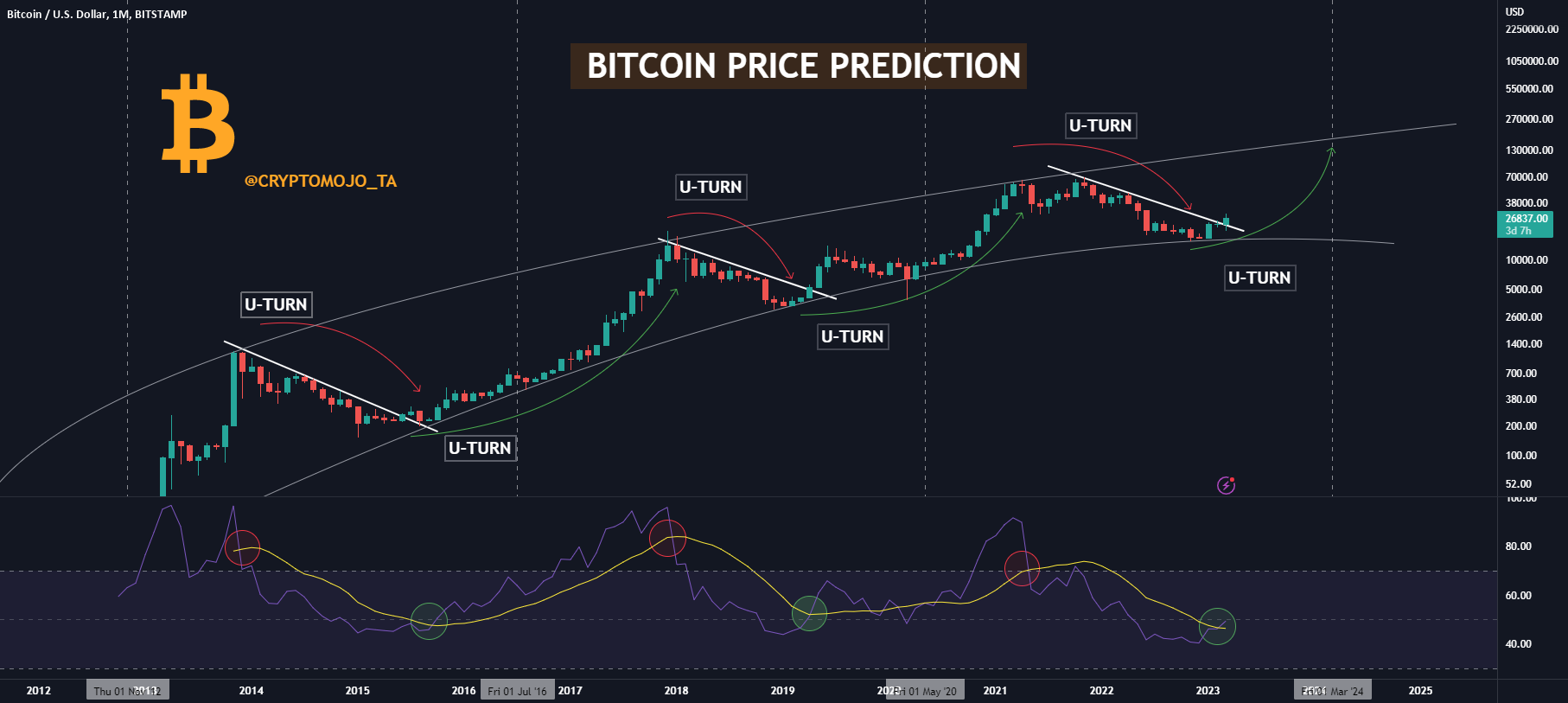

As the cryptocurrency landscape evolves, Bitcoin price prediction stands at the forefront of discussions among investors and analysts alike. With increasing interest in Bitcoin long-term investment and notable Bitcoin institutional investment, understanding market trends is critical for potential gains. Experts suggest that while Bitcoin is expected to experience a long-term upward trajectory, it may also face periods of heightened Bitcoin volatility and price corrections along the way. The recent price movements suggest a convergence with historical Bitcoin cycle analysis, indicating that the market is maturing. Investors must keep an eye on these dynamics to navigate the intricacies of Bitcoin’s market trends and maximize their investment opportunities.
In the realm of digital currencies, the forecast for Bitcoin’s value has garnered significant attention, referring often to its future potential and growth patterns. As seasoned traders analyze Bitcoin’s performance, they look into various factors that could influence its price trajectory, including patterns in Bitcoin’s market behavior and the overall momentum of cryptocurrency investments. Many are exploring the implications of Bitcoin as a stable asset for long-term savings and the impact of institutional investments on its valuation. Observations about Bitcoin’s fluctuations and the critical phases within its trading cycles offer insights into suitable strategies for those interested in entering this dynamic market. These considerations not only shed light on Bitcoin’s past and present but also lay the groundwork for its future in the financial landscape.
Understanding Bitcoin Price Prediction: What Lies Ahead?
As we delve into the future of Bitcoin price predictions, insights from experts like Matt Hougan indicate a generally positive outlook for Bitcoin as a long-term investment. With sustained returns expected over the next decade, investors might consider Bitcoin’s potential for resilience amidst market volatility. Unlike past cycles characterized by dramatic spikes, the coming years may showcase a steady, gradual increase in value, bolstered by institutional investment. This phase signifies that Bitcoin will experience less drastic fluctuations, making it more appealing to conservative investors.
Nevertheless, the nature of Bitcoin’s volatility cannot be ignored entirely. The cryptocurrency market is notoriously unpredictable, with fluctuations occurring in response to market sentiment and macroeconomic factors. Even amidst a long-term positive trend, periodic pullbacks are anticipated. This is why understanding the broader market trends is crucial, as these dips may create opportunities for savvy investors to reinvest and bolster their portfolios.
Analyzing Bitcoin Market Trends and Their Implications
The analysis of Bitcoin market trends offers valuable insights for investors looking to navigate the complex landscape of cryptocurrency. Recent observations of Bitcoin’s price behavior reveal a significant convergence with historical cycles, as outlined by Hougan and Beau. The continued influx of institutional investment is pivotal in this context, providing a safety net that helps mitigate sharp declines. While previous cycles have seen corrections of over 60%, the market currently appears to be stabilizing, suggesting a shift in investor sentiment as Bitcoin matures.
However, caution is advisable when interpreting these trends. Market participants, including analysts like Peter Brandt, remain vigilant for potential corrections. His prediction of a possible dip towards $60,000 in the near term highlights the importance of closely monitoring Bitcoin’s price movements and the external factors that influence them. Understanding these market dynamics can equip investors with the knowledge necessary to time their investments effectively and capitalize on growth opportunities.
The Role of Bitcoin Volatility in Long-Term Investment Strategies
Bitcoin volatility plays a significant role in shaping long-term investment strategies. Despite the expectation of a long-term slow ascent, investors must remain aware of the inherent risks associated with Bitcoin’s price fluctuations. For those looking to invest in Bitcoin, it’s important to devise a strategy that accommodates potential short-term losses while maintaining a focus on long-term growth. This approach necessitates a keen understanding of market trends and cycle analyses that predict when to buy or sell.
Moreover, embracing volatility can lead to lucrative opportunities for astute investors. The cyclical nature of Bitcoin trends means that values can rise sharply after corrections, making it essential to have a plan in place for such moments. Incorporating practices of dollar-cost averaging (DCA) or setting price alerts can mitigate the stress associated with managing a volatile asset. Thus, while Bitcoin investment entails risks, it also requires a strategic mindset capable of leveraging its unique market dynamics.
Institutional Investment in Bitcoin: A Game Changer
The inflow of institutional investment in Bitcoin marks a significant turning point for the cryptocurrency market. As major financial institutions begin to embrace Bitcoin, the asset class gains legitimacy and stability. This trend is crucial for both current and prospective investors, as it often leads to increased market confidence and less volatility overall. The gradual yet steady investment from institutions has the potential to create a more structured market, leading to a greater understanding of Bitcoin’s price behavior.
However, the road ahead is not without challenges. While institutional investment is a positive indicator, large-scale players can also create price pressure through significant buying or selling actions. As such, investors should remain vigilant, paying attention to shifts in institutional sentiment that could impact Bitcoin prices. By staying informed, individuals can better position themselves to make sound investment decisions that harness the full potential of Bitcoin as a long-term asset.
Insights on Bitcoin Cycle Analysis and Market Behavior
Understanding Bitcoin’s cycle analysis provides investors with critical insights into market behavior. Historical data indicates that Bitcoin experiences cyclical patterns of boom and bust, often influenced by factors like supply changes and market demand. Analysts, including Hougan and Beau, are examining whether Bitcoin’s traditional four-year cycle is still relevant, especially in light of recent market developments. The unpredictability of current price adjustments suggests the need for a fresh perspective on how Bitcoin behaves in these cycles.
Recent demands for Bitcoin have diverged from previous market cycles, indicating a maturation of the market influenced largely by institutional investments. As these institutions establish their foothold, the dynamics of Bitcoin price corrections may differ significantly from historical norms. Hence, comprehensively analyzing Bitcoin’s cycles can furnish investors with tools to project future market behavior, refining their trading strategies and enhancing their potential for profit in a fluctuating environment.
Macroeconomic Factors Affecting Bitcoin Prices
Macroeconomic factors play a vital role in determining Bitcoin’s market dynamics and subsequent price movements. According to Hougan, regulatory clarifications surrounding Bitcoin’s status as a commodity have minimized the impact of political changes, particularly under the Trump administration. This stability brings a level of predictability to Bitcoin’s future, as it suggests that significant policy changes are less likely to trigger drastic price adjustments. For investors, this underscores the importance of remaining alert to economic indicators rather than solely focusing on political developments.
Moreover, global economic shifts, including inflation and interest rates, also significantly influence Bitcoin prices. Increased inflation might drive investors towards Bitcoin as a hedge, thus impacting demand positively. As macroeconomic factors continue to evolve, being attuned to these developments can help investors gauge Bitcoin’s performance trajectory, crafting a well-rounded investment strategy that accommodates both micro and macro influences.
How to Approach Bitcoin as a Long-Term Investment
Approaching Bitcoin as a long-term investment requires a strategic mindset that accounts for market volatility while identifying potential growth opportunities. Investors should establish clear goals and understand that Bitcoin, like any other asset, requires patience and resilience. Developing a well-structured investment plan that outlines when to enter or exit the market can be key to navigating its fluctuations. Additionally, establishing a diversified portfolio can help mitigate risks associated with Bitcoin’s inherent volatility.
Educating oneself about Bitcoin market trends, cycle analysis, and the factors influencing price movements is crucial. Investors should stay informed about technological advancements within the blockchain ecosystem, shifts in regulatory landscapes, and broader economic patterns that could impact Bitcoin’s performance. Embracing this long-term perspective can enhance an investor’s ability to weather short-term turbulence while reaping the benefits of Bitcoin’s growth potential over the coming years.
Bitcoin vs. Traditional Investments: A Comparative Analysis
When comparing Bitcoin to traditional investments, it becomes evident that each option has its distinct advantages and downsides. Bitcoin offers a level of liquidity and potential for high returns that traditional assets often cannot match. This quality has attracted a growing number of investors, particularly those looking for alternatives in a diverse trading landscape. However, the associated volatility remains a double-edged sword, making Bitcoin a risky venture for those unaccustomed to market fluctuations.
Conversely, traditional investments like stocks and bonds tend to offer more stability, albeit with typically lower returns. Understanding this fundamental difference is crucial for investors when aligning their risk tolerance with their investment strategies. It’s essential to consider how Bitcoin fits into the larger context of an investment portfolio, weighing the potential for high returns against the backdrop of increased risk and volatility associated with cryptocurrencies.
Preparing for Future Bitcoin Trends in 2026 and Beyond
As we look toward 2026 and beyond, the landscape for Bitcoin is poised for significant evolution. Expert predictions, including those from Hougan and Brandt, suggest that while Bitcoin is unlikely to see the extreme surges of the past, there is still substantial room for growth. The optimism surrounding Bitcoin’s long-term potential indicates that investors should prepare for a market that emphasizes stability and gradual escalation in value. This approach requires adopting a forward-thinking investment strategy that anticipates both challenges and opportunities.
Investors should also keep an ear to the ground regarding evolving market trends, as these will critically shape Bitcoin’s role within the financial ecosystem. Factors such as regulatory adjustments, global economic trends, and the pace of institutional adoption will all contribute to how Bitcoin performs leading into the latter half of the decade. Therefore, maintaining a fluid and adaptable strategy will be essential for investors aiming to capitalize on Bitcoin’s evolving prospects.
Frequently Asked Questions
What are the main factors influencing Bitcoin price prediction in the long-term?
Several factors influence Bitcoin price predictions, particularly for long-term investments. Key elements include institutional investment, market trends, and historical volatility. Analysts suggest that sustained returns might be achieved through a gradual increase in Bitcoin’s value, supported by ongoing institutional interest.
How does Bitcoin volatility affect price prediction and market trends?
Bitcoin volatility plays a crucial role in price prediction. While some forecasts indicate a long-term slow ascent in Bitcoin prices, periodic fluctuations and dips are expected. Understanding these trends helps investors gauge the potential risks and rewards associated with Bitcoin’s price trajectory.
Can Bitcoin’s price prediction be influenced by institutional investment patterns?
Yes, institutional investment significantly impacts Bitcoin price predictions. Continuous inflows from institutional funds are believed to provide a safety net against sharp price declines, contributing to a more stable long-term outlook. As institutional interest grows, it could lead to a positive price adjustment in the Bitcoin market.
Is there a consensus on the future of Bitcoin cycles and price predictions?
There is still some debate among analysts regarding whether the established four-year Bitcoin cycle has ended. Despite a recent pullback, the absence of deep price corrections like those seen in previous cycles suggests potential stability. Predictions about Bitcoin’s price will likely continue to evolve as more data emerges.
What role do macroeconomic factors play in Bitcoin price prediction?
Macroeconomic factors, including regulatory policies, have a limited direct impact on Bitcoin price predictions. Analysts believe that, while regulations may clarify Bitcoin’s status, they are unlikely to drive significant price reactions. Bitcoin’s market trends will more likely be influenced by underlying supply and demand dynamics.
What is the expected Bitcoin price trend over the next few years based on predictions?
Predictions suggest that Bitcoin may experience a ‘long-term slow ascent’ with moderate growth. While significant annual increases may not be common, experts forecast a strengthening trend by around 2026, suggesting that the price may reach new heights amid consistent institutional support.
How does historical cycle analysis inform current Bitcoin price predictions?
Historical cycle analysis offers valuable insights into Bitcoin’s price behavior. By examining past cycles, analysts can identify trends and patterns that may repeat. Current price actions, including recent pullbacks, are compared to past cycles to formulate predictions and strategies for future investments in Bitcoin.
| Key Point | Details |
|---|---|
| Long-Term Outlook | Bitcoin is expected to achieve solid returns over the next decade with a phase of slow ascent. |
| Price Dynamics | Extreme single-year increases are unlikely, though periodic pullbacks may occur. |
| Institutional Support | Institutional funds are steadily flowing in, providing support against price declines despite recent drop. |
| Market Sentiment | Some market participants predict further declines, with a concern of a drop to $60,000 by Q3 2026. |
| Regulatory Impact | Future policy changes are unlikely to have a significant impact on Bitcoin prices. |
Summary
Bitcoin price prediction shows a steady outlook as experts anticipate solid returns in the upcoming decade. While the price is expected to rise gradually, volatility may decrease compared to historical trends. Despite recent pullbacks, institutional interest continues to provide a cushion against steep declines. Observers remain divided regarding the current market cycle, but ongoing developments suggest a cautious yet optimistic stance for Bitcoin investors.
Related: More from Bitcoin News | Citi Sees Bitcoin Banked on Wall Street Crypto Platform | Bitcoin Drops Below $65K Amid Macro Risks