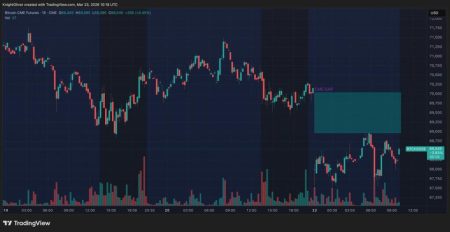




In the realm of cryptocurrency, Bitcoin price analysis is crucial for understanding market dynamics and prospective future performance. As Bitcoin currently hovers around significant price levels, traders and analysts are closely scrutinizing current Bitcoin price trends to gauge investor sentiment and market behavior. With the BTC mining cost sitting at approximately $67,000, it introduces a pivotal point in assessing the sustainability of this digital asset’s value. Observing Bitcoin market trends can provide insights into potential support levels that could dictate the next movements. Additionally, as we delve into analyzing Bitcoin volatility, it becomes evident that deciphering these patterns can illuminate future opportunities for both investors and traders alike.

Exploring the intricacies of Bitcoin price movements offers a window into the broader cryptocurrency landscape. This digital currency has showcased notable price behavior that demands careful examination to predict its trajectory. Assessing the mining expenses associated with BTC reveals how these operational costs interact with prevailing market conditions. By examining trends within the Bitcoin ecosystem and understanding vital support thresholds, market participants can strategize more effectively. Furthermore, a thorough exploration of Bitcoin fluctuations equips investors with the knowledge essential for navigating the uncertainties inherent in this fast-paced market.
| Key Points | Details |
|---|---|
| Current Price Level | Bitcoin is maintaining a price level of around $67,000, regarded as a critical support level. |
| Production Costs | The BTC mining cost estimate is significant at approximately $67,000, showing miners’ operational pressures. |
| Price Zones | Four key zones indicate Bitcoin’s price dynamics: Zone A ($70,600 – $66,900), Zone B ($63,000), Zone C ($58,000 – $56,000), and Zone D (production cost models). |
| Market Behavior | Market dynamics remain complex, stressing the importance of on-chain analysis, derivative patterns, and miner behavior to assess price stability. |
| Institutional Flows | Negative flows from institutions indicate a decrease in demand which complicates recovery attempts despite previous price levels being breached. |
Summary
Bitcoin price analysis reveals that the cryptocurrency is navigating a critical phase, oscillating around significant production costs and multiple key price zones. Currently sitting at approximately $67,000, Bitcoin’s ability to maintain this support is crucial as it correlates with miner stress levels and general market sentiment. Analysts emphasize the importance of understanding the shifts from leverage-driven practices to a demand-centric approach in price discovery, showcasing that sustainable recoveries rely on returning institutional participation and real buying pressure.
Current Bitcoin Price Analysis
As of February 2026, the current Bitcoin price hovers around the significant level of $70,000, which it has managed to defend for some time. Recent trading activity has demonstrated volatility, with a sharp intraday low at $60,000 before recovering above crucial support levels. This price range has become a focal point for traders, as it aligns with key mining cost estimates, particularly the $67,000 production cost associated with BTC mining. About 63,000 serves as a pivotal threshold, as prices dipping below it can indicate broader market sentiment shifts. Thus, a continuous observation of the current Bitcoin price and trader sentiment is essential for understanding potential market movements in the coming days and weeks.
In the next phases of Bitcoin trading, various support levels will likely be tested, including the 50% retracement benchmark at $63,000, which traders see as a critical psychological barrier. Analyzing Bitcoin market trends will reveal whether traders are more inclined to sell or hold amidst the precarious backdrop of BTC mining costs and external pressures such as macroeconomic conditions. As institutions continue to monitor these vital price points, an in-depth understanding of the current Bitcoin price dynamics will be crucial in preparing for potential rebounds or further retreats.
Examining Bitcoin Mining Costs
Bitcoin mining costs have been prominently highlighted in recent market analyses, with estimates currently pegged around $67,000. This figure reflects the comprehensive expenses incurred by miners to generate new BTC, including electricity, hardware depreciation, and operational overheads. The significance of mining costs cannot be underestimated, as they interact closely with market pricing; if Bitcoin continues trading below this production cost, it could put financial strain on miners, leading potentially to sell-offs or a drilling down of active participants in the market. Decreasing miner participation could, in turn, affect the overall market supply of Bitcoin, as less mining activity may eventually lead to less selling pressure.
Furthermore, the ongoing assessment of miner stress signals a complicated landscape for Bitcoin mining. During periods where mining costs exceed the market price, miners may face acute dilemmas regarding asset liquidation versus maintaining operations. Understanding the correlation between Bitcoin mining costs and overall market behavior is paramount, as spikes in mining costs could lead to reductions in Bitcoin supply, juxtaposing broader market dynamics. Thus, tracking changes in the Bitcoin mining cost framework can offer vital insights into future Bitcoin pricing and market strategies.
Key Bitcoin Market Trends
The trends within the Bitcoin market have shown a paradigm shift as traders adapt to fluctuating prices and uncertain conditions. Recent analyses point toward a potential transition from a market dominated by leverage to one dictated by actual spot demand. As historical trends highlight, Bitcoin prices often rebound from critical support levels, but the sustainability of such rebounds relies heavily on the presence of strong buying pressure and favorable market sentiment, both of which are influenced by external economic factors and investor behavior. A clearer understanding of emerging Bitcoin market trends will be essential to discern whether the current structures signify a prolonged recovery or merely a temporary relief rally.
Additionally, glassnode’s data regarding Bitcoin support levels shows a detailed breakdown of the on-chain metrics, highlighting zones that indicate where buying interest may emerge. Traders actively identify these zones to establish potential entry and exit strategies. The potential formations of local bottoms, as indicated by various analysis models, suggest that areas around $66,900 to $70,600 may serve as crucial points where substantial buying pressure could once again materialize if the market sentiment shifts favorably. Hence, monitoring Bitcoin’s price behavior alongside these support levels becomes vital for investors aiming for long-term positioning.
Understanding Bitcoin Volatility
Bitcoin volatility has been a persisting characteristic of cryptocurrency markets, often leading to significant price fluctuations within short timeframes. Analyzing Bitcoin volatility is essential for investors, especially in the context of current trading activities that have seen the asset range between $60,000 to $70,000. This volatility can exacerbate market reactions, where minor changes in the macroeconomic environment trigger large-scale sell-offs or buying spikes. Traders must remain vigilant and prepared for rapid changes, which require adaptive strategies that can capitalize on both upward and downward movements in price.
Furthermore, measuring volatility through on-chain data provides valuable insights into market psychology and trader behavior. Discernible patterns of high volatility often accompany times of uncertainty and fear, which can be identified through derivatives market analyses. As highlighted by recent reports, a heightened level of fear as reflected in extreme risk reversals signals potential for further market instability. Understanding how Bitcoin volatility interacts with external economic stimuli will thus empower traders to make informed decisions and anticipate market movements.
The Influence of Mining Conditions
Current mining conditions greatly impact the wider Bitcoin market, particularly as miners balance their costs against market prices. Recent reports indicate a critical point for miners, where costs have approached $67,000 while BTC itself trades below this threshold, indicating potential distress in the mining sector. The ability of miners to sustain operations becomes uncertain, and their responses—whether through liquidation or halting production—can significantly reconfigure market supply. Investors must closely monitor these mining conditions, as changes could prompt broader market shifts.
Moreover, setbacks in hash prices, evidenced by declines below thresholds like $32 per PH/s, create a ripple effect across the market. Should miners reduce their selling pressures or capitulate en masse, significant price adjustments could arise from fluctuations in supply. Thus, understanding the relationship between Bitcoin price mechanics and ongoing mining conditions is critical for predicting future market trajectories and discerning the strength of price rebounds.
Identifying Support Levels in the Bitcoin Market
Support levels are critical to Bitcoin’s price resilience; they act as barriers to further price drops within the market. Current analyses underscore the importance of the $66,900 to $70,600 range, which represents a dense cluster of support based on on-chain metrics. If Bitcoin can maintain its positioning above this threshold, it could indicate renewed bullish sentiment and the potential for recovery or price stabilization. Investors widely regard these regions as pivotal since any breach could trigger increased selling pressure.
Observing how Bitcoin interacts with established support levels also reflects trader sentiment. If market behavior aligns with historical patterns, a bounce from these critical zones may signal the diminishing influence of negative sentiments and speculative selling. This scenario speaks volumes about the long-term potential of Bitcoin beyond transient price movements and highlights the psychological warfare battling within, where both fear and hope dictate transactional behavior.
Potential Recovery Scenarios
The Bitcoin market has been characterized by various potential recovery scenarios that investors need to monitor closely. The first and most optimistic scenario revolves around the formation of a clear local bottom in the price action, with support found within the key range of $66,900 to $70,600. If the market can sustain trading in this zone, traders may see positive developments that propel Bitcoin toward reclaiming its True Market Mean at $80,200. Such a transition will largely depend on the stabilization of derivatives, decreasing realized losses, and an uptick in institutional investment, which often strengthens bullish situations.
Alternatively, should the market undergo further downward pressure, a more bearish scenario could materialize, characterized by a drift towards testing the $56,000 to $58,000 support levels. This scenario may emerge if spot demand fails to gain traction, reflecting ongoing skepticism among investors. In this case, volatility could persist as the market reacts to macroeconomic factors, yet it also presents opportunities for those seeking to capitalize on lower entry points for long-term investments. The ongoing evaluation of these potential recovery scenarios will assist traders in navigating sound strategies in an unpredictable environment.
Market Sentiment and Institutional Behavior
Understanding the interplay between market sentiment and institutional behavior is vital for assessing the ongoing dynamics of Bitcoin. Recent flows have demonstrated a cautious approach from institutions, evidenced by substantial net outflows which signal a preference for de-risking amidst uncertainty. Tracking these movements provides valuable insight into how market psychology shifts in response to price changes, particularly during significant downturns like the recent sell-off where panic selling seemingly triggered further declines. Reversing these trends and encouraging institutional confidence are essential for Bitcoin’s recovery.
Furthermore, while retail sentiment can often be influenced by news cycles or social media trends, institutional behavior tends to follow a more foundational set of metrics, focusing on valuation, market applications, and regulatory developments. Maintaining equilibrium between Bitcoin’s supply dynamics and institutional demand for a robust, healthy market becomes crucial. Confident institutional participation could foster sustainable upward price movements, reinforcing key support levels and stabilizing the overall market.
Future Price Discovery Techniques
In the evolving landscape of Bitcoin trading, development of innovative price discovery techniques will be imperative. Traditional approaches based on historical prices and mining costs are being enhanced by modern analytical methods that incorporate real-time behavioral analytics and on-chain signals. This implies that both retail and institutional traders must adapt to new ways of interpreting market behavior, particularly as Bitcoin moves away from being solely influenced by leverage-driven trading toward more fundamental, spot-led dynamics. Effective analysis of ongoing trends is crucial to unlocking future opportunities in the Bitcoin market.
Moreover, continued innovations in price discovery mechanisms, along with enhanced transparency from exchanges and data providers, foster an environment where market participants can draw more reliable conclusions about market direction. As liquidity deepens and the trading environment stabilizes, understanding how to capitalize on these signals will offer traders a competitive advantage amidst ongoing price fluctuations. The interaction between emerging technologies and trading behaviors will ultimately dictate the efficiency of price discovery in the Bitcoin ecosystem, setting the stage for future market developments.
Frequently Asked Questions
What factors influence current Bitcoin price analysis?
Current Bitcoin price analysis is influenced by multiple factors, including BTC mining cost, market trends, support levels, and overall volatility in the cryptocurrency space. As highlighted in recent studies, the current mining cost is around $67,000, impacting miners’ behavior and market dynamics.
How significant is the current Bitcoin mining cost in relation to price trends?
The current Bitcoin mining cost of approximately $67,000 plays a crucial role in price trends. Historical data indicates that Bitcoin often rebounds from cost zones, making this level a notable support indicator in ongoing Bitcoin price analysis.
What are the key support levels for Bitcoin price based on recent analysis?
Recent Bitcoin price analysis identifies several key support levels: Zone A ($66,900 to $70,600), Zone B ($63,000), and Zone C ($58,000 to $56,000). Each zone indicates potential buying pressure and is crucial for understanding where Bitcoin could stabilize or reverse.
What are the implications of Bitcoin market trends for pricing strategies?
Bitcoin market trends suggest a possible shift from leveraged pricing to true price discovery. Current data emphasizes the need for genuine spot transactions to establish clearer support levels, making it vital for traders to monitor these trends closely in their price analysis.
How does analyzing Bitcoin volatility contribute to understanding market movements?
Analyzing Bitcoin volatility helps investors understand market movements and potential price fluctuations. It reveals underlying market sentiment, like the extreme fear noted in recent volatility indicators, which influences trader behavior and overall market trends.
What does the current Bitcoin price indicate about miner stress levels?
The current Bitcoin price indicates significant miner stress, particularly as it trades below the estimated production costs. This situation suggests that miners may face tough decisions, influencing future price trends as they adjust operations in response to market conditions.
How can Bitcoin price analysis help predict future market scenarios?
Bitcoin price analysis incorporates support levels, mining costs, and market behavior to forecast potential future scenarios. Trends and patterns derived from this analysis can signal whether the market is likely to stabilize, decline, or enter a recovery phase.
What role do on-chain metrics play in Bitcoin price analysis?
On-chain metrics are pivotal in Bitcoin price analysis as they provide insights into supply and demand dynamics, miner activities, and market sentiment. They offer a deeper understanding of price movements and support levels beyond just price charts.
How do institutional flows affect Bitcoin price analysis?
Institutional flows significantly impact Bitcoin price analysis by indicating market sentiment and potential demand shifts. A reversal in negative institutional flows could signal renewed interest and more stable pricing, influencing overall market outlook.
What can the historical performance of Bitcoin tell us about current price levels?
Historical performance indicates that Bitcoin tends to rebound from key price levels like the current $67,000 mining cost. This historical context is essential for understanding current price dynamics and forecasting potential future movements.