


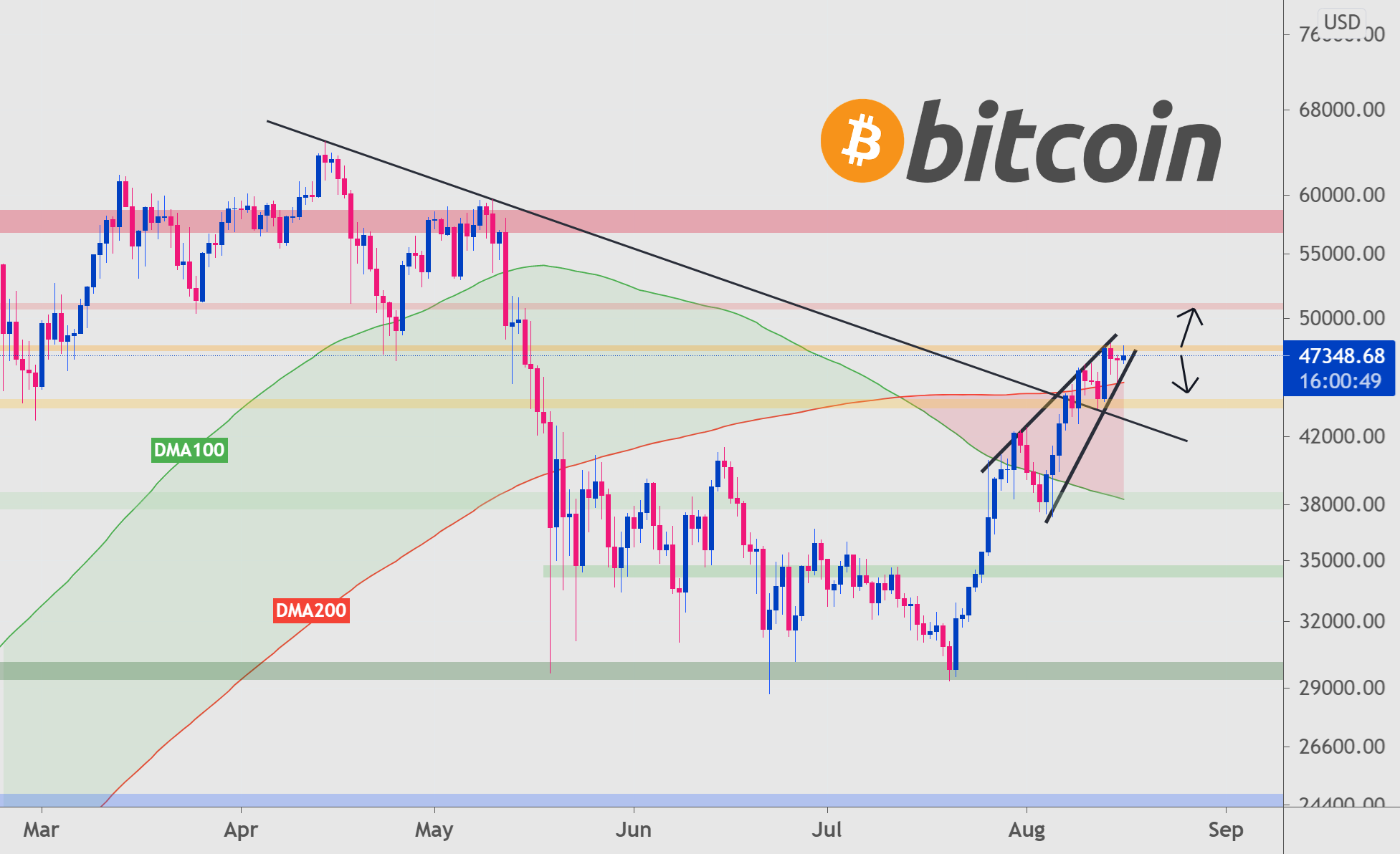

Bitcoin price action has demonstrated a curious resilience amidst macroeconomic shifts, as traders navigate the complex interplay of market dynamics. As inflation indicators measured a cooling trend, expectations grew surrounding potential Federal Reserve rate cuts. However, the anticipated boost to Bitcoin’s price has remained elusive, hampered by persistent high real yields and a tightening liquidity environment. This situation highlights a critical moment for the cryptocurrency market, where ETF flows and broader economic signals play a significant role in dictating price movements. Investors are tuning into these Bitcoin market dynamics, weighing the effects of inflation and external economic pressures as they reevaluate their strategies.

The recent fluctuations in Bitcoin’s trading price illustrate a phase where market participants must grapple with the intricacies of cryptocurrency value amidst evolving financial conditions. Within this framework, the conversation shifts to observer sentiment around indicators such as monetary policy adjustments and their tangible impacts on asset prices. Instead of viewing Bitcoin merely through the lens of speculative hype, analysts are increasingly focused on the relationship between inflations trends, yield rates, and the influx or outflow of ETF investments. Understanding these connections is vital for anyone looking to stay ahead in a landscape defined by rapid changes in economic landscapes and investor behavior. As such, the dialogue surrounding Bitcoin encompasses not just its immediate trading metrics, but a broader analysis of how various market forces converge to influence its trajectory.
Navigating Bitcoin Price Action Amidst Mixed Macroeconomic Signals
The recent Bitcoin price action has highlighted the complexities traders face in the current macroeconomic environment. Even with inflation data showing a moderate increase, Bitcoin struggles to break free from its established price range. The inflation figures were initially perceived as supportive of the narrative that Federal Reserve rate cuts could be on the horizon, yet the anticipated uplift in Bitcoin’s value has not materialized. Instead of responding to macro headlines, traders are increasingly paying attention to real yields and liquidity conditions, revealing a shift in market dynamics that emphasize the need for concrete factors to drive price movements.
With Bitcoin’s range defined between $81,000 and $93,000, it’s clear that the market is operating on a set of dynamics beyond the simple expectation of rate cuts. Understanding how real yields and cash conditions interact with Bitcoin price action is now a crucial part of a trader’s toolkit. The apparent disconnect between optimistic macroeconomic narratives and Bitcoin’s price observed in the marketplace suggests that traders may be more cautious, until a clearer path emerges for more sustained upward movement.
The Impact of Fed Rate Cuts on Bitcoin Market Dynamics
Federal Reserve rate cuts are typically viewed as a windfall for Bitcoin and risk assets alike. However, the latest economic data suggests a more complicated picture. While investors often anticipate that lower rates will lead to increased liquidity and higher asset prices, high real yields currently act as a damping factor on Bitcoin’s bullish potential. The expectation of rate cuts alone has not been enough to create a significant upward shift in Bitcoin’s prices, showcasing the critical importance of contextual factors such as inflation and liquidity frameworks.
As traders navigate through conflicting signals, the focus has shifted from solely relying on rate cuts to considering how they interact with real yields and broader liquidity issues. For example, the relationship between nominal rate adjustments and persistent high real yields indicates that even as cuts occur, the environment for Bitcoin may remain constrained. It’s this interplay that traders now seek to decode, looking for signs that the anticipated cuts will indeed translate into tangible upward momentum in Bitcoin’s price action.
Understanding Real Yields and Their Influence on Bitcoin
Real yields represent the returns on investment adjusted for inflation and play a pivotal role in the valuation of risk assets, including Bitcoin. As of late December, the 10-year TIPS real yield hovered around 1.90%, establishing a benchmark that could limit Bitcoin’s price upside. When inflation is factored into the equation, high real yields can undermine the supposed benefits of monetary easing, creating a challenging landscape for Bitcoin bulls who anticipate a rally from an easing Fed.
Traders are increasingly aware that while the Federal Reserve may signal cuts to stimulate the economy, the environment of high real yields can coexist with such easing, resulting in limited positive effects on Bitcoin price action. This nuanced understanding prompts a more measured approach, requiring traders to remain vigilant for signs of declining real yields to indicate a more favorable backdrop for upward price movements in Bitcoin as liquidity conditions possibly improve.
ETF Flows: Shaping Bitcoin’s Response to Macro Events
The introduction of spot Bitcoin ETFs has fundamentally changed the way Bitcoin reacts to macroeconomic developments. These funds provide a real-time flow of capital that influences Bitcoin’s price action, creating pathways for either bullish or bearish trends. Recent data showing roughly $3.4 billion in net outflows from U.S. spot Bitcoin ETFs since early November illustrates how adverse flows can counteract positive macro news, stifling rallies and keeping Bitcoin pinned within its established range.
As trading strategies adapt to these new realities, understanding ETF dynamics becomes crucial. A market founded on ETF structures can mute the impact of favorable economic news if there are ongoing net outflows, reflecting weak demand. The challenge for Bitcoin awaits a return to a net positive flow environment, which may restore the bullish sentiment originally anticipated from macroeconomic improvements, laying the groundwork for higher Bitcoin valuations.
The Complex Relationship Between Inflation and Bitcoin
Inflation data continues to shape the narrative around Bitcoin, especially as reports show the Consumer Price Index (CPI) increasing, albeit with questions surrounding its credibility. With inflation currently registered at 2.7% year-over-year, and core inflation at 2.6%, one would assume bullish implications for Bitcoin as a hedge against inflation. However, the mixed nature of the data presents complications, making traders question whether the inflation narrative is strong enough to drive significant price changes.
Additionally, the relationship between inflation reports and Bitcoin price action is evolving. For Bitcoin to react positively to inflation data, there must be clarity on how these figures lead to actionable changes in policy or liquidity. Traders are starting to discern that Bitcoin’s future performance may depend not only on inflation figures but also on the tangible effects they have on investor sentiment and liquidity flows—highlighting the importance of real yields in framing the inflation narrative within the context of Bitcoin.
Liquidity Conditions: The Key to Unleashing Bitcoin Potential
Liquidity conditions have become a focal point in understanding Bitcoin’s price action as traders grapple with the realities of a tightening market. The record usage of the New York Fed’s Standing Repo Facility, indicated by $74.6 billion on December 31, and increasing reverse repo balances signal strains in liquidity that are often overlooked. Though the narrative may suggest that liquidity is available, the reality paints a more complex picture where actual liquidity remains constrained, limiting traders’ risk appetite.
Understanding the dynamics of liquidity is essential for anyone looking to navigate Bitcoin investing. The balance sheets and cash flows in the broader economy have immense implications on Bitcoin’s performance. Until liquidity becomes more accessible and generous, Bitcoin’s price may continue to experience constraints, highlighting the urgent need for structural changes in liquidity frameworks to positively influence price actions and support sustained price breakout efforts.
What Lies Ahead for Bitcoin? Signals and Projections
Looking forward, traders need to prepare for a variety of potential scenarios that could impact Bitcoin’s price trajectory. The current scenario—where rate cuts are priced into the market amidst rising inflation and stable real yields—could keep Bitcoin confined within the existing range of $81,000 to $93,000. It becomes crucial for investors to monitor how current economic indicators, especially inflation reports and real yield trends, evolve in the coming months, as these could dictate the future direction Bitcoin takes.
Alternatively, a more favorable scenario could unfold if real yields decline and spot ETF inflows increase, stimulating demand and potentially allowing Bitcoin to break through its upper resistance. This will lead to greater interest in Bitcoin, making it crucial for traders to assess market shifts diligently. The challenge remains in waiting for a robust combination of macro inputs that would align favorably for Bitcoin’s ascent, with all eyes on macroeconomic developments as possible catalysts for such a transition.
Analyzing the Macro Factors Behind Bitcoin’s Price Stagnation
The current stagnation in Bitcoin’s price can be traced to a blend of macroeconomic factors that are shaping market perceptions and investor strategies. With the Federal Reserve’s actions and the uncertainty surrounding inflation as key components, traders are particularly attentive to the balance of supply and demand. Factors such as rising real yields and ETF outflows suggest a complex interplay that is preventing enthusiastic buying pressure and has resulted in Bitcoin adhering to defined technical levels.
As traders analyze this landscape, the overall sentiment reflects a cautious yet hopeful outlook wherein Bitcoin’s potential remains evident, provided that macroeconomic conditions shift favorably. Monitoring upcoming economic indicators will be vital in deciphering how these varying dynamics interact, with a focus on whether a tangible shift in rate policies alongside supportive liquidity conditions could catalyze the much-anticipated price movement in Bitcoin.
The Future of Bitcoin: Potential Catalysts for Upside Movement
Investors are keenly aware that for Bitcoin to experience its anticipated breakout, a series of favorable catalysts must align strategically. A decline in real yields, sustained improvements in ETF flow dynamics, and favorable macroeconomic conditions all play a role in this potential surge. Should markets see a shift towards a more stimulating economic environment, traders will be eager to leverage this momentum in their strategies.
Moreover, these catalysts must interact cohesively to reinforce the broader narrative propelling Bitcoin forward. As market participants remain vigilant, the interconnectedness between macro signals and Bitcoin price action underscores the significance of analytical strategies in anticipating and capitalizing on breaking trends. Whether traders find newfound confidence in Bitcoin’s price performance largely hinges on these essential macro drivers.
Frequently Asked Questions
How do real yields impact Bitcoin price action?
Real yields play a crucial role in Bitcoin price action as they influence investor sentiment and liquidity in the market. When real yields are high, it can lead to tighter financial conditions, limiting Bitcoin’s ability to break higher, even if investors anticipate Federal Reserve rate cuts.
What effect do Fed rate cuts have on Bitcoin market dynamics?
Fed rate cuts typically aim to stimulate economic growth, which could positively impact Bitcoin market dynamics. However, if real yields remain elevated, the anticipated benefits of rate cuts may not significantly uplift Bitcoin price action, as seen in the current range-bound market.
How do ETF flows influence Bitcoin’s price response to macro news?
ETF flows significantly impact Bitcoin’s price response as they create a direct link between macro sentiment and market demand. A spike in positive inflows can drive Bitcoin pricing upward, while net outflows, like the recent $3.4 billion since November, can cap potential rallies, leading to more muted price action.
What role does inflation play in shaping Bitcoin price action?
Inflation data can shape Bitcoin’s price action by affecting market sentiment and expectations for future interest rate changes. Recent CPI reports showing low inflation have supported narratives of Fed rate cuts, but credibility issues surrounding these reports can limit their immediate impact on Bitcoin prices.
What does the current market structure tell us about Bitcoin’s price levels?
The current market structure indicates a defined trading range for Bitcoin, with resistance around $93,000 and support near $81,000. This range suggests that while traders are paying attention to macroeconomic indicators, actual price action remains constrained by these established levels.
What needs to happen for Bitcoin to break out of its current price range?
For Bitcoin to break out of its current $81,000-$93,000 range, we need to see a decline in real yields, sustained positive ETF inflows, and a strong move above the resistant supply levels. This would signal a shift in market dynamics that could propel Bitcoin higher.
| Driver | Latest Reference Point | Why It Matters for BTC |
|---|---|---|
| Inflation | Nov. CPI 2.7% YoY, core 2.6% YoY (BLS) | Supports the “cuts” narrative, but credibility issues may limit repricing (Reuters) |
| Real Yields | 10-year TIPS real yield ~1.90% (FRED DFII10) | Keeps the discount rate restrictive even with nominal cuts priced |
| Liquidity Plumbing | SRF usage record $74.6 billion on Dec. 31 (Reuters) | Signals localized tightness that may restrain leverage and risk appetite |
| ETF Flows | ~$3.4 billion net outflows since Nov. 4 (ETF Database; Farside) | Weakens the marginal bid that typically drives breakouts |
| Market Structure | Support ~$81,000, resistance ~$93,000 (Glassnode) | Establishes the near-term battlefield where catalysts need to follow through |
Summary
Bitcoin price action currently reflects a cautious market, showing that while the narrative of “cuts are coming” persists, it has yet to translate into significant upward momentum. The interplay of high real yields, mixed liquidity conditions, and ETF outflows is maintaining Bitcoin’s price within a defined range. Investors are now focusing more on tangible factors such as real yields and liquidity rather than just macro headlines. For Bitcoin to break above its constraints, we may need to witness sustained positive changes in ETF flows, further declines in real yields, or a notable decrease in inflation pressures beyond current reports.