
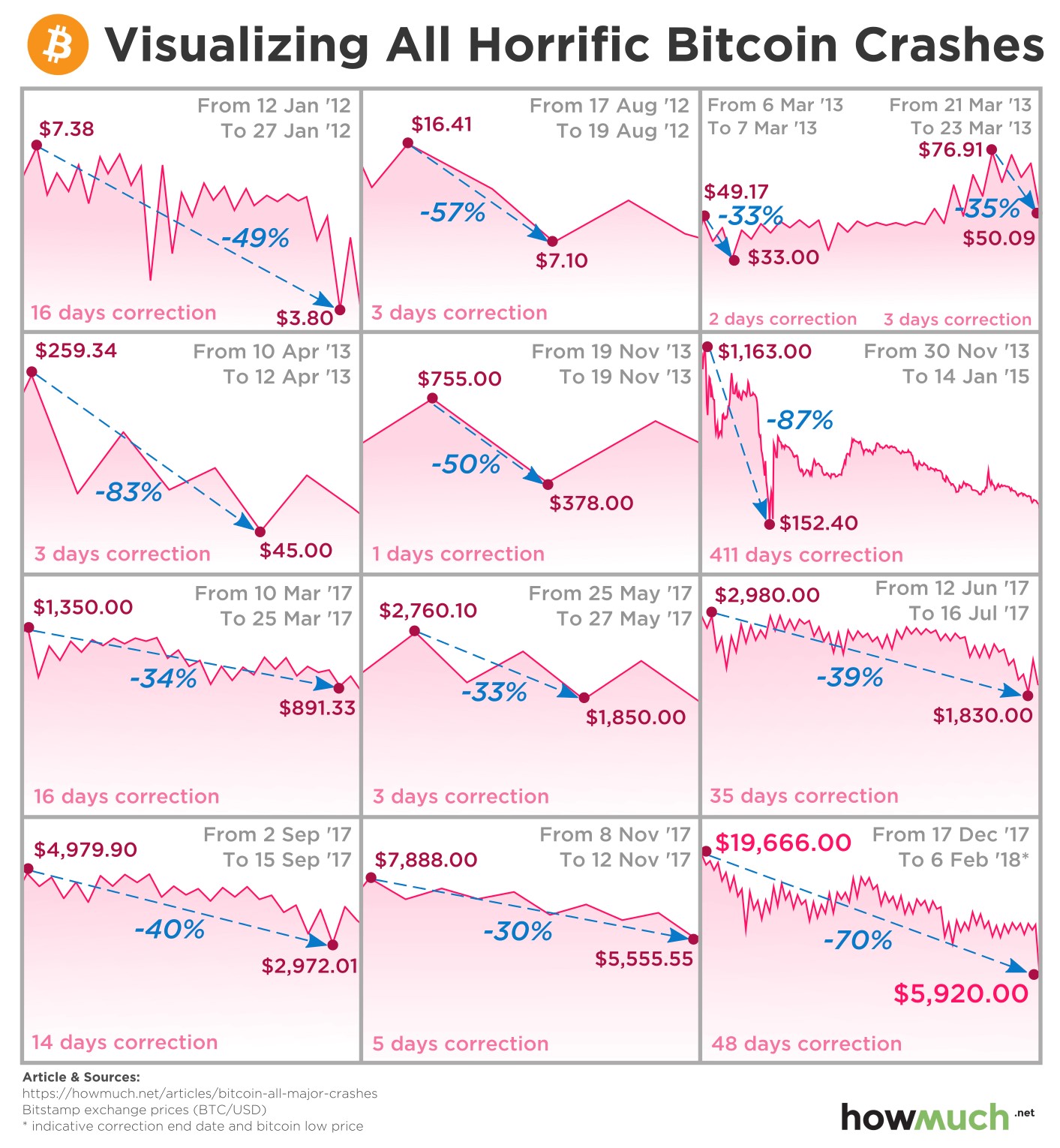

The recent Bitcoin market crash has sent shockwaves through the financial landscape, raising alarm bells for both seasoned investors and newcomers alike. With Bitcoin witnessing a staggering price plunge of nearly 24% in just a week, the repercussions are felt far and wide as institutions assess their exposure amidst growing inflation fears. The intertwining of Bitcoin’s decline with a significant drop in silver has prompted a global margin call, highlighting the fragility of investor sentiment in the face of macroeconomic pressures. As traders scramble to assess collateral and navigate this chaotic environment, the crypto market stress intensifies, leaving many questioning the stability of their investments. The current climate signifies a pivotal moment, where the narrative shifts from bullish optimism to cautious apprehension as the market veers into uncharted territory.

The ongoing turmoil in the cryptocurrency sector can be characterized as a stark downturn for digital currencies, notably Bitcoin. This sharp value decrease has raised critical concerns among market participants, particularly as parallels can be drawn to traditional commodities like silver, which also faced significant declines. The intersection of these asset classes during this tumultuous period underscores the urgency among traders dealing with new margin calls as financial leverage tightens significantly. Heightened anxieties surrounding inflation and its impact on market confidence have further compounded the situation, leading many investors to re-evaluate their strategies. In this complex backdrop, the behavior of both crypto and silver markets serves as an essential gauge of investor sentiment amid rising economic uncertainty.
| Market State | Bitcoin Drop (%) | Silver Drop (%) | ETF Outflows ($) | CME Margin Increase | Oil Price Increase (%) |
|---|---|---|---|---|---|
| Markets under stress due to inflation and margin calls | 24% | 34% | -817.8M on Jan 29 | From $20,000 to $32,500 margin | 1.6% |
| Institutional selling led by high leverage | Continuous breakdown of key price levels | -272.0M on Feb 3 | |||
| Resource commodities also experiencing declines |
Summary
The recent Bitcoin market crash has highlighted the fragility of both cryptocurrency and traditional financial systems. As Bitcoin experiences drastic declines, compounded by significant ETF outflows and rising margin requirements for leveraged traders, the need for cautious risk management becomes more apparent. This tumultuous period suggests that traders should remain vigilant and prepared for further volatility as the relationship between Bitcoin and macroeconomic indicators continues to unfold.
Understanding the Bitcoin Market Crash
The recent Bitcoin market crash has left many investors in a state of disbelief as prices plummet at an alarming rate. Following a staggering drop of approximately 24%, from around $90,076 to lows of $66,700, it’s clear that sentiment has shifted. This decline is not merely a fluctuation but signals deeper issues within the crypto landscape, correlating strongly with inflation fears and prevailing economic volatility. When traders see such monumental drops, it influences market psychology, often resulting in panic selling and margin calls, further exacerbating the situation.
Moreover, the rapid descent below key psychological levels, such as the high $70,000s, reflects an immense loss of confidence among traders. The interplay of institutional investor withdrawal and ETF outflows creates a perfect storm for Bitcoin, indicating a demand crisis that could persist without substantial changes in market conditions. As the market adjusts, observers must focus on technical indicators that could signal either support or further declines, essentially hoping to ascertain whether Bitcoin can reclaim critical support levels.
The Impact of Inflation Fears on the Crypto Market
Inflation fears have taken center stage in shaping market trends recently, as they have not only influenced Bitcoin but also other asset classes such as silver. The potential for rising inflation creates uncertainty, which tends to heighten market volatility. As investors reassess their positions due to anticipated financial tightening, it prompts many to flee risk assets, including cryptocurrencies. This behavior is heightened during times when central banks indicate that interest rates may remain elevated, further compressing liquidity for speculative investments like Bitcoin.
The fear of inflation-driven economic contraction leads to a significant shift in trader mindset, aligning it more with concerns about liquidity than typical speculative excitement. This correlation of negative sentiment across various asset classes presents a significant challenge for Bitcoin, which traditionally relies on an expanding market environment for growth. As the Federal Reserve introduces tighter policy, the coping strategies among crypto traders involve liquidity management, which can lead to aggressive margin calls and ultimately, further price declines.
Margin Calls: The Mechanism Behind Crypto Volatility
Margin calls represent a critical mechanism behind the volatility of the crypto market, especially during periods of economic stress like the one currently witnessed. As leverage in trading increases, so does the risk of forced liquidations when positions cannot sustain adverse price movements. The recent spike in margin requirements for silver exemplifies this dynamic; when traders are compelled to add more cash to maintain their positions, it can trigger widespread selling to secure necessary collateral.
This phenomenon is not unique to silver but extends deeply into Bitcoin’s ecosystem as well. As leverage becomes too risky amidst falling prices, many traders must choose between adding cash, reducing their position size, or closing trades altogether, a conundrum that can lead to cascading sell-offs in an environment filled with uncertainty. The pressure intensifies when multiple traders face similar margins, amplifying the downward spiral of volatility and providing a fertile ground for significant market movements driven by panic.
The Correlation Between Bitcoin and Silver Market Crashes
The correlation between Bitcoin and silver market crashes sheds light on broader market dynamics and investor behavior under financial stress. While Bitcoin is often viewed as a digital asset disconnected from traditional commodities, recent events demonstrate that shifts in market behavior can link these assets in surprising ways. The simultaneous decline in both Bitcoin and silver indicates that market sentiment can often reflect a broader aversion to risk, forcing liquidity-driven selling across assets, regardless of their perceived intrinsic value.
When silver witnessed a drastic price plunge, it mirrored the volatility seen in the crypto world, suggesting that both markets are susceptible to similar macroeconomic pressures. This interconnectedness can be attributed to the common behavioral traits exhibited by traders in response to margin calls or changes in liquidity conditions. Such dynamics reveal that in an environment fraught with inflation concerns and tightening monetary policy, traditional and digital assets alike may experience heightened correlations in their price movements.
Bitcoin’s Technical Breakdown: Key Support Levels
Bitcoin’s recent technical breakdown showcases the importance of key support levels that traders are keenly monitoring. As the price has descended through significant markers, like the $73,600 high, each failure to hold these levels represents not just a technical failure but a mental one for bullish traders. The inability of Bitcoin to reclaim these crucial levels exacerbates the market’s fear narrative, suggesting that a deeper correction might be on the horizon if sellers continue to dominate.
This leads to the critical examination of the $56,100 floor, previously established as a support level. If Bitcoin’s price descends towards this significant threshold and fails to hold, it could catalyze further panic among traders already nervous about market conditions. The setting of these support levels acts as a battleground between bulls and bears, and a breakdown here might not only endanger Bitcoin’s immediate future but could also spill over volatility into the larger crypto and equity markets, perpetuating the cycle of margin calls and forced liquidations.
How ETF Outflows Influence Bitcoin Prices
ETF outflows have become a pivotal factor influencing Bitcoin prices, as they reflect sudden shifts in market sentiment and investor confidence. The recent trends show significant outflows, diminishing Bitcoin’s cushion against price dips and indicating weak demand. As observed during the downturn, when ETF flows turned negative, investors fled from the once-popular assets, further compounding the market’s stress and leading to deeper sell-offs. Such conditions highlight the vital role that investor sentiment plays in the cryptocurrency market, where positive inflows previously served as a buffer during price corrections.
The interplay between rising selling pressure and falling inflows creates a distressed market landscape where recovery becomes increasingly difficult. Analysts argue that sustained negative ETF flows could prolong the bear market trend in Bitcoin, emphasizing the need for swift re-establishment of investor confidence. As market participants closely monitor these flows, understanding their implications becomes crucial in predicting future performance and making informed trading decisions amidst heightened volatility.
The Role of Macro Economic Factors in Crypto Stability
Macro economic factors play a significant role in the stability and pricing of cryptocurrencies like Bitcoin. As inflation fears grow, so do the stakes for crypto traders, especially in how these external pressures influence market dynamics. Traders must grapple not only with intra-market factors but also with the larger forces of economic policy and geopolitical events, all of which can create unforeseen volatility in asset pricing. This interlinkage means that Bitcoin’s success often hinges on global economic health, making it vulnerable during economic downturns.
Moreover, the relationship between macroeconomic indicators and crypto sentiment becomes apparent in times of financial distress. When inflation alarms resound, the risk appetite diminishes, thereby engendering market reactions that lead to rapid price drops and increased sell-offs. Thus, understanding the intricate balance between macroeconomic stability and crypto performance is essential for traders looking to navigate these uncertain waters effectively, especially when new economic policies could shift the landscape quickly.
Investor Sentiment: The Critical Factor in Crypto Volatility
Investor sentiment is arguably one of the most critical factors in understanding the volatility of cryptocurrencies, particularly Bitcoin. Amidst periods of sharp price movements, the psychological elements that drive market behavior often outweigh fundamental factors. When fear dominates, as seen during the recent market crash, traders are quick to exit positions, creating a chain reaction where their collective actions lead to amplified price declines. This phenomenon results in a market environment where a sense of panic can override logical assessments based on the underlying value of assets.
Current market conditions illustrate how quickly sentiment can shift, particularly when inflation fears loom large, resulting in selling pressure across multiple asset classes. The prevailing mood can significantly dictate market direction, leading to fluctuations that may not align with the asset’s long-term trajectory. Recognizing these sentiment-driven movements is essential for traders, particularly in crypto markets where volatility reigns supreme and can lead to unexpected outcomes.
Preparing for Market Recovery Amidst Uncertainty
As the cryptocurrency market faces significant turbulence, preparing for recovery becomes a pressing concern for traders and investors alike. Understanding current market conditions entails analyzing both technical indicators and macroeconomic factors affecting Bitcoin. The path to recovery is riddled with challenges; market participants are not just waiting for a bottom but also gauging when sentiment may turn bullish once more amidst the overarching inflation fears and tightening monetary policy.
Crafting a recovery narrative hinges on Bitcoin’s ability to reclaim pivotal support levels and trade positively regarding ETF flow dynamics. A stable influx of capital can uplift market sentiment and potentially reignite bullish trends. Investors are advised to remain vigilant in monitoring these factors, as a well-informed approach could provide opportunities to capitalize on market recoveries when they materialize, even in the face of persistent uncertainty.
Frequently Asked Questions
What caused the recent Bitcoin market crash and price plunge?
The recent Bitcoin market crash, which saw a significant price plunge of approximately 24%, was primarily triggered by inflation fears and rising margin calls that affected traders’ positions. Influential ETF outflows highlighted a demand crisis, leading to a swift unwinding of leveraged positions across both Bitcoin and the silver market.
How do inflation fears contribute to the Bitcoin market crash?
Inflation fears play a crucial role in the Bitcoin market crash by driving investors to liquidate riskier assets, including cryptocurrencies. As inflation concerns grow, traders often prioritize cash holdings and reduce leverage, contributing to a significant decline in Bitcoin prices.
What impact do margin calls have during a Bitcoin market crash?
During a Bitcoin market crash, margin calls increase as traders are required to meet higher collateral requirements. This results in forced selling and a rapid decline in prices as leveraged traders must liquidate their positions to cover their margins, further exacerbating the market downturn.
Is the Bitcoin market crash related to the silver market crash?
Yes, the Bitcoin market crash is closely related to the silver market crash, as both experienced significant declines simultaneously due to increased margin requirements and overall market stress. The interconnectedness of these markets highlights the broader impact of leverage and selling pressure among risk assets.
What levels should traders watch after the Bitcoin market crash?
Traders should closely monitor the $73,600 level as a crucial point for Bitcoin. Maintaining this price could signal an end to the downward trend. If Bitcoin fails to hold above this mark, it may lead to a further drop towards the significant support level of $56,100.
How are Bitcoin ETF outflows affecting the market during this crash?
Bitcoin ETF outflows play a significant role in the current market dynamics. The recent negative flows indicate a lack of demand, which increases selling pressure. Continuous outflows coupled with negative sentiment can lead to a downward spiral, making market recovery difficult.
What does the Bitcoin market crash mean for the future of cryptocurrency?
The Bitcoin market crash underscores the volatility and sensitivity of cryptocurrencies to macroeconomic pressures. It highlights the need for traders to remain cautious and consider these external influences, especially inflation and margin requirements, that could shape the future stability of the crypto market.
Related: More from Bitcoin News | AI, BTC Miners Issue High | Bitcoin Above $69K? Glassnode Weighs In