


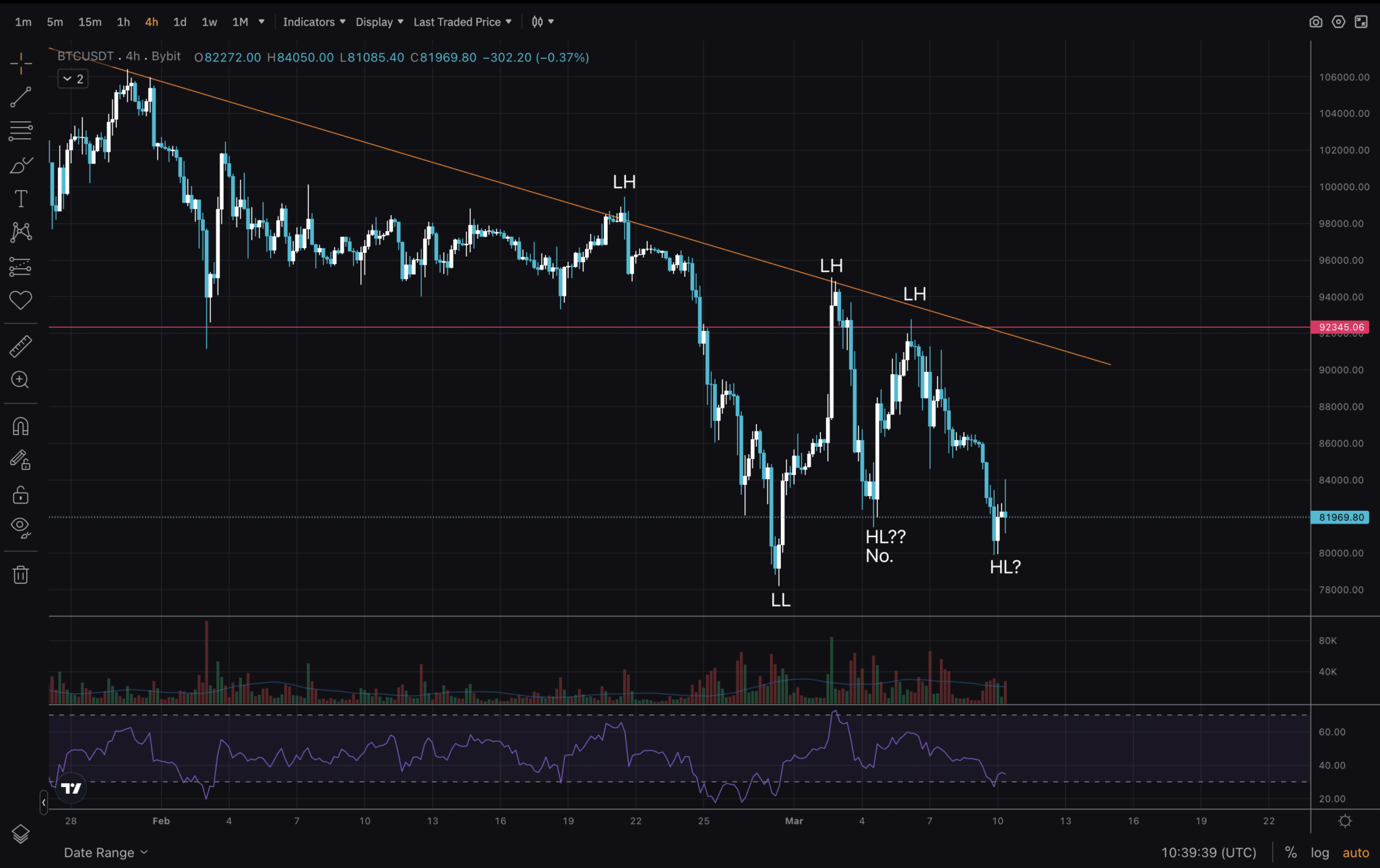

Bitcoin market analysis is crucial for understanding the evolving dynamics of cryptocurrency trading, especially as we head into 2026, a year that could mark a significant chapter in the Bitcoin saga. Recent studies suggest that Bitcoin could face a pivotal price battle around the $65,000 threshold, a key level seen as a potential point of support or resistance. Market analysts have long debated the implications of Bitcoin’s four-year price cycles and the potential for a bear market, with predictions varying widely. The power law concept serves to highlight these cyclical trends, painting a picture that adds depth to current Bitcoin price predictions. As investors keenly watch for signs of consolidation or a breakout, comprehending these market trends becomes indispensable for informed trading decisions.

A comprehensive examination of Bitcoin’s trading environment is essential for anyone interested in cryptocurrencies. With the possibility of a bearish market looming in 2026, assessing the potential turning points for Bitcoin value becomes imperative. Analysts are focusing on key figures like $65,000, which could determine future price movements as part of broader trading cycles. This transition period may be characterized by Bitcoin price fluctuations that adhere to established trends, particularly reflected in its historical price cycles and support levels. By understanding the nuances associated with Bitcoin’s power law and price dynamics, investors can better navigate future market landscapes.
The Current State of the Bitcoin Market
As we dive into the current state of the Bitcoin market, it becomes evident that the ongoing bear market is still in play. The dynamics of Bitcoin price fluctuations are largely influenced by historical trends and cycles, and 2026 appears to be pivotal. With the Bitcoin price hovering around the significant psychological level of $65,000, traders and investors are closely monitoring this threshold as a potential point of support or resistance. The historical patterns indicate that Bitcoin often revisits previous highs during periods of consolidation, making the next year crucial for the cryptocurrency’s trajectory.
Market analysts are keeping a close eye on Bitcoin’s dealings within its four-year price cycle framework. This cycle has shown a pattern of rallies followed by corrections, which leads many to believe that if Bitcoin can solidify itself around the $65,000 mark, it may signal the end of the consolidation phase and pave the way for future growth. However, should it break below this mark, the focus will shift toward the next critical support level near $45,000, a threshold that aligns with established power law trends.
Frequently Asked Questions
What does the Bitcoin bear market of 2026 mean for market analysis?
The Bitcoin bear market of 2026 signifies a period where BTC may experience prolonged price declines. Market analysis suggests that during this time, key levels, such as $65,000, will act as critical price support points. Understanding these dynamics is essential for investors navigating potential market downturns.
How do Bitcoin price predictions incorporate power law analysis?
Bitcoin price predictions utilize power law analysis to forecast price movements based on historical trends. This method points to significant price levels, like $65,000, where Bitcoin might struggle or succeed, providing a framework for anticipating potential resistance and support during market cycles.
What is the significance of the $65,000 price support in Bitcoin market analysis?
The $65,000 price support is vital in Bitcoin market analysis as it represents a ‘do-or-die’ level for Bitcoin. If BTC manages to maintain this level during consolidation in 2026, it could signal a resurgence; however, falling below could indicate further bearish trends in the market.
Are Bitcoin price cycles still relevant in today’s market analysis?
Yes, Bitcoin price cycles remain relevant in market analysis, especially in light of historical patterns. Despite debates about diminishing halving effects, the cyclical behavior of Bitcoin pricing continues to serve as a valuable tool for predicting future price movements.
How does the power law relate to Bitcoin’s price during a bear market?
The power law suggests Bitcoin’s price should align with historical averages, indicating fair value. During a bear market, such as what’s anticipated in 2026, analysis shows that prices often test lower support lines, like $45,000, demonstrating the trend’s impact on price behavior.
What are the projections for Bitcoin as it approaches its price support levels?
As Bitcoin approaches key price support levels like $65,000, market projections suggest that players should expect potential volatility. Analysts predict significant price actions may occur as Bitcoin either rebounds from this support or fails to maintain these levels, indicating a deeper bear market.
Why is the $45,000 trendline crucial in Bitcoin’s market analysis?
The $45,000 trendline is crucial in Bitcoin’s market analysis as it represents a critical lower threshold influenced by the power law. If Bitcoin prices drop to this level, it may offer insights into potential long-term bottoms or further declines within the ongoing bear market.
What does the future hold for Bitcoin given its power law trends?
Given the current power law trends, the future for Bitcoin may involve longer price cycles and potential consolidations around key support levels. Analysts expect that resolving the ongoing compression below long-term growth laws will necessitate upward price movements, highlighting the importance of monitoring these trends.
How do market analyses account for Bitcoin’s volatile nature?
Market analyses account for Bitcoin’s volatility by understanding historical price cycles, support levels like $65,000, and their relationship with market sentiment. Investors should prepare for both recovery scenarios and continued volatility based on past performance and power law projections.
What role does historical price data play in Bitcoin market analysis?
Historical price data plays a crucial role in Bitcoin market analysis as it helps identify trends, cycles, and potential support/resistance levels like $65,000. This context is necessary for making informed predictions and understanding the likelihood of price movements in various market conditions.
| Key Points | Detail |
|---|---|
| Bitcoin Price Targets | $65,000 is identified as a critical price level for Bitcoin, which may serve as a support or resistance based on market consolidation. |
| Bear Market Characteristics | 2026 is projected to potentially be a classic bear market year for Bitcoin, influenced by historical price cycles. |
| Power Law Influence | Current analyses suggest that Bitcoin’s price is aligning with power law trends but could need to catch up to these predictions. |
| Market Reactions | The Bitcoin community is questioning the relevance of four-year cycles in pricing, especially after the recent halving year concluded negatively. |
| Long-term Trends | Experts indicate that while bear markets are expected to persist, the volatility and price cycles of Bitcoin may be evolving. |
Summary
Bitcoin market analysis indicates that the cryptocurrency is facing critical price levels, specifically the $65,000 mark, which could determine its trajectory moving into 2026. Analysts highlight that as Bitcoin continues to evolve, its relationship with historical price cycles and theories may result in major shifts. The upcoming year appears pivotal as market dynamics suggest Bitcoin may either consolidate or seek upward movement, as indicated by power law analyses and expert opinions on its long-term growth.
Related: More from Bitcoin News | Bitcoin Analysts: BTC Market Bottoming in Q4 2026 | BTC Below $70K, JPN Inflation Under 2%: Monthly Charts