
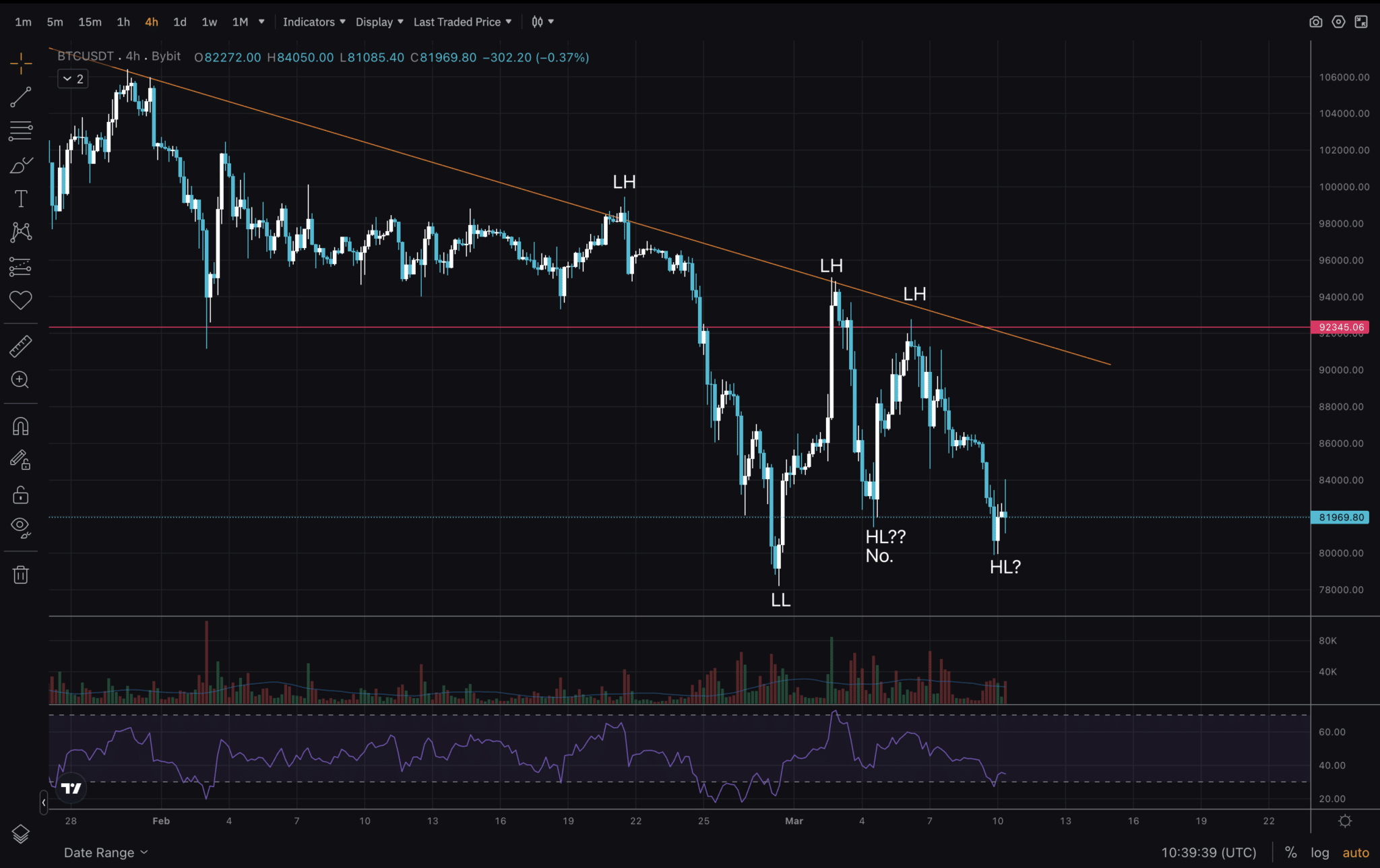

In the volatile world of cryptocurrency, Bitcoin market analysis remains vital for investors seeking insights into future price movements. As Bitcoin recently dipped below $70,000, the discussions around Bitcoin price predictions and potential price drops have intensified, raising concerns among traders. Observing the ongoing cryptocurrency market trends reveals that long-term holders still maintain their positions, showcasing resilience even amid a bearish outlook. Insight into Bitcoin’s price movements toward $40,000 can illuminate whether the market requires a psychological reset before rallying back into bullish territory. As we continue to navigate through this unpredictable crypto bear market, understanding the behaviors of Bitcoin long-term holders will be key to predicting the next phase of this digital currency’s evolution.

Examining the dynamics of the Bitcoin market can shed light on the broader trends influencing digital assets today. Market participants are keenly watching the fluctuations in the value of Bitcoin, especially as it teeters on the edge of significant psychological price points like $40,000. The involvement of long-term Bitcoin holders is crucial, as their actions often dictate the asset’s momentum amid ongoing market uncertainty. This analysis, focused on understanding Bitcoin’s performance and the implications of fluctuating prices, seeks to provide clarity on cryptocurrency market behaviors, especially during downturns. By assessing how Bitcoin fares amidst bearish trends, investors can better equip themselves for hopeful long-term investments.
| Key Point | Details |
|---|---|
| Current Bitcoin Price Drop | Bitcoin has fallen below $70,000 for the first time in over a year, raising concerns among investors. |
| Long-term Holder Resilience | Long-term holders, those who have held Bitcoin for over 155 days, are currently not feeling the pressure as much, which indicates potential stability in the market. |
| Historical Context on Price Levels | Historically, $40,000-$50,000 is a significant price point as it’s where long-term holders may start feeling uncomfortable if prices approach their cost bases. |
| Market Indicators and Metrics | Metrics such as MVRV (Market Value to Realized Value) and SOPR (Spent Output Profit Ratio) indicate that long-term holders are still realizing profits and have not yet reached capitulation. |
| Potential for Further Decline | If Bitcoin continues to decline, it could approach the $40,000 level, where testing the strength and conviction of long-term holders could occur. |
| Psychological Reset of the Market | For Bitcoin to stabilize or initiate a new bull run, a psychological reset might be necessary, potentially driving prices lower before recovery. |
Summary
In conclusion, Bitcoin market analysis suggests that the cryptocurrency may face significant challenges as it approaches crucial support levels between $40,000 and $50,000. Given the current data indicating that long-term holders remain largely above water, the market has not yet reached a point of severe distress. However, ongoing price drops could test the resilience of these holders, confirming whether a major psychological reset is required before a new bull run can commence. Thus, monitoring key metrics like MVRV and SOPR is critical for predicting the market’s future movements.
Understanding Bitcoin Price Predictions
Bitcoin price predictions serve as a crucial part of the cryptocurrency market landscape, especially during turbulent periods. Recent analysis has suggested potential price targets around $40,000 before Bitcoin can kickstart its next bull run. These predictions are often based on historical price trends, market sentiment, and key indicators such as long-term holder behavior. As investors navigate the volatility, price predictions become critical in shaping expectations and investment strategies. Analysts closely monitor these fluctuations, as they reveal insights into market dynamics and investor sentiment.
Furthermore, the reliance on predictive models underscores the importance of LSI terms like ‘cryptocurrency market trends’ and ‘Bitcoin long-term holders.’ When assessing Bitcoin’s future trajectory, incorporating these concepts into analysis provides a richer context. For instance, if Bitcoin approaches the predicted $40,000 range, the long-term holders’ response will be paramount. Their historical resilience suggests they are less likely to sell during downturns, which could stabilize the price and influence future market movements.
Current Cryptocurrency Market Trends
Analyzing current cryptocurrency market trends reveals patterns that are essential for understanding Bitcoin’s positioning and potential recovery. As Bitcoin experiences a notable price drop, many investors are seeking clarity on whether this drop is temporary or a signal of deeper market issues. Tracking trends allows investors to gauge the mood of the market and adjust their strategies accordingly. Moreover, it sheds light on the broader health of the cryptocurrency ecosystem, reflecting investor confidence and possible future formations of bullish or bearish trends.
The interplay between Bitcoin price movements and the sentiments in the crypto space can be likened to a psychological game. When major trends indicate a prolonged bear market, like we are possibly witnessing now, it instills fear among traders. This atmosphere often leads to rapid sell-offs, accentuating the volatility of the market. Hence, understanding these trends becomes pivotal for both new and seasoned investors as they navigate their positions amid fluctuating prices.
The Role of Bitcoin Long-Term Holders
Bitcoin long-term holders play a significant role in market stability, especially during bearish phases. These investors, often characterized by their buy-and-hold mindset, effectuate a buffer against rampant selling pressures that arise from short-term traders. As Bitcoin’s price hovers at critical levels, like the $40,000 mark, the availability and behavior of long-term holders can determine whether the market stabilizes or plunges further. Their commitment to hold through market volatility often signals confidence in Bitcoin’s long-term potential, which can influence other investors.
Additionally, long-term holders can provide useful insights into overall market sentiment. Their response to price fluctuations—particularly when the market dips or hits new lows—can act as a valuable indicator of the market’s psychological state. If long-term holders begin selling off their assets in significant quantities, it may suggest that the market could be entering deeper bearish territory. Conversely, their continued accumulation or lack of selling can reinforce support levels and dictate the potential for future price recoveries.
Bitcoin Price Drop Analysis and Its Implications
The recent drop in Bitcoin’s price has raised numerous questions and concerns within the investment community. With the market witnessing a plunge below $70,000, analysts are contemplating the implications of this slip. Price drops, especially in a historically volatile market, can shake investor confidence and spur a wave of selling from short-term holders looking to cut losses. Analyzing how these price drops correlate with long-term holder sentiment becomes essential in forecasting recovery trajectories.
Moreover, it is vital to contextualize these price drops within historical patterns. Previous downturns often precede substantial recoveries, suggesting that current lows might not be the end of the road for Bitcoin. Investors should remain focused on the broader trend indicators, as substantial price drops often serve as market resets, enabling healthier conditions for the next bull cycle. Understanding these implications can help investors approach the market with a long-term perspective, especially when navigating the psychology of trading in a challenging environment.
On-Chain Data Insights for Bitcoin Investors
Utilizing on-chain data gives investors critical insights into Bitcoin’s price dynamics and the overall health of the market. On-chain metrics, such as the long-term holder realized price and MVRV, provide an analytical framework to assess how various cohorts are performing financially. When these indicators reveal that many long-term holders remain ‘above water,’ it suggests a lower likelihood of widespread panic selling, thus indicating potential support for Bitcoin’s price.
Current on-chain data is exhibiting resistance, with a significant percentage of long-term holders still holding onto their positions despite the recent price drops. This resilient behavior could signal that the market is still in an accumulation phase rather than a full-blown panic situation. Therefore, investors should examine these on-chain metrics closely, as they can offer predictions about forthcoming market movements, especially as prices approach critical support levels like $40,000.
Market Sentiment and Its Effects on Bitcoin Prices
Market sentiment plays a pivotal role in shaping Bitcoin prices. As the cryptocurrency landscape evolves, investor emotions, whether fueled by fear or optimism, often directly influence price movements. When market sentiment dips, as seen during recent bearish trends, it can lead to rapid declines in Bitcoin’s value as traders rush to liquidate positions. A comprehensive understanding of this sentiment, especially how it impacts decisions from both short-term and long-term investors, is essential for navigating current market phases.
In times of fear, particularly during a crypto bear market, observing sentiment shifts is crucial. If investors perceive Bitcoin’s future negatively, they might be more inclined to capitulate and sell at losses, further exacerbating the drop in prices. Conversely, fostering a positive sentiment through strategic marketing, community engagement, and educational resources may bolster confidence, encouraging more robust market participation and potentially mitigating the severity of price declines.
The Psychological Impact of a Crypto Bear Market
Experiencing a crypto bear market often affects investor psychology, creating a challenging environment for decision-making. As prices fall and uncertainty looms, fear and despair can prompt impulsive selling strategies. Understanding the emotional responses that typically accompany bear market conditions allows investors to better manage their portfolios and mitigate losses. A focus on data-driven decision-making can help shield against the volatility that characterizes these downtrends.
Additionally, recognizing that every bear market eventually leads to a recovery can instill confidence in long-term strategies. Historical data reminds investors that enduring the strain may lead to significant rebounds after major downturns. By fostering a mindset geared towards long-term success—and coupling it with sound investment principles—investors can better navigate psychological challenges and emerge stronger in the face of adversity.
Navigating Bitcoin Trading Through Market Cycles
Navigating Bitcoin trading requires a keen understanding of market cycles and how they affect investment strategies. The fluctuating nature of Bitcoin prices can be daunting, especially as investors evaluate their next moves in a highly volatile environment. Identifying the patterns of previous cycles can provide insights into when to enter or exit positions, particularly during critical price levels like $40,000. Recognizing the underlying factors behind these cycles allows for more informed trading decisions.
Investors should also consider the broader context of cryptocurrency trends, which can impact Bitcoin’s performance. The factors influencing Bitcoin’s market cycles include macroeconomic signals, evolving regulatory environments, and changes in investor sentiment. Keeping an eye on these contributors helps investors predict potential shifts in market dynamics and adapt their strategies accordingly.
Future Prospects for Bitcoin Amidst Current Challenges
Looking ahead, the future prospects for Bitcoin are influenced by current challenges and market sentiments. While prices have dropped, the underlying blockchain technology and growing cryptocurrency acceptance may fuel positive long-term growth. Investors need to remain vigilant and adaptable to changing conditions. Encouragingly, the market has witnessed cycles of recovery in the past, reinforcing the belief that downturns may ultimately lead to opportunities.
As Bitcoin navigates this tumultuous phase, the involvement of institutional investors and evolving regulatory frameworks could play a pivotal role. These developments may provide new pathways for growth, potentially re-establishing Bitcoin’s position as a dominant player in the digital asset landscape. Maintaining a balanced perspective and staying informed about external factors will be critical for investors, enabling them to capitalize effectively as the landscape evolves.
Frequently Asked Questions
What are the key indicators of Bitcoin market analysis predicting a price drop to $40,000?
Bitcoin market analysis suggests that key indicators like the long-term holder realized price and the MVRV ratio play a crucial role in predicting a potential price drop to around $40,000. These metrics reflect on-chain behavior of long-term holders, highlighting when they are still in profit versus when they are facing losses, which may trigger selling pressure.
How do Bitcoin price predictions utilize long-term holder metrics?
Bitcoin price predictions often incorporate long-term holder metrics to gauge market sentiment. By analyzing the average acquisition price of coins held by long-term holders, analysts can determine when these holders might start feeling financial pressure, indicating potential price drops or market turning points.
What role does on-chain data play in understanding cryptocurrency market trends?
On-chain data is fundamental to understanding cryptocurrency market trends as it provides insights into the behavior of market participants, particularly long-term holders. Metrics like SOPR (Spent Output Profit Ratio) and the percentage of long-term holders at a loss give analysts tools to forecast potential price movements and market sentiment.
Can Bitcoin rebound from a predicted price drop during a crypto bear market?
While Bitcoin may forecast a price drop during the current crypto bear market, historical trends indicate that after significant drawdowns, the market eventually stabilizes and can rebound. The recovery often occurs when long-term holders are sufficiently shaken out or when buying interest returns, which can support new bullish trends.
What does a high percentage of long-term holders at a loss signify for Bitcoin’s market analysis?
A high percentage of long-term holders at a loss is a critical signal in Bitcoin market analysis, suggesting that many long-term investors are experiencing distress. This situation often precedes capitulation, which can lead to further price declines as panic selling may ensue, thereby shaping the market’s bottom.
Why is the $40,000 to $50,000 range significant in Bitcoin market analysis?
The $40,000 to $50,000 range is a focal point in Bitcoin market analysis as it corresponds to critical support levels where long-term holders’ average cost basis lies. It acts as a stress test for market conviction, and historical patterns indicate that the price behavior within this range could lead to significant outcomes for future market conditions.
How do forced selling events impact Bitcoin price dynamics?
Forced selling events can greatly impact Bitcoin price dynamics by increasing volatility and driving prices lower, especially during bearish market conditions. When significant amounts of Bitcoin are dumped onto the market, it can overwhelm buying interest and worsen existing downtrends, making it an important consideration in market analysis.
What is the significance of Bitcoin’s SOPR in market analysis?
Bitcoin’s SOPR (Spent Output Profit Ratio) is significant in market analysis as it indicates whether holders are selling for profit or at a loss. SOPR values above 1 suggest profit-taking, while values below 1 indicate losses. This metric helps analysts assess market sentiment and potential future price movements.
Related: More from Bitcoin News | AI, BTC Miners Issue High | Bitcoin Above $69K? Glassnode Weighs In