
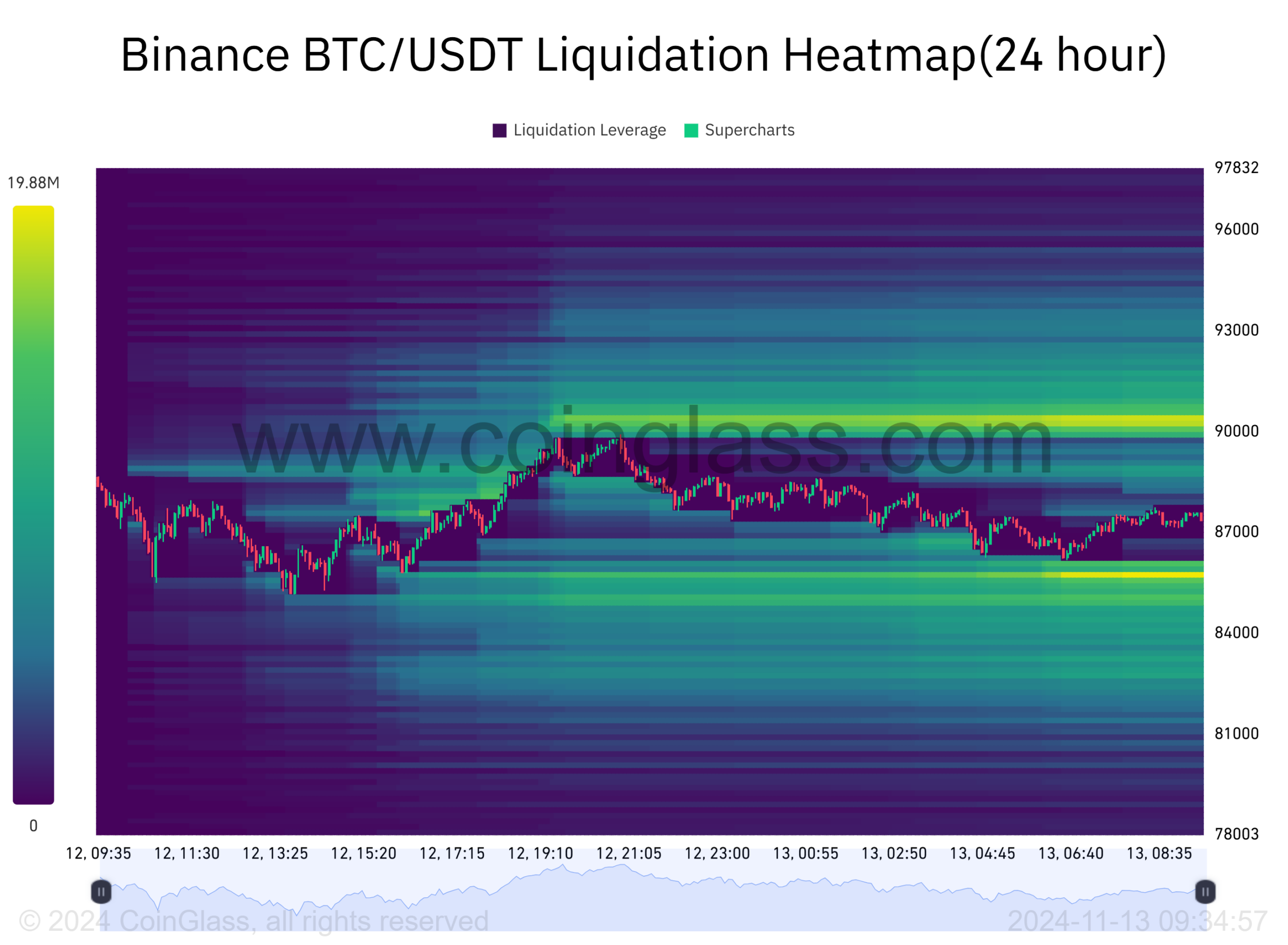

Bitcoin liquidations have recently made headlines in the cryptocurrency market, as a staggering $759 million worth of positions were closed out in just a few hours. This surge in liquidations highlights the volatility of Bitcoin (BTC) and its significant impact on the broader crypto landscape. An astonishing $398 million alone was attributed to a single Bitcoin liquidation, alongside $171 million in Ethereum liquidations. As crypto market news continues to evolve, investors must stay vigilant about the potential for drastic price fluctuations that can lead to extensive liquidations. In the latest liquidations report, long position liquidations accounted for $679 million, underscoring the risks involved in trading cryptocurrencies during such unpredictable periods.

The phenomenon of Bitcoin liquidations is a crucial aspect of the cryptocurrency trading environment, where significant sell-offs occur in response to market pressures. This recent wave of liquidations not only affected Bitcoin but also saw Ethereum facing similar challenges, with substantial amounts liquidated across various platforms. Investors in the crypto space must pay close attention to these events as they reflect the inherent instability of digital assets. Understanding the dynamics behind these liquidations can provide pivotal insights into trading strategies and risk management. Recent shifts in crypto prices call for a cautious approach, as traders must navigate through extensive market movements and the resulting liquidations.
| Key Point | Value |
|---|---|
| Total Liquidations | $759 million |
| Liquidations for Long Positions | $679 million |
| Liquidations for Short Positions | $79.27 million |
| Single BTC Liquidations | $398 million |
| Single ETH Liquidations | $171 million |
Summary
Bitcoin liquidations have reached a staggering total of $759 million in just four hours, demonstrating significant market volatility. The data sheds light on crucial aspects of this phenomenon, including a substantial $679 million attributed to long positions being liquidated, in contrast to $79.27 million for short positions. Furthermore, notable liquidations for individual cryptocurrencies reveal that nearly $400 million in Bitcoin was liquidated, alongside $171 million for Ethereum. The current trends underscore the ongoing risks and opportunities present in cryptocurrency trading, especially for traders dealing with leveraged positions.
Understanding Bitcoin Liquidations
Bitcoin liquidations refer to the process by which positions in the cryptocurrency trading market are automatically closed when a trader’s margin falls below a required level. This often occurs in a volatile market where prices can fluctuate rapidly. In the past four hours alone, a remarkable $759 million worth of liquidations occurred across various trading positions, highlighting the intensity of the market during such a period.
Specifically, nearly $400 million was attributed to a single Bitcoin liquidation, demonstrating the high stakes involved in trading BTC. These liquidations happen particularly when traders are overly leveraged. If the price of Bitcoin dips below a certain threshold, those long positions face significant risks, leading to forced liquidations which can further exacerbate market downturns.
The Impact of Liquidations on Crypto Market Dynamics
Liquidations have a considerable impact on crypto market dynamics, often resulting in sharp price movements that can affect a multitude of assets. The liquidation report for the last four hours revealed that approximately $679 million were from long positions, while $79.27 million came from shorts. This disparity suggests a market sentiment skewed towards bullish positions that have been unexpectedly liquidated.
When traders are forced out of their positions due to liquidations, it can lead to a cascading effect, causing further declines in crypto prices. The recent events not only illustrate the volatility of Bitcoin but also show how Ethereum liquidations of $171 million can influence investor confidence and crypto market participation. Traders must remain aware of these trends to adjust their strategies accordingly.
Analyzing Recent Crypto Price Fluctuations
Recent crypto price fluctuations have showcased the unpredictable nature of the market, heavily influenced by trader liquidations. The past few hours saw drastic changes, particularly with Bitcoin and Ethereum experiencing significant swings that resulted in a substantial amount of liquidations. The current environment requires traders to stay updated with crypto market news and analyze technical indicators that may predict potential price movements.
Many analysts suggest that understanding the relationship between price volatility and liquidation events can provide insight into future market behavior. For instance, when liquidity is thin, large sell-offs can trigger a series of automatic liquidations, leading to a rapid price decline. Investors must be equipped with knowledge of potential triggers and broader market trends to navigate these fluctuations effectively.
The Role of Liquidations in Risk Management
Liquidations can serve as a critical focal point for risk management within the crypto trading ecosystem. The forced closure of positions is a risk tactic employed by exchanges to safeguard their own interests and ensure that they do not suffer losses due to traders’ unfavorable performance. Understanding how liquidations work can empower traders to implement better risk management strategies.
Traders can mitigate risks by utilizing techniques such as proper stop-loss orders and maintaining adequate margin levels. By being informed about the total liquidations report within the crypto market, traders can gauge the level of market stress and respond promptly to avoid significant losses during periods of high volatility.
The Correlation Between Leverage and Liquidations
The relationship between leverage and liquidations is a crucial component of cryptocurrency trading. Utilizing high leverage can amplify profits but also significantly increases the risk of liquidation. The recent $398 million BTC liquidation serves as a notable example of the dangers of heavy leverage, where even minor price declines can trigger large losses for investors.
In environments characterized by rapid price changes, such as the crypto market, leveraging too much can lead to overwhelming positions that traders can no longer manage. Therefore, reality dictates that traders carefully consider their leverage use, as understanding the dynamics of both Bitcoin liquidations and the impact of leverage can drastically alter their trading success.
The Effects of Market Sentiment on Liquidation Events
Market sentiment plays a significant role in predicting liquidation events, with trader psychology influencing market behavior. Fear and greed often dictate the tendencies to assume higher risks, which in turn can lead to heightened liquidation occurrences. Observing fluctuations in the market sentiment can thus serve as a useful tool for anticipating potential liquidations.
In light of the recent crypto market news, where BTC positions were liquidated en masse, understanding trader sentiment could have prepared participants for the risks associated with their strategies. With continuous changes in sentiment feeding into larger price patterns, traders must cultivate an attune sense to embrace more informed decisions amidst volatile environments.
Tracking Liquidation Events: Importance of Data Analysis
Data analysis is crucial in tracking liquidation events within the crypto market. Platforms that provide liquidation data, like Coinglass, offer insights that attempt to quantify market movements related to liquidations. The recent report revealing $679 million in liquidations signals a need for traders to analyze trends and patterns for making informed predictions about upcoming market activities.
Understanding the characteristics of liquidation events involves not only recognizing peak values such as the $398 million handled for Bitcoin but also identifying how frequent these occurrences happen across various digital assets like Ethereum. This analytical viewpoint aids traders in strategically planning their trades to evade the notorious volatility that liquidation events can induce.
Developing Adaptive Trading Strategies in a Volatile Environment
In a volatile environment characterized by frequent liquidations, developing adaptive trading strategies becomes essential for success. Traders must navigate through the noise of price fluctuations and liquidation reports by crafting strategies that account for high levels of unpredictability. Utilizing market analysis and historical liquidation data can help forge strategies that can withstand the pressure of sudden price movements.
For instance, during times of market instability—like the recent online reports of liquidations where BTC saw a drastic fall in price—traders may benefit from adopting more conservative margin practices. This approach may include reducing their leveraged positions and implementing stop losses, thus protecting themselves from adverse market reactions, ensuring resilience in their trading approaches.
Future Outlook: Implications of Liquidation Trends
Looking to the future, understanding the implications of liquidation trends is vital for traders and investors in the cryptocurrency landscape. By recognizing daily liquidations and their correlation with market dynamics, traders can forecast potential outcomes based on current trading behaviors. With notable figures such as the nearly $400 million liquidated for a single BTC in just a few hours, traders are urged to stay vigilant.
As the crypto landscape evolves, continuous monitoring of liquidation events is imperative in aligning trading tactics with market trends. Adapting to the ever-changing nature of liquidations can position investors to react promptly to adverse market conditions, ultimately leading to more stable trading practices. Therefore, staying informed about liquidation data and developing robust strategies will be crucial for navigating future market uncertainties.
Frequently Asked Questions
What are Bitcoin liquidations and how do they affect the crypto market?
Bitcoin liquidations occur when traders’ leveraged positions are automatically closed by exchanges due to the market price hitting a certain threshold, resulting in significant losses. These liquidations can significantly impact the crypto market, as seen recently with a total of $759 million liquidated across various positions, influencing BTC and Ethereum price fluctuations.
How do BTC liquidations influence Ethereum liquidations?
BTC liquidations can have a cascading effect on Ethereum liquidations, as both assets often move in correlation within the broader crypto market. In a recent report, $398 million of BTC liquidations led to $171 million in Ethereum liquidations, showcasing how the liquidation of one asset can trigger selling in another.
What was the recent liquidation report for the Bitcoin market?
The recent liquidation report indicated that within a 4-hour period, the Bitcoin market saw nearly $400 million in liquidations, with $679 million attributed to long positions and $79.27 million to short positions. These substantial BTC liquidations highlight the volatility and risks involved in the crypto market.
What are the implications of high Bitcoin liquidations for crypto investors?
High Bitcoin liquidations can signal increased volatility and uncertainty in the crypto market, creating both risks and opportunities for investors. For instance, the recent total liquidations of $759 million can lead to sudden price drops or spikes, affecting crypto trading strategies.
Where can I find the latest crypto market news on Bitcoin and Ethereum liquidations?
The latest crypto market news, including updates on Bitcoin and Ethereum liquidations, can be found on various financial news platforms and specialized websites such as Coinglass. Keeping track of these liquidations reports can help investors make informed decisions in the rapidly changing crypto landscape.
Related: More from Bitcoin News | AI, BTC Miners Issue High | Bitcoin Above $69K? Glassnode Weighs In