


The impact of Bitcoin liquidation is crucial for anyone closely following the cryptocurrency landscape. As prices fluctuate, understanding how Bitcoin’s price analysis reflects the dynamics of the crypto market trends can provide significant insights for traders. A potential breakthrough above $90,000 could trigger a staggering $541 million in short position liquidations on major centralized exchanges (CEX), while a drop below $87,000 may unleash $703 million of liquidations on long positions. This volatility emphasizes the importance of monitoring CEX liquidation charts, as they reveal pivotal points where market reactions could lead to pronounced shifts. Employing effective Bitcoin trading strategies in light of these potential liquidation impacts is essential for navigating the complexities of the cryptocurrency market.

Examining the repercussions of Bitcoin position liquidations sheds light on the broader scope of crypto trading activities. Liquidation events essentially serve as crucial indicators of market sentiment and liquidity fluctuations, delineating the threshold where traders face forced exit points. Should Bitcoin surge or dip dramatically, these reactions on centralized exchanges underscore the cascading effects on traders’ strategies. Observing these shifts, especially through detailed liquidation charts, offers a valuable framework for understanding cryptocurrency price movements. Adapting trading approaches based on these insights can greatly enhance one’s position in navigating the often unpredictable landscape of digital currencies.
The Impact of Bitcoin Liquidation on Market Stability
The potential for massive liquidations in the Bitcoin market can create significant volatility, particularly when a key resistance level is breached or a support level is lost. In the upcoming scenarios where Bitcoin faces critical price points, the total liquidation intensity of short positions could reach an astonishing $541 million if Bitcoin surpasses the $90,000 mark. This phenomenon highlights how concentrated short positions can lead to a rapid price surge, as traders are compelled to close their positions due to margin calls, consequently driving up Bitcoin’s value. Such dynamics underscore the importance of understanding key liquidation levels in relation to overall crypto market trends.
Conversely, if Bitcoin’s price dips below $87,000, we could see a liquidation intensity of long positions peak at around $703 million. Such significant liquidations can exacerbate existing bearish sentiments in the market, ultimately leading to broader declines in cryptocurrency valuations. The interdependence between liquidation events and price movements is crucial for investors and traders to analyze, especially when developing effective Bitcoin trading strategies. This awareness can enhance preparation for potential market shifts, arming them with insights into how to navigate the crypto landscape effectively.
Understanding CEX Liquidation Charts and Their Implications
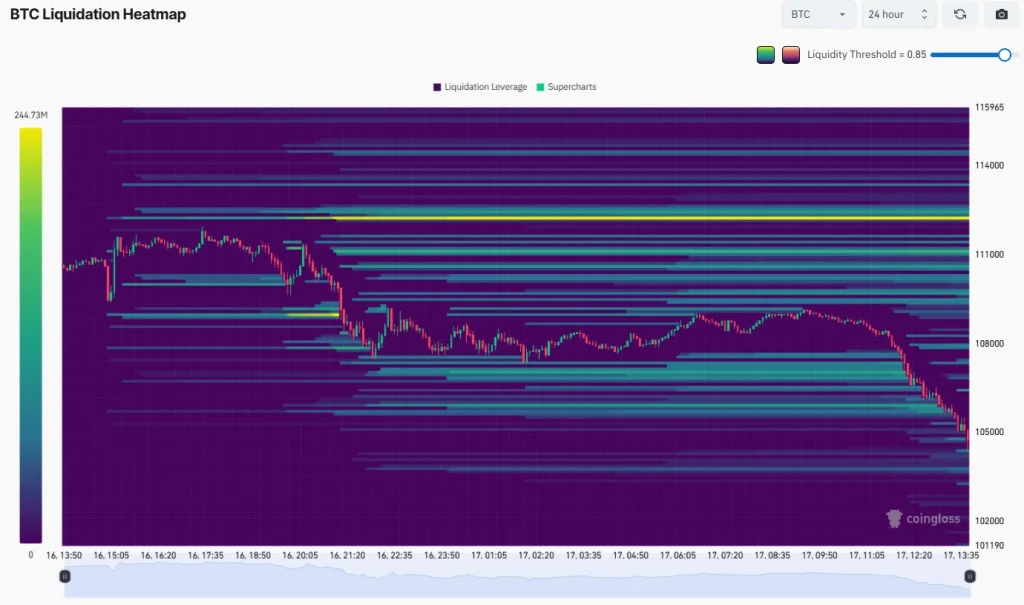
CEX liquidation charts serve as a vital tool for cryptocurrency traders and analysts aiming to gauge the potential impact of liquidation events on Bitcoin prices. These charts do not display exact contract values but provide an overview of the intensity of liquidation clusters. When traders analyze these charts, they find insights into where significant liquidation events may occur, thus helping them anticipate price swings. For instance, a high liquidation bar indicates a strong potential reaction at a given price level, resonating well with broader crypto market reactions.
Moreover, being able to decode the complexities of CEX liquidation charts arms traders with valuable foresight into impending market corrections or rallies. For example, understanding where liquidations cluster can aid traders in determining their entry and exit points within the Bitcoin market. This knowledge is pivotal in formulating Bitcoin trading strategies, as it provides clarity on the levels of price stability and volatility in the current market. By closely monitoring CEX charts, traders can position themselves strategically to take advantage of sudden price movements resulting from liquidation events.
The Role of Bitcoin Price Analysis in Liquidation Trends and Strategies: Understanding price analysis is essential for any trader looking to optimize their trading practices in the volatile cryptocurrency realm. By meticulously analyzing Bitcoin’s price movements along with the liquidation implications presented in CEX charts, traders can derive strategic insights that guide their decisions. Consideration of key price levels, such as $90,000 and $87,000, is crucial as they directly influence the liquidation intensity of both short and long positions.
For example, traders must remain vigilant as Bitcoin approaches these critical levels, as liquidations could trigger significant price shifts. Comprehensive Bitcoin price analysis takes into account not just the immediate price changes but also how broader crypto market trends affect investor behavior. By integrating price movements with potential liquidation outcomes, traders can formulate well-informed strategies that maximize their chances of success amidst market unpredictability.
Navigating Cryptocurrency Market Reactions to Liquidation Events
Cryptocurrency market reactions can be swift and unpredictable, particularly during times of significant liquidation activity. As Bitcoin’s price fluctuates around critical thresholds, the anticipated liquidations can lead to heightened trading volumes and intensified price swings. For instance, the speculated liquidation intensity nearing $541 million marks a pivotal point for the market’s response. When traders witness a congregation of short positions at such levels, it often ignites a bandwagon effect, where additional trades are executed, triggering rapid price increases or decreases.
Moreover, understanding the rationale behind cryptocurrency market reactions is integral for traders aiming to leverage these patterns. As liquidity shifts rapidly during liquidation events, new opportunities emerge for astute investors. By being attuned to how market participants react to price changes and liquidation triggers, traders can strategically position themselves for profit. Remaining updated on Bitcoin’s price analysis and the implications of CEX liquidation trends allows these traders to better navigate tumultuous market conditions and enhance their investment strategies.
Impact of Bitcoin Price Levels on Liquidation Strategies
Strategically, the price levels of Bitcoin serve as critical indicators for traders focusing on liquidation strategies. The upcoming thresholds of $90,000 and $87,000 are not just focal points for price analysis; they represent potential catalysts for widespread market activity. The sheer volume of liquidations tied to these price levels underscores the interconnection between trading strategies and market psychology. For instance, a breach of the $90,000 threshold could empower short sellers to liquidate their positions in anticipation of a sudden price uptrend.
Alternatively, as Bitcoin’s price approaches the $87,000 mark, long positions are likely to feel immense pressure to close, potentially triggering a steep decline. This cyclical relationship between price levels and liquidation strategies emphasizes the need for traders to stay not only informed but adaptive to emerging market conditions. By studying how Bitcoin price movements correlate with liquidation pressures, traders can develop more nuanced strategies that respond to market dynamics rather than simply reacting to price changes.
The Importance of Risk Management in Liquidation Scenarios
Effective risk management is fundamental for traders operating in the volatile landscape of cryptocurrency, particularly in scenarios involving liquidation. As Bitcoin nears critical support and resistance levels, the likelihood of triggering a liquidation cascade increases, affecting not only individual traders but the broader market as well. By employing sound risk management strategies, traders can mitigate the consequences of unforeseen market reactions triggered by liquidations. For instance, utilizing stop-loss orders and appropriately sizing positions can help safeguard traders’ accounts during tumultuous periods.
Furthermore, understanding the potential ramifications of liquidation intensity allows traders to navigate through these complexities more proficiently. For example, adhering to disciplined risk management protocols enables traders to withstand the volatility that may ensue following large liquidation events, especially when Bitcoin’s price reaches pivotal levels. Establishing risk-adjusted return thresholds is vital, as it empowers traders to evaluate whether the potential rewards justify the risks associated with highly liquidative trades. This approach leads to more balanced trading strategies, protecting against the worst potential outcomes.
Analyzing Bitcoin’s Trading Patterns Amid Liquidation Events
Closely monitoring Bitcoin’s trading patterns during liquidation events is integral to understanding overall market sentiment. Traders who can spot patterns within these volatile moments often gain a competitive edge. For instance, observing how Bitcoin responds when it approaches significant liquidation levels can reveal the psychological tendencies of market participants. If, historically, Bitcoin has shown bullish behavior when short positions are liquidated, traders may position themselves accordingly to capitalize on subsequent upward movements.
Conversely, recognizing bearish patterns during long position liquidations can provide critical insight, prompting traders to employ defensive strategies. This level of analysis enhances their trading methodologies, potentially pre-empting adverse market movements. As traders dissect these patterns, they can harmonize their understanding of Bitcoin trading strategies with the insights gleaned from analysis, leading to more informed and calculated trading decisions in the face of market volatility.
Future Forecasts for Bitcoin Liquidations and Market Trends
Looking ahead, the forecasting of Bitcoin liquidations and their implications for market trends remains a paramount concern for investors and analysts. The number of anticipated liquidations tied to key price levels suggests that substantial market movements could be on the horizon. As the cryptocurrency market evolves, predicting these liquidation instances will become crucial not just for traders but also for understanding broader economic indicators intertwined with Bitcoin’s performance.
Furthermore, as more traders enter the crypto space, the patterns of liquidations may shift, creating both opportunities and challenges. Analyzing past liquidation events, combined with ongoing market sentiment, can yield valuable insights into future price fluctuations. Staying ahead by understanding these trends enables traders to enhance their strategies while adapting to rapid changes in market conditions, ultimately leading to more strategic decision-making.
Integrating Technical Analysis with Liquidation Insights
A well-rounded approach to Bitcoin trading involves integrating technical analysis with insights derived from liquidation trends. Traders who effectively combine chart patterns, indicators, and liquidation levels create a more comprehensive view of the market landscape. For example, when a critical Bitcoin price level coincides with certain Fibonacci retracement levels, the potential for significant liquidations can be more pronounced, leading to stronger market reactions. This interplay of technical signals helps traders anticipate moves, thereby optimizing their strategies.
Additionally, technical analysis can reveal divergences or confirmations that signal when traders should enter or exit the market surrounding liquidation events. By understanding how these technical indicators correlate with potential liquidation levels, traders position themselves advantageously, reducing risks while maximizing gains. This adept integration of two analytical disciplines not only enhances trading precision but also fosters a more resilient approach to navigating the complex dynamics of the cryptocurrency market.
Frequently Asked Questions
What is the impact of Bitcoin liquidation on cryptocurrency market reactions?
Bitcoin liquidation can significantly influence cryptocurrency market reactions, especially as it drives volatility. When large liquidation events occur, such as when Bitcoin surpasses $90,000 or falls below $87,000, traders react to these price movements, which can lead to accelerated buying or selling across the market. As liquidation levels reach millions, market sentiment shifts, impacting overall crypto market trends.
How do Bitcoin price analysis and liquidation events relate to trading strategies?
Bitcoin price analysis often incorporates liquidation events to optimize trading strategies. Understanding the liquidation thresholds, like the $541 million in short liquidations at $90,000, helps traders anticipate market movements. By developing strategies that factor in these liquidation events, traders can position themselves advantageously and mitigate risks associated with abrupt price swings in the crypto market.
What do CEX liquidation charts reveal about Bitcoin price volatility?
CEX liquidation charts highlight key price levels where significant liquidations will occur due to market positions. For example, the charts indicate that if Bitcoin trades above $90,000, the high liquidation intensity suggests increased volatility. These insights assist traders in understanding potential price movements and volume swings that could affect Bitcoin price analysis and overall market trends.
How can traders prepare for the impact of Bitcoin liquidation events on the crypto market?
Traders can prepare for the impact of Bitcoin liquidation events by regularly monitoring liquidations on CEX liquidation charts and understanding market sentiment. Keeping an eye on key resistance and support levels, such as $90,000 for shorts and $87,000 for longs, allows traders to adjust their strategies accordingly and minimize potential losses during these impactful price shifts.
Why are major liquidation events significant in Bitcoin trading strategies?
Major liquidation events are significant in Bitcoin trading strategies because they signal potential market shifts and increased volatility. For instance, the impending $541 million in liquidations above $90,000 can lead to rapid price movements, prompting traders to recalibrate their strategies. Recognizing these events helps traders make informed decisions about entering or exiting positions in anticipation of price fluctuations.
| Price Level | Impact on Short Positions | Impact on Long Positions | Key Notes |
|---|---|---|---|
| Above $90,000 | $541 million | n/a | Intense liquidations expected for shorts. |
| Below $87,000 | n/a | $703 million | Intense liquidations expected for longs. |
Summary
The impact of Bitcoin liquidation is significant, especially when price levels fluctuate around the $90,000 and $87,000 marks. If Bitcoin surpasses $90,000, we can expect short positions to face a total liquidation intensity of $541 million, showcasing a strong sell-off potential among those speculating on price decreases. Conversely, a drop below $87,000 indicates that long positions could experience a substantial liquidation intensity of $703 million, prompting a notable reaction from market participants betting on price increases. Understanding these liquidation scenarios can help traders navigate the volatile Bitcoin market effectively.