


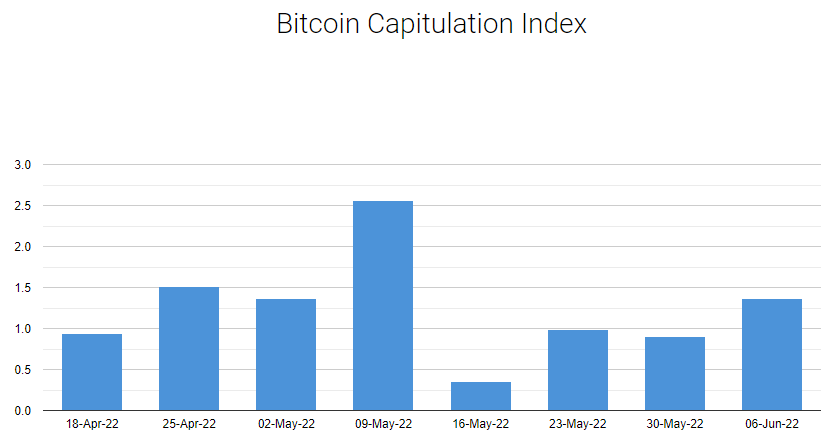

Bitcoin capitulation has sparked intense discussions among traders and analysts alike, especially following recent market turmoil. As Bitcoin’s price teetered below $65,000 and approached the critical $60,000 mark, panic selling became evident among short-term holders, raising questions about the sustainability of the cryptocurrency‘s current trajectory. With the ongoing crypto market volatility, understanding the roots of this capitulation is vital for investors seeking insights into potential Bitcoin price recovery. The intertwined dynamics of leveraged trading Bitcoin and ETF flows have showcased how sentiment shifts can profoundly impact market performance. By analyzing Bitcoin market analysis trends during this phase, we can glean valuable insights that may inform future trading strategies and risk management.

The phenomenon of Bitcoin capitulation, also referred to as sharp seller exhaustion, highlights the challenges faced by current investors amid fluctuating market conditions. As leverage gets unwound during these tumultuous periods, it often leads to forced selling by traders who miscalculated their positions. This intense reaction can be exacerbated by external forces such as negative investor sentiment and unfavorable ETF movements. Consequently, the crypto landscape is witnessing a pivotal point, as stakeholders grapple with the effects of recent sell-offs in the context of broader economic conditions. Unraveling the implications of this capitulation phase is crucial for understanding how the market might stabilize moving forward.
| Key Point | Details |
|---|---|
| Bitcoin’s Recent Price Movement | Bitcoin dropped below $65,000, testing the $60,000 mark, which marked its worst weekly performance since late 2022. |
| Capitulation vs. Leverage Reset | The market is questioning if recent selling is capitulation or a necessary reset of leverage positions. |
| Cross-Asset Risk-Off Behavior | Equities sold off significantly prior to Bitcoin’s declines, indicating a broader risk-off sentiment. |
| Liquidation Signals | Experiencing over $3.3 billion in liquidations highlighted forced selling activity amidst these declines. |
| ETFs and Crypto Links | More than $3 billion in Bitcoin ETF withdrawals in January indicated a persistent bearish sentiment. |
| On-Chain Metrics | Short-term holders sold at a loss, indicating market stress and potential capitulation factors. |
| Future Market Signals | A stable recovery will need clear signals of reduced ETF outflows and seller exhaustion. |
Summary
Bitcoin capitulation is a significant moment reflecting heightened market stress, characterized by panic selling from short-term holders at a loss. Recent market events, including high liquidation rates and substantial ETF outflows, suggest that while some forced selling has occurred, a definitive capitulation may require further clarity on market stabilization indicators. Understanding the interplay between these elements will be crucial for assessing the potential for recovery and the overall health of the Bitcoin market moving forward.
Understanding Bitcoin Capitulation: The Current Market Dynamics
Bitcoin capitulation refers to a situation where investors, especially short-term holders, panic sell their assets leading to significant price drops. Recent market patterns indicate that many Bitcoin short-term holders are now selling at a loss, raising questions about whether this marks true capitulation or merely a strategic deleveraging. The decline in Bitcoin’s price from over $65,000 to around $60,000 has sparked debates among analysts, with some suggesting it’s a necessary reset in the highly leveraged setup of the market. Observing market indicators such as liquidity patterns, risk measures, and on-chain behavior is crucial in determining if we are in a phase of capitulation or simply witnessing a temporary upheaval in the market.
In periods of high volatility, the propensity to sell mounts as investors react to rapid price fluctuations. In this context, it’s vital to understand that the term ‘capitulation’ can often be misused. It connotes a final surrender, which does not align with the cyclical nature of the markets. Whether the sell-off signals a genuine capitulation or just a leverage reset depends heavily on accompanying trading signals and whether the market can regain a stable footing post the liquidation phase. The extent of losses realized by short-term holders and the movements in Bitcoin’s trading volume will be key indicators to monitor moving forward.
Another dimension to consider in the analysis of Bitcoin capitulation is its alignment with movements in the broader crypto market and traditional finance. As crypto assets exhibit high-beta characteristics, their price actions often closely mirror changes in traditional asset classes such as equities. This relationship was evident during the recent market selloff, where correlations between declining stock prices and Bitcoin’s fall became pronounced, suggesting a systemic risk-off sentiment affecting risk assets broadly. Such dynamics can exacerbate the panic selling among crypto investors, leading to significant liquidity issues.
To further dissect this behavior, metrics such as open interest and liquidation volumes offer valuable insights. For instance, a spike in forced liquidations can suggest an environment where many traders are forcibly exiting positions, contributing to price declines. If Bitcoin is indeed in a capitulation phase, we should expect to see a concentrated sell-order cluster and a notable drop in trading activity, indicating that weak hands are being shaken out of the market. Therefore, assessing both Bitcoin-specific indicators and broader financial market trends is essential to accurately interpreting the significance of current price movements.
Frequently Asked Questions
What is Bitcoin capitulation and how does it relate to market analysis?
Bitcoin capitulation refers to a market phase where investors panic and sell their holdings, often at a loss, due to extreme price drops. This event can be a response to significant market volatility and is crucial in Bitcoin market analysis as it indicates points of potential market bottoming or recovery.
How does leveraged trading affect Bitcoin capitulation?
Leveraged trading can exacerbate Bitcoin capitulation events. During severe price declines, highly leveraged positions can lead to forced liquidations, intensifying selling pressure and driving down prices further as traders exit their positions to cover margins.
Are Bitcoin ETFs contributing to recent capitulation trends?
Yes, recent trends in Bitcoin ETFs have shown substantial outflows, indicating reduced confidence among institutional investors. These withdrawals can contribute to Bitcoin capitulation by increasing selling pressure and signaling a lack of demand in the market.
What signals indicate Bitcoin price recovery after a capitulation event?
Post-capitulation signals for Bitcoin price recovery include stabilization of open interest, a rise in the short-term holder SOPR above 1.0, and a reduction in ETF outflows, suggesting a renewed interest from investors and a potential for price stabilization.
How does crypto market volatility trigger Bitcoin capitulation?
Crypto market volatility often leads to rapid price swings that can trigger investor panic, resulting in Bitcoin capitulation. During periods of high volatility, fear can override rational decision-making, prompting sell-offs even if fundamentals remain strong.