

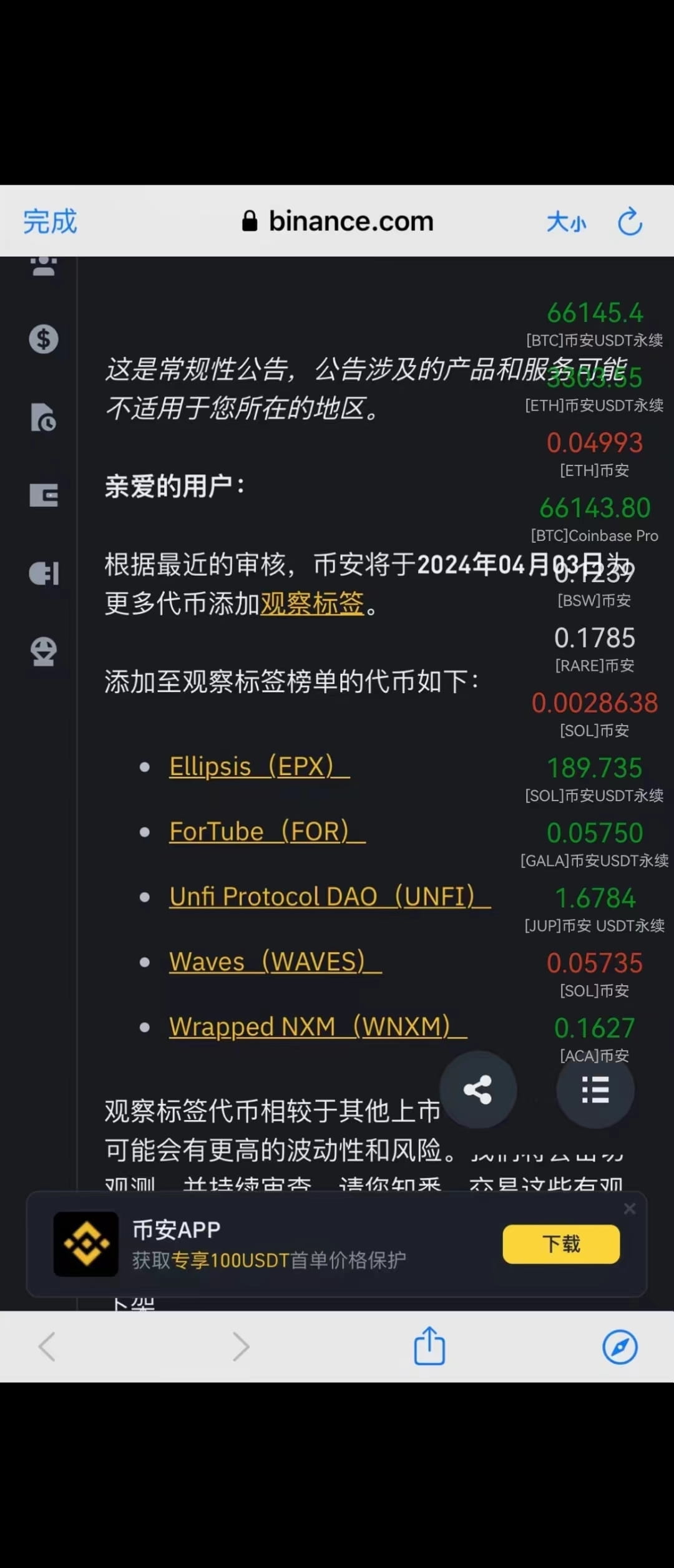

On January 2, 2026, Binance will introduce observation labels for various tokens, highlighting the growing concerns around Binance observation labels. These labels indicate that certain tokens are exhibiting increased volatility and are considered high-risk regarding cryptocurrency investment. Notably, tokens like the Acala Token (ACA) and others listed may face heightened scrutiny, as they no longer comply with the exchange’s original listing standards. Investors should tread carefully, as trading these volatile tokens can expose them to significant risks, including the possibility of delisted tokens that might not recover. Continuous monitoring and reviews of these labeled tokens will be essential to ensuring transparency within the trading ecosystem.

The forthcoming implementation of observation tags by Binance marks a pivotal development for the exchange and its users. These identifiers will serve as a cautionary signal for traders engaging with various digital assets, particularly those deemed volatile and risky. For instance, the Acala Token and other tokens under observation will now come with a warning about their potential market fluctuations. As cryptocurrency investments become increasingly complex, understanding the implications of these alerts is vital for maintaining prudent risk management. Moreover, this move aims to enhance trading security by providing clear information on assets that may be on the brink of delisting.
Understanding Binance Observation Labels
Binance observation labels are essential tools that indicate the heightened volatility associated with certain cryptocurrencies. Starting January 2, 2026, Binance will implement these labels for additional tokens, highlighting those tokens that may pose a greater cryptocurrency risk to investors. This proactive measure provides users with a clearer understanding of which assets are experiencing instability, thereby helping them make informed trading decisions. Investors need to consider the fluctuations that may accompany these observation-labeled tokens, as they can greatly affect their portfolios.
Tokens added to the observation label list, such as the Acala Token (ACA) and DAR Open Network (D), signify the platform’s vigilance in maintaining quality assets. By closely monitoring these tokens, Binance aims to mitigate potential risks that come with investing in highly volatile tokens. Users should be aware that trading assets under observation labels entails a greater level of responsibility, and having clear knowledge about these risks is crucial for strategic trading.
The Risks of Trading with Observation Labels
Trading cryptocurrency carries inherent risks, and those assets marked with Binance observation labels epitomize this volatility. When a token receives an observation label, it typically indicates that the token has slipped below the exchange’s expected standards, making it more susceptible to delisting. Investors should approach these tokens, such as Streamr (DATA) and Flow (FLOW), with heightened caution, as their value could fluctuate drastically, reflecting broader trends in the market. Considering the unpredictable nature of these assets is crucial for anyone looking to navigate the cryptocurrency landscape safely.
Moreover, delisted tokens pose a significant threat to investors unaware of the risks involved. The fluctuation in market demand for observation-labeled tokens can lead to sharp price movements, further exacerbating the risk of financial loss. It’s advisable for traders to conduct thorough research and stay updated on market trends before engaging with these volatile tokens. Utilizing risk management strategies will be instrumental in protecting investments, especially when dealing with cryptocurrencies that show signs of instability.
Frequently Asked Questions
What are Binance observation labels and why are they important?
Binance observation labels are special designations for certain tokens that indicate a higher level of volatility and risk. These labels are applied to tokens like the Acala Token (ACA) to alert traders that these cryptocurrencies may not meet the usual standards for listing. Recognizing and understanding observation labels is crucial for managing cryptocurrency risk effectively.
How does Binance determine which tokens receive observation labels?
Binance assigns observation labels to tokens based on continuous monitoring of their performance and stability. If a token, such as Acala Token or others, shows signs of increased volatility or falls below listing standards, it may receive an observation label as a warning to traders regarding its potential risk.
What tokens currently have observation labels on Binance?
As of January 2, 2026, Binance has assigned observation labels to several tokens, including Acala Token (ACA), DAR Open Network (D), Streamr (DATA), and Flow (FLOW). These tokens are under closer scrutiny due to their higher volatility and potential risks.
What risks are associated with trading tokens with observation labels on Binance?
Trading tokens with observation labels involves heightened risks due to their volatility and the possibility of delisting. A token fails to meet Binance’s listing standards when assigned an observation label, and it may lack the stability and security typically associated with other Binance tokens.
Can observation labels indicate a token might be delisted from Binance?
Yes, observation labels can signal that a token is at risk of being delisted from Binance. When a token shows significant volatility and does not meet listing criteria, such as Acala or others on the observation list, it may face eventual removal from the exchange.
What should traders consider when trading volatile tokens with observation labels?
Traders should conduct thorough research and carefully assess the risks associated with volatile tokens marked with observation labels. Understanding the factors that contribute to cryptocurrency risk, particularly for tokens like the Acala Token, is essential before engaging in trading.
Will Binance continue to monitor tokens with observation labels?
Yes, Binance will continuously monitor tokens with observation labels. The performance of these tokens is under regular review to ensure that appropriate measures are taken, whether it is to mitigate risk or proceed towards potential delisting from the platform.
| Key Points |
|---|
| Binance adds observation labels for more tokens on January 2, 2026. |
| Tokens with observation labels exhibit higher volatility and risk compared to standard tokens. |
| These tokens will be monitored closely and reviewed continuously. |
| Risk is involved as these tokens may not meet the original listing standards and could be delisted. |
| Tokens with observation labels include: Acala Token (ACA), DAR Open Network (D), Streamr (DATA), and Flow (FLOW). |
Summary
Binance observation labels will be introduced for selected tokens starting January 2, 2026, marking a significant change in how these assets are monitored. These observation labels will highlight tokens that exhibit higher risk and volatility, which is crucial information for traders. As Binance continues to uphold the integrity of its platform, the tokens with observation labels will be subjected to thorough scrutiny and may face delisting if they do not meet the required standards. Therefore, traders should exercise caution when engaging with these assets.