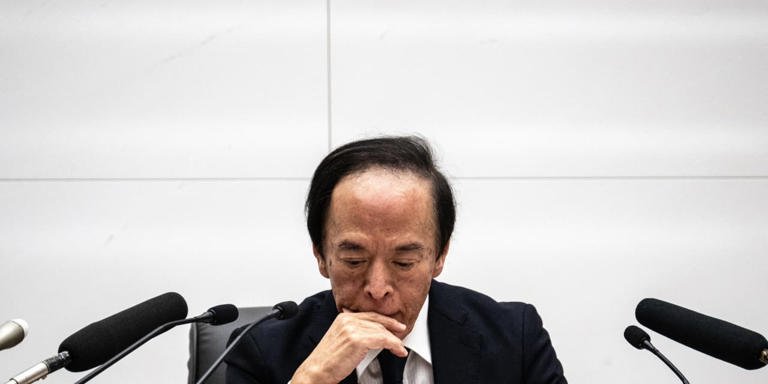

The recent discussions surrounding a potential Bank of Japan rate hike have sparked considerable interest in the currency markets, especially as traders speculate on the implications for yen weakness. Despite hints from Bank of Japan Governor Kazuo Ueda that interest rates may rise, many investors continue to bet against the yen, anticipating its further decline. This situation is compounded by the ongoing disparity between Bank of Japan interest rates and those of the United States, which favors the US dollar versus yen exchange rate. Currency market analysis from major financial institutions highlights a prevailing bearish sentiment towards the yen, reinforced by Citigroup’s negative “pain index” for the currency. As such, even with a rate hike on the horizon, market participants remain cautious, suggesting that any real change will require a significant surprise from the central bank.
The anticipated move towards raising rates by the central bank of Japan has generated a buzz across the financial landscape, particularly among forex traders analyzing the impacts on the Japanese yen. As discussions unfold about the likelihood of higher interest rates, investor sentiment seems skewed towards pessimism regarding the yen’s future performance. Observers note that comparisons with interest rates in the United States, coupled with commentary from Bank of Japan officials, add a layer of complexity to the ongoing dynamics of currency trading. Market players are increasingly attentive to fluctuations in the US dollar compared to the yen, as these movements signal broader economic projections. In essence, the delicate interplay between rising interest rates in Japan and the resulting currency trends remains a focal point for analysts and traders alike.
Understanding the Implications of the Bank of Japan Rate Hike
The anticipated Bank of Japan rate hike is generating considerable interest among investors and financial analysts. Governor Kazuo Ueda’s hints toward an increase in interest rates suggest a shift in the central bank’s policy, marking a potential end to years of ultra-loose monetary policies aimed at stimulating growth in Japan’s economy. However, traders are skeptical about the effectiveness of this move in reversing the current trend of yen weakness, especially against the backdrop of relatively higher interest rates in the United States.
As discussions around the Bank of Japan’s future moves intensify, the currency market analysis reveals an ongoing divergence between market expectations and the realities of Japan’s economic outlook. While a rate hike could stabilize the yen to some extent, many traders appear unconvinced that it will significantly alter the currency’s trajectory. Analysts argue that without substantial economic growth or an increase in Japan’s yield rates to compete with U.S. yields, the Bank of Japan’s actions may be too little, too late.
Yen Weakness: Market Sentiment and Investor Behavior
Despite the positive implications a Bank of Japan rate hike could have, investor sentiment remains predominantly bearish towards the yen. This sentiment is mirrored in the positions taken by major financial institutions like Bank of America and Nomura Holdings, which suggest that traders are betting against the yen’s strength. According to Citigroup’s ‘pain index,’ the persistent negative outlook indicates that traders are preparing for continued yen depreciation, largely driven by the contrasting yield rates in the U.S. and Japan.
This negative sentiment is exacerbated by statements from Kazuo Ueda regarding the need for cautious monetary policy adjustments. Even as some analysts express optimism about a potential rate change, market actions suggest that participants expect the dollar to outperform the yen in the near term. The currency pair is likely to remain favorable to the dollar unless the Bank of Japan implements more aggressive measures that would genuinely change the dynamics in favor of the yen.
Kazuo Ueda’s Hawkish Comments and Their Impact on Currency Markets
Kazuo Ueda’s recent hawkish comments have stirred significant discussion among investors regarding potential shifts in monetary policy. His acknowledgment of the need for a rate hike creates an avenue for speculation, as markets often react to any indications of a possible tightening of monetary policy. However, the overall response from traders suggests skepticism about the effectiveness of such a move, especially in terms of reversing the yen’s declining trend against the U.S. dollar.
Market analysts are closely watching how these remarks will evolve into actionable policies, and whether they can convince investors to reassess their bearish outlook on the yen. Although Ueda’s statements may have caused a temporary uptick in interest towards the yen, the prevailing sentiment in the currency market continues to foresee a stronger U.S. dollar. Hence, unless Ueda’s comments translate into concrete policy changes that impact yields positively, the market’s cautious stance on the yen may linger.
Analyzing the US Dollar vs Yen Dynamics
The ongoing dynamics between the U.S. dollar and the yen are shaped significantly by central bank actions and economic indicators from both countries. With the Federal Reserve maintaining its firm stance on interest rate increases, the dollar continues to attract investors looking for better returns. In contrast, while a Bank of Japan rate hike could provide some support for the yen, economic fundamentals suggest it may not be enough to reverse existing trends.
As traders analyze the US dollar vs yen pair, the strong performance of the dollar is seen as a driving force impacting the yen’s value. This relationship underscores the importance of geopolitical stability and economic growth in determining the strength of either currency. Thus, any positive movement in the yen will require not only a rate hike but also a significant improvement in Japan’s economic outlook relative to the U.S.
Currency Market Analysis: Trends and Predictions
Recent currency market analysis indicates that traders are increasingly cautious regarding the yen’s performance against the U.S. dollar. With many financial institutions reporting positions that reflect a continued bearish outlook for the yen, the anticipated rate hike from the Bank of Japan may not provide the necessary momentum for a substantial recovery. This skepticism is reflected in trading patterns that favor the dollar over the yen.
Predictions for the yen’s future largely hinge on how effectively the Bank of Japan can implement changes that resonate with investors. Should the anticipated rate hike materialize, it could temporarily impact market dynamics; however, the prevailing view remains that without significant fundamental support, the yen is likely to continue its downtrend. As analysts project potential currency fluctuations, they stress the need for ongoing monitoring of economic data and policy announcements from the Bank of Japan.
The Future of Japan’s Monetary Policy and Economic Growth
In considering the future of Japan’s monetary policy, the Bank of Japan faces significant challenges amid a global economic environment heavily influenced by inflation and interest rate adjustments. The expected rate hike represents a pivotal moment, signaling a shift towards more conventional monetary policy. However, the impact on Japan’s economic growth remains uncertain, as underlying issues such as stagnant wages and low consumer spending need addressing.
A delicate balance is required as Japan navigates economic recovery. While higher interest rates could generate a more appealing investment environment, they could also hinder consumption and borrowing. The effectiveness of the Bank of Japan’s monetary policy will largely depend on its ability to stimulate economic growth without destabilizing the current recovery, specifically in the context of waning yen strength.
Market Speculation: Understanding Investor Sentiment towards the Yen
Investor sentiment plays a critical role in shaping market speculation surrounding the yen, particularly as traders analyze the implications of a potential Bank of Japan rate hike. Despite hints at monetary policy tightening, many investors have expressed concern that the yen’s future is tied to broader economic conditions rather than central bank actions alone. Market participants are closely monitoring economic reports that reveal consumer confidence and spending habits.
This speculative environment demonstrates the precariousness of currency trading, wherein short-term decisions are heavily influenced by geopolitical tensions and domestic economic signals. If the Bank of Japan cannot convincingly address these broader economic issues, even a rate hike may only offer temporary relief for the yen, suggesting that traders will remain skeptical about any sustained appreciation against the U.S. dollar.
The Impact of Global Economic Trends on the Yen
Global economic trends exert substantial influence on the yen, especially given Japan’s reliance on exports and foreign investment. Factors such as ongoing inflationary pressures in Western economies and changes in U.S. monetary policy have direct repercussions on Japan’s currency. As the Fed continues to raise interest rates, the relative attractiveness of the dollar compounds the challenges faced by the yen, particularly in maintaining competitive exchange rates.
Moreover, shifts in investor preferences globally, steered by risk sentiment and market volatility, can exacerbate the yen’s weakness. As traders continuously reassess their positions based on macroeconomic indicators, the scope for the yen to regain strength hinges not just on Japan’s internal policies but also on external factors beyond its control. Therefore, understanding these global economic trends is crucial for anticipating the future of the yen.
Investor Strategies in Light of Yen Weakness
In light of the prevailing yen weakness, investors are adapting their strategies to capitalize on potential opportunities while mitigating risks. One common approach has been to leverage positions in stronger currencies, particularly the U.S. dollar, which remains a safe haven amidst economic uncertainty. Market participants are employing various hedging strategies to protect against further yen depreciation while seeking gains from the currency’s ongoing weakness.
Additionally, understanding the interplay between the Bank of Japan’s anticipated rate hikes and the broader economic landscape prompts investors to remain agile. Close attention to macroeconomic indicators will inform decisions as economic conditions evolve. By effectively recognizing market patterns, investors can better position themselves to navigate through the volatility and potentially capitalize on an eventual reversal in yen strength.
Frequently Asked Questions
What does the Bank of Japan rate hike mean for the yen weakness?
The Bank of Japan rate hike signifies a potential increase in interest rates aimed at strengthening the yen. However, despite these hints from Bank of Japan Governor Kazuo Ueda, market participants remain skeptical, leading to ongoing bets on yen weakness as they expect Japan’s yields to remain lower than those in the U.S.
How might the Bank of Japan interest rates affect the US dollar vs yen exchange rate?
An increase in Bank of Japan interest rates could strengthen the yen against the US dollar, but analysts predict that unless the rates effectively rival those in the U.S., the US dollar vs yen exchange rate may continue to favor the dollar.
What impact does Kazuo Ueda’s comments have on the Bank of Japan rate hike expectations?
Kazuo Ueda’s comments regarding a possible Bank of Japan rate hike have ignited discussions about market sentiment, yet traders still exhibit a bearish stance towards the yen, indicating that his hawkish take has not significantly shifted perspectives on the currency.
How do currency market analysis and Bank of Japan rate hikes interact?
Currency market analysis reveals that anticipation of Bank of Japan rate hikes often influences trader positions and market trends. However, current analysis suggests that even with potential hikes, the yen’s vulnerability remains as investors expect lower yields compared to U.S. rates.
Why is the yen continuing to decline despite potential Bank of Japan interest rate increases?
The yen continues to experience weakness despite potential increases in Bank of Japan interest rates because market sentiment favors the US dollar. Investors remain cautious, believing Japan’s financial yields will lag behind those in the U.S., maintaining downward pressure on the yen.
| Key Points | Details |
|---|---|
| Market Speculation | The Bank of Japan is expected to raise interest rates this month. |
| Investor Sentiment | Participants are betting on further decline of the yen despite the potential rate hike. |
| Traders’ Stance | Traders from Bank of America, Nomura Holdings, and Royal Bank of Canada confirm bearish positions on the yen. |
| Yen ‘Pain Index’ | Citigroup’s ‘pain index’ indicates sustained negative sentiment towards the yen. |
| Governor’s Remarks | Governor Kazuo Ueda hinted at a rate hike contingent on economic stability. |
| Comparison with U.S. Yields | Despite a potential rate hike, Japan’s yields are forecasted to remain lower than U.S. yields. |
| Market Predictions | Positions suggest continued rise of the dollar against the yen unless unexpected actions occur. |
Summary
The Bank of Japan rate hike is a pivotal moment for the currency markets. As speculations rise concerning potential interest rate increases, the prevailing sentiment remains negative towards the yen, with many investors maintaining a bearish outlook. Despite indications from Bank of Japan Governor Kazuo Ueda regarding possible rate hikes, the expectation of persistently lower Japanese yields in comparison to U.S. yields continues to drive market participants to bet against the yen. As the month progresses, the dynamics between U.S. and Japanese monetary policies will play a critical role in shaping currency valuations.
Related: More from Market Analysis | Earnings season is wrapping up with a mixed bag of results across | Polymarket Bet Fails to Catch Insider Traders