


Bitcoin Hashprice Plunges to a Two-Year Low as AI Innovations Split Miners’ Focus
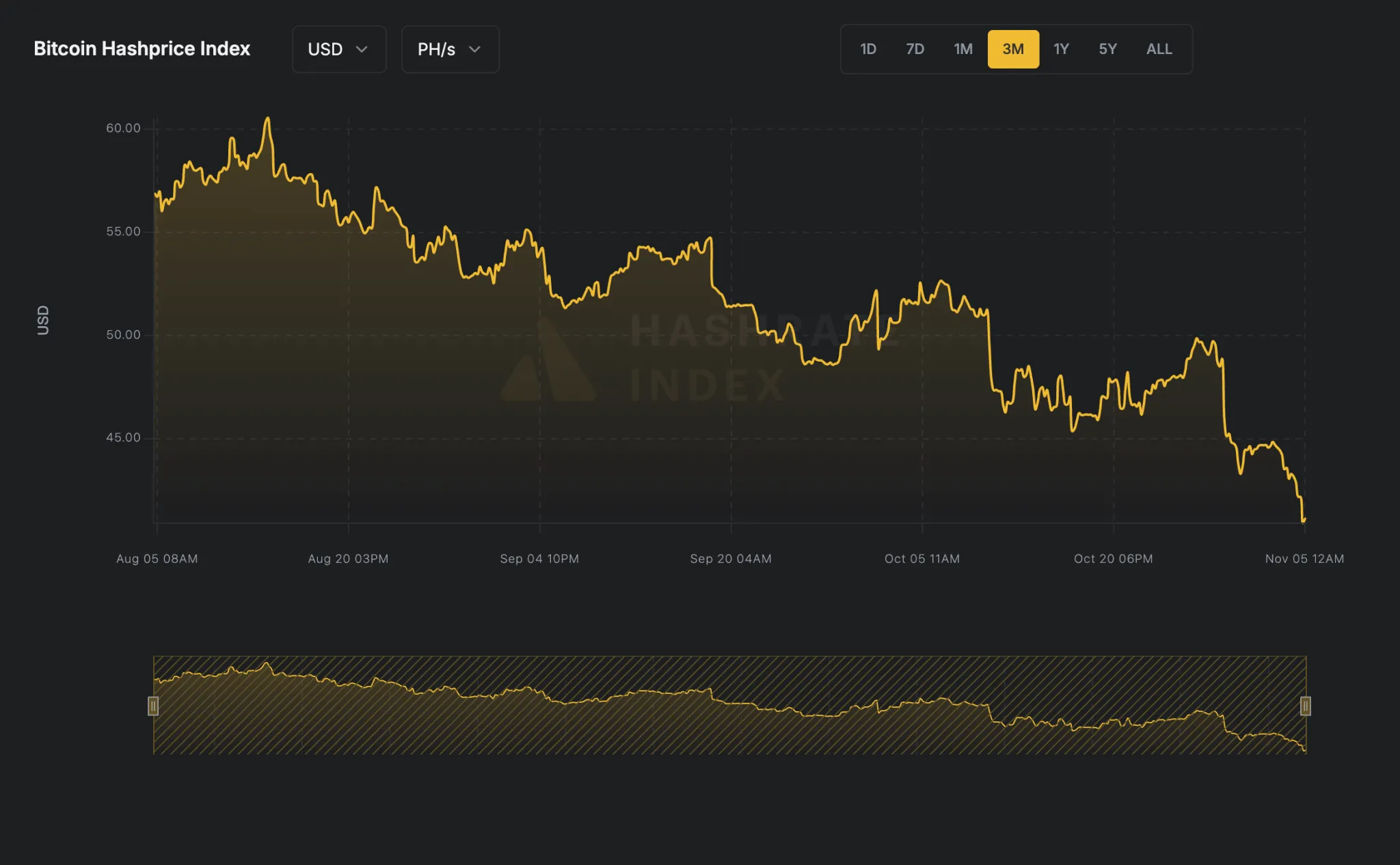
In recent developments within the cryptocurrency mining sector, the Bitcoin hashprice, a critical metric used to gauge the profitability of Bitcoin mining, has nosedived to its lowest level in two years. This downturn comes amid a broader shift as some miners start diverting their computational resources towards burgeoning AI-related tasks, leaving the Bitcoin network somewhat in the lurch.

Understanding Hashprice
Hashprice measures the revenue miners generate for each terahash of computing power per second (TH/s) they contribute to the network. It is fundamentally influenced by two major factors: the current price of Bitcoin and the total hash rate of the network, which is the combined computational power used to mine and process Bitcoin transactions. The recent plummet in hashprice is primarily a byproduct of declining Bitcoin prices coupled with a relentless increase in global hash rate as more miners join the fray or upgrade to more powerful, efficient machines.
The AI Disruption
Compounding the financial pressures from falling Bitcoin prices and rising hash rates, an unexpected factor has also emerged: artificial intelligence (AI). The surge in AI’s capabilities and applications has created new opportunities for profitability that some crypto miners are finding increasingly hard to ignore. Leveraging their high-powered computing resources, these miners are pivoting to support AI processes which promise better returns on investment, at least in the current economic landscape.
This trend of repurposing mining hardware for AI tasks is most noticeable among smaller mining operations and hobbyists who have been squeezed the hardest by the declining hashprice. These smaller players are often more agile, allowing them to switch between different tasks based on whichever is most profitable at the time.
The Split in Miner Community
This pivot has not been universally accepted within the miner community, leading to what some describe as a split. Traditionalists argue that diverting resources away from Bitcoin mining undermines the security and integrity of the network. They contend that the strength of Bitcoin’s blockchain relies heavily on a robust, decentralized network of miners, and any decrease in the hash rate could make Bitcoin more susceptible to attacks, potentially affecting its value and trustworthiness.
On the other hand, the proponents of this shift highlight the necessity of adaptation and diversification in what they see as a rapidly evolving digital economy. They argue that the traditional model of mining—which consumes enormous amounts of energy and yields increasingly diminishing returns—is unsustainable and that miners need to diversify their revenue streams to stay viable.
Economic and Environmental Impacts
The economic implications of this trend are significant. If a substantial number of miners begin redirecting their resources away from Bitcoin, we could see alterations in the network’s performance. Transaction validation times might increase, and network security could temporarily dip. Additionally, such shifts might influence Bitcoin’s price itself, as changes in the mining landscape often lead to speculative trading behaviors.
Furthermore, the environmental impact of mining, particularly in relation to its energy consumption, has been a hot-button topic. Pivoting towards AI tasks, which can also be energy-intensive, doesn’t necessarily alleviate these concerns but redistributes the focus of where and how energy is used in large-scale computation.
Looking Ahead
As the digital landscape continues to evolve, the decisions made by Bitcoin miners will play a significant role in shaping not only the future of cryptocurrencies but of emerging technologies like AI. Whether this pivot becomes a permanent shift or a temporary diversion may depend largely on the recovery of the Bitcoin market and further advancements in AI profitability and applications.
The ongoing situation marks a crucial juncture for Bitcoin and blockchain technology, unfolding in an era where digital resources are becoming ever more precious. As such, the choices of today’s miners could resonate well into the future of digital currencies and beyond.