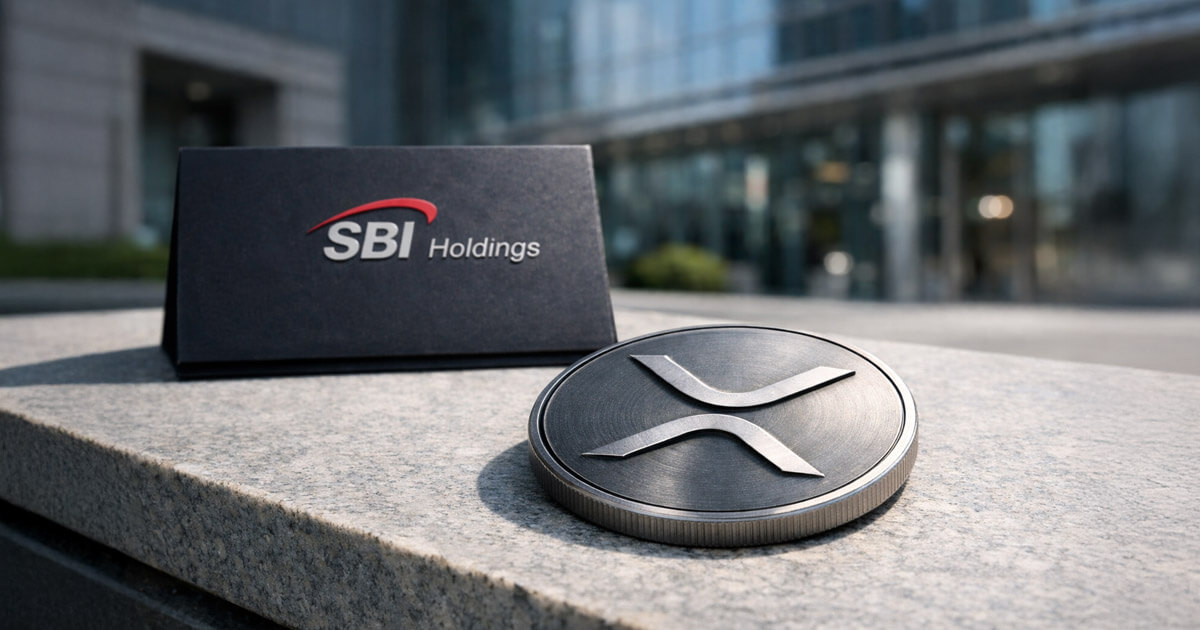

Japan’s SBI Holdings will issue a ¥10 billion retail bond on March 24, but the story is the XRP perk dangled in front of buyers, conditional on opening an account at SBI VC Trade and completing receipt procedures by noon on May 11.
Pricing drops on March 10, subscription runs from March 11-23, and secondary trading launches on March 25 on Osaka Digital Exchange’s START platform.
The bond itself is a conventional three-year instrument. XRP is a marketing lever designed to funnel retail investors to a crypto exchange while bootstrapping liquidity for a fledgling security token venue.
This isn’t crypto adoption. It’s TradFi copying loyalty marketing, using a digital asset like credit card points within a regulated wrapper.
A bond with strings attached
SBI START Bonds require a ¥10,000 minimum investment, low enough to attract retail buyers who’d balk at six-figure thresholds.
Yet, the </div><h2>Digital issuance, analog incentives</h2><p>BOOSTRY’s platform replaces Japan’s traditional bond-custody plumbing with blockchain-based record-keeping, but XRP doesn’t settle the bonds itself.</p><p>Ownership, interest, and principal flow through standard yen rails. The crypto asset operates as a bolt-on rewards layer.</p><p>By decoupling XRP from settlement, SBI avoids regulatory ambiguity around whether the bond constitutes a crypto-denominated instrument.</p><div id=” height=”538″ loading=”lazy” src=”data:image/svg+xml,%3Csvg%20xmlns=%22http://www.w3.org/2000/svg%22%20viewBox=%220%200%201024%20538%22%3E%3C/svg%3E” width=”1024″>
CryptoSlate Daily Brief
Daily signals, zero noise.
Market-moving headlines and context delivered every morning in one tight read.
5-minute digest 100k+ readers
Free. No spam. Unsubscribe any time.
Whoops, looks like there was a problem. Please try again.
You’re subscribed. Welcome aboard.
START’s role as the designated secondary venue ties the issuance to ODX’s broader bet on security-token infrastructure. The platform launched as a proprietary trading system for tokenized securities, targeting individual investors.
SBI’s issuance tests whether retail demand exists not just for the product but for the venue itself. If trading volume flatlines after March 25, the bond succeeds as a funding instrument but fails as a liquidity catalyst.
Conditionality and scale
The XRP perk’s gated structure creates friction by design. Domestic residents only. Payment confirmed during the offering period.
SBI VC Trade account opened and receipt procedures completed by noon, May 11. Miss any step, and the benefit evaporates. SBI wants qualified users who’ll stick around, not speculators chasing a one-time rebate.
Future benefits remain undefined, introducing uncertainty. SBI flags 2027, 2028, and 2029 dates but offers no details on amount, asset type, or eligibility. Investors buying for the total return can’t model those perks with precision.
The checkable outcomes
The final coupon announcement on March 10 will reveal whether SBI prices at the low end, high end, or somewhere between.
Allocation results show demand intensity: does the book fill quickly despite the ¥10,000 minimum? Do investors cluster at ¥100,000 to capture the XRP perk?
SBI VC Trade account openings between now and the May 11 deadline quantify the customer-acquisition funnel. If SBI reports material signup volume tied to the bond campaign, the XRP strategy has been validated.
START trading volume after March 25 determines whether the bond seeds secondary liquidity or trades thinly. ODX positioned this as the platform’s first digital bond; turnover data will show whether retail investors treat START as a real venue.
Repeat issuance signals institutional commitment. Does SBI plan to run a second XRP-rewards bond later this year, or will the firm quietly shelve the format?
A follow-on issue with tweaked terms would confirm this as a distribution strategy rather than a launch stunt.
Distribution vs. innovation
The broader question isn’t whether XRP “goes mainstream.” It’s whether TradFi issuers adopt crypto-asset incentives as a permanent distribution tool.
SBI’s bond tests a hypothesis: digital-asset rewards can drive retail engagement with tokenized securities at a cost lower than traditional marketing spend, while simultaneously funneling users into exchange ecosystems that monetize through trading fees.
If the hypothesis holds, expect more bonds with ETH perks, stablecoin rebates, or other digital-asset hooks. If it fails, tokenized issuance reverts to institutional buyers and wholesale markets where rewards matter less than yield and credit quality.
The endgame isn’t decentralization or disintermediation. It’s incumbents using crypto primitives to solve legacy distribution problems, such as customer acquisition, venue liquidity, and product differentiation within regulated frameworks.
SBI’s ¥10 billion bond doesn’t replace the financial system. It shows how the system absorbs new tools when the economics make sense.
The winners: issuers who crack low-cost retail onboarding, exchanges that capture the account flow, and venues that convert issuance attention into sustained volume.
The outcome depends on execution. Whether SBI can convert bond buyers into active exchange users, and whether START can hold their attention after the launch window closes.
Mentioned in this article