

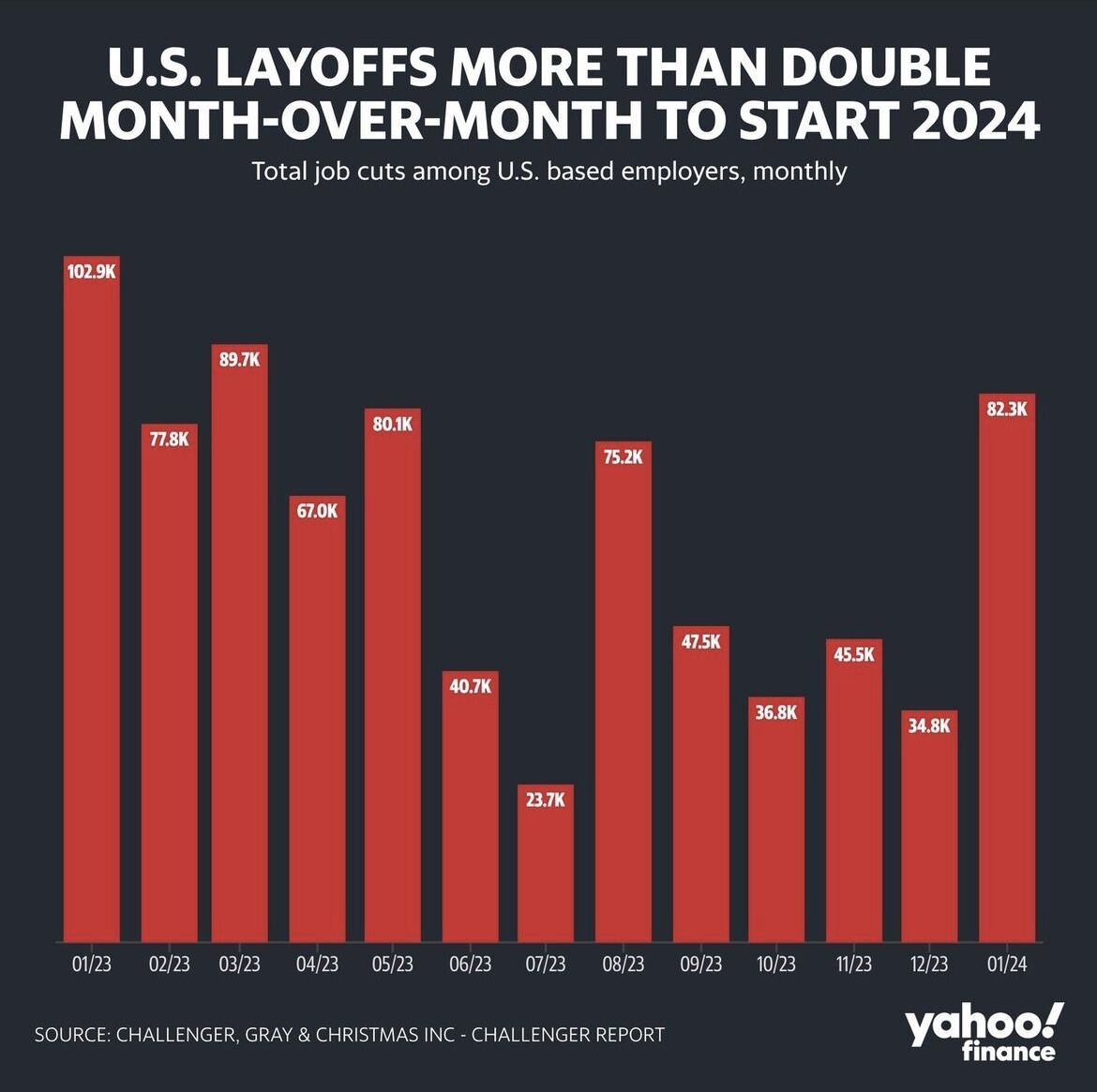

U.S. layoffs in January 2023 marked a staggering increase, reaching the highest level for that month in 17 years. As businesses grappled with reduced contracts and persistent economic uncertainty, a record 108,435 planned layoffs were announced according to employment experts. This year-on-year surge of 118% underscores a notable trend in job loss statistics, reflecting broader economic downturn concerns. As companies brace for potential challenges ahead, understanding the layoff reasons becomes critical in assessing future employment trends. With tech giants like Amazon leading the charge, this wave of layoffs signals a significant shift in the employment landscape.
The rise in job cuts across the United States in January 2023 highlights alarming employment trends and a shift in corporate strategies. Faced with an unpredictable financial climate, many firms are implementing sizable staff reductions, prompting discussions about planned layoffs for the year ahead. High-profile companies in various sectors, particularly technology and transportation, are adjusting their workforce in response to changing market dynamics. This context not only raises questions about job stability but also stresses the importance of staying informed on the latest job loss statistics. In analyzing the various layoff reasons, it’s apparent that this phenomenon reflects a broader strategy among employers to navigate economic challenges effectively.
| Key Points |
|---|
| The number of planned layoffs in January 2023 was the highest for that month in 17 years. |
| Planned layoffs increased by 118% year-on-year to 108,435 people. |
| The spike in layoffs is attributed to decreases in business contracts and uncertain economic conditions. |
| The transportation sector was the hardest hit, particularly with UPS announcing 31,243 layoffs. |
| The technology sector also saw significant layoffs, with Amazon cutting 16,000 jobs. |
| The healthcare sector faced layoffs due to decreased reimbursements from Medicaid and Medicare. |
| These layoffs reflect employers’ lack of optimism about the economic outlook for 2026. |
Summary
U.S. layoffs in January 2023 reached an alarming pinnacle, marking the highest level of planned layoffs for this month in 17 years. Driven by a significant decrease in business contracts and a lack of confidence in future economic conditions, the total number of layoffs surged by 118% compared to the previous year. Key sectors like transportation and technology saw the most substantial job cuts, indicating troubling signs for the labor market as employers brace for continued uncertainty in the economy.
U.S. Layoffs January 2023: An Alarming Surge
January 2023 marked a severe increase in planned layoffs across various sectors in the United States. This figure, reported by employment consulting firm Challenger, Gray & Christmas, revealed an astonishing 118% year-on-year rise, culminating in a staggering 108,435 job losses. This spike is particularly significant as it represents the highest recorded number of layoffs for January in 17 years, indicating a troubling trend that mirrors the economic anxieties reminiscent of the financial downturn previously experienced.
The sectors most affected by these layoffs include transportation, technology, and healthcare, with many companies citing economic uncertainty and decreased business contracts as major factors behind their decisions. Notably, UPS alone announced over 31,000 planned layoffs, showcasing how even major players in the logistics industry are feeling the pinch. As businesses brace for continued economic challenges, the prospect of job security appears increasingly precarious.
Understanding Job Loss Statistics in 2023
The dramatic rise in job loss statistics in January 2023 sheds light on the broader economic landscape facing American workers. These numbers not only illustrate the immediate impacts of layoffs but also highlight underlying issues such as inflation and market instability that contribute to an uncertain employment climate. Many analysts believe that the 2023 employment trends will be shaped by both the cyclical nature of the economy and the specific challenges posed by different industries grappling with post-pandemic recovery.
Furthermore, detailed job loss statistics reveal that sectors such as technology are adapting to recent shifts in consumer demand, leading to planned layoffs as companies recalibrate their workforce. For instance, major companies like Amazon announced intentions to cut thousands of jobs, emphasizing the need for a strategic approach to maintain profitability amidst fluctuating market demands. This situational awareness of employment trends is critical for job seekers aiming to navigate this tumultuous job market.
Key Reasons Behind Planned Layoffs in 2023
Several factors contribute to the rise in planned layoffs in 2023, reflecting shifting priorities and challenges faced by businesses. Primarily, many organizations are responding to an economic downturn characterized by diminishing contracts and reduced consumer spending. The uncertainty surrounding the future economic climate compels employers to take preemptive actions, leading to announcements of layoffs even in traditionally stable industries.
Moreover, specific reasons like decreased reimbursements from federal programs in the healthcare sector have also forced firms to reassess their workforce requirements. This trend not only hints at the fragility of current business models but also underscores the multifaceted nature of layoff decisions, often driven by a combination of operational efficiency and the need for a sustainable workforce going forward.
Examining Employment Trends Amid Economic Uncertainty
Employment trends in 2023 are sharply affected by the ongoing economic uncertainties that plague various industries. As businesses adjust to changing market conditions, many employers are implementing cost-cutting measures, including layoffs and workforce reductions. The shift in employment dynamics highlights the crucial need for adaptability and resilience among both companies and their employees in the face of potential economic headwinds.
Additionally, experts believe that such employment trends may signal a transformation in how organizations approach workforce management. With more emphasis placed on technology and automation, companies may seek to reduce their labor costs in favor of innovative solutions that require fewer human resources, further complicating the overall employment landscape. This evolution prompts workers to enhance their skill sets to remain competitive in a rapidly changing job market.
Sector-Specific Layoff Trends in January 2023
The layout of layoffs in January 2023 varied significantly across sectors, with the transportation industry experiencing the most dramatic impact, particularly due to UPS’s planned layoffs. This situation illustrates how specific sectors are disproportionately affected by economic pressures, necessitating specialized responses from employers. The stark contrast in layoff statistics across various fields indicates the necessity for industry-specific strategies to mitigate the risk of job losses.
In addition, the technology sector was also notably impacted, with major firms like Amazon making headlines for extensive job cuts. Such sector-specific trends suggest that labor markets are increasingly segmented, where some industries thrive while others suffer. Understanding these dynamics is essential for job seekers and policymakers alike, as they navigate an environment fraught with changes and challenges.
The Connection Between Layoffs and Economic Downturns
The recent surge in layoffs is deeply interconnected with the prevailing economic downturn, where reduced consumer spending and declining business contracts lead to tough decisions for employers. As companies grapple with shrinking profit margins, many are compelled to downsize their workforce as a means of managing expenses and remaining operationally viable. This relationship between layoffs and economic downturns is becoming increasingly clear, as businesses prioritize financial stability amidst uncertainty.
Moreover, history shows that periods of economic decline are often accompanied by spikes in unemployment, creating a vicious cycle of job loss and economic contraction. By assessing the underlying reasons for layoffs, it becomes evident that policymakers must take proactive measures to address these issues and stimulate economic recovery, which ultimately benefits both employers and the workforce.
Long-Term Implications of Rising Layoffs
As we witness an alarming rise in layoffs in 2023, it is essential to consider the long-term implications for the workforce and the economy. The increase in job losses not only affects the individuals who find themselves without employment but also has ripple effects on local economies and consumer spending patterns. This decline in job security could lead to decreased consumer confidence, further fueling a downward spiral in economic activity.
Additionally, companies must reckon with the long-term impact of their workforce decisions, as cultural and operational shifts can arise from widespread layoffs. Retaining top talent becomes increasingly challenging in environments marred by job insecurity, prompting organizations to rethink how they communicate with and support their employees during turbulent times. A focus on employee engagement and development may become critical to retaining talent and fostering a resilient work culture.
Navigating the Job Market Post-Layoffs
Navigating the job market following significant layoffs presents unique challenges for job seekers in 2023. With numerous individuals entering the job hunt simultaneously, competition for available positions increases, forcing candidates to adapt their strategies to stand out. This scenario underscores the importance of networking and skill enhancement, allowing individuals to position themselves more advantageously amidst a saturated job market.
Moreover, understanding current employment trends is vital for those seeking new opportunities. Job seekers should focus on industries that remain robust despite the challenges faced by others, aligning their skills with the demands of a changing labor market. By remaining informed and proactive, job seekers can increase their chances of finding rewarding employment even in the face of widespread layoffs.
The Role of Government in Addressing Layoff Challenges
Government intervention plays a critical role in addressing the challenges posed by widespread layoffs. By implementing policies aimed at economic stimulus and job creation, governments can mitigate some of the negative impacts of layoffs on individuals and communities. Moreover, providing resources and support for retraining programs can assist displaced workers in transitioning to new roles within growing sectors.
Additionally, fostering a stable economic environment through sound fiscal policies can help restore employer confidence and curb future layoffs. As businesses regain assurance in their operations, they are more likely to retain and hire workers, contributing to an overall recovery in employment rates. Thus, proactive government action is essential in confronting the fallout of rising layoffs and promoting long-term economic stability.
Frequently Asked Questions
What were the job loss statistics for U.S. layoffs in January 2023?
In January 2023, the U.S. saw a staggering increase in planned layoffs, with job loss statistics reaching 108,435. This marked a 118% rise year-on-year and set a record for the month that had not been reached since 2009.
What factors contributed to the economic downturn leading to U.S. layoffs in January 2023?
The economic downturn in January 2023 was attributed to a decrease in business contracts and overall economic uncertainty, prompting U.S. employers to announce significant layoffs, a trend not seen since the late stages of the global recession.
What sectors experienced the highest number of planned layoffs in the U.S. during January 2023?
In January 2023, the transportation sector was hit hardest with 31,243 planned layoffs, largely from UPS. The technology sector followed with 22,291 layoffs, including significant cuts by Amazon, while the healthcare sector also reported notable layoffs due to reduced reimbursements from Medicaid and Medicare.
What employment trends can be observed from U.S. layoffs in January 2023?
The employment trends from U.S. layoffs in January 2023 indicate a significant surge in job losses, primarily driven by the transportation and technology sectors. This suggests a broader concern among employers regarding future economic conditions and workforce stability.
What are the primary layoff reasons cited by employers during January 2023 in the U.S.?
The primary layoff reasons for the spike in U.S. layoffs in January 2023 included decreased business contracts and a lack of confidence in economic stability, prompting employers to initiate cuts in workforce to align with uncertain economic prospects.
Related: More from Market Analysis | WLFI Price Predicted: World Liberty Financial Proposes Governance Overhaul | XLM Bounces But Bears Control