
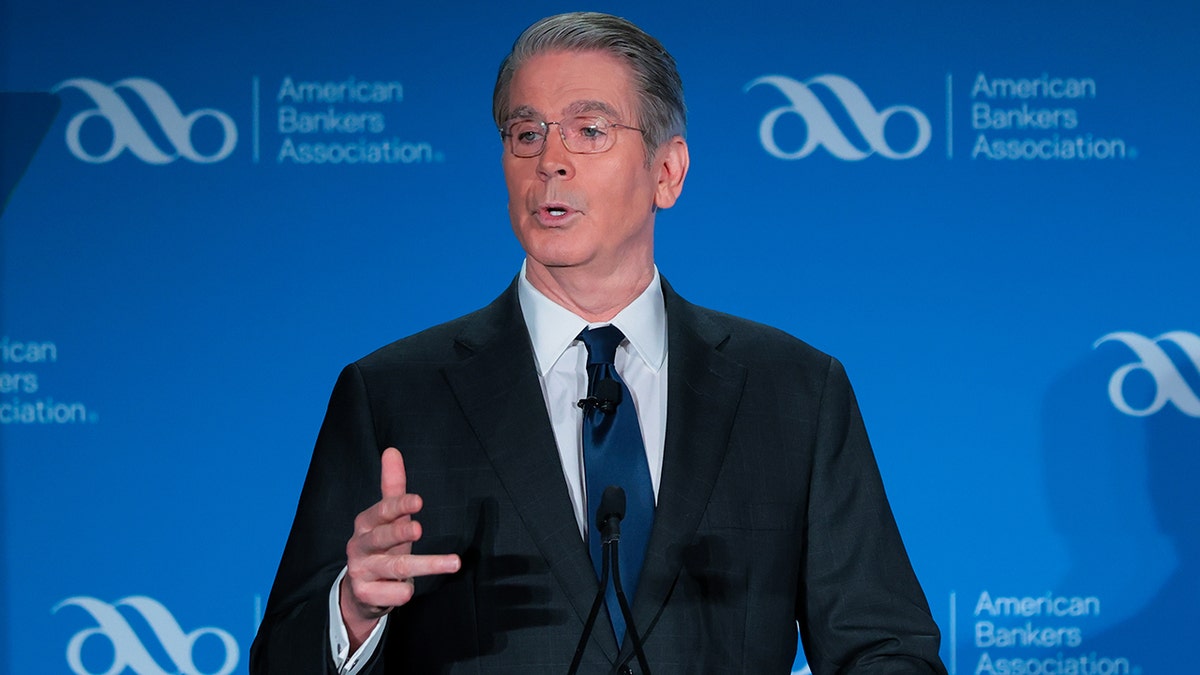

In a surprising turn of events, U.S. Treasury Secretary Scott Bessent publicly acknowledged the inaccuracies in his previous claims concerning tariffs and their impact on inflation. During a contentious hearing of the House Financial Services Committee, he was questioned about his earlier statement made before Trump’s re-election in January 2024, where he labeled tariffs as inflationary. Bessent’s reevaluation of his stance opens the floor for discussions about the economic implications of tariffs and their potential effects on inflation correction. This bold admission underscores the complexities that government officials face when navigating the nuanced relationship between trade policies and economic outcomes. As inflation continues to be a pressing issue, Bessent’s revised perspective may shape future legislative measures aimed at stabilizing the economy amidst varying economic pressures.
In light of the recent admission by U.S. Treasury Secretary Scott Bessent regarding the misconceptions surrounding tariffs and inflation, the discourse surrounding trade policies takes on new importance. Bessent, who serves under the Trump administration, faced intense scrutiny from Democratic lawmakers during a session of the House Financial Services Committee about his earlier remarks. His willingness to address and rectify the narrative around tariffs signals a potential shift in economic understanding that could have far-reaching consequences. The evolving dialogue about how import taxes influence overall price levels and economic stability remains critical, especially as the nation confronts ongoing inflationary challenges. As discussions continue, analysts and policymakers alike must consider the broader ramifications of tariff implementations on the economy and consumer pricing.
| Key Point | Details |
|---|---|
| Admission of Error | Scott Bessent acknowledged that his earlier statement regarding tariffs causing inflation was incorrect. |
| Context of Statement | This correction was made during a House Financial Services Committee hearing following questioning from Democratic lawmakers. |
| Trump Administration’s Influence | Bessent, appointed by Trump, indicated his willingness to correct the previous misunderstanding. |
Summary
Scott Bessent tariffs inflation has been a topic of controversy as U.S. Treasury Secretary, Scott Bessent, recently retracted his earlier claim made in January 2024 that tariffs are inflationary. During a tense congressional hearing, he admitted to lawmakers that he was wrong and clarified that tariffs do not inherently lead to inflation. This admission highlights the complex dynamics between government policy and economic factors, particularly as the political landscape evolves.
The Economic Implications of Tariffs on Inflation
U.S. Treasury Secretary Scott Bessent’s recent admission that tariffs may not be inflationary has sparked a significant discussion about the economic implications of such policies. During his testimony to the House Financial Services Committee, he acknowledged that his previous assertion—that tariffs contribute to inflation—was inaccurate. This marks a crucial moment for the current administration as elected officials debate the ramifications of tariffs, especially in light of Trump’s potential re-election. With the economy beginning to recover post-pandemic, understanding the relationship between tariffs and inflation is more critical than ever.
The acknowledgment from Bessent brings to light a bizarre contradiction in economic theory, where policies that aim to protect domestic industries can inadvertently lead to increased prices for consumers. If tariffs indeed do not drive inflation, policy-makers need to reassess the current tariff regime. This could lead to re-evaluating trade agreements and the overall economic strategy as we approach the 2024 elections, where issues like inflation correction and job creation will play pivotal roles.
Scott Bessent’s Testimony and the Impact on Trump’s Re-election
During the House Financial Services Committee hearing, Scott Bessent’s candid acknowledgment that tariffs are not inherently inflationary sets a precedent that may impact the broader narrative surrounding Trump’s re-election campaign. His statements suggest a shift in the administration’s approach to economic policy that could resonate with voters who are concerned about the cost of living. The confusion over tariffs can lead to voter uncertainty regarding economic growth and stability, making Bessent’s clarification timely as the election approaches.
Moreover, this moment also highlights the tension between economic policy and political agendas. The timing of Bessent’s admission appears strategically beneficial for Trump, as it gives the administration a chance to detach from previous misstatements and emphasize a more favorable economic outlook. In an election where data-driven narratives can sway public opinion, transparency on issues related to inflation and tariffs could enhance Trump’s appeal to undecided voters who prioritize financial stability.
Understanding the Role of the U.S. Treasury on Economic Policy
The role of the U.S. Treasury is central to shaping economic policy and ensuring fiscal responsibility, particularly through tariffs and trade sanctions. With Scott Bessent stepping into the spotlight during the recent Committee hearing, the department’s influence on economic growth and inflation has never been more scrutinized. Treasury officials play a vital role in advising the President and Congress on economic conditions, making their public statements about subjects like tariffs and inflation pivotal for the nation’s economic discourse.
As the Treasury Department seeks to navigate through the complexities of trade, legislators are tasked with maintaining oversight to protect consumer interests while allowing for fair trade practices. Policymaking becomes essential in fostering an economically stable environment that avoids inflationary pressures. The subsequent discussion surrounding Bessent’s statements serves as a reminder of the delicate balances the Treasury must strike in its role within the broader economic landscape.
The Impact of Inflation on Consumer Behavior
Inflation significantly impacts consumer behavior, forcing individuals and businesses to reconsider their spending habits. When prices rise, consumers tend to cut back on non-essential purchases, affecting the overall economy. Scott Bessent’s claims regarding tariffs and inflation suggest that consumers may benefit from reevaluated trade policies, potentially leading to a more stable pricing environment. The recent admission sheds light on how perceived inflationary pressures can alter spending dynamics across various sectors.
Understanding the linkage between tariffs and inflation can enable policymakers to foster more nuanced economic strategies that encourage consumer confidence. If tariffs do not add to inflation, as Bessent suggests, strategies that encourage importation of cheaper goods may lead to lower prices for everyday consumers. This understanding could be instrumental in shaping future fiscal policies aimed at stimulating economic growth while keeping inflation in check.
Reassessing Tariffs: A New Economic Strategy?
In light of Scott Bessent’s recent retraction regarding tariffs and their link to inflation, there’s a growing conversation around reassessing the current tariff structures that have been instrumental in the Trump administration’s economic strategy. Tariffs, which are designed to protect domestic industries, may require a fundamental reconsideration if they do not result in the expected inflationary outcomes. This raises critical questions about the effectiveness of tariffs in achieving broader economic objectives.
As policymakers and economists evaluate the implications of existing tariff policies, potential reforms might include rebalancing trade agreements and rethinking strategies that prioritize consumer welfare. The economic landscape is ever-evolving, and understanding the true impact of tariffs on prices will be essential in crafting policies that guarantee economic growth without unintended inflationary consequences.
Legislative Oversight on Economic Policies
Legislative oversight plays a pivotal role in maintaining the integrity of economic policies, particularly those that involve tariffs and trade. The scrutiny faced by Scott Bessent during the House Financial Services Committee hearing illustrates the responsibilities lawmakers hold in ensuring that policymakers are held accountable for their statements and the economic impact of policies formulated under their guidance. The critical assessment of economic claims fosters transparency and aids in preventing misinformation that can negatively affect consumer and investor confidence.
Moreover, effective oversight helps facilitate informed discussions on issues affecting the economy, such as inflation and employment. Lawmakers’ engagement in rigorous debate, particularly concerning statements like Bessent’s incorrect assertions, can lead to a reformed approach in future legislation aimed at sustainable economic development. A bipartisan understanding of the implications of tariffs, in the context of inflation, can forge a path towards more unified fiscal strategies.
Trump’s Economic Policies and Public Perception
Trump’s economic policies, including the controversial use of tariffs, have been a double-edged sword in shaping public perception. The assertion by Scott Bessent from early 2024 that tariffs are inflationary was a crucial talking point for opponents of the administration. However, his recent acknowledgment of the inaccuracy of that statement provides a unique opportunity for the Trump campaign to shift public narrative toward a more favorable economic outlook as the election approaches.
The capacity of voters to perceive economic policies critically is essential in a fluctuating market. Bessent’s correction could guide public sentiments about Trump’s economic management, emphasizing the administration’s intent to stabilize inflation while fostering growth. The alignment of economic perceptions and actual policy effects plays a significant role in shaping election outcomes, making clarity and factual accuracy paramount in the administration’s economic messaging as the 2024 elections draw near.
Future Directions for U.S. Economic Policy
In the wake of Scott Bessent’s testimony, U.S. economic policy may undergo significant changes to align with new understandings of tariff implications and inflation dynamics. With the possibility of Trump’s re-election looming, policymakers are tasked with developing strategies that enhance economic stability while addressing inflation concerns. This evolution will likely involve revisiting the current tariff systems in place to ensure they align with broader economic goals, promoting consumer welfare and international trade partnerships.
As the landscape of global trade evolves, future legislation may embrace more flexible economic strategies that adapt to the changing market conditions. The linkage between effective tariff policies and their actual economic impact becomes increasingly crucial as the country navigates post-pandemic recovery. Ultimately, the direction taken by the U.S. Treasury, particularly in light of Scott Bessent’s admission, will shape the pathway toward a more resilient economic future.
Frequently Asked Questions
What did U.S. Treasury Secretary Scott Bessent say about tariffs and inflation?
U.S. Treasury Secretary Scott Bessent recently acknowledged that his earlier statement claiming tariffs are inflationary was incorrect. During a hearing of the House Financial Services Committee, he expressed willingness to amend his previous assertion made before Trump’s re-election.
How did the House Financial Services Committee react to Scott Bessent’s statements on tariffs and inflation?
The House Financial Services Committee members, particularly Democratic lawmakers, scrutinized Scott Bessent’s remarks about tariffs and their inflationary effects. Bessent clarified his prior comments, stating that he is ready to correct his misjudgment regarding the relationship between tariffs and inflation.
What economic implications of tariffs did Scott Bessent discuss during the hearing?
During the hearing, U.S. Treasury Secretary Scott Bessent discussed the economic implications of tariffs, highlighting their potential impact on inflation. He admitted that his prior claim linking tariffs directly to inflation was erroneous, underscoring the need for accurate economic assessments.
Why is Scott Bessent’s acknowledgment about tariffs significant in the context of Trump’s re-election?
Scott Bessent’s acknowledgment of his mistake regarding tariffs and inflation is significant as it reflects accountability within the Trump administration. This correction comes at a critical time, just before Trump’s re-election, indicating possible shifts in economic policy discourse.
What does the correction by Scott Bessent imply for understanding inflation correction in economic policy?
Scott Bessent’s correction regarding tariffs and inflation suggests a more nuanced understanding of inflation correction in economic policy. It indicates that previous assumptions about tariffs’ inflationary effects may require reevaluation as economic policies evolve.
Related: More from Regulation & Policy | Anthropic Completes 0 Billion Funding Round, Valuing Company at 80 Billion | Gold Market Speculation: What Treasury Secretary Bessent Says