
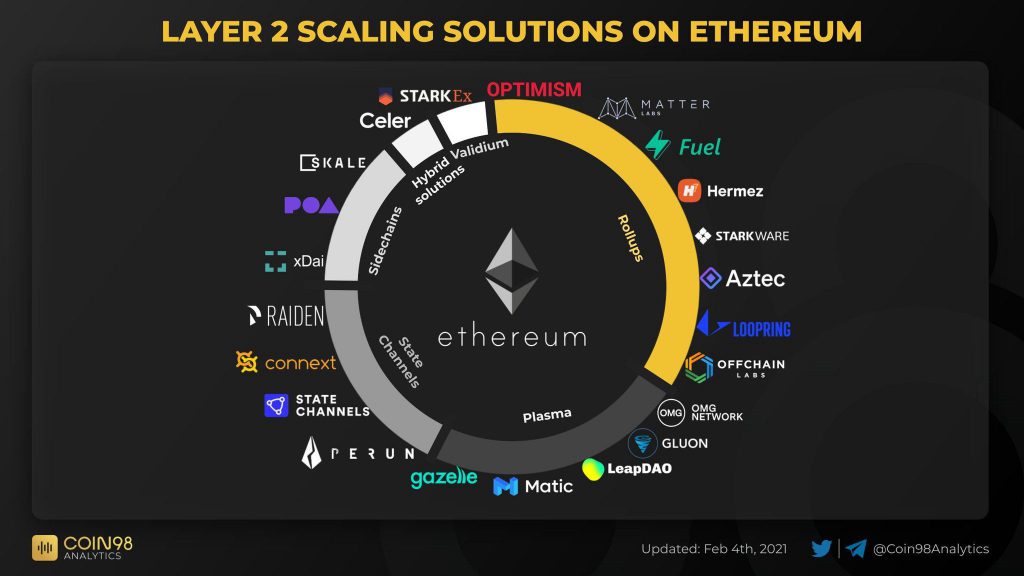

Ethereum Layer 2 solutions represent an innovative leap in the quest for Ethereum scaling, addressing the network’s notorious gas fees and enhancing transaction throughput. As the cryptocurrency landscape evolves, Vitalik Buterin’s vision for Layer 2 has shifted, emphasizing the need for differentiated rollup decentralization rather than a homogenous approach. This rethinking of Ethereum scaling strategies is crucial, especially as the Ethereum mainnet sees diminishing costs associated with transactions. Recent trends indicate that many Layer 2 chains now lack a distinct purpose, prompting a reevaluation of their roles within the broader Ethereum ecosystem. Understanding and harnessing these developments in Layer 2 technology will be essential for users and developers aiming to navigate the intricacies of Ethereum’s future growth.
The next generation of Ethereum’s blockchain technology—often referred to as Layer 2 advancements—presents a pivotal solution to the growing issues of network congestion and high transaction costs. These secondary frameworks allow users to execute transactions more efficiently while maintaining a connection to the main Ethereum network. With rising discussions surrounding scalability, new implementations such as rollups are emerging as crucial components in Ethereum’s strategy for enhanced throughput. Current insights from leading Ethereum figures highlight the importance of distinguishing between various Layer 2 implementations, ensuring that each serves its own unique purpose within this expansive ecosystem. As Ethereum continues to evolve, understanding these key innovations is vital for both investors and developers alike.
| Project | Stage | TVS ($) | Proof Type | Upgrade Key / Security Council Present? | Notes |
|---|---|---|---|---|---|
| Arbitrum One | 1 | 16.16B | Optimistic | Yes | Emergency path can skip delays |
| Base Chain | 1 | 10.99B | Optimistic | Yes | Upgrades approved by multiple parties; no delay |
| OP Mainnet | 1 | 1.88B | Optimistic | Yes | Security council instant upgrade power |
| Lighter | 0 (Appchain) | 1.27B | Validity | Yes | 21d delay, emergency can go to 0 |
| Starknet | 1 | 676.17M | Validity | Yes | Security council can upgrade with no delay |
| Ink | 1 | 523.71M | Optimistic | Yes | Security council + foundation approvals; no regular delay |
| Linea | 0 | 492.93M | Validity | Yes | Multisig can upgrade with no delay |
| ZKsync Era | 0 | 417.07M | Validity | Yes | Emergency board can bypass upgrade delays |
| Katana | 0 | 297.94M | Validity | Yes | Security council can remove the upgrade delay |
| Unichain | 1 | 168.81M | Optimistic | Yes | No exit window for regular upgrades; instant powers |
Summary
Ethereum Layer 2 scalability solutions are undergoing significant transformation as the fundamental assumptions about their roles and functionalities are reevaluated. With Ethereum’s transaction fees dropping sharply, the initial perspective that Layer 2 (L2) chains would serve as uniform ‘branded shards’ is proving to be outdated. As outlined, the L2 ecosystem is diversifying into various categories, emphasizing specialized functions and improving security rather than merely competing on cost. The future of Ethereum Layer 2 is shaped by a more nuanced understanding of user needs and explicit design choices, paving the way for both enhanced user experiences and greater innovation within the Ethereum network.
The Evolution of Ethereum Layer 2 Solutions
Ethereum Layer 2 solutions have undergone significant evolution since their inception, particularly in response to issues such as high gas fees and the need for improved scalability. Initially, these solutions were viewed as “branded shards,” aimed at alleviating the congestion and transaction costs associated with Ethereum’s Layer 1. However, according to Vitalik Buterin, this vision has shifted as the Ethereum community recognized the critical need for distinct and purposeful implementations of Layer 2 beyond just cost-cutting measures. As Ethereum’s gas fees have recently plummeted, the Layer 2 landscape is now faced with new challenges and opportunities that define its purpose and functionality in a rapidly changing ecosystem.
As the Ethereum ecosystem matures, Layer 2 solutions are increasingly being analyzed through the lens of a spectrum of security and performance characteristics, rather than uniform alternatives. Vitalik Buterin’s new definition emphasizes not just the expected cost savings, but also the unique properties that different rollups can offer to users and developers alike. This approach enables a more nuanced understanding of how Layer 2 solutions can cater to varied user requirements, such as privacy and high-speed transactions, thereby affirming their potential utility beyond merely being cost-effective.
Understanding the Stages of Rollup Decentralization
The L2BEAT framework categorizes rollups into distinct stages, from Stage 0, which signifies minimal decentralization, to Stage 2, representing full decentralization with robust security guarantees enforced by code. At Stage 1, rollups exhibit partial decentralization, relying on governance and upgrade trust, which can deter potential users wary of centralized control. This staged approach not only clarifies the decentralization landscape for developers but also helps end users understand the trust assumptions and risks associated with various Layer 2 solutions.
Current statistics reveal that a staggering 91.5% of the value in the Layer 2 ecosystem is locked in Stage 1 rollups, primarily due to the slow progress toward achieving Stage 2 decentralization. The predominant presence of a few major players in this stage often overshadows smaller projects, which could struggle to attract liquidity and usage without distinct advantages. As the Ethereum community deliberates over the future implications of decentralization achieved through rollups, it becomes imperative to navigate these stages with a keen awareness of their impact on scalability and user trust.
The Role of Ethereum Gas Fees in Layer 2 Adoption
The fluctuations in Ethereum gas fees have been pivotal in shaping the adoption and development of Layer 2 solutions. Back in 2020, soaring gas prices drove the urgent need for scalable solutions, prompting a collective shift towards embracing rollups. However, as transaction costs have recently dropped to unprecedented lows, the incentive for users to migrate to Layer 2 has diminished, prompting a reevaluation of what these solutions should aim to achieve in the current climate. Vitalik Buterin’s recent observations highlight that while cheaper transactions are a significant priority, they alone cannot sustain the long-term purpose of Layer 2 solutions.
As Ethereum continues to improve its Layer 1 capabilities—like raising the block gas limit—Layer 2 projects must reassess their value propositions to ensure they meet the evolving needs of users. The conversation surrounding Ethereum gas fees has shifted from merely providing a cheaper alternative to emphasizing the specialized benefits and unique features that Layer 2 solutions can offer. This transition indicates a deeper understanding of the ecosystem, where the focus has broadened beyond immediate cost savings to include aspects like privacy, efficient execution, and unique functionalities that enhance the overall Ethereum experience.
Decentralization vs. Control in Layer 2 Solutions
The Ethereum Layer 2 landscape is increasingly characterized by a dichotomy between decentralization and control. This distinction is crucial, especially for projects categorizing themselves strictly as Layer 2 but operating under regulatory or governance constraints. Some solutions might choose to remain at Stage 1 intentionally, prioritizing control as a key feature for certain institutional clients. This raises questions about the authenticity of these platforms as meaningful solutions for “scaling Ethereum,” highlighting a pivotal shift in the narrative from purely decentralized models to a more complex web of value propositions.
This ongoing dialogue about decentralization versus control invites stakeholders to rethink how they engage with Layer 2 networks. Users must become more discerning, as understanding the governance structures and upgrade paths of these solutions directly impacts their security and trust levels. The evolution within the ecosystem indicates that while many Layer 2 solutions may share underlying technology, the differentiation based on their control mechanisms and governance models is becoming a fundamental aspect of their acceptance and success.
The Future of Rollups in the Ethereum Ecosystem
With Ethereum’s ongoing transition to a more scalable and user-friendly architecture, the future of rollups is poised to diverge significantly from past models. Instead of a homogeneous group of Layer 2 solutions merely competing on price, the landscape is trending toward specialized offerings that cater to specific application needs, ranging from financial services to decentralized identity systems. Vitalik Buterin’s new strategy calls for a categorized approach, urging projects to focus not just on cost but on innovative functionalities that enhance user experience and operational efficiency.
This shift in perspective presents both challenges and opportunities for developers and users alike. Projects must clearly define their objectives and service offerings, ensuring that they address unique pain points while maintaining a strong connection to Ethereum’s core principles. By embracing specialization and transparent governance, rollup solutions can carve out their niche in a competitive environment where interoperability and security are paramount, ultimately fostering a more robust and functional Ethereum ecosystem.
The Importance of User Education in Layer 2 Solutions
As the Ethereum Layer 2 ecosystem evolves, education becomes vital for users at all levels. Many users are still grappling with what Layer 2 solutions entail and how they operate. With the varying degrees of decentralization and specialized functionalities, clear communication about the nature of these rollups is crucial. Stakeholders must move beyond basic descriptions of cost savings to explain the underlying trust mechanisms that govern each solution. The L2BEAT Stages framework offers a structured way to convey these complexities, enabling users to make informed decisions about which solutions best align with their needs.
Developers and builders within the Ethereum ecosystem have a critical role in promoting this educational effort. By providing transparent information about upgrades, escape hatches, and proof systems, they can empower users to navigate the intricate web of Layer 2 solutions. A well-informed user base will not only drive adoption but will also hold developers accountable for the promises made in terms of scalability and reliability, fostering a healthier and more sustainable Ethereum ecosystem.
Potential Challenges for Ethereum Layer 2 Solutions
Despite the promising future of Ethereum Layer 2 solutions, several challenges lurk on the horizon. The slow progression toward achieving meaningful decentralization, particularly in Stage 2 rollups, raises concerns about the long-term sustainability and trustworthiness of many projects. Users may hesitate to engage with Layer 2 options if they remain accustomed to centralized governance models, leading to a potential slowdown in adoption rates. Furthermore, as Ethereum gas fees continue to fluctuate, the role of Layer 2 solutions as the go-to alternative may be jeopardized unless they can articulate their unique value propositions clearly.
Regulatory pressures also present a major obstacle for the advancement of Layer 2 solutions. Many projects must navigate complex compliance landscapes, which can hinder their ability to innovate freely. This tension between regulatory compliance and the ethos of decentralization opens up a critical discussion regarding the future of Ethereum Layer 2 solutions and how they can balance these competing interests without compromising their foundational principles. Ultimately, addressing these challenges will be crucial for the continued growth and evolution of the Layer 2 landscape.
Exploring Specialized Use Cases for Layer 2 Solutions
The emerging narrative surrounding Ethereum Layer 2 solutions emphasizes their potential for specialization beyond mere scalability. Projects are beginning to explore unique use cases that leverage the capabilities of rollups to serve distinct market niches. For instance, privacy-focused rollups utilizing zkProofs can cater to industries requiring confidential transactions, while ultra-low-latency sequencers can optimize performance for high-frequency trading environments. This focus on tailored offerings represents a significant shift in the Layer 2 discussion, steering attention away from cookie-cutter solutions that merely aim to lower fees.
As Layer 2 projects embark on these specialized paths, they bring innovation and creativity to the forefront of the Ethereum ecosystem. By addressing specific industry needs and frustrations, projects can attract a dedicated user base seeking solutions that genuinely cater to their functional requirements. This trend not only represents the evolution of Layer 2 technology but also reflects the broader adaptability that Ethereum exhibits as it continues to redefine itself in response to user demands and market dynamics.
The Impact of Stage 2 Decentralization on the Ethereum Ecosystem
The journey toward achieving Stage 2 decentralization in Layer 2 solutions carries significant implications for the broader Ethereum ecosystem. As rollups successfully transition to this stage, the community stands to benefit from increased trust, security, and stability, which are essential for long-term adoption. Stage 2 rollups, which enforce critical properties through code, present a more resilient model against governance risks that have historically plagued centralized systems. By reinforcing these characteristics, the Ethereum community can foster an environment where users feel confident engaging with Layer 2 solutions.
However, the path to widespread Stage 2 adoption is fraught with complications. Entrenched players in Stage 1 may resist moving beyond their established frameworks due to concerns about the complexities involved in transitioning to a fully decentralized model. This caution can stifle innovation and limit the collective progress toward a more robust and diverse Ethereum Layer 2 ecosystem. Thus, encouraging and providing support for gradual moves toward Stage 2 rollups is crucial for maximizing the potential benefits of a more decentralized Ethereum landscape.
Frequently Asked Questions
What are Ethereum Layer 2 solutions and how do they help with Ethereum scaling?
Ethereum Layer 2 solutions are secondary frameworks built on top of the Ethereum blockchain designed to enhance scalability. They alleviate network congestion by processing transactions off-chain while still leveraging the underlying security of the Ethereum mainnet. This approach reduces Ethereum gas fees, enabling faster and more cost-effective transactions, ultimately improving the user experience in the Ethereum ecosystem.
How do Ethereum Layer 2 solutions impact gas fees on the Ethereum network?
Ethereum Layer 2 solutions significantly reduce Ethereum gas fees by offloading transaction processing from the main blockchain. By using mechanisms like rollups, which bundle multiple transactions into a single batch, costs are minimized for users. As a result, the Ethereum community can benefit from lower fees, making decentralized applications more accessible to everyone.
What is rollup decentralization in the context of Ethereum Layer 2 solutions?
Rollup decentralization refers to the degree of independence and security that Layer 2 rollups can achieve while still being anchored to the Ethereum blockchain. With various stages of decentralization, projects aim to reach ‘Stage 2’, where code enforces safety without reliance on trust assumptions or discretionary governance, thus enhancing the overall security of the Ethereum scaling landscape.
What did Vitalik Buterin say about the current state of Ethereum Layer 2 chains?
Vitalik Buterin noted that many current Ethereum Layer 2 chains have lost their original purpose, as gas fees have plummeted and the ecosystem requires clearer differentiation among these solutions. He emphasized the need for Layer 2s to specialize in specific areas, rather than all competing as ‘cheap EVM clones,’ to effectively contribute to Ethereum scaling.
How does the stage system by L2BEAT help understand Ethereum Layer 2 solutions?
The L2BEAT stage system categorizes Ethereum Layer 2 solutions based on their decentralization maturity. Stage 0 represents initial setups with trust assumptions, Stage 1 indicates partial decentralization with stronger safeguards, and Stage 2 signifies full decentralized operational security. This framework aids users and developers in assessing the trust models and security risks associated with different Layer 2 chains.
What might the future hold for Ethereum Layer 2 solutions according to recent discussions?
Recent discussions suggest that Ethereum Layer 2 solutions will not revolutionize the ecosystem outright, but rather undergo a re-tiering process. Layer 2s will likely diversify in terms of functionality, focusing on specialization in areas like privacy, compliance, or performance optimizations, while still maintaining a minimum security standard for transactions involving Ethereum assets.
How can users and builders differentiate between various Ethereum Layer 2 solutions?
Users and builders can differentiate Ethereum Layer 2 solutions by examining their security models, upgrade mechanisms, and unique features. The new emphasis is not merely on transaction cost, but rather on how well these solutions handle Ethereum assets and their specific use cases, giving priority to those that are transparent about their trust assumptions and operational guarantees.
Related: More from Ethereum News | Ethereum Network Transactions Hit New Record: What It Means for You | 30,000 ETH Withdrawn: What It Means for Binance and Ethereum