

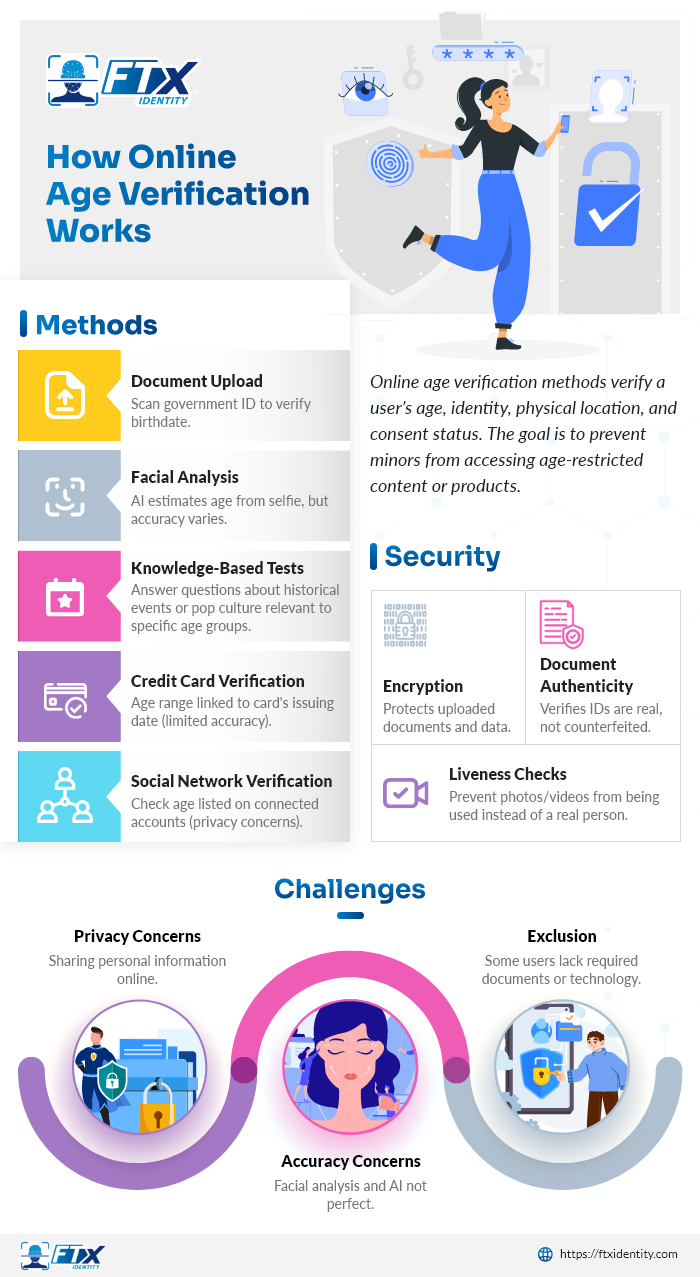

In today’s digital landscape, online age verification has emerged as a focal point of discussion, particularly with the new age verification laws cropping up across various nations. As governments seek to implement measures for protecting minors, these laws often carry significant implications for online privacy and free expression. Critics, including industry leaders like Telegram’s co-founder Pavel Durov, express concerns that such regulations can lead to excessive government censorship and invasive surveillance of users. While the intention behind these policies may be noble, the risk of de-anonymizing users raises alarms about potential abuses of power. The conversation surrounding online age verification is, therefore, not just about protecting young users but also about safeguarding fundamental rights in an increasingly regulated internet.
The concept of verifying an individual’s age online is gaining traction as platforms and governments respond to societal challenges in managing minors’ online interactions. Discussions include the introduction of strict guidelines that aim to ensure compliance with social media regulations, inadvertently leading to concerns about government overreach and the erosion of personal freedoms. Moreover, as authorities push for identification measures, the dialogue around user privacy grows louder, with many experts advocating for more secure alternatives to conventional age verification. The balance between protecting vulnerable populations and upholding individual rights is delicate, and this ongoing debate reflects broader societal dilemmas about the future of digital interaction. As we delve deeper into this issue, understanding the nuances of such regulations will be crucial for all internet users.
| Key Point | Details |
|---|---|
| Pavel Durov’s Concerns | Durov warns that the online age verification law could lead to government censorship and violate user privacy. |
| Government’s Justification | Prime Minister Pedro Sánchez claims the law is necessary to protect children online, similar to measures in the UK. |
| Criticism from Advocates | Privacy advocates argue that age verification limits free speech and grants governments power to censor. |
| Counterproductive Methods | Experts suggest current verification methods push users to use VPNs to bypass age checks. |
| Alternative Solutions | Boris Bohrer-Bilowitzki proposes using blockchain technology for secure age verification without revealing identities. |
Summary
Online age verification is a contentious topic that raises significant concerns about privacy and censorship. As discussed by Pavel Durov and other critics of Spain’s new law, the implementation of such measures could compromise users’ anonymity and enhance governmental control over online communication. While the intention behind protecting children is commendable, the methods proposed may inadvertently lead to more significant issues, such as restricting free speech and infringing on individual liberties. Moving forward, it’s crucial to find innovative solutions, like utilizing blockchain technology, that can achieve the necessary protections without sacrificing privacy.
The Impact of Online Age Verification on User Privacy
The implementation of online age verification laws poses significant challenges to user privacy, as it often requires individuals to submit sensitive personal information. This not only increases the risk of data breaches but also undermines the right to online anonymity that many users cherish. Many fear that such measures, while ostensibly aimed at protecting minors, could serve as a gateway for governments to expand their surveillance capabilities, infringing on the online privacy rights of all users. The potential for misuse of personally identifiable information makes it crucial to scrutinize the necessity and effectiveness of these age verification processes thoroughly.
Moreover, online age verification can inadvertently lead to government censorship. When platforms must verify the age of users, it creates a data trail that can be monitored by authorities, raising concerns over what constitutes appropriate content and who gets to decide. Advocates for digital rights warn that these laws could be selectively applied to silence dissent and control the narrative in political discourse. By prioritizing age verification, governments may be emboldened to restrict access to information that challenges their authority, ultimately threatening the foundational principles of free expression.
Government Censorship and the Surveillance State
Pavel Durov’s warnings about potential government overreach highlight a significant concern regarding the intersection of law and technology. As countries like Spain adopt stringent regulations, there is a growing fear that these online age verification systems are more about surveillance than safeguarding the youth. The proposal to monitor the online behavior of minors raises alarms among critics, who argue that it could set a precedent for broader censorship measures. Such an environment may transform the internet into a compliance mechanism that prioritizes state interests over individual freedoms.
Critics argue that the shift towards more extensive government censorship under the guise of protecting minors reflects a troubling trend in media regulation. Government officials often assert that such laws are necessary for societal well-being; however, history shows that similar measures can quickly spiral into pervasive control over what citizens can see and share. This potential for misuse is exacerbated in environments where social media regulations become tools of oppression rather than protection, leading users to question the underlying motives behind these age verification laws.
Protecting Minors vs. Restricting Access
The conversation around protecting minors from harmful content is undeniably important, yet the method of achieving this aim is fiercely debated. While online age verification could theoretically shield children from inappropriate material, it also imposes barriers that could restrict access to educational and empowering content. Young individuals may find themselves unable to engage with informative resources simply because a blanket verification mechanism categorically denies access based on age, rather than on content relevance or appropriateness.
Stakeholders argue that instead of rigid age restrictions, innovative alternatives should be explored that prioritize both protection and accessibility. For instance, leveraging technology like blockchain could allow for a more nuanced approach to identity verification that preserves user privacy. By developing solutions that are both effective and respectful of individual rights, the industry can create a safer online environment for minors without sacrificing the freedoms of all users.
Social Media Regulations and User Freedom
As the debate surrounding social media regulations escalates, the primary concern remains how such laws impact user freedom online. Regulations like age verification laws could potentially redefine the landscape of online interaction, causing users to self-censor or even abandon platforms altogether due to the fear of being monitored. This chilling effect can stifle creativity and innovation, resulting in a more homogeneous digital space where only the ‘acceptable’ perspectives are shared.
Furthermore, these regulations could drive a wedge between the users and the platforms they utilize. If trust in social media platforms diminishes due to invasive verification processes, users may seek alternative communication channels that prioritize anonymity. This shift could disrupt community building and dialogue that thrives on diverse opinions. The challenge lies in balancing necessary protections for younger audiences with ensuring that platforms remain open and free for all users.
The Role of Technology in Age Verification
As age verification methods evolve, there’s an increasing call to leverage advanced technology to address the challenges they pose. Current approaches often rely on sensitive data that can compromise user security. However, emerging technologies such as machine learning and blockchain offer promising pathways to implement secure verification processes without exposing personal information. By harnessing these innovations, online platforms can create a framework that protects minors while also respecting the privacy rights of all users.
The use of cryptographic techniques can enable secure identity verification without disclosing user-specific information, allowing for a more transparent system. This model not only addresses the immediate concern of safeguarding minors but also lays the groundwork for an ethical approach to age verification that prioritizes user agency and consent. By focusing on technology’s potential to enhance online privacy, stakeholders can work towards solutions that meet the objectives without compromising foundational digital rights.
Public Response to Age Verification Laws
The public response to proposed online age verification laws highlights the tensions between government intentions and citizen rights. Many activists and privacy advocates argue that these measures are unnecessary steps towards greater governmental control and censorship. As more individuals become aware of the implications of these laws on personal freedom and privacy, a growing movement has emerged advocating against these encroachments on digital rights. Public demonstrations and online campaigns illustrate the resistance these measures face.
Moreover, the backlash from industry leaders and tech innovators demonstrates a collective concern over the future of internet governance. Figures like Elon Musk and Durov have vocalized their disapproval, aligning themselves with users who prioritize internet freedom. This growing dialogue indicates that rather than leading to safer internet practices, such age verification laws may ultimately galvanize community resistance and push for reforms that uphold both protection and privacy.
International Perspectives on Age Verification
Examining age verification laws internationally provides insight into how different countries approach balancing regulation and user freedoms. In regions like the UK, age verification has been implemented but met with its own set of critiques regarding privacy and censorship. These international perspectives underscore the complexity of age verification systems and the potential of varying cultural attitudes towards government oversight in digital spaces. As nations adapt strategies from one another, the potential for intrusive policies may grow globally, prompting calls for unified international standards.
Countries experimenting with alternative verification models offer hope for a more privacy-conscious approach. By studying successful implementations abroad, stakeholders can develop solutions that are effective without compromising individual rights. This cross-border dialogue could foster innovation in creating systems that inform and protect users without imposing draconian measures. Ultimately, navigating these regulations effectively requires collaborative efforts to ensure that protective measures do not come at the cost of essential freedoms.
The Future of Online Privacy Amid Age Verification
The future of online privacy stands at a crossroads amid the implementation of age verification laws. As governments propose to scrutinize user data for safeguarding minors, there is an urgent need to advocate for frameworks that prioritize user autonomy. With the constant evolution of technology, it is critical to balance the need for protection with the unyielding demand for privacy. Engaging in active discussions and inclusive policymaking will be essential to navigate this complex landscape.
Moreover, as awareness around these issues spreads, individuals are becoming increasingly savvy about protecting their own online privacy. The rise of privacy-focused technologies demonstrates a strong consumer demand for services that prioritize safety without invasive oversight. The dialogue surrounding age verification laws can spur innovative alternatives that do not compromise user anonymity, fostering a more equitable digital environment. Ultimately, the technology industry may play a pivotal role in shaping a future where online privacy and security coexist harmoniously with the need to protect vulnerable populations.
Balancing Child Protection with Digital Rights
Striking a balance between the necessity to protect children online and the rights of digital users is paramount as age verification laws come into play. Organizations advocating for children’s safety assert that age verification can play a role in shielding minors from harmful content where traditional measures fall short. However, they must also recognize the broader implications these laws can have on digital freedoms for all users. Thus, the challenge lies in ensuring that protective regulations do not inadvertently create a landscape ripe for exploitation of privacy.
As stakeholders in the tech community observe the unfolding legislation, it is essential to engage in proactive discussions that emphasize collaborative solutions. By thinking critically about the methods of implementing age verification, policymakers can work alongside tech developers to forge initiatives that respect individual privacy and freedom of expression. This dual focus can create a safer internet space for children while minimizing the risk of overreaching government control soon becoming a reality.
Frequently Asked Questions
What are the implications of online age verification laws for online privacy?
Online age verification laws can significantly impact online privacy by requiring users to disclose personal information to verify their age. This process often leads to concerns over data security, potential misuse of personal information, and de-anonymization of users, as highlighted by critics of such regulations.
How do online age verification laws aim to protect minors on social media?
Online age verification laws are designed to protect minors by restricting access to social media platforms for users under certain ages, typically 16. These regulations are implemented to prevent young individuals from exposure to inappropriate content, although critics argue they may also lead to increased government censorship.
What role do online age verification measures play in government censorship?
Online age verification measures can facilitate government censorship by requiring platforms to monitor user age and content access. This can lead to the restriction of information, as authorities may enforce controls over what can be shared or viewed online, potentially stifling free expression.
Why are critics against online age verification for protecting children?
Critics argue that while protecting children from harmful content is necessary, online age verification methods can be ineffective and yield unintended consequences. They believe these measures may push users to circumvent controls using tools like VPNs, thus undermining the intended protective benefits.
What potential solutions are there for online age verification without compromising privacy?
Some experts suggest leveraging blockchain technology for online age verification. This approach could securely verify identities while maintaining user anonymity, thus providing a privacy-centric alternative that could balance child protection and online freedom.
How do social media regulations relate to online age verification?
Social media regulations often include online age verification as a means to enforce compliance with laws aimed at protecting minors. These regulations typically require platforms to implement age checks to restrict access to users based on their age, which has sparked debates on privacy and censorship.
What are the arguments for and against online age verification in light of government surveillance?
Supporters of online age verification argue it is essential for protecting minors from harmful content, while opponents express concern that these laws enable government surveillance and monitoring of online activities, potentially infringing on users’ civil liberties and privacy.
What is the potential impact of online age verification on freedom of speech?
The implementation of online age verification could threaten freedom of speech by allowing governments to censor content under the guise of protecting minors. Critics warn this could diminish platforms’ accountability and result in broader limitations on expression.
Related: More from Regulation & Policy | Anthropic Completes 0 Billion Funding Round, Valuing Company at 80 Billion | Gold Market Speculation: What Treasury Secretary Bessent Says