

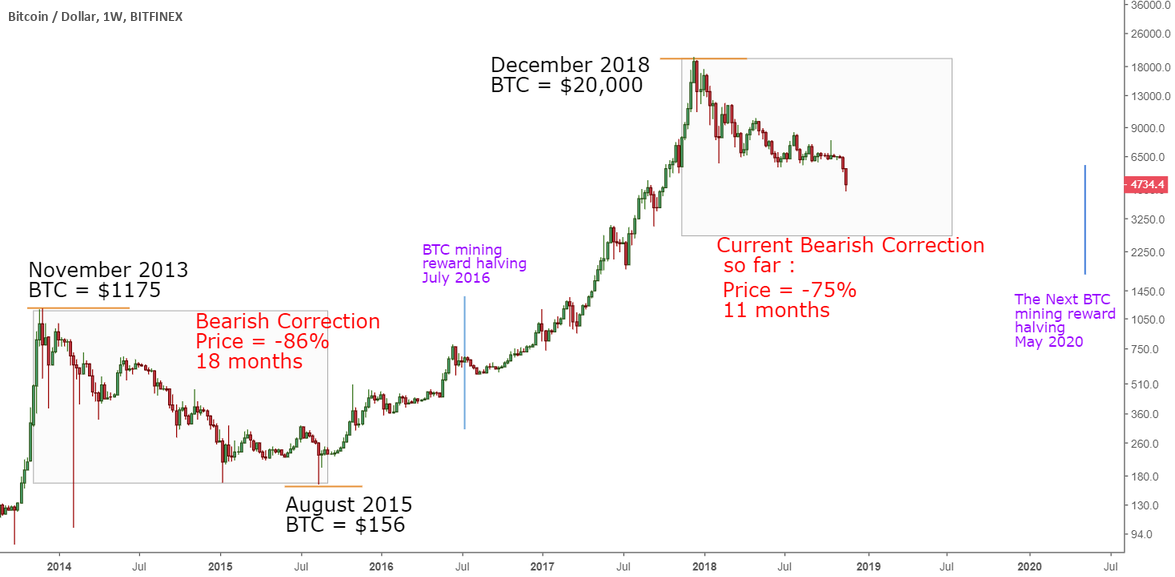

The Bitcoin bear market has become a hot topic among crypto enthusiasts and investors, as analysts debate the implications of current market conditions. With the Bitcoin price trend showing a significant decline from its peak, many industry experts suggest that we may be in for a prolonged bearish phase that could last well into 2026. Recent crypto market analysis indicates that institutional investments in Bitcoin are still occurring, despite the prevailing sentiment of a bear market, raising questions about the definition of a bear market itself. How do we classify this downturn when major players continue to hold or increase their positions? As the CryptoQuant signals suggest, the way forward may rely on pivotal shifts in demand, trend reclamation, and a normalization of risk appetite among investors.
In the world of cryptocurrency, the current downturn is being referred to as a bearish phase for Bitcoin, with experts closely monitoring market dynamics. Analysts are exploring what a bear market means beyond just price drops, considering various factors such as institutional involvement and market sentiment. The term ‘bearish trend’ is being utilized interchangeably, as the significance of significant declines becomes clearer through detailed crypto market assessments. Furthermore, understanding the implications of such a trend is crucial, especially when institutional investments continue amidst a challenging landscape. As sector analysts utilize tools like CryptoQuant signals to interpret these adjustments, the essence of this bearish environment is evolving, leaving many to ponder what defines the end of such periods.
| Key Point | Details |
|---|---|
| Current Market Status | Bitcoin is currently in a bear market, declining approximately 41% from its peak. |
| Definition of Bear Market | A bear market is typically defined as a drop of 20% or more over two months. Bitcoin has met this criterion. |
| Market Sentiment | Many institutions acknowledge the bear market but continue to hold or increase their exposure. |
| Key Trigger Signals to End Bear Market | Three signals include trend reclamation, demand inflection, and normalization of risk appetite. |
| Current Price Status | Bitcoin trades below the 365-day moving average, which indicates a bearish trend. |
| Selling Pressure | Large holders sold approximately $29 billion in Bitcoin since October. |
| Market Outlook | Patience is required as the market is expected to face a capped upside until signals switch. |
Summary
The Bitcoin bear market is marked by significant price declines and shifting market sentiments. Analysts believe that it will continue until certain signals indicate a turnaround. Investors must be patient and recognize that while the current bear market may last longer in time, it could be less damaging in terms of percentage drops. Understanding the evolving definitions and signals associated with the Bitcoin bear market will be crucial for informed investment decisions.
Understanding the Bear Market Definition in Crypto
In the world of finance, the term ‘bear market’ often evokes images of major downturns characterized by significant price declines across various asset classes. Traditional markets define a bear market as a drop of 20% or more in broader indexes sustained over a two-month period. However, the buzz around Bitcoin’s current status prompts a reassessment of this definition for the crypto space, where volatility reigns supreme. Within crypto, especially with assets like Bitcoin, a 20% drop can occur regularly, raising important questions about whether the conventional bear market metrics apply in their entirety.
In light of this, while Bitcoin’s sharp decrease from its peak price to around $74,000 substantiates a bear market claim by traditional measures, the crypto context suggests flexibility is needed. The reality is that many institutions continue to hold or even accumulate Bitcoin despite the declining price actions. A grasp of the nuanced variations in the bear market definition is vital for investors to comprehend market behavior, particularly as crypto’s unique volatility and price dynamics challenge the applicability of standard financial indicators.
Current Bitcoin Price Trends and Their Implications
Bitcoin’s price trend is crucial for investor sentiment and market movements. At present, Bitcoin’s price being below the 365-day moving average indicates a particularly bearish trend. This trend is further emphasized by the substantial drop from its peak, demonstrating the shifts in market dynamics that investors are grappling with. Furthermore, as analysts like Julio Moreno note, the potential for an extended bear market through 2026 could shape the strategic decisions of both retail and institutional investors alike.
Monitoring the Bitcoin price trend becomes essential for understanding overall market signals. Analysts utilize tools such as moving averages, trading volume, and market sentiment metrics to gauge current and future price developments. Key indicators like CryptoQuant’s analysis may reveal that while a bear market phase is acknowledged, the involvement of institutions indicates a different perception against the backdrop of decreasing prices, which could suggest underlying strength and potential long-term profitability.
Analyzing Crypto Market Dynamics and Investor Sentiment
The ongoing bear market has generated a variety of responses within the crypto market. Many institutional investors, as indicated in surveys from Coinbase Institutional and Glassnode, perceive the market as transitioning to bearish phases yet still demonstrate a willingness to maintain or increase their investments in Bitcoin. This contradiction hints at a complex view among large players who continue to believe in Bitcoin’s long-term value despite the prevailing bearish trend.
Moreover, liquidity levels and demand outlines significantly affect how investors perceive the current market. The sale of approximately $29 billion of Bitcoin by large holders since October illustrates an ongoing shift in investment strategies amidst overall bearish conditions. However, demand signals are not uniform, as many institutions decide to keep their positions, emphasizing the market’s duality where bearish sentiment conflicts with positive long-term value perspectives.
The Role of Institutional Investments During Bear Markets
Institutional investments play a pivotal role in shaping market dynamics during bear markets. While many institutions currently acknowledge the bear characteristics of the market, their ongoing participation suggests a belief in Bitcoin’s foundational strength. The mix of fear and opportunity often drives institutional investors’ behavior, indicating they may be capitalizing on lower entry points to secure larger portions of Bitcoin despite the recognized downtrend.
Moreover, the differentiated views held by institutional investors highlight the complex realities of market psychology. Their strategies often include view of longer timelines, seeking profits in the wake of current bear conditions. As institutional flows turn positive in the future, analysts predict signs of market recovery could emerge, thus reaffirming the need for a keen analysis of ongoing institutional behavior, which could signal a turning point within the current bear market cycle.
Key Signals Indicating the End of a Bitcoin Bear Market
Determining when a bear market truly concludes can hinge on three critical signals: trend reclamation, demand inflection, and normalization of risk appetite. Trend reclamation entails Bitcoin reclaiming its long-term moving averages, which analysts believe would signify a potential pivot towards bullish sentiment. Such movements would be indicative of fundamental shifts in market conditions favoring prices on an upward trajectory.
In contrast, demand inflection looks at changes in buying behavior, particularly from large institutional players. Should these entities begin to shift from selling to net buying, it could signify a key turning point. Coupled with stabilization in risk appetite—where investors exhibit reduced fear or hesitance—the convergence of these signals could definitively indicate the conclusion of the bear market phase, offering clues for future bullish trends.
Impact of CryptoQuant Signals on Market Predictions
CryptoQuant signals have become an essential tool for market predictions, especially during downturns, like the current Bitcoin bear market. By analyzing historical data and various technical indicators, CryptoQuant provides insights into market conditions that contribute to an informed investment strategy. Signals such as wallet transactions, market liquidity, and on-chain behavior allow traders to assess potential price movements stemming from large holder activities.
With these insights, investors can gauge when market trends are likely to shift towards recovery or continue their downward trajectory. By keeping a close watch on these signals, particularly during volatile periods, investors often find opportunities to recalibrate their approaches based on quantifiable data rather than speculative sentiment alone. This reliance on data-driven decision-making has proven to be invaluable, especially for those looking to navigate the tumultuous waters of cryptocurrency trading.
Navigating Bitcoin’s Bear Market: Patience and Strategy
Navigating a bear market requires a blend of patience and strategic foresight. As the current Bitcoin bear market unfolds, investors are faced with the challenge of maintaining composure amidst significant price fluctuations. The market’s cyclic nature means that avoiding hasty decisions, grounded in fear, can often lead to better financial outcomes when the market rebounds.
Additionally, strategic investment planning, particularly focusing on accumulating Bitcoin during dips, can position investors advantageously for future gains. Understanding the unique aspects of Bitcoin’s market, alongside the technical indicators provided by analysts can contribute to developing a nuanced investment strategy that appeals to both new and seasoned crypto enthusiasts.
Comparing Bear Market Characteristics Across Financial Landscapes
The characteristics of a bear market in cryptocurrency differ significantly from traditional stock markets. While both environments demonstrate price declines, the volatility articulated within crypto can obscure traditional indicators such as the 20% drop in indices that mark a bear market. These variabilities require investors to adopt frameworks that account for shifting participant behaviors and market reactions, particularly significant in assets like Bitcoin.
As the market continues to evolve, the definitions and behaviors associated with bear markets expand beyond traditional measures. Understanding these differences allows investors to adapt their strategies more effectively. Navigating through these unique market dynamics enhances the potential for future profits, particularly when equipped with insights into the distinct patterns characterizing the cryptocurrency market.
The Long-Term Perspective: Preparing for Bitcoin’s Future
Looking toward the future, preparing for Bitcoin’s next growth phase is crucial for investors, particularly as the current bear market unfolds. While it can be distressing to see declining price levels, history shows that Bitcoin often recovers stronger than before. Adoption rates and institutional sentiment remain robust, suggesting a solid foundation for potential future upside as market conditions shift.
Ultimately, maintaining a long-term perspective amid bear market conditions allows investors to capitalize on future growth cycles and bolster overall portfolio resilience. Viewing Bitcoin not just through the lens of short-term volatility, but as a potentially revolutionary asset in the financial landscape, can lead to more effective investment strategies that weather market downturns.
Frequently Asked Questions
What is the definition of a Bitcoin bear market?
A Bitcoin bear market is typically defined as a period during which the Bitcoin price declines by 20% or more over a sustained period, often characterized by pessimism and reduced investor confidence. According to traditional finance, this includes significant sell-offs and negative sentiment about future price trends.
What are the current trends in the Bitcoin bear market?
Current trends in the Bitcoin bear market indicate that the price has declined from its peak in October 2025 above $126,000 to around $74,000. This ongoing downward price trend is a primary indicator of bearish sentiment in the crypto market, affecting investor behavior and market stability.
How does institutional investment impact the Bitcoin bear market?
Institutional investments have a complex impact during a Bitcoin bear market. While many institutions acknowledge the bear market phase, a significant number also continue to hold or increase their positions, suggesting a long-term belief in Bitcoin despite short-term price declines. This juxtaposition can lead to market stabilization even during downturns.
What signals indicate a potential end to the Bitcoin bear market?
Analysts identify three key signals that may indicate the end of a Bitcoin bear market: 1) trend reclamation, where Bitcoin’s price returns above key moving averages; 2) demand inflection, suggesting an increase in buyer interest; and 3) risk appetite normalization in options markets, reflecting a shift to bullish sentiment among investors.
Why is the 20% threshold for a Bitcoin bear market considered arbitrary?
The 20% threshold for a Bitcoin bear market is considered somewhat arbitrary because the cryptocurrency market experiences volatility not typical in traditional finance. Significant price swings can occur without a true regime change; hence, analysts often look at a diversified set of indicators including demand, liquidity, and overall market sentiment to define bear market conditions.
How can I analyze the current Bitcoin price trend amid the bear market?
To analyze the current Bitcoin price trend during a bear market, you can use tools like moving averages, such as the 365-day moving average, which help in assessing long-term price movements. Additionally, monitoring indicators such as CryptoQuant’s dashboards, institutional net flows, and liquidity can provide deeper insights into market behavior and future price actions.
What are the implications of the Bitcoin bear market on crypto market analysis?
The implications of the Bitcoin bear market on crypto market analysis include a more nuanced understanding of price dynamics, investor behavior, and the necessity for a multi-faceted approach in assessing market health. Analysts must consider not just price metrics, but also liquidity, demand fluctuations, and institutional sentiment to create a comprehensive overview.
Related: More from Bitcoin News | AI, BTC Miners Issue High | Bitcoin Above $69K? Glassnode Weighs In