

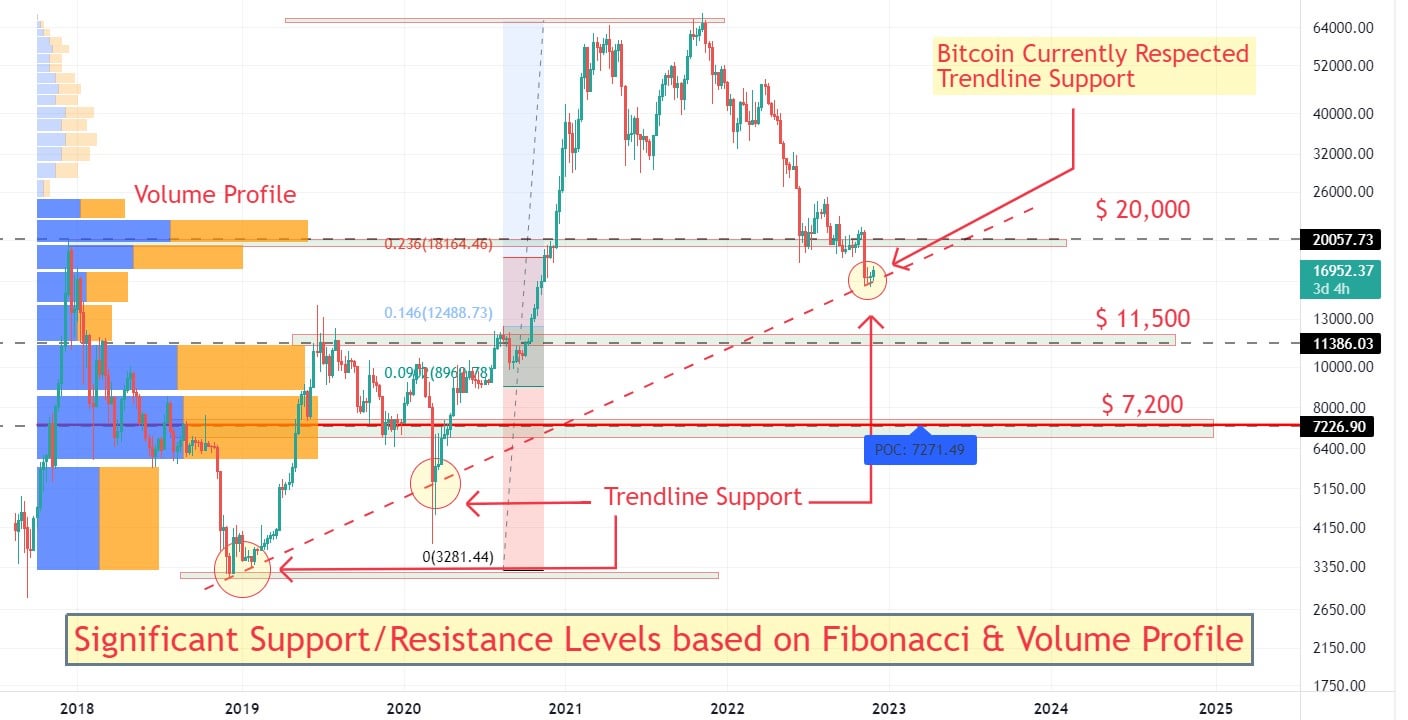

Bitcoin resistance levels play a crucial role in understanding the dynamics of the cryptocurrency market. Recent Bitcoin price analysis reveals a significant barrier in the $95,000 to $98,000 range, where the leading cryptocurrency has struggled to gain traction. Despite reaching a peak of $97,850 earlier this month, subsequent Bitcoin fluctuations have prompted a retreat back into familiar territory, hampered by decreased buying momentum and notable ETF fund outflows. As traders closely monitor these cryptocurrency resistance levels, the lack of a decisive breakthrough indicates a period of caution in market sentiment. Ultimately, without a clear catalyst to reignite demand, Bitcoin may remain constrained within this range for the foreseeable future.
Exploring the concept of resistance points within the crypto sector, Bitcoin’s price struggles underscore the importance of trend analysis. The identified thresholds, particularly the critical range of $95,000 to $98,000, highlight the barriers that Bitcoin faces as it navigates current market pressures. With ongoing volatility affecting overall cryptocurrency market trends, traders are increasingly aware of how significant resistance levels can influence their strategies. Additionally, factors such as ETF fund movements and varying demand can magnify these resistance challenges, impacting the overall sentiment in the digital currency space. Understanding these dynamics is essential for investors seeking to make informed decisions amidst the ever-shifting landscape of cryptocurrency.
| Key Points | Details |
|---|---|
| Current Resistance Levels | Bitcoin faces strong resistance between $95,000 and $98,000. |
| Recent Price Action | After peaking at $97,850 in January, Bitcoin has dropped over 10%. |
| Market Indicators | Weakening spot buying momentum and increased ETF fund outflows. |
| Derivative Market | Adjustments are orderly, focusing on short-term contracts. |
| Future Outlook | Without renewed demand for spot and ETFs, Bitcoin may continue to fluctuate within the resistance range. |
Summary
Bitcoin resistance levels are currently a significant focus within the cryptocurrency market, as recent analysis highlights the challenges Bitcoin faces in breaking through the $95,000 to $98,000 barrier. Despite apparent volatility, the lack of a decisive catalyst has left Bitcoin fluctuating within established limits. Traders should remain cautious until clearer signals emerge that may bolster the demand and potentially push Bitcoin beyond its current resistance.
Understanding Bitcoin Resistance Levels
Bitcoin resistance levels are critical price points where the cryptocurrency struggles to break through, signifying a temporary ceiling on its price movement. Recent analysis highlights that Bitcoin has faced significant resistance between $95,000 and $98,000. This range has proven to be a formidable barrier, preventing further upward movement in Bitcoin’s price. As investors keep a close watch on these resistance levels, the ability of Bitcoin to penetrate this threshold is seen as a key indicator of market sentiment and future price action.
Resistance levels, including the current Bitcoin ceiling, play an essential role in understanding the broader cryptocurrency market trends. When Bitcoin reaches these levels, traders often see it as a signal to sell, which can contribute to price drops. The repeated failure to surpass $95,000 to $98,000 suggests that bearish trends may continue, especially in light of other factors such as ETF fund outflows and diminished spot buying momentum. Consequently, analysts are keen to observe whether Bitcoin can maintain stability below these resistance levels or if it will eventually break through to pave the way for new highs.
Impact of ETF Fund Outflows on Bitcoin Price
ETF fund outflows have a direct correlation with Bitcoin’s price movements, impacting overall market conditions. When investors withdraw funds from Bitcoin-related ETFs, it often leads to increased volatility and downward pressure on prices. Recent reports indicate intensified ETF outflows that coincide with Bitcoin’s struggle at its resistance levels. This reflects a cautious sentiment among investors who may be hesitant to commit their capital amidst uncertain market conditions.
Furthermore, these ETF fund outflows suggest a shift in investor behavior, where market participants are opting for liquidity or reallocating their investments elsewhere. As a result, Bitcoin’s fluctuations are likely to remain pronounced until confidence returns in both spot and institutional trading. The interplay between ETF activity and Bitcoin resistance levels will be crucial to monitoring potential rebounds or declines. Investors must keep an eye on these trends as they navigate the ever-changing cryptocurrency landscape.
Analyzing Cryptocurrency Market Trends
The cryptocurrency market is known for its dynamism, and recent fluctuations in Bitcoin’s pricing reflect ongoing volatility influenced by a multitude of factors. As Bitcoin addresses its resistance levels, the impact of broader market trends cannot be overlooked. Analysts continually assess market data, looking for signals that might indicate shifts in investor sentiment. With Bitcoin currently holding below the critical resistance levels, it’s clear that market trends are more volatile than ever, influenced by global economic developments and regulatory changes.
Investors in the cryptocurrency space should pay attention to these market trends, particularly the influence of Bitcoin’s performance on other altcoins and the overall health of the market. The future trajectory of Bitcoin’s price—whether it breaks through its current resistance or remains range-bound—could set the tone for altcoin performance as well. Thus, understanding cryptocurrency market trends encompasses not just individual asset performances but also broader macroeconomic indicators that could lead to either stabilizing growth or continued fluctuations.
Bitcoin Fluctuations: Causes and Consequences
Bitcoin fluctuations stem from various factors, including market sentiment, investor behavior, and external economic influences. The cryptocurrency space is uniquely sensitive to news and events, often leading to rapid price changes. For instance, recent patterns show Bitcoin attempting to rally yet facing obstacles at its resistance levels. These fluctuations have substantial consequences, both for short-term traders aiming to capitalize on price swings and for long-term investors who are concerned about market stability.
Moreover, understanding the causes behind Bitcoin’s fluctuations can provide insights into future movements. Market dynamics often emerge from a combination of speculative trading, macroeconomic trends, and institutional investment strategies. As such, astute investors will monitor these fluctuations closely, adjusting their strategies to optimize their positions. Without a definitive catalyst for change, Bitcoin’s price is likely to remain within established ranges, influenced heavily by ongoing market behaviors.
The Role of Sentiment in Bitcoin Price Movements
Market sentiment is an integral component of Bitcoin price movements, heavily influencing investor decisions and trading patterns. The current bearish sentiment surrounding Bitcoin, partly driven by its inability to break through the resistance levels of $95,000 to $98,000, reflects a lack of confidence among market participants. This psychological barrier impacts trading volumes and can exacerbate volatility if bearish sentiment prevails. Understanding sentiment dynamics is essential for predicting future price movements in the cryptocurrency market.
As market sentiment fluctuates, so does the corresponding interest in additional cryptocurrencies. For instance, if traders perceive Bitcoin’s current pricing structure as unfavorable, they may shift their focus towards altcoins. This behavior underscores the interconnectedness of cryptocurrency assets, where Bitcoin often sets the tone for other currencies. By monitoring sentiment indicators, traders can gain valuable insights into potential shifts in Bitcoin’s market trajectory, helping them navigate uncertain trading waters.
Short-Term Trading Strategies Amidst Bitcoin Resistance
For traders looking to navigate the choppy waters of Bitcoin’s price action, understanding short-term trading strategies is essential, particularly in light of the prevailing resistance levels. Traders dealing with Bitcoin’s current trading range may find success employing scalping techniques, capitalizing on small price movements within the established boundaries. These strategies are particularly effective when resistance and support levels are clearly defined, allowing for quick entry and exit points based on price action.
Conversely, those adopting a more aggressive approach may consider high-leverage positions to take advantage of potential breakouts if Bitcoin manages to surpass its resistance thresholds. However, this strategy comes with increased risk, particularly given the current volatility in the market. Thus, traders must exercise caution and implement robust risk management strategies to mitigate potential losses. As Bitcoin remains caught within its resistance levels, short-term strategies will continue to be paramount for identifying profitable trading opportunities.
Long-Term Investment Outlook for Bitcoin
While short-term fluctuations dominate the narrative around Bitcoin’s price movements, a long-term investment perspective remains crucial for understanding its potential growth. Many analysts argue that despite the current resistance at $95,000 to $98,000, Bitcoin’s fundamentals remain strong, suggesting a promising outlook for long-term holders. The growing institutional interest in Bitcoin and its increasing adoption as a digital asset could drive significant price increases once market confidence is restored.
Investors who approach Bitcoin with a long-term perspective may benefit from dollar-cost averaging strategies, allowing them to accumulate Bitcoin over time without the pressures of daily price fluctuations. This strategy can be particularly advantageous during periods of volatility, as it alleviates the impact of short-term price swings on overall investment performance. Ultimately, for those looking to capitalize on Bitcoin’s long-term potential, patience and strategic investment planning will be key to reaping rewards in an evolving cryptocurrency landscape.
The Future of Bitcoin in the Cryptocurrency Ecosystem
The future of Bitcoin holds significant implications for the broader cryptocurrency ecosystem, particularly as it continues to navigate its current resistance levels. Bitcoin’s performance often sets the tone for market trends and altcoin valuations, which makes understanding its trajectory essential. The interplay between Bitcoin, institutional interest, and regulatory developments will shape the landscape of the cryptocurrency market in the coming years, influencing investor strategies and market behavior.
As Bitcoin evolves and matures, its role as a leading digital asset could redefine the parameters of investing in cryptocurrency. With increased regulatory scrutiny, innovative financial products, and changing market dynamics, Bitcoin’s future performance will likely reflect broader economic conditions. Investors should remain vigilant, actively monitoring developments in the cryptocurrency space to adapt their strategies accordingly. Long-term holders willing to weather volatility may find that Bitcoin continues to be a pivotal asset within the digital finance landscape, signaling a new era of investment opportunities.
Frequently Asked Questions
What are Bitcoin resistance levels and why are they important for price analysis?
Bitcoin resistance levels, such as the current range between $95,000 and $98,000, are critical price points where selling pressure tends to emerge, making it difficult for Bitcoin to break through. Understanding these levels helps traders and investors analyze potential price movement and plan their strategies accordingly.
How do recent Bitcoin fluctuations relate to resistance levels?
Recent Bitcoin fluctuations have been closely tied to resistance levels, particularly the failure to maintain prices above $95,000 to $98,000. Such resistance can indicate market sentiment, and when price attempts to break these levels but fails, it often leads to a retreat, which has been observed with Bitcoin’s recent decline.
What impact do ETF fund outflows have on Bitcoin resistance levels?
ETF fund outflows can contribute to the inability of Bitcoin to break through established resistance levels like $95,000 to $98,000. As funds are withdrawn, it can diminish market demand and weaken spot buying momentum, further entrenching the resistance range.
How can cryptocurrency market trends affect Bitcoin resistance levels?
Cryptocurrency market trends significantly influence Bitcoin resistance levels. For instance, if market conditions are bearish, resistance levels may hold stronger as traders anticipate further declines in Bitcoin price. Conversely, bullish trends could see continued attempts to breach resistance levels.
What should traders watch for regarding Bitcoin’s price approaching resistance levels?
Traders should monitor volume and momentum indicators as Bitcoin nears resistance levels like $95,000 to $98,000. A lack of strong buying interest or increasing selling pressure can signal a rejection at these levels, while a breakthrough could indicate a bullish trend.
Why has Bitcoin struggled to maintain its price above $95,000 to $98,000?
Bitcoin has struggled to maintain its price above $95,000 to $98,000 mainly due to decreased spot buying momentum and significant ETF fund outflows. Without renewed demand from investors or positive market catalysts, Bitcoin is likely to remain confined within this resistance range.
What does the recent Bitcoin price analysis suggest about the future of resistance levels?
Recent Bitcoin price analysis indicates that unless there is a significant increase in demand from spot and ETF markets, Bitcoin is likely to continue experiencing fluctuations within the resistance levels of $95,000 to $98,000, highlighting the need for a market catalyst for a potential breakout.
How do Bitcoin resistance levels impact long-term investment strategies?
Understanding Bitcoin resistance levels is crucial for long-term investment strategies as they reveal where prices may stabilize or reverse. Smart investors use this data to identify entry and exit points, promoting more informed decision-making in the volatile cryptocurrency market.
Related: More from Bitcoin News | AI, BTC Miners Issue High | Bitcoin Above $69K? Glassnode Weighs In