
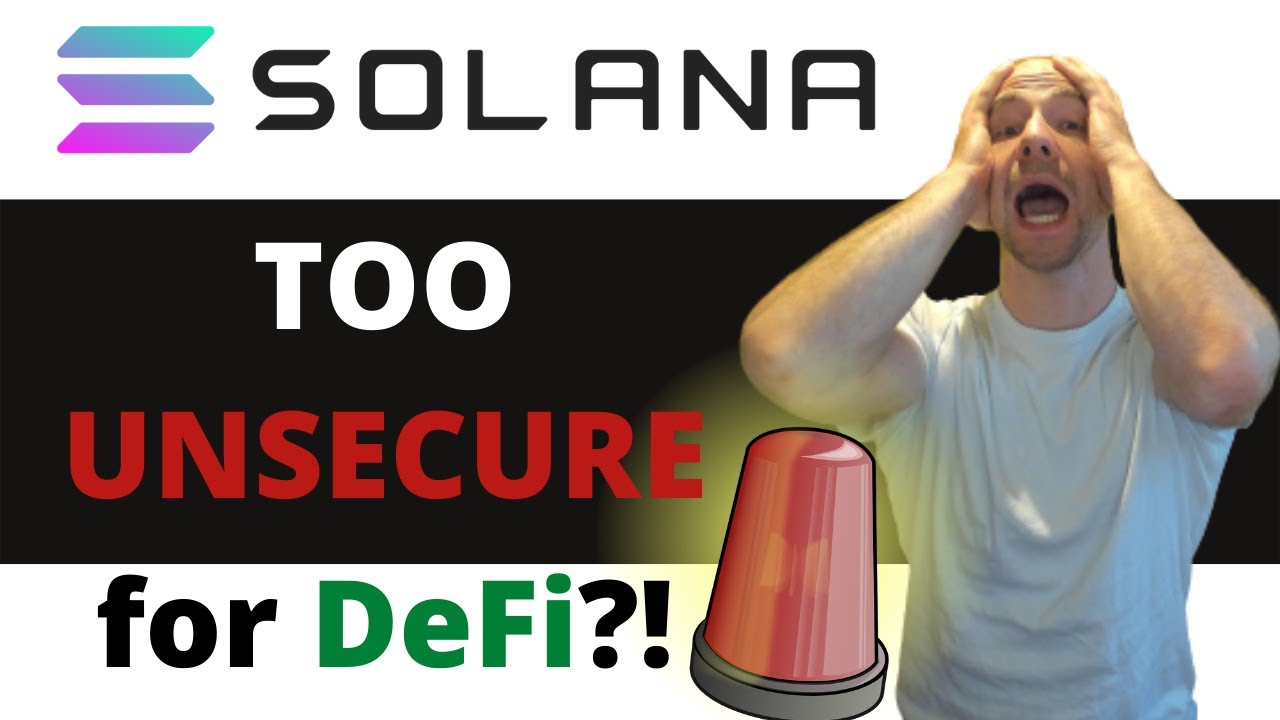

Solana security flaws have recently come into sharp focus as the blockchain community grapples with important questions surrounding network reliability and the challenges posed by proof-of-stake vulnerabilities. The Solana blockchain, celebrated for its high-speed transaction processing, faces scrutiny not only due to its ambitious architecture but also because of its validator coordination issues, which can jeopardize network stability. Recent update delays raised concerns about how quickly operators could implement necessary changes, leading to fragmented adoption of updates across the validator community. This divide highlights the underlying risks that can stem from isolated upgrades, potentially leaving parts of the network exposed during crucial moments. As discussions evolve, it becomes increasingly clear that a robust approach to securing the Solana ecosystem is essential for its sustained integrity amid escalating threats.
Exploring the weaknesses in the Solana ecosystem sheds light on critical vulnerabilities that could impact its overall framework. The perceived flaws within the Solana infrastructure reveal a broader concern with maintaining a stable and secure proof-of-stake network, particularly as user reliance on stable digital finance increases. In trading circles, discussions orbit around the need for improved coordination among validators to mitigate the risks associated with potential cyber threats. Furthermore, the implementation of timely and effective upgrades becomes paramount, dictating not only the success of the Solana network but also its reputation in the competitive blockchain landscape. As the community seeks innovative solutions, addressing these underlying coordination hurdles will be key to bolstering confidence in Solana’s security mechanisms.
| Key Point | Description |
|---|---|
| Urgent Network Upgrades | The urgency of updates highlighted the need for quick coordination among Solana validators during security threats. |
| Version Migration | As of January 11, only 18% of the stake had migrated to the new v3.0.14 version, leaving large portions on older versions during critical times. |
| Coordination Challenges | The incident raised concerns about synchronization and coordination when quick upgrades are required, a challenge for decentralized networks. |
| Gossip System Flaws | A flaw in the gossip system could allow coordinated attacks to crash validators, reducing cluster availability. |
| Vote Processing Issues | A missing verification step in vote processing could stall consensus, further complicating operations during upgrades. |
| Economic Incentives for Upgrades | New delegation criteria require validators to adhere to specific software versions to ensure economic viability and better coordination. |
Summary
Solana security flaws have raised critical questions about the network’s resilience against coordinated attacks. The situation revealed significant challenges in the coordination of validators during urgent security upgrades, with vulnerabilities in the gossip system and vote processing exposing the network to potential disruptions. To enhance security and operational integrity, necessary software version compliance has been established as a crucial economic incentive for validators. The approach emphasizes the importance of seamless cooperation among independent network operators, ensuring that security concerns are addressed in a timely manner.
Understanding Solana’s Security Flaws
The recent vulnerabilities exposed in the Solana blockchain demonstrate critical security flaws that have far-reaching implications for the network’s integrity. As a proof-of-stake platform, Solana relies on validators to maintain network stability and process transactions. However, the discovery of issues related to validator coordination raises concerns about how effectively the network can implement necessary upgrades in times of urgency. If these validators do not act in unison, as evidenced during the recent v3.0.14 upgrade, the potential for extensive disruptions increases significantly.
These security flaws reveal weaknesses in the governance and operational framework of the Solana ecosystem. For instance, only a fraction of validators upgraded in the necessary timeframe, which could have risked the network’s economic stability. The lessons gleaned from these vulnerabilities are that robust systems must accommodate rapid and coordinated actions from decentralized operators to prevent a lapse in network services.
The Impact of Upgrade Issues on Solana’s Network
Solana’s upgrade issues have substantial implications for its network stability and overall usability. With the landscape of decentralized finance (DeFi) evolving constantly, the necessity for quick, secure upgrades cannot be overstated. Users expect an ‘always-on’ service, yet security lapses can inhibit the network’s operational integrity. The lag in migrating validators to the latest software version highlighted how economic stakes are jeopardized when the coordination among operators falters during crucial updates.
Moreover, the mechanics of proof-of-stake inherently invite complexities, particularly from the gossip protocol involved in message dissemination. Flaws can lead to validator crashes, which threatens the consensus mechanism necessary for confirming transactions. As the network navigates these upgrade challenges, it must also bolster its internal structures to ensure that all validators understand their role in maintaining both economic and operational stability.
The Role of Validator Coordination in Solana’s Ecosystem
Validator coordination is paramount for the stability and security of the Solana network, especially in the context of fast-paced upgrades. The recent events surrounding the v3.0.14 upgrade highlighted that timely communication and action among these independent actors are crucial. When validators fail to align during urgent updates, the risk of delays increases, which can be exploited by malicious entities, thereby compromising the entire network’s reliability.
Effective coordination relies not only on clear communication but also on robust incentives that bind validators to follow upgrade protocols. Since validator performance directly affects their economic aspects—such as stake rewards—it’s essential that the Solana Foundation emphasizes compliance with the latest software requirements. This ensures that all nodes contribute to a resilient network capable of withstanding attempts at disruption.
Exploring Proof-of-Stake Vulnerabilities in Solana
Proof-of-stake, while providing benefits such as reduced energy consumption and enhanced transaction speeds, also introduces specific vulnerabilities that need addressing. Solana’s reliance on this consensus mechanism means that if vulnerabilities remain unaddressed, they can represent significant risks. For example, the missing verification steps in vote processing can ultimately lead to stalled consensus, highlighting the intricacies of maintaining a secure network in a decentralized system.
By rapidly addressing these issues through the recent upgrades, Solana aims to secure these vulnerability points strategically. It is crucial for the network to continuously develop and implement patches that not only rectify existing flaws but also bolster defenses against potential future attacks, thereby promoting a more secure blockchain environment.
Importance of Efficient Software for Continuous Operations
In a fast-paced blockchain environment like Solana, the efficiency of the software running the network is vital for continuous operations. As the proof-of-stake model hinges on validators being active and effectively processing transactions, any slowdown or disruption can have cascading effects. Upgrades like v3.0.14 emphasize not only security but operational efficiency, ensuring that validators can fulfill their roles with minimal downtime or failure.
Furthermore, the Solana Foundation is prioritizing software excellence to establish a robust operational framework that can not only handle current demands but also future-proof the network against unforeseen challenges. This means continually optimizing the software and aligning validation actors toward a unified operational goal—maximizing both security and efficiency.
Mitigating Risks of Decentralized Finance with Upgrade Protocols
The realm of decentralized finance (DeFi) is rife with risks, and iconic networks like Solana must navigate these challenges effectively. Upgrade protocols are designed to fortify the network against potential exploits that jeopardize not just individual transactions but the entire economic ecosystem. By ensuring that all validators comply with new implementations, DeFi can thrive without succumbing to systemic flaws.
These protocols also serve to reinforce the trust that users place in the network. When stakeholders can see proactive measures being taken against known vulnerabilities, it builds confidence in Solana’s capabilities as a secure and reliable platform for conducting financial transactions. Ultimately, the emphasis on rigorous upgrade processes is foundational in advancing DeFi security.
How Solana’s Architecture Supports Network Resilience
Solana’s architectural design is built with resilience in mind, structured to support high throughput while aiming for maximum uptime. However, with such a decentralized approach also comes the challenge of ensuring that all participants—especially validators—are synchronized during critical upgrades. The architecture’s independence is a double-edged sword; while it provides redundancy and minimizes single points of failure, it can also complicate the necessary coordination during urgent situations.
The installation of clear delegation criteria and upgrade requirements is part of Solana’s strategy to enhance its network resilience. By mandating compliance with the latest software versions, it cultivates an environment where validators are motivated to keep pace with upgrades, helping to avert scenarios that could undermine the network’s stability.
The Future of Solana: Bolstering Security Through Continuous Improvement
As Solana progresses, the future hinges on continuous improvement and adaptations to security processes. The only way to secure the network in the face of evolving threats is to remain vigilant and proactive in addressing the inherent vulnerabilities that its proof-of-stake model presents. Continuous cycles of assessment and upgrade are crucial to maintaining user confidence and network integrity.
This commitment to security and improvement will be essential in attracting both developers and users to the Solana ecosystem. By focusing on refining its processes, and ensuring that all stakeholders understand their roles during upgrades, Solana can position itself as a leading blockchain network capable of adapting to future challenges and safeguarding its users.
Synergizing Community Effort: The Key to Solana’s Success
The success of Solana’s blockchain relies heavily on community efforts towards collective action and open communication among all participants. When individuals understand the importance of timely upgrades and security patches, it fosters a culture of cooperation that is essential for navigating the complexities of a decentralized environment. The community’s engagement during critical upgrades like v3.0.14 showcases how collaboration can mitigate risks and bolster network integrity.
Encouraging an interactive and responsive community also helps establish best practices for future developments and security measures. By incentivizing coordinated actions and disseminating clear information, Solana can ensure that its ecosystem remains resilient and dynamic, continuously evolving while preserving the foundational elements that attract users and developers alike.
Frequently Asked Questions
What are the key Solana security flaws that affect blockchain operations?
Key Solana security flaws include vulnerabilities in its gossip protocol and vote processing mechanisms, which can lead to validator crashes and impede consensus. These issues underscore the importance of timely upgrades to maintain network stability.
How can Solana upgrade issues affect validator coordination?
Solana upgrade issues can create significant challenges in validator coordination, especially during critical updates. If validators do not synchronize quickly, it can lead to discrepancies in network performance and increase vulnerability to attacks.
What role do proof-of-stake vulnerabilities play in Solana’s blockchain security?
Proof-of-stake vulnerabilities in Solana can compromise the network by allowing coordinated attacks that disrupt validator operations, thereby threatening the entire blockchain’s integrity and operational reliability.
How does the Solana network ensure validator coordination during urgent upgrades?
The Solana network encourages validator coordination through clear delegation criteria and incentives that tie validators’ economic benefits to compliance with the latest software versions, particularly during urgent upgrades like v3.0.14.
Can Solana’s network stability be compromised by human operations?
Yes, while Solana’s architecture aims for high transaction speeds, human operations play a critical role. Inefficient coordination among independent validators during urgent situations can jeopardize network stability.
What measures are in place to mitigate Solana security flaws during upgrades?
To mitigate Solana security flaws during upgrades, the Solana Foundation emphasizes the importance of timely software updates and the need for validators to align on new versions, reducing risks associated with uncoordinated operations.
What happens when Solana validators do not act in unison during security updates?
When Solana validators do not act in unison during security updates, it can lead to increased vulnerability, with the potential for reduced network availability and higher risks of attacks or disruptions.
Why is the migration to Solana v3.0.14 critical for network security?
Migration to Solana v3.0.14 is critical for network security as it addresses vital vulnerabilities in message processing and vote verification, thus enhancing the resilience and stability of the Solana blockchain.
Related: More from Altcoin News | Toncoin Overshoots: Telegrams Vaults Update | Elon Musk’s Moon Mission: What You Need to Know About SpaceX’s Plans