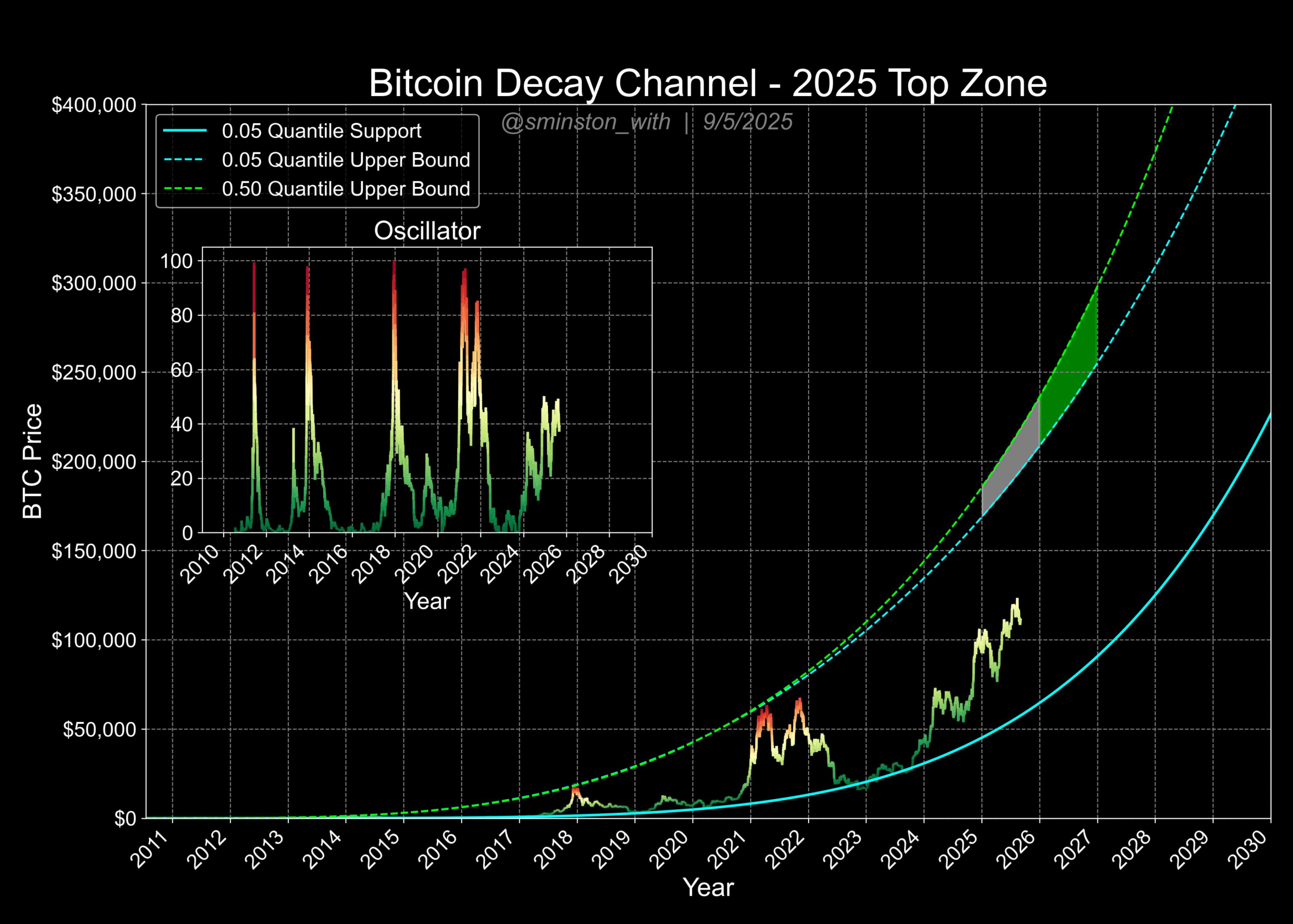

As we look towards the Bitcoin 2026 forecast, analysts are predicting a price range that highlights the volatility and uncertainty surrounding this leading cryptocurrency. With estimates varying significantly—from as low as $75,000 to as high as $250,000—the debate over factors influencing Bitcoin’s trajectory is more active than ever. Key influencers such as Bitcoin’s institutional demand and the potential influx from crypto ETFs are expected to shape market trends over the coming years. Market participants are particularly focused on understanding how these dynamics will unfold in light of the broader economic climate. As institutional investors increasingly engage with Bitcoin, the 2026 Bitcoin outlook remains pivotal for both existing and prospective holders.
In exploring the projections for Bitcoin in 2026, we delve into the expected price movements and factors that might drive them. The forecasts suggest an unpredictable landscape, driven by institutional interest and the possible impact of crypto exchange-traded funds (ETFs). With varied predictions around Bitcoin’s valuation, market participants seek clarity on how institutional demand could reshape market trends. As we assess the potential highs and lows, it’s important to consider not just investor sentiment but also the economic conditions influencing these forecasts. The diverse outlooks on Bitcoin’s future underscore the complexity of this digital asset’s journey within the evolving financial ecosystem.
| Institution / Analyst | 2026 Price Target | Key Factors |
|---|---|---|
| Standard Chartered | $150,000 | ETF demand; slower growth expectations. |
| Bernstein | $150,000 | Bull cycle; institutional purchases offset retail selling. |
| JPMorgan | $170,000 | Gold-adjusted framework for volatility. |
| Tom Lee (Fundstrat) | $200,000 | Sustained momentum from institutions. |
| Michael Saylor (Strategy) | $150,000 | Institutional adoption; supply limitations. |
| Carol Alexander (University of Sussex) | $75,000 – $150,000 | Conservative view; volatility expected. |
| Charles Hoskinson (Cardano) | $250,000 | Constrained supply meeting rising demand. |
Summary
The Bitcoin 2026 forecast presents a range of predictions from major financial institutions, highlighting the uncertainty surrounding its price trajectory. As analysts project prices between $75,000 and $250,000, the forecast underscores the volatile and unpredictable nature of the cryptocurrency market. Factors such as institutional demand, ETF inflows, and macroeconomic conditions will play crucial roles in determining Bitcoin’s performance in 2026. While some remain optimistic, the differing opinions among expert institutions reflect the challenges that lie ahead for Bitcoin’s value.
Understanding Bitcoin’s Market Dynamics Ahead of 2026
Bitcoin’s market dynamics are increasingly influenced by institutional demand and the advent of crypto ETFs, setting the stage for significant shifts anticipated in 2026. The current forecasts exhibit a wide range, with estimates fluctuating between $75,000 to $250,000. This variability is largely attributed to uncertain retail participation and the broader liquidity conditions. As Bitcoin’s adoption continues to edge higher among financial institutions, the sustainability of this demand will play a key role in determining price trajectories and market stability over the next few years.
In the context of the evolving Bitcoin 2026 forecast, it’s clear that institutional investment strategies, particularly via ETFs, may redefine market accessibility for a broader range of investors. An increase in ETF inflows could indicate that institutions are keen to absorb the available Bitcoin supply, which may counterbalance potential retail selling anxiety. Hence, as the institutional narrative strengthens, the dynamics of Bitcoin price predictions will increasingly reflect on-demand absorption capabilities through these newly established investment vehicles.
Bullish Sentiments: The Case for Bitcoin’s Growth
The bullish case for Bitcoin hinges on the expectation that institutional demand will outstrip retail selling pressures, pushing prices towards $150,000 or even $250,000 by 2026. Analysts like Eric Balchunas project significant inflows into crypto ETFs that could enhance Bitcoin’s market liquidity and stability. These optimistic scenarios rest on the conviction that institutions will recognize Bitcoin as a vital component of their portfolios, enabling them to ride out market fluctuations more robustly than individual investors.
Furthermore, firms such as Galaxy Digital predict that by 2026, the net inflows from U.S. spot crypto ETFs could surpass $50 billion. This influx would not only reflect institutional confidence but could also play a crucial role in increasing Bitcoin’s price stability. With long-term holders beginning to reaccumulate after a distribution phase, the anticipated demand could contribute to a more balanced market environment. Consequently, the bullish sentiments appear well-founded, bolstered by solid institutional frameworks ready to leverage Bitcoin’s unique value proposition.
Bearish Outlook: Risks Facing Bitcoin in 2026
Despite optimistic forecasts, the bearish outlook presents a realistic alternative for Bitcoin’s future in 2026, with predictions dipping as low as $35,000. Analysts at CryptoQuant suggest that Bitcoin has entered a bear market, as indicated by persistent on-chain signals of drawdown risk. If institutional demand falters or macroeconomic pressures intensify, Bitcoin may struggle to reclaim previous highs. This could lead to prolonged periods of price stagnation or decline, exposing the cryptocurrency to heightened volatility.
Market analysts also emphasize that investor confidence is often reactive to macroeconomic conditions. As Bitcoin has shown greater sensitivity to liquidity fluctuations post-2025, the potential for a bearish trend could deepen if macroeconomic indicators continue to tighten. In this landscape, any upward momentum in Bitcoin’s price will be heavily contingent on rekindling institutional inflows at a scale sufficient enough to counteract bearish sentiments lingering from recent market corrections.
Institutional Demand: A Key Factor for Bitcoin’s Future
Institutional demand is increasingly recognized as a pivotal factor influencing Bitcoin’s price trajectory, especially as we look toward 2026. Major financial institutions are expected to drive demand through enhancements in investment products such as ETFs, potentially reshaping how Bitcoin is integrated into traditional finance. This shift indicates a growing acceptance and belief in Bitcoin as a legitimate asset class, which may pave the way for substantial inflows and supportive market dynamics.
The forecasts that place Bitcoin’s price around $150,000 to $200,000 emphasize the necessity of institutional uptake to counterbalance the hesitancy among retail investors. As asset managers continue to roll out Bitcoin investment products, there is a prevailing belief that the flow of capital towards Bitcoin will help maintain upward momentum. Creating a diverse array of inclusionary strategies related to Bitcoin will not only enhance its allure to institutions but could also lead to improved market resilience.
The Role of Cryptocurrency ETFs in Bitcoin’s Evolution
Crypto ETFs are poised to play a transformative role in Bitcoin’s ecosystem, with forecasts indicating significant inflows anticipated by 2026. As institutional interest grows, ETFs provide a streamlined and regulated method for investors to gain exposure to Bitcoin without the intricacies of direct ownership. Analysts project that a successful rollout and subsequent uptake of Bitcoin ETFs could boost prices dramatically, helping them ascend into the $150,000 to $250,000 range as predicted by several financial institutions.
The optimistic predictions regarding ETF inflows suggest that the accessibility and legitimacy introduced by these funds may bridge the gap between traditional investing frameworks and the crypto market. As more institutional investors gain access through ETFs, the anticipated capital influx would likely stabilize Bitcoin’s price and even spur market growth, fostering an environment where focused institutional demand can ultimately overshadow retail volatility.
Evaluating Bitcoin’s Technological Adoption in 2026
As Bitcoin approaches 2026, the technological advancements surrounding its infrastructure and adoption will be critical in shaping its market position. Innovations such as the Lightning Network and further developments in security and scalability could enhance Bitcoin’s usability and acceptance as a transaction medium. These enhancements, coupled with growing institutional interest, reinforce the narrative that Bitcoin could become a more entrenched financial asset in the global economy.
The trajectory of Bitcoin’s technological evolution is also likely to impact its interaction with regulatory landscapes around the world. As enhancements to blockchain technology are integrated, it could lead to a smoother expansion of Bitcoin adoption in both traditional and decentralized finance. If institutions can leverage these technologies to improve transactional efficiency and security, it may serve to bolster the already positive outlook for Bitcoin prices as we monitor the latest forecasts leading into 2026.
Market Sentiment Analysis for Bitcoin Projections
Market sentiment plays a crucial role in shaping Bitcoin’s price movements and overall trajectory as we approach 2026. Current trends indicate a blend of cautious optimism among investors, as they balance recent price retrievals and institutional compliance. The outlook, given the diverse predictions ranging between bullish and bearish perspectives, illustrates a market caught between potential and risk, ultimately leading to volatility.
Understanding the prevailing sentiments surrounding Bitcoin can provide invaluable insights into future movements. As institutions continue to bolster their Bitcoin reserves through ETFs and other investments, coupled with macroeconomic factors, market sentiment will remain a pivotal driver of Bitcoin’s price. Investors will keenly watch for signs of increasing institutional inflows, which could shift sentiment positively, thus further supporting forecasts and price predictions.
Long-Term Trends in Bitcoin Pricing
The long-term trends in Bitcoin pricing indicate an evolving landscape shaped by institutional strategies and market behaviors. As we analyze forecasts for 2026, the understanding of Bitcoin’s cyclical nature remains essential. With historical data suggesting that Bitcoin has consistently moved through distinct bull and bear cycles, the timing of these cycles amid changing institutional dynamics will be key to predicting where Bitcoin’s price may settle.
Observations suggest that while Bitcoin historically reacts to broader economic factors, its growing institutional acceptance could lead to a decoupling of its price movements from previous trends. This highlight illustrates the importance of keeping an eye on institutional demand metrics as critical indicators of Bitcoin’s resistance to traditional cyclical patterns. The interplay between ETF-driven capital influxes and Bitcoin’s intrinsic attributes will ultimately inform long-term pricing strategies and forecasting methods.
Psychological Factors Influencing Bitcoin Investment
Psychological factors significantly impact Bitcoin investment behaviors, especially during periods of heightened volatility seen in current forecasts for 2026. Investor sentiment can rapidly change based on publicity, institutional endorsements, or regulatory news, creating waves of bullish and bearish pressure. Recognizing these psychological triggers is vital for both institutional and retail investors as they navigate the turbulent waters of crypto investments.
Moreover, as market sentiment shifts, the psychological divide between institutional players and individual retail investors may widen, particularly if institutions leverage educational initiatives to enhance understanding and adoption. By fostering a community of educated investors, the cumulative effects of psychological factors can lead to a more stable investment environment, potentially mitigating the extreme fluctuations that have been characteristic of Bitcoin’s price movements.
Frequently Asked Questions
What is the Bitcoin price prediction for 2026 based on market trends?
The Bitcoin price prediction for 2026 varies significantly among analysts, with estimates ranging from $75,000 to $250,000. Many forecasts cluster around $150,000 to $170,000. This uncertainty reflects the potential impact of institutional demand and market liquidity on Bitcoin’s price.
How does institutional demand affect the Bitcoin 2026 forecast?
Institutional demand plays a crucial role in the Bitcoin 2026 forecast. Analysts suggest that increased investments from entities such as ETFs and corporate treasuries could push prices higher. However, if institutional buying fails to compensate for reduced retail participation, it may hinder Bitcoin’s price growth.
What are the key factors influencing the 2026 Bitcoin outlook?
The key factors influencing the 2026 Bitcoin outlook include institutional demand, crypto ETF inflows, macroeconomic conditions, and market liquidity. Analysts suggest that if institutions absorb Bitcoin supply effectively, it could lead to a bullish market scenario; otherwise, prices may stagnate or decline.
How significant are crypto ETF inflows in predicting Bitcoin’s price in 2026?
Crypto ETF inflows are critical in predicting Bitcoin’s price in 2026. Analysts estimate inflows could reach between $15 billion and $50 billion, potentially driving demand and price upward. However, the realization of this potential heavily depends on prevailing market conditions and investor confidence.
What are the bearish scenarios for Bitcoin in 2026?
Bearish scenarios for Bitcoin in 2026 suggest a price range of $35,000 to $70,000. These predictions are based on concerns over declining institutional demand, adverse macroeconomic conditions, and weakening relationships with market liquidity, which could lead to increased downside risks.
How do Bitcoin market trends impact price predictions for 2026?
Bitcoin market trends are pivotal in shaping price predictions for 2026. Analysts examine previous cycles, liquidity conditions, and institutional purchasing patterns to forecast future price movements. The divergence in predictions reflects different interpretations of these market trends.
What is the importance of the 2026 Bitcoin halving in price predictions?
The 2026 Bitcoin halving is significant as it will reduce daily Bitcoin issuance, potentially increasing scarcity and influencing demand dynamics. If institutional demand remains robust post-halving, it could lead to upward price pressure, prompting more optimistic forecasts for Bitcoin.
Why have some analysts adjusted their Bitcoin 2026 forecasts downward?
Some analysts, like Standard Chartered, have adjusted their Bitcoin 2026 forecasts downward due to expectations of slower growth and the reliance on ETF demand rather than increased corporate treasury investments. This reflects cautious market sentiment amid uncertain economic conditions.
What does the broad range of Bitcoin price forecasts for 2026 indicate?
The broad range of Bitcoin price forecasts for 2026, from $75,000 to $250,000, indicates a high level of uncertainty among market participants regarding Bitcoin’s trajectory. This variability underscores the complex interplay of institutional demand, market sentiment, and macroeconomic factors.
How does the Bitcoin 2026 forecast affect investor strategies?
The Bitcoin 2026 forecast significantly impacts investor strategies, as varying predictions lead to different risk assessments. Investors may adjust their holdings based on anticipated price trends, liquidity scenarios, and broader economic conditions to optimize their investment outcomes.
Related: More from Bitcoin News | AI, BTC Miners Issue High | Bitcoin Above $69K? Glassnode Weighs In