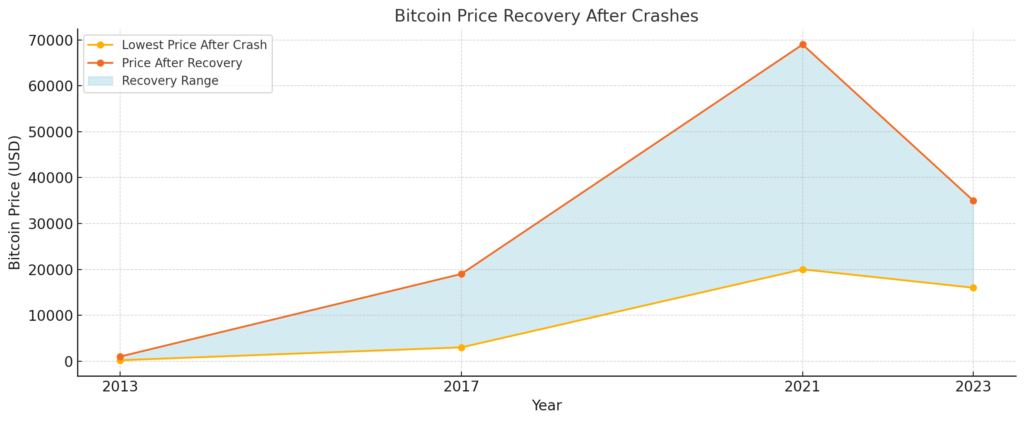

Bitcoin price recovery has sparked fresh excitement in the cryptocurrency market, as traders react to a sudden ease in tariff threats following President Donald Trump’s announcement. This unexpected announcement, which alleviates concerns around geopolitical risks, prompted a notable surge in Bitcoin, pushing its price above $90,000 after a significant dip to $87,300. The rebound not only wiped out recent losses but also showcased Bitcoin’s high-beta nature, which tends to amplify movements in response to macroeconomic shifts. As gold, often seen as a safe haven, retraced in value, Bitcoin emerged as a more appealing risk asset amidst fluctuating market volatility. This dynamic underscores the complex relationship between Bitcoin and traditional assets like gold, especially in the face of ongoing geopolitical uncertainties.
The resurgence of Bitcoin, often described as a digital currency and at times a store of value, reflects a shift in trader sentiment as macroeconomic factors shift. This recent upswing, attributed to reduced tariff threats, signals a potential turning point for the entire crypto landscape. As news breaks and economic policies evolve, cryptocurrencies like Bitcoin exhibit a remarkable sensitivity to these developments, often outperforming traditional safe-haven assets. Market participants are increasingly viewing Bitcoin as a high-risk asset that can mirror the volatility of markets, especially when geopolitical tensions arise. Ultimately, the interplay among Bitcoin, economic policies, and traditional hedges like gold will continue to shape trading strategies going forward.
| Key Point | Details |
|---|---|
| Bitcoin Price Recovery | Bitcoin rebounded above $90,000 after a tariff threat alleviation from President Trump’s announcement, reversing a two-day selloff. |
| Impact of Announcement | Trump’s avoidance of tariffs originally set for February 1 led to a sharp reversal in market sentiment, driving Bitcoin up and impacting gold and silver prices. |
| Market Reaction | The announcement resulted in over $1 billion in liquidations across positions, showing high volatility in the Bitcoin market. |
| Correlation with Gold | As Bitcoin recovered, gold’s price dropped, indicating a shift in risk sentiment from safe-haven assets. |
| Ongoing Risks | Despite the recovery, the potential for renewed tariff threats remains, reflecting ongoing geopolitical uncertainty. |
Summary
Bitcoin price recovery has been significant following a recent announcement that alleviated tariff threats. This upheaval illustrates how swiftly market sentiment can change amid geopolitical events, showing Bitcoin’s behavior as a high-beta asset. As investors rotated from safe-haven assets like gold back into risk assets, Bitcoin not only recovered but showcased its vulnerability to macroeconomic headlines. Although Bitcoin is currently experiencing a price resurgence, traders remain watchful due to the lingering potential for renewed geopolitical tensions that could influence market volatility in the future.
Understanding Bitcoin Market Volatility
Bitcoin market volatility can be attributed to a myriad of factors, with macroeconomic conditions often taking center stage. Traders closely monitor geopolitical developments, such as tariff announcements and international negotiations, as these events can trigger sharp price fluctuations. The recent announcement regarding the halt of tariff implementations significantly influenced investor sentiment. Following this news, Bitcoin bounced back above the $90,000 mark, highlighting its sensitivity to global economic cues. It’s important for traders to recognize that Bitcoin’s volatility can mirror movements in the stock market, as both asset classes respond vigorously to similar macroeconomic events.
When geopolitical tensions arise, Bitcoin often captures the attention of investors looking for alternative avenues of growth. High-beta assets like Bitcoin tend to amplify price changes during volatile times, making them appealing to risk-seeking traders. The current climate of uncertainty enhances this volatility, as evidenced by the recent sell-offs and subsequent rebounds in Bitcoin prices. Understanding the underlying causes of Bitcoin’s market movements—such as tariff threats or shifts in trading policy—can provide investors with strategies to navigate this turbulent landscape.
The Impact of Tariff Threats on Bitcoin and Gold
Tariff threats have historically created ripples in the financial markets, with notable impacts on Bitcoin and gold prices. The correlation between these two assets is particularly fascinating; while gold often acts as a safe haven during economic turmoil, Bitcoin is increasingly viewed as a high-risk asset. When tariffs were announced, gold prices surged as investors sought refuge. However, the moment Trump’s administration alleviated these tensions, both gold and Bitcoin experienced a reversal, albeit in different directions. Gold dipped as risk-on sentiment reclaimed dominance among traders, while Bitcoin surged as its narrative as a macro asset gained traction.
The swift change in Bitcoin prices showcases its role as a parallel to traditional commodities like gold. Traders are alerted to the fact that geopolitical risks can lead to extreme market conditions. When safe-haven demand diminishes, Bitcoin tends to rally, illustrating its dual nature—it can serve as both a digital currency and a speculative investment. Investors should continuously monitor how tariff policies influence these dynamics, adjusting strategies accordingly to maximize gains while balancing risks that arise from market volatility.
Geopolitical Risks and Bitcoin’s Price Dynamics
Geopolitical risks have a profound influence on Bitcoin’s price movements by adding layers of unpredictability. Recent events have demonstrated that news related to international trade can shift market sentiment rapidly. For instance, Bitcoin’s price fluctuated significantly in response to tariff announcements linked to Trump’s Greenland initiative. This suggests that traders should remain vigilant throughout geopolitical developments as they tend to provoke knee-jerk reactions in the cryptocurrency market. As Bitcoin emerges as a frontrunner in risk asset dynamics, understanding these correlations becomes crucial for predicting future behavior amidst similar geopolitical uncertainty.
Moreover, the relationship between geopolitical events and Bitcoin’s volatility is underscored by the potential for forced liquidations during times of high leverage. As traders navigate through the turbulence of international affairs, their positions can quickly become untenable, especially if they are unprepared for swift market shifts driven by unexpected news. The intricate interaction between geopolitical risk and Bitcoin pricing highlights the essential nature of staying informed to adeptly respond to changing market conditions.
Bitcoin’s Resilience Amidst Economic Turbulence
The ability of Bitcoin to rebound robustly during periods of economic turbulence speaks volumes about its resilience as an asset class. Market participants have seen firsthand how swiftly Bitcoin can recover after negative movements when broader economic concerns are alleviated. The recent recovery to over $90,000 post-tariff announcement exemplifies Bitcoin’s knack for rapid rebounds, confirming its status as a significant player in financial markets. This resilience is particularly notable when compared to traditional safe havens like gold, which reflect the anxiety of investors rather than their risk appetite.
Investors should note that Bitcoin’s recovery patterns provide valuable insights into investment strategies. Those participating in the Bitcoin market must consider both the fundamentals of digital currencies and the macroeconomic indicators that dictate their price movements. Market behavior during economic crises has shown that Bitcoin can thrive in times of market recovery, making it an integral part of diversified portfolios aimed at capturing high returns while managing risk effectively.
Bitcoin’s Relation to Gold in Market Sentiment
The relationship between Bitcoin and gold continues to be a topic of considerable debate, especially during turbulent times. Traditionally, gold has been seen as a refuge during market volatility, while Bitcoin is gradually being framed as an aggressive alternative investment. The recent drop in gold prices juxtaposed with Bitcoin’s surge indicates a shift in investor sentiment, suggesting that many are favoring riskier assets when panic subsides. This divergence underscores a critical shift in market dynamics, where digital currencies like Bitcoin are emerging not just as investment assets but as significant players in risk-on market scenarios.
For investors, this correlation is crucial in understanding how market behaviors influence asset allocation. The decline in gold following a tariff relief announcement demonstrates that once fears dissipate, investors may prefer speculative assets like Bitcoin that offer higher growth potential. However, recognizing this shifting dynamic is essential, lest investors overexpose themselves to potential swings in the volatile cryptocurrency market while re-evaluating their traditional holdings in gold.
Mitigating Risks in Bitcoin Trading Amidst Volatility
Unquestionably, trading Bitcoin during periods of high volatility requires seasoned risk management strategies. Traders must be aware of the potential for sharp price changes triggered by macroeconomic news, including tariff discussions and geopolitical shifts. The recent liquidations exceeding $1 billion following sentiment reversals emphasize the necessity for intelligent positioning. By implementing robust risk management strategies, such as stop-loss orders and diversifying portfolios, traders can mitigate their exposure to Bitcoin’s inherent volatility.
Moreover, adopting a keen understanding of market dynamics can equip traders better for when to enter or exit positions. Those familiar with Bitcoin’s price behavior in response to broad economic news will be better positioned to take advantage of potential profit opportunities, while simultaneously safeguarding their investments against adverse price movements that can occur during periods of rapid sentiment shifts. The overarching principle remains: knowledge is power in navigating the unpredictable currents of Bitcoin trading.
The Future of Bitcoin in a Geopolitical Landscape
As we delve deeper into the geopolitical landscape, the future of Bitcoin remains intertwined with global economic policies and international relations. The weight of tariff threats and political maneuvers will continue to influence market dynamics, and traders must remain astute to these external elements. The way in which Bitcoin interacts with traditional financial systems—especially during crises—will shape its future trajectory and acceptance among mainstream investors.
The overarching trend suggests an increasing recognition of Bitcoin as a viable alternative to conventional financial systems, especially when faced with the unpredictability of geopolitical risks. As international trade negotiations unfold and economic policies adapt, Bitcoin’s role in the financial landscape will likely evolve. Staying informed about how global events affect market sentiment will be paramount for traders as they navigate this shifting environment and adjust their strategies accordingly.
Leveraging Bitcoin for Portfolio Diversification
Incorporating Bitcoin into investment portfolios has become an appealing strategy for many investors seeking diversification. As a high-beta asset, Bitcoin exhibits different behavior compared to traditional equities and bonds, enabling investors to spread risk across their positions effectively. The recent market movements, influenced by tariff threats, illustrate Bitcoin’s ability to react differently than safe-haven assets like gold, making it a valuable addition for those looking to hedge against potential losses in other areas of their portfolios.
By recognizing Bitcoin’s unique characteristics as a risk asset, investors can construct portfolios that withstand the pressures of market volatility. The insights gained during episodes of geopolitical uncertainty emphasize the importance of adapting investment strategies to include Bitcoin, as its price dynamics can offer opportunities for growth while safeguarding against downturns in more conventional assets. Ultimately, leveraging Bitcoin for portfolio diversification will require ongoing education and awareness of both market trends and external economic influences.
Preparing for Future Bitcoin Market Fluctuations
Anticipating future fluctuations in the Bitcoin market necessitates a thorough understanding of current trends and potential triggers for volatility. As seen with the abrupt price changes surrounding geopolitical news, traders must stay vigilant and be ready to adapt their strategies as new information emerges. Developing a keen sense of market timing can enhance opportunities for taking profitable positions during upward trends or mitigating risks during downturns.
Moreover, traders should embrace the importance of ongoing education in cryptocurrency and economic indicators that influence Bitcoin’s price behavior. With an agile approach, recognizing shifts in market sentiment in response to external events becomes integral to navigating future fluctuations. As Bitcoin continues to solidify its place within the broader economic landscape, investors equipped with foresight and adaptability will likely reap the rewards when volatility strikes.
Frequently Asked Questions
What factors contributed to the recent Bitcoin price recovery?
The recent Bitcoin price recovery can be attributed to alleviated tariff threats following President Trump’s announcement of a ‘framework deal’ regarding Greenland, which prompted a surge in risk assets. This geopolitical shift reversed prior selloffs, pushing Bitcoin back above $90,000.
How does geopolitical risk affect Bitcoin price recovery?
Geopolitical risks, such as tariff threats, have a profound impact on Bitcoin price recovery. When uncertainty decreases, as seen with Trump’s decision to halt proposed tariffs, Bitcoin rebounds significantly as traders shift back to risk assets, confirming its nature as a high-beta macro asset.
What is the relationship between Bitcoin and gold during price recoveries?
During recent market movements, Bitcoin exhibited a contrasting behavior compared to gold. While Bitcoin surged post-tariff threat alleviation, gold prices dropped, suggesting that Bitcoin is increasingly viewed as a risk asset rather than a safe haven like gold during macroeconomic shifts.
How does Bitcoin market volatility relate to tariff threats?
Bitcoin market volatility tends to increase during periods of tariff threats. The recent selloff, which pushed Bitcoin below $92,000, highlights how macroeconomic news influences Bitcoin’s price swings, making it more susceptible to rapid changes in sentiment.
Can Bitcoin be seen as a high-beta asset in relation to economic news?
Yes, Bitcoin has emerged as a high-beta asset that responds strongly to economic news. The recent recovery following tariff announcements showcases Bitcoin’s tendency to amplify market movements, behaving similarly to equities during times of macroeconomic uncertainty.
What impact did the liquidation of short positions have on Bitcoin’s price recovery?
The liquidation of over $203 million in short positions during Bitcoin’s rebound significantly contributed to its price recovery. This forced covering by short sellers accelerated Bitcoin’s rise past $90,000, showcasing the interconnectedness of derivatives markets and price movements.
How did the Bitcoin surge on January 21 reflect broader market trends?
The Bitcoin surge on January 21 reflected broader market trends of risk-on sentiment following the resolution of tariff concerns. This movement demonstrates Bitcoin’s correlation with risk assets, as both equities and Bitcoin rallied after geopolitical risks subsided, while traditional safe havens like gold came under pressure.
Related: More from Bitcoin News | AI, BTC Miners Issue High | Bitcoin Above $69K? Glassnode Weighs In