

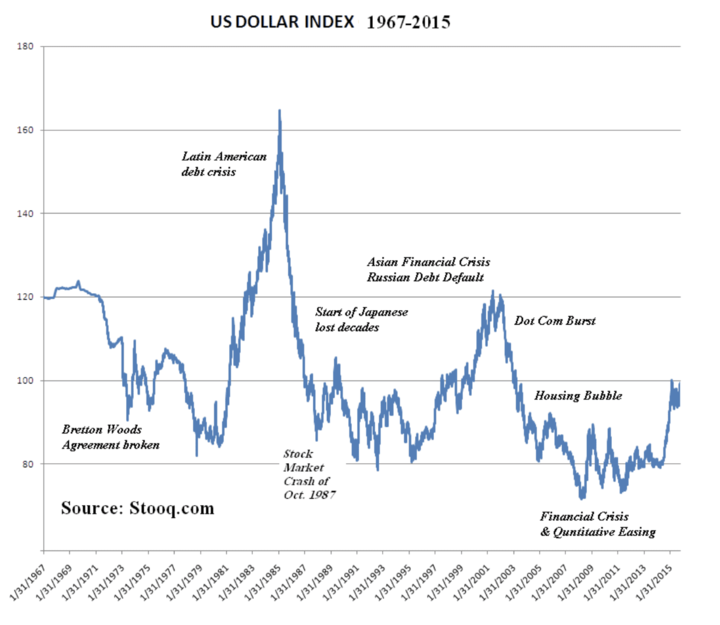

The Dollar Index, often referred to as DXY, is a critical barometer for assessing the strength of the US dollar against a basket of foreign currencies. Recent fluctuations in this index have been notably influenced by various factors, including the recent speech by U.S. President Trump at the World Economic Forum in Davos, where the dollar dipped to an intraday low of 98.384. As investors closely monitor US Dollar news, these developments highlight how economic indicators and political rhetoric can dramatically shift market perceptions. The impact of Trump’s speech raises questions about future DXY movements and the potential implications on global trade. Consequently, understanding the dynamics of the Dollar Index is essential for traders and economists alike, especially in a landscape shaped by such influential events.
The Dollar Index, also known as the DXY, serves as a key metric for gauging the value of the American currency against several major rivals. Market analysts often explore the ramifications of pivotal speeches and announcements that can sway the dollar’s strength, particularly those made by influential figures like the President. Understanding shifts in currency valuation involves examining a mixture of economic indicators alongside broader geopolitical narratives. The recent downturn in the index, related to comments made during the Davos summit, underscores the interplay between political discourse and economic performance. Engaging with these concepts equips investors and observers with a better grasp of currency dynamics in an ever-changing financial landscape.
| Key Point | Details |
|---|---|
| Davos Speech | President Trump’s speech at Davos affected market sentiments. |
| Dollar Index (DXY) | The DXY hit an intraday low of 98.384 following the speech. |
| Market Reaction | Investor reactions to the speech drove the Dollar Index lower. |
Summary
The Dollar Index (DXY) recently experienced a significant decline, reaching an intraday low of 98.384, primarily due to President Trump’s remarks at the World Economic Forum in Davos. The speech influenced market perceptions and investor confidence, leading to a downward shift in the index’s value. This situation highlights the sensitivity of the Dollar Index to political events and statements, indicating that external communications by key leaders can dramatically alter currency valuations.
Impact of Trump’s Davos Speech on the Dollar Index
The recent speech delivered by President Trump at Davos has had significant repercussions on the Dollar Index (DXY), which dropped to an intraday low of 98.384 following his comments. This decline signals trader concern, as Trump’s policies and comments on international trade could affect the strength of the U.S. Dollar. Investors initially viewed the speech as a potential precursor to increased tariffs and trade tensions, which prompted a sell-off in dollar-denominated assets and impacted the currency’s value.
Moreover, fluctuations in the Dollar Index can often be linked to broader market sentiments and economic indicators. After Trump’s speech, the market reacted swiftly, reflecting investor anxiety over U.S. economic stability. The DXY is a gauge of the dollar’s value against a basket of major currencies, and sudden shifts in sentiment regarding U.S. fiscal and monetary policies can cause notable volatility in the index. As such, the implications of Trump’s rhetoric cannot be understated, especially for traders watching economic indicators closely.
Understanding DXY Fluctuations Post-Trump Speech
The fluctuations in the Dollar Index (DXY) following Trump’s speech at Davos exemplify the connection between political events and currency performance. When President Trump addressed the international audience, his remarks about trade deficits and negotiations were met with mixed responses from the market. This illustrates how geopolitical news can serve as a catalyst for immediate and sometimes drastic movements in currency values. As analysts observe, such immediate proactivity in the dollar’s fluctuations often reflects a broader uncertainty about future economic policies.
It is essential for investors to keep abreast of not just the headlines but also the underlying economic indicators that can influence the dollar’s performance. Following Trump’s speech, many economic indicators were scrutinized to gauge their potential impact on the DXY. For instance, employment rates, inflation forecasts, and GDP growth figures often play a significant role in determining the strength of the dollar. Being informed of how these metrics interact with political narratives enhances strategic investment decisions.
Current U.S. Dollar News and Market Reactions
In light of Trump’s recent remarks at Davos, current U.S. dollar news is heavily focused on the changing perceptions of the dollar’s value among economists and traders alike. The dollar’s decline to an intraday low is indicative of broader market reactions to potential shifts in U.S. economic policy. Market attendees and analysts are now closely monitoring developments that could either stabilize or further weaken the dollar in the coming weeks.
Furthermore, current analysis indicates that the dollar’s strength is contingent on a variety of factors, including inflation rates and interest rate adjustments set by the Federal Reserve. The interplay of these elements with market sentiment following Trump’s Davos speech is critical for assessing future dollar trends. Economic experts argue that shoppers and corporations will also feel these repercussions at the consumer level, illustrating the profound ripple effects that currency valuation changes can entail.
Analyzing the Effect of Davos on Economic Indicators
The economic indicators that surfaced after Trump’s speech at Davos will play a significant role in understanding its longer-term effects on the U.S. Dollar. Analysts are using data such as the Consumer Price Index (CPI), non-farm payroll numbers, and export-import ratios to interpret how the dollar may perform moving forward. Trump’s comments created an air of unpredictability that investors typically dislike; thus, thorough analysis of these economic indicators became paramount to avoid adverse market reactions.
As traders anticipate Federal Reserve decisions that correspond to real economic data, the link between Trump’s remarks and subsequent market behavior becomes more pronounced. Understanding these indicators not only informs trading strategies but also helps in comprehending the broader economic landscape. The implications of Trump’s speech resonate beyond immediate market reactions, affecting everything from inflation forecasts to consumer spending levels, ultimately impacting the Dow Index and its fluctuations.
The Role of Political Rhetoric in Currency Valuation
Political rhetoric, especially from influential leaders like President Trump, can sway market confidence and currency valuation significantly. His speech at Davos served as a reminder of how intertwined political narratives are with economic outcomes. The repercussions on the Dollar Index (DXY) following this political event underscore the sensitivity of the language used in international discussions. Investors are particularly attuned to how these statements may signal future government policy directions.
In addition to market reactions, traders often study the psychological impact of political speeches on consumer and business sentiment. Trump’s comments ignited speculation about potential economic policies that could benefit or hinder the dollar. Therefore, those involved in currency trading must remain vigilant about political updates, considering them as crucial determinants of market movements just as much as solid economic data.
Future Projections for the Dollar Amidst Political Uncertainty
Looking ahead, projections for the future of the Dollar Index are increasingly shaped by political developments, particularly speeches and comments by key figures like Trump. If the market continues to interpret rhetoric as negative for trade relations, it is likely we will see further fluctuations in the DXY. Conversely, if subsequent economic indicators improve and mitigate concerns, the dollar could rebound to a stable path.
Economic forecasts often reflect these sentiments, hinting that anticipation of future policy changes can either buoy or depress the dollar. Thus, understanding how political statements correlate with economic forecasts is essential for both currency traders and investors. Keeping track of assumptions made during high-profile speeches will be critical for those aiming to predict where the DXY is headed in the short and long term.
Evaluating U.S. Trade Policies and Dollar Strength
The effectiveness of U.S. trade policies has a direct link with the strength of the Dollar Index; any changes proposed by President Trump can lead to immediate shifts in market confidence. Following Trump’s speech at Davos, analysts are closely examining how potential tariffs and trade agreements will influence the dollar. As history shows, trade tensions often correlate with increased currency volatility, emphasizing the importance of these policies on overall economic health.
Trade negotiations and outcomes are not just independently significant but intricately tied to other economic indicators. If Trump’s administration promotes trade initiatives that attract foreign investment, this could bolster the dollar’s resilience. Conversely, unsuccessful negotiations may lead to a decline in the dollar’s value, making it necessary for currency investors to keep a keen eye on trade-related developments.
The Interconnection of Inflation and Dollar Stability
Trump’s speech at Davos has reignited discussions about inflation and its effects on dollar stability. Inflationary pressures can often lead to an increase in interest rates, which has a direct effect on the Dollar Index (DXY). If the federal policies aimed at curbing inflation are perceived as aggressive, the dollar may strengthen; however, overbearing measures could lead to economic slowdown.
Evaluating inflation trends against commentary from key speeches provides significant insight for traders. The dollar’s performance often hinges on how inflation data correlates with U.S. monetary policy, and careful monitoring of these elements post-Davos will prove valuable. Thus, investors must not only consider political rhetoric but also solid economic data reflecting inflationary trends to make informed trading decisions.
The Broader Economic Landscape Post-Davos Speech
President Trump’s remarks at Davos have broader implications that extend beyond immediate dollar fluctuations, influencing the overall economic landscape. A notable drop in the Dollar Index (DXY) calls into question the market’s confidence in the U.S. economy, prompting a reassessment of economic indicators and forecasts. Stakeholders ranging from consumers to global investors are impacted by these shifts, illustrating the interconnectedness of political discourse and economic stability.
The dialogue at Davos also sets the tone for future economic discussions and policy adjustments that could seek to stabilize the dollar. As various sectors react to these developments, analyses will continue to explore how political decisions and speeches shape economic conditions. Observing how the dollar responds will provide a barometer not just for currency traders but for all engaged in the global economic sphere. The link between policy, market response, and economic indicators remains critical in navigating potential future developments.
Frequently Asked Questions
What impact did Trump’s speech at Davos have on the Dollar Index (DXY)?
President Trump’s speech at Davos led to a notable drop in the Dollar Index (DXY), which fell to an intraday low of 98.384. The market reacted to his comments that hinted at potential policies influencing the US Dollar’s strength.
How do economic indicators affect the fluctuations of the Dollar Index (DXY)?
Economic indicators play a crucial role in the fluctuations of the Dollar Index (DXY). Indicators such as employment rates, GDP growth, and inflation influence investor confidence in the US Dollar, leading to its appreciation or depreciation against a basket of currencies.
What are the latest US Dollar news affecting DXY today?
Recent US Dollar news reflects ongoing concerns about inflation and economic growth, which directly impact the Dollar Index (DXY). Updates on monetary policy from the Federal Reserve and key economic reports can influence market sentiment and cause significant shifts in the Dollar’s value.
How does Trump’s rhetoric influence the Dollar Index (DXY) over time?
Trump’s rhetoric often leads to volatility in the Dollar Index (DXY). Market participants closely monitor his speeches for insights into trade policies and economic strategies, which can either boost or diminish the value of the US Dollar in the global market.
What are the potential long-term effects of the Davos speech on the Dollar Index (DXY)?
The long-term effects of Trump’s Davos speech on the Dollar Index (DXY) could hinge on how his proposed policies are implemented. If market confidence wanes, the DXY could face prolonged declines, but if economic growth strengthens as a result of proposed initiatives, the index may recover.
How do DXY fluctuations correlate with global economic events?
DXY fluctuations are often correlated with global economic events, as they reflect investor sentiment towards the US economy compared to others. Significant events such as trade agreements, geopolitical tensions, and international policy changes can lead to rapid movements in the Dollar Index.
Related: More from DeFi & Stablecoins | Aixovia Burns 90,357,968 AIXDROP Tokens On-Chain Proof | Arthur Hayes Liquidates DeFi Tokens: A $3.48 Million Loss You Should See