


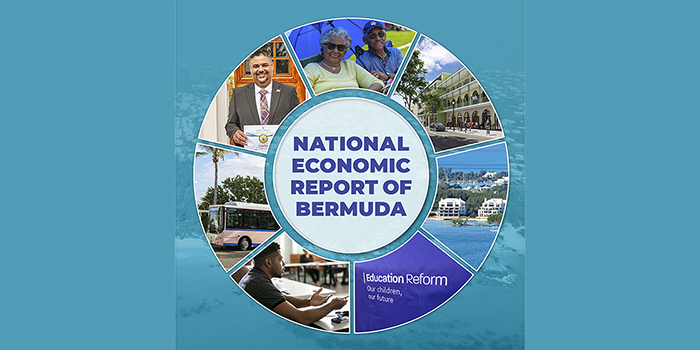

Bermuda on-chain economy is taking center stage as the island embarks on an ambitious journey to integrate stablecoin adoption seamlessly into its financial system. With the collaboration of the local government, Circle, and Coinbase, this initiative aims to modernize the Bermuda economy transformation by laying down robust digital currency infrastructure. Primarily leveraging USDC payments, the goal is to replace costly legacy payment systems with faster and more economical alternatives, thereby enhancing overall economic efficiency. However, amid the excitement, there is a hidden complexity that reveals the challenge of turning lofty ambitions into practical, everyday applications. As Bermuda navigates this blockchain economy transformation, the world watches closely to see if it can successfully implement a truly integrated on-chain economy while maintaining its financial stability.

The movement towards an on-chain economic framework in Bermuda is a pioneering effort that seeks to harness the power of digital assets for everyday transactions. This undertaking, often referred to as the shift towards a blockchain economy, focuses on utilizing digital currencies like USDC for various payment methods throughout the island. By enhancing the digital currency infrastructure, Bermuda aims to streamline processes and reduce transaction costs associated with traditional financial systems. This initiative not only signifies a potential evolution in how Bermudians engage with their economy but also serves as an experimental model for other regions considering similar stablecoin adoption. As this transformative journey unfolds, the nuances of consumer behavior and merchant engagement will play a pivotal role in shaping the success and sustainability of this on-chain economy.
| **Level** | **Operational Meaning** | **What You’d Need to See** | **What Bermuda Has Actually Disclosed** |
|---|---|---|---|
| 0 | “On-chain economy” is primarily a branding concept, with little to no change in actual payment flows. | No meaningful new payment options in production; no measurable change in costs, settlement times, or adoption; no public roadmap beyond general ambition. | High-level ambition language + partnership framing; no KPIs, timelines, or adoption figures published. (Easy to over-interpret without data.) |
| 1 | On-chain payments are permitted and usable in limited areas: early merchant acceptance and limited government/payment trials. | Named payment categories in scope (e.g., specific fees/taxes); baseline counts (# merchants, # wallets); initial volumes (monthly transaction count/dollars); basic user experiences (cash-in/out availability). | Releases describe pilots and claim “multiple live examples,” with USDC at the center, plus education/onboarding plans — but provide no merchant counts, wallet penetration, volumes, or cost comparisons. |
| 2 | Stablecoins become a common settlement option for key transactions while legacy systems still exist. | Penetration rates by sector (% of merchant sales in stablecoins); cost differences vs cards/wires; settlement speed metrics; reliable on/off-ramps; named bank/insurer integrations with go-live dates; compliance framework in operation. | The language suggests ‘allowing on-chain payments’ progressing toward ‘default rails’ in aspiration, but there’s no disclosed schedule, no named integrating institutions, and no verified adoption/cost outcomes yet. |
| 3 | On-chain is integrated into the national financial system: government + financial institutions + broad consumer use with observable macro impact. | Government collections + disbursements are substantially on-chain (taxes/fees + benefits/payroll/rebates); wide merchant coverage; high wallet penetration; audited cost/time savings; resilience/uptime metrics; clear governance and success metrics. | Not established by the announcement: no mandate, no claim that ‘all GDP’ settles on-chain, no replacement of the fiat system, and no published success metrics showing system-wide transformation. |
Summary
The Bermuda on-chain economy initiative, aiming to create the world’s first fully on-chain national economy, showcases significant potential and challenges. By integrating stablecoin payments through USDC and testing innovative financial infrastructure without mandating residents to fully transition, Bermuda is setting itself up as a practical model for future adoption. Despite the ambitious marketing and the framework set since 2018, the project remains in its early stages, with critical metrics regarding actual usage and integration still underdeveloped. Success in this endeavor could transform Bermuda’s economic landscape, offering a reference point for other nations exploring digital currency integration.
Understanding Bermuda’s Initiative Towards a Fully On-Chain Economy
Bermuda is stepping into uncharted waters as it embarks on its journey to become the world’s first fully ‘on-chain’ national economy. This initiative is chiefly powered by the adoption of USDC, a widely recognized stablecoin that promises to streamline payment processes and digital transactions across various sectors of the economy. The government, in collaboration with Circle and Coinbase, envisions that this transformation will not only modernize payment mechanisms but also provide a resilient backbone for future financial transactions. Through the integration of digital currency infrastructure, the island is set to revolutionize how citizens engage with their local economy while aiming to attract global interest and investment in the burgeoning blockchain economy.
However, this bold vision must be approached with caution. Despite the ambitious marketing of an entirely on-chain economy, the practicalities reflect a more gradual implementation strategy. The government is not mandating the use of blockchain for all transactions; instead, it is conducting pilot programs to assess stability and usability, indicating that while the adoption of digital currencies like USDC is encouraged, it will not fully replace traditional transaction methods immediately. This nuanced approach is key to understanding Bermuda’s economic landscape, which is heavily influenced by global trends while carefully balancing local consumer behavior and established financial practices.
The Role of Stablecoin Adoption in Bermuda’s Transformation
Stablecoin adoption stands at the forefront of Bermuda’s economic transformation efforts. As local businesses and financial institutions engage with stablecoins, particularly USDC, they explore innovative payment solutions that promise to enhance efficiency while reducing transaction costs. For instance, the move from traditional payment methods, which often incur high merchant fees (ranging from 2.5% to 3.5%), to stablecoins illustrates how Bermuda could save millions annually. If even a fraction of consumer spending shifts to stablecoins, the potential savings could significantly empower the local economy. Such adoption could pave the way for enhanced participation in digital commerce, ultimately supporting the broader ambitions of a blockchain-enabled economy.
Yet, the road to full-fledged stablecoin integration is laden with challenges. While the financial benefits are clear, successful stablecoin adoption in Bermuda hinges on the establishment of a robust digital currency infrastructure and comprehensive education programs to ensure that both consumers and merchants understand and embrace these changes. Without reliable onboarding mechanisms and clear regulatory frameworks that facilitate the use of digital currencies, the potential for widespread adoption may falter. The interplay between these factors is crucial, as Bermuda navigates its unique context as a small island economy with ambitions to lead in the digital finance space.
Bermuda’s Digital Currency Infrastructure and Its Implications
The foundational element of Bermuda’s on-chain economy initiative is the digital currency infrastructure being established through strategic partnerships and government collaboration. At the core of this infrastructure is the intent to implement USDC as a prominent payment method across government services, banks, and businesses. This holistic approach is designed to not only improve transaction efficiency but also to set a precedent for how digital currencies can be integrated into daily life. However, it is essential to recognize that such infrastructure development is not merely about facilitating transactions; it also focuses on building trust and acceptance among the population, which is pivotal for any successful economic transition.
Furthermore, advancements in Bermuda’s digital currency infrastructure could serve as a global case study, demonstrating the potential of on-chain economies to foster financial inclusivity and economic growth. If these systems are efficient and effective, they could attract investment and tourism, bolstering Bermuda’s service-oriented economy. However, a successful transition demands not only technological innovation but also the establishment of clear guidelines, compliance measures, and community engagement initiatives to educate and inform residents about the benefits and workings of blockchain technology and stablecoins.
Challenges in Moving Toward an On-Chain Economy
Despite the exciting prospects of transforming into a fully on-chain economy, Bermuda faces substantial challenges that could hinder its ambitions. The government has not yet provided detailed figures on critical metrics such as merchant adoption rates, transaction volumes, or overall consumer engagement with stablecoins. These data points are vital to determine the effectiveness of their initiatives and to transparently communicate progress to both residents and external stakeholders. The lack of information prompts skepticism regarding the true state of Bermuda’s digital economy, as potential investors and partners look for reliable indicators of success.
Moreover, the on-chain framework must contend with the reality of social and operational inertia. Many consumers are accustomed to traditional payment methods and may resist change unless there are compelling incentives to switch to stablecoins for everyday transactions. This consumer hesitance can be exacerbated by a lack of infrastructure for cash-in and cash-out processes, which is crucial for making stablecoins practically usable in daily life. Therefore, for Bermuda to successfully transition toward an on-chain economy, it is essential to foster both consumer confidence and operational readiness, ensuring that the benefits of such a shift are clear and accessible.
Testing Grounds: Why Bermuda is an Ideal Candidate for Blockchain Trials
Bermuda’s relatively small population and service-oriented economy position it uniquely as a testing ground for blockchain initiatives. With approximately 64,600 residents and a focus on high-value, low-volume transactions, the island can experiment with stablecoin integration in a controlled environment. This scenario allows the government and financial institutions to gauge the effectiveness of digital currency infrastructure without overwhelming traditional systems. By piloting various applications and services, Bermuda can gather invaluable data that might inform broader implementations of stablecoins and blockchain technology across larger economies.
Additionally, Bermuda’s historical context in digital finance allows it to build on existing frameworks established through previous initiatives, such as those involving USDC in tax payments. This existing familiarity with digital currencies among both government actors and residents can facilitate smoother transitions as innovations are introduced. Should Bermuda succeed in its digital transformation, it could emerge as a global referent for other nations exploring similar economic models, demonstrating how small economies can leverage technology to adapt to modern financial landscapes.
Consumer Engagement and Education in the Transition to On-Chain Payments
Critical to the success of Bermuda’s on-chain economy is consumer engagement and education. For stablecoins to gain traction, residents must not only understand how these digital currencies function but also recognize the tangible benefits they offer in terms of cost savings and transaction efficiencies. Initiatives aimed at educating consumers—whether through workshops, online resources, or community programs—will be vital in demystifying stablecoins and alleviating concerns about their legitimacy and security. The clearer individuals are about the advantages and workings of stablecoins, the more likely they are to incorporate these new payment methods into their regular financial interactions.
Furthermore, the government’s proactive role in supporting educational initiatives will bolster community confidence in transitioning to a digital currency economy. Engaging local stakeholders, including businesses and financial institutions, to create a cohesive message around the value of stablecoins can foster a collective movement towards adoption. By showcasing successful pilot projects and real-world use cases, Bermuda can transform skepticism into acceptance, laying down the groundwork for a robust on-chain economy that reflects both modern technological advancements and the unique needs of its population.
Regulatory Frameworks for a Stablecoin-Driven Economy
The establishment of a regulatory framework is paramount in securing Bermuda’s aspirations of a stablecoin-driven economy. Policies governing the use and management of stablecoins must be clearly defined to encourage both consumer adoption and institutional participation. This includes creating guidelines that protect consumers while allowing for innovation within the digital currency space. A well-structured approach to regulation can help mitigate risks associated with fraud and instability often associated with digital currencies, thereby fostering a secure environment for economic transformation.
Additionally, Bermuda’s ongoing regulatory efforts, such as the Digital Asset Business Act of 2018, set the stage for a properly governed digital economy. By establishing clear regulations that distinguish between government-operated and private-sector digital asset businesses, Bermuda can ensure compliance while promoting growth in the sector. As stablecoin adoption continues to evolve, these regulatory frameworks must remain adaptable to address emerging challenges and opportunities, serving as a foundation for building a robust on-chain economy that aligns with international standards and fosters global partnerships.
The Future of Bermuda’s On-Chain Economy and Its Global Significance
As Bermuda ventures deeper into the establishment of its on-chain economy, the implications of its progress will extend far beyond the island. By positioning itself as a leader in stablecoin adoption and digital currency infrastructure, Bermuda has the potential to influence other nations exploring similar paths. Should the country successfully navigate the complexities of integrating blockchain technology with traditional financial systems, it can serve as a prototype for others in the global community. Insights gleaned from Bermuda’s experiences with operational models, regulatory challenges, and consumer adoption could greatly enrich the dialogue surrounding digital currencies.
Moreover, Bermuda’s success or struggles could reshape how stablecoins are perceived globally. This ongoing journey of experimentation demonstrates the inherent instability that many economies face while attempting to modernize their financial landscapes. The outcomes of Bermuda’s initiatives may reignite conversations worldwide about the potential of blockchain to alleviate inefficiencies and offer transformative fiscal benefits, making it a pivotal case study in the evolution of the blockchain economy.
Frequently Asked Questions
What is the Bermuda on-chain economy initiative?
The Bermuda on-chain economy initiative aims to transform the island’s financial ecosystem by integrating USDC stablecoin payments into government operations, banking, insurance, and local businesses, positioning Bermuda as a pioneer in adopting blockchain-based digital currency infrastructure.
How does USDC payments fit into Bermuda’s on-chain economy transformation?
USDC payments are central to Bermuda’s transformation into a fully on-chain economy, offering fast and low-cost settlements that could replace traditional financial systems, thereby aiming to enhance efficiency and reduce costs in the island’s high-cost economy.
What role will digital currency infrastructure play in Bermuda’s economy?
Bermuda’s digital currency infrastructure is designed to facilitate transactions across various sectors by implementing stablecoins like USDC as primary payment methods, ultimately improving accessibility and integration within the local economy.
What challenges does Bermuda face in fully implementing an on-chain economy?
Bermuda faces challenges including limited merchant acceptance of USDC, the need for reliable on/off-ramps for stablecoins, and the requirement for regulatory clarity and infrastructure that effectively complements traditional payment systems.
Is Bermuda requiring all residents to adopt stablecoins in their day-to-day transactions?
No, Bermuda is not mandating that all residents use stablecoins for transactions. Instead, it is piloting stablecoin payments to assess their viability as a common settlement infrastructure without forcing consumers to change their payment habits.
How is Bermuda measuring the success of its on-chain economy initiative?
While Bermuda’s announcement lacks specific metrics regarding adoption rates or transaction volumes, success will likely be measured by the extent of stablecoin integration into everyday financial systems and observable cost savings for businesses and consumers.
What benefits could stablecoin adoption bring to Bermuda’s economy?
Adopting stablecoins like USDC could provide significant merchant savings, potentially lowering transaction costs from traditional card networks, thus allowing for lower prices for consumers and increased competitiveness for businesses in Bermuda.
What previous initiatives has Bermuda undertaken to support its blockchain economy?
Bermuda’s previous initiatives include the Digital Asset Business Act of 2018, the acceptance of USDC for tax payments in 2019, and various pilot programs that explore innovative uses of blockchain technology within the local financial landscape.
How does Bermuda’s approach to stablecoins compare to other jurisdictions?
Bermuda’s approach to integrating stablecoins into its economy is unique in that it seeks to implement a national framework that supports blockchain transactions, unlike many jurisdictions that may only adopt cryptocurrency in a limited capacity.
What future developments can be expected from Bermuda’s on-chain economy project?
Future developments from Bermuda’s on-chain economy project may include expanded partnerships with financial institutions, increased merchant adoption of USDC payments, and further initiatives focused on digital literacy and public engagement surrounding blockchain technology.
Related: More from Regulation & Policy | Anthropic Completes 0 Billion Funding Round, Valuing Company at 80 Billion | Gold Market Speculation: What Treasury Secretary Bessent Says