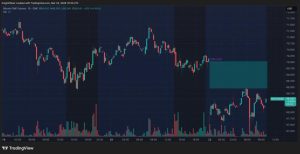




Wintermute’s viewpoint on the cryptocurrency market cycle reflects a transforming landscape for digital assets. The agent Garrett Jin from ‘1011 Insider Whales’ emphasizes that rather than marking the end of the traditional bull market, institutional players are reshaping its dynamics. With the increasing scale of institutional asset management, there’s a notable shift where volatility diminishes while asset prices enhance, especially for major cryptocurrencies like BTC and ETH. This pivotal transition highlights how these top assets are evolving from speculative entities into allocatable assets. Far from signaling a downturn, Wintermute’s perspective suggests an evolution towards more strategic investment approaches within the crypto market, indicating a mature phase defined by greater stability and institutional interest.

Examining the insights from Wintermute’s approach reveals a critical turning point for digital currencies in the context of the broader financial ecosystem. As traditional bullish phases give way to a new paradigm, the focus shifts from high-risk speculation to more stable asset allocation strategies. This change illustrates how market participants, particularly institutions, are adapting to trends in BTC and ETH, where investment strategies are becoming increasingly sophisticated. Rather than experiencing mere fluctuations in the crypto market’s volatility, stakeholders are pivoting towards managing risks and aligning their portfolios with more sustainable growth models. The evolving narrative within digital assets suggests an era where bitcoin and ethereum forge paths as foundational elements in institutional asset management.
| Key Point | Explanation |
|---|---|
| Wintermute’s Viewpoint | The traditional bull market cycle for cryptocurrencies is perceived to have ended. |
| Shift in Market Dynamics | The dynamics are altering due to changing institutional participation. |
| Institutional Asset Management | As institutions manage more assets, prices rise and volatility decreases. |
| BTC and ETH Evolution | BTC and ETH are moving from speculative instruments to allocatable assets. |
| Market Phase Transition | The market is changing from retail-driven volatility to institutional allocation-driven stability. |
Summary
Wintermute’s viewpoint highlights a significant shift in the cryptocurrency market dynamics, suggesting that the traditional bull market cycle has not ended but has transformed. Institutions are beginning to play a crucial role, leading to a transition of key crypto assets like BTC and ETH from speculative assets to those suitable for institutional allocation. As we witness this evolution, the increased stabilization in asset prices alongside reduced volatility indicates that this phase is more aligned with structured investment strategies rather than mere retail speculation, signaling a new era in cryptocurrency trading.
Understanding Wintermute’s Viewpoint on Cryptocurrency Market Dynamics
Wintermute’s viewpoint signals a pivotal shift in the cryptocurrency market cycle, particularly regarding the transition from an era dominated by retail investors to one led by institutional players. According to Garrett Jin from ‘1011 Insider Whales’, this shift does not mark the end of the bull market for cryptocurrencies. Instead, Wintermute interprets this change as an evolution in how institutions engage with assets like Bitcoin (BTC) and Ethereum (ETH). By emphasizing the importance of institutional asset management, Wintermute suggests that the overall market dynamics are transforming, leading to more stability and less volatility in asset prices.
This perception indicates that as institutional participation increases, these top cryptocurrencies are being redefined not merely as speculative assets but as allocatable investments. This fundamental change in market behavior reflects a broader adaptation within the crypto space. Institutions are moving from a position of mere speculation to one of strategic allocation, fundamentally altering how asset pricing and market movements are understood. A deeper institutional involvement may lead to more sustainable asset growth and a healthier market environment.
The Impact of Institutional Asset Management on BTC and ETH Trends
The rise of institutional asset management in the cryptocurrency market is reshaping the trends associated with leading cryptocurrencies like BTC and ETH. With institutions actively purchasing these assets, it is evident that the market is undergoing a transformation from a high-volatility landscape characterized by retail-driven trading to a more measured approach influenced by institutional dynamics. As more institutional players enter the fray, the price behavior of BTC and ETH is expected to stabilize, effectively reducing speculative spikes that define earlier market behavior.
This transition affects not only the trading trends of BTC and ETH but also brings about a recalibration of how the crypto market is perceived globally. As these cryptocurrencies become more widely recognized as allocatable assets, they may also gain acceptance as viable components in diversified investment portfolios. This trend can create an environment where BTC and ETH are viewed less as risky assets and more as essential allocations in modern asset management strategies, signaling a maturation of the cryptocurrency market as a whole.
Crypto Market Volatility: A New Phase Driven by Allocation Strategies
The cryptocurrency market has historically been known for its extreme volatility, largely driven by retail investors leveraging speculative sentiment. However, as noted by Wintermute, the increasing presence of institutional investors signifies a new phase of market volatility, which is now top-down rather than bottom-up. This evolution suggests that the traditional drivers of market swings are being replaced by institutional-level volatility, which is often more measured and rational. Thus, while fluctuations may still occur, they are likely to be influenced more by macroeconomic factors and institutional decisions than by retail sentiment alone.
As investors transition into this new phase, the strategies employed through institutional allocations will play a crucial role in determining the longevity and stability of the crypto market. Institutions typically bring a level of analysis and strategy that counters the chaotic nature of retail trading. As a result, the market may experience a decline in wild price movements, leading to a scenario where cryptocurrencies can be integrated into long-term investment strategies, ultimately promoting greater confidence among mainstream investors.
Shifting Focus: From Meme Dominance to Institutional Positioning in Crypto
The cryptocurrency landscape is undergoing a significant paradigm shift where the dominance of memes and small-scale retail trading is giving way to a more serious, institutional-driven market focus. Wintermute’s commentary reflects this critical transition, signaling a move away from the previous bull market characterized by speculative exuberance fueled by retail investors engaging with meme-inspired assets. Instead, this new market phase emphasizes the importance of institutional positioning, which prioritizes value and growth potential over mere popularity.
This shift is crucial for the long-term sustainability of the crypto market, as institutions start to favor on-chain analytics and fundamental valuation over speculative trading patterns. In a market increasingly shaped by institutional participation, cryptocurrencies will likely evolve in their use cases, becoming integral components within diversified portfolios rather than fleeting trends. Thus, this transformation is essential not only in redefining investor perceptions but also in establishing a more robust framework for evaluating crypto assets moving forward.
The Future of Cryptocurrency Amidst Evolving Market Strategies
As the cryptocurrency market evolves into a more mature ecosystem, the strategies employed by institutional investors will continue to shape its landscape. With Wintermute at the forefront of this dialogue, the narrative is clear: the future of cryptocurrency is not about the extinction of bull markets but about their reinvention. Institutions are no longer passive observers; they are now active participants whose investment decisions will lead to price stabilization and reduced volatility in the market.
Going forward, we can expect a heightened focus on the long-term potential of cryptocurrencies. Institutional strategies that involve building diversified portfolios containing key allocatable assets like BTC and ETH will likely influence other investors. This focus will cement cryptocurrencies’ positions within the financial mainstream, prompting a significant shift from traditional perceptions of volatility to a recognition of their long-term value within asset management frameworks.
Market Adaptation: How Institutions Are Influencing Valuation Procedures
As the cryptocurrency market matures, it is becoming increasingly clear that institutional investors are changing the way cryptocurrencies are valued. Traditionally, valuations were heavily influenced by market hype and retail trading patterns, leading to erratic price movements. However, Wintermute’s insights suggest that the growing influence of institutional asset management is promoting a more structured approach to valuation. By employing rigorous analysis, institutions can weigh factors such as demand, utility, and technology, which will directly impact the pricing models of cryptocurrencies.
In this new framework, BTC and ETH are likely to be evaluated not just as speculative assets but as integral components of a well-rounded investment strategy. This adaptation not only increases the credibility of cryptocurrencies among institutional investors but also encourages a more disciplined investment approach. As institutions refine their valuations, we may witness a shift towards fundamental analysis in the cryptocurrency market, ushering in a new era of stability and growth.
Navigating Market Sentiment: From Retail Influences to Institutional Insights
In the rapidly evolving cryptocurrency market, understanding market sentiment is crucial, particularly as retail influencers give way to institutional insights. Wintermute’s analysis emphasizes the importance of institutional participation in shaping market sentiment, which has historically been a driver of volatility. As institutions begin to dominate the market, their data-driven approach allows for a more nuanced understanding of price movements, reflecting the underlying economic and technological factors influencing cryptocurrencies.
With a decreasing dependency on retail-driven hype and speculation, the market’s sentiment landscape is becoming more grounded in reality. Institutions tend to focus on long-term value rather than immediate gains, shifting the overall sentiment and prompting consumers to consider cryptocurrencies as viable long-term investments. This evolution in sentiment recognizes the role of institutional insights in cultivating a more informed and strategic approach to crypto investments.
The Importance of Allocatable Assets in a Maturing Cryptocurrency Market
As institutions begin to recognize major cryptocurrencies like BTC and ETH as allocatable assets, this marks a critical transformation in how these digital currencies are viewed by the broader market. Wintermute’s perspective highlights that the bullish narrative surrounding cryptocurrency is not diminishing but evolving, with institutions now prioritizing long-term asset allocation strategies over short-lived speculative investments. By classifying BTC and ETH as allocatable assets, the perception of risk associated with these currencies is being re-evaluated, leading to increased confidence among investors.
This transformation offers significant implications for the cryptocurrency market’s future, as it represents a shift from volatile price swings driven by retail sentiment to a framework in which cryptocurrencies are regarded as stable components of diversified portfolios. Allocatable assets can provide a buffer against traditional market fluctuations, enhancing their appeal as viable investment options. With this maturation of the cryptocurrency market, investors will likely witness increased stability and reliance on cryptocurrencies for long-term growth.
Institutional Participation: Setting the Stage for a New Investment Paradigm
The increasing participation of institutional investors in the cryptocurrency market is fundamentally setting the stage for a new investment paradigm. As highlighted by Wintermute, this involvement brings a sense of legitimacy and professionalism that has previously been missing in the crypto space. Institutions have rigorous investment protocols and strategies aimed at maximizing returns while mitigating risks, which can drastically alter the landscape of cryptocurrency investing.
With a focus on structured asset management and long-term value creation, institutional investors are likely to influence market trends and enhance stability in cryptocurrency prices. Their strategies often favor established cryptocurrencies, signaling a shift in which BTC and ETH could be seen not just as speculative assets but as foundational elements in diversified financial portfolios. This shift invites more mainstream participants to consider cryptocurrencies as an asset class worthy of inclusion in their investment selections.
Frequently Asked Questions
What does Wintermute’s viewpoint signify about the cryptocurrency market cycle?
Wintermute’s viewpoint suggests that the traditional bull market cycle for cryptocurrencies has transitioned rather than ended. It highlights how institutional asset management is changing market dynamics, leading to a more stable environment for allocatable assets like BTC and ETH.
How does Wintermute’s viewpoint affect BTC and ETH trends in the current market?
According to Wintermute’s viewpoint, BTC and ETH trends are shifting from being speculative to more institutional-focused. This transition indicates that these top cryptocurrencies are recognized as allocatable assets, allowing for increased stability and reduced volatility as institutional participation rises.
What is the significance of cryptocurrency market volatility in Wintermute’s perspective?
In Wintermute’s perspective, cryptocurrency market volatility is expected to decline as the market shifts toward institutional asset management. This transition implies that as institutions invest more in allocatable assets like BTC and ETH, the overall market will experience less speculative-driven volatility.
How does Wintermute view the role of institutional asset management in the crypto market?
Wintermute believes that institutional asset management is reshaping the cryptocurrency market by changing how assets are allocated. The viewpoint suggests that as institutional participation grows, cryptocurrencies will be viewed less as speculative tools and more as allocatable assets.
What changes does Wintermute anticipate in crypto market dynamics?
Wintermute anticipates a shift in crypto market dynamics from a phase dominated by retail speculation and high volatility to one characterized by institutional allocation strategies. This transition is driven by deeper institutional involvement, particularly with leading assets like BTC and ETH.
Is the bull market over according to Wintermute’s viewpoint?
No, Wintermute’s viewpoint does not indicate that the bull market is over. Instead, it suggests that the nature of the bull market is evolving due to increased institutional participation, which is changing how assets are managed and perceived in the cryptocurrency space.
What does Wintermute imply about the future of allocatable assets in cryptocurrency?
Wintermute implies that the future of allocatable assets in cryptocurrency, particularly BTC and ETH, will be defined by institutional involvement and strategic asset management that prioritizes stability over speculation.
How do retail-driven dynamics compare to institutional-driven mechanisms in Wintermute’s analysis?
In Wintermute’s analysis, retail-driven dynamics are characterized by high volatility and speculative trading, whereas institutional-driven mechanisms emphasize stable allocation strategies and reduced volatility as institutions take a more significant role in the cryptocurrency market.
Related: More from Market Analysis | WLFI Price Predicted: World Liberty Financial Proposes Governance Overhaul | XLM Bounces But Bears Control