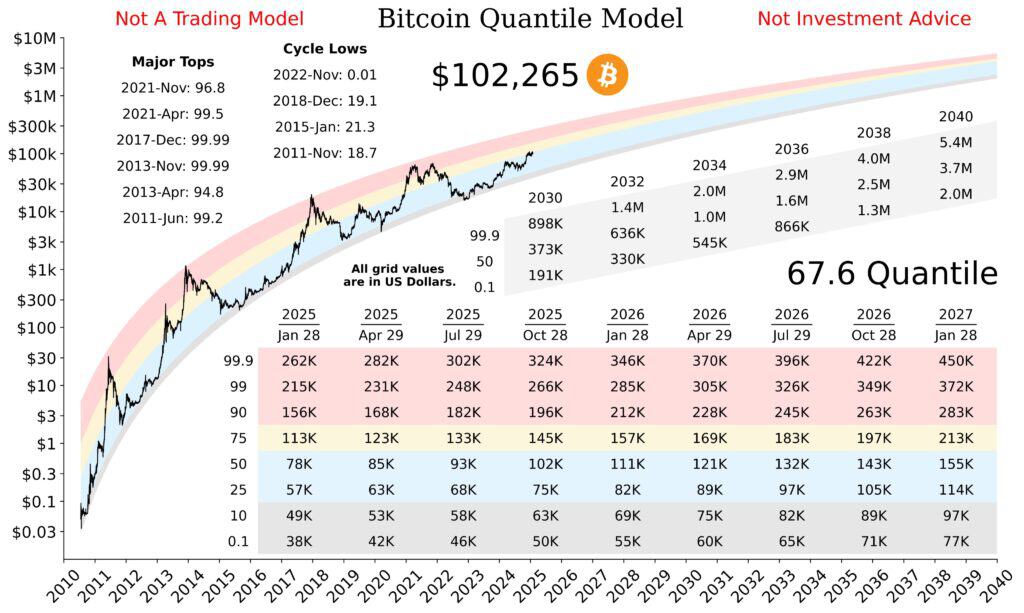

In the ever-evolving landscape of cryptocurrencies, Bitcoin price predictions have become a hot topic of discussion among traders and analysts alike. As the leading digital asset, Bitcoin’s value is influenced by numerous factors, including future market trends and institutional activity. Recent events surrounding the Federal Reserve and potential investigations into key figures like Jerome Powell have sparked curiosity about BTC’s resilience. Additionally, insights into the cryptocurrency market, including Bitcoin futures and trends, provide a framework for evaluating potential price movements. With Bitcoin ETFs experiencing significant outflows, understanding these market dynamics is crucial for anyone looking to navigate the complexities of Bitcoin’s future.
When considering forecasts for Bitcoin’s future value, market analysts often delve into BTC trends and cryptocurrency evaluations. Investors are examining the underlying factors that could influence Bitcoin’s trajectory, such as regulatory changes and macroeconomic impacts. The outlook for Bitcoin, as a digital asset, hinges on institutional involvement and the broader sentiment in the financial markets. From the scrutiny of Bitcoin ETF flows to the implications of Bitcoin futures data, it’s clear that traders need to remain vigilant as they speculate on the path ahead for BTC. Ultimately, following these developments will shed light on the blockchain’s potential as a mainstream financial player.
Analyzing Bitcoin Price Predictions Amid Market Uncertainties
As Bitcoin captures the attention of both investors and analysts, the prospects for its price have become a hot topic. Recently, Bitcoin has shown remarkable resilience amidst external pressures, with its recent rally bringing it close to the $92,000 mark. However, analysts are cautious, warning that the cryptocurrency’s price may struggle to hold this momentum due to ongoing market dynamics, including regulatory scrutiny and institutional outflows from Bitcoin ETFs. Market insights suggest that these factors could influence Bitcoin’s trajectory, leading to varied predictions in the cryptocurrency price landscape.
Bitcoin price predictions remain a crucial aspect of market discussions, especially given the recent volatility surrounding the cryptocurrency. With key indicators such as the neutral basis rate of BTC futures and the significant outflows from ETFs, the outlook for Bitcoin is mixed. While some analysts foresee a potential climb towards new all-time highs, others emphasize the importance of buyer conviction and market sentiment, indicating that without robust demand, the price might drift lower. Thus, keeping an eye on BTC price fluctuations and investor behaviors is vital for making informed investment decisions.
Understanding Bitcoin Price Analysis: Current Trends and Insights
The current state of Bitcoin price analysis reveals a complex interplay of market forces shaping its value. Following the recent spike that pushed Bitcoin above $92,000, analysts have noted the lack of bullish sentiment among traders. The recent data from BTC futures suggests that while there is some interest in trading, the premium has not reached levels that indicate a strong bullish trend. Instead, the positive moves in Bitcoin’s price have been countered by considerable outflows from ETFs, suggesting that institutional investors may be hedging their positions in anticipation of market corrections.
In the broader context of cryptocurrency market insights, Bitcoin’s current price action indicates a cautious market. Despite institutional interest, as highlighted by significant buying from firms like MicroStrategy, many traders are unconvinced about a sustained bullish market. As such, the prevalent bearish undercurrents in Bitcoin futures place the cryptocurrency at a crossroads, where confidence in the BTC market is essential for any hopeful upward movement. Therefore, ongoing Bitcoin price analysis should focus on external economic factors and internal market behaviors to give a clearer picture of future trends.
The Impact of Bitcoin ETF Outflows on Market Sentiment
The recent trend of Bitcoin ETF outflows has raised alarms about market sentiment. With $1.38 billion in net outflows recorded over just four trading sessions, it’s clear that institutional investors are reevaluating their positions in Bitcoin. This movement has contributed to a bearish tone in the market, as many investors may perceive the outflows as a sign of weakening demand for Bitcoin. Understanding the implications of these outflows is critical, as declining ETF investments could signal a broader reluctance among institutional players to engage with Bitcoin amid regulatory uncertainties.
Moreover, the correlation between Bitcoin ETF outflows and price deterioration cannot be ignored. High outflow volumes often precede price drops, creating a feedback loop that can lead to increased bearish sentiment among traders. As the market navigates through these turbulent waters, the potential for further outflows could exacerbate volatility, impacting Bitcoin’s historical role as a digital store of value. Therefore, monitoring trends in Bitcoin ETF investment flows will be essential for anticipating future price movements.
BTC Futures: Current Status and Future Predictions
The state of BTC futures is a significant aspect of market analysis, particularly following recent price movements. With the futures’ basis rate hovering around a neutral 5%, it suggests that traders are currently adopting a wait-and-see approach. Historically, a bullish breakout for Bitcoin has been characterized by a basis exceeding 10%, indicating investor confidence. As the market stands at a critical juncture, any shift in the basis rates could either fuel a resurgence in Bitcoin prices or deepen the current bearish sentiment.
Furthermore, insights derived from BTC futures data reveal the cautious nature of traders amidst uncertainty surrounding the Federal Reserve’s actions. As institutional investment strategies evolve, the implications of BTC futures trading will undoubtedly influence market dynamics. Therefore, it is vital for analysts to interpret these movements as potential indicators of future price stability or volatility, aiding traders in making informed decisions. Whether the market witnesses a bullish turnaround or continues on its current trajectory largely depends on investor sentiment and external economic factors.
The Role of Institutional Investors in Bitcoin’s Future
Institutional investors play a pivotal role in shaping Bitcoin’s future, particularly in light of recent market fluctuations. With significant capital moving in and out of Bitcoin, their decisions can have a substantial impact on price stability. The recent acquisition of Bitcoin by MicroStrategy illustrates how large institutions are maneuvering within the cryptocurrency market, despite broader bearish trends. However, the challenge lies in balancing their strategies against shifting market conditions and regulatory environments that could affect their investments.
The hesitance of institutional investors to fully commit to Bitcoin, especially amid reports of ETF outflows, underscores the importance of sustained confidence within the market. Should institutions perceive Bitcoin as a viable alternative investment compared to traditional assets, we could see renewed bullish behavior. Nonetheless, the ongoing scrutiny from regulatory bodies and the fluctuations in Bitcoin’s perceived value continue to complicate this landscape, making the role of these investors crucial in steering future Bitcoin trends.
Bitcoin’s Volatility: Causes and Consequences
Bitcoin’s volatility is a defining characteristic that both attracts and deters investors. Recent shifts in price, including the swift rise to $92,000, are often followed by subsequent drops, creating a landscape of uncertainty in cryptocurrency trading. Such rapid price swings can be attributed to several factors, including market manipulation, speculative trading, and external economic pressures, such as changes in US Federal Reserve policies. Understanding these factors is crucial for both traders and analysts who aim to navigate the turbulent waters of crypto investments.
The consequences of Bitcoin’s volatility extend beyond individual investors to influence broader market strategies. Businesses and institutions are forced to adapt their approaches to trading and investment, potentially leading to more conservative strategies during periods of high volatility. Additionally, market sentiment can shift dramatically, impacting everything from Bitcoin’s acceptance as a legitimate asset class to its long-term value perception. As such, ongoing analysis of Bitcoin’s volatility will remain vital for understanding its future in the financial landscape.
What to Expect from Future Bitcoin Price Movements
As Bitcoin continues to be a focal point in the financial world, expectations for future price movements remain a hotly debated topic. The potential for Bitcoin to reclaim and move beyond the $94,000 mark hinges on several market factors, including institutional buying trends, regulatory developments, and macroeconomic indicators. Analysts remain divided on short-term predictions, with some foreseeing bullish trends based on increased institutional involvement, while others suggest that current economic conditions may lead to further price corrections.
Moreover, understanding the correlation between Bitcoin price movements and broader market sentiments is essential. If the cryptocurrency can build on its recent gains and foster increasing investor trust, the pathway to significant price increases appears feasible. Conversely, if regulatory concerns and inflows into ETFs continue to decline, Bitcoin may struggle to maintain its price momentum. Thus, ongoing market observation and analysis will be crucial for anticipating the trends that will shape Bitcoin’s future.
Regulatory Concerns and Their Impact on Bitcoin Pricing
The evolving landscape of cryptocurrency regulation poses significant challenges for Bitcoin pricing. Recent investigations into prominent figures, such as the Federal Reserve Chair Jerome Powell, illuminate the intricate relationship between government policy and market sentiment. As uncertainty looms over potential regulatory actions, traders remain cautious about Bitcoin’s long-term viability as a prominent asset class. Market reactions to regulatory developments often create sharp price fluctuations, highlighting the importance of understanding these dynamics for predicting Bitcoin’s future.
Additionally, regulatory scrutiny often leads to increased volatility, as market participants weigh the potential implications of new laws and compliance requirements. This uncertainty can deter institutional investment, further affecting Bitcoin’s pricing stability. If regulatory challenges persist without clear guidelines and supportive frameworks, Bitcoin’s narrative as a safe-haven asset could be undermined, leading to decreased confidence among investors. Effective monitoring of regulatory changes will be vital for understanding their impact on Bitcoin’s market performance.
The Future of Bitcoin as a Store of Value
Discussions on Bitcoin as a store of value have come to the forefront, especially as gold and silver approach new highs while Bitcoin experiences notable price drops. The initial narrative framing Bitcoin as digital gold has faced scrutiny in light of recent market behaviors, including ETF outflows and diminished demand for leveraged positions. This shift in perception raises questions about Bitcoin’s reliability as an alternative hedge against traditional economic pressures, thereby influencing investment strategies among both retail and institutional investors.
As analysts consider Bitcoin’s long-term potential, the need for a reassessment of its store-of-value status becomes critical. If Bitcoin can solidify its value proposition amid ongoing market challenges, it could reclaim investor confidence and establish a more prominent role in global finance. However, ongoing scrutiny surrounding its regulatory status and market acceptance will determine whether Bitcoin can navigate these challenges successfully. Investors must remain vigilant and informed as they assess Bitcoin’s potential as a sustainable store of value.
Frequently Asked Questions
What factors are currently influencing Bitcoin price predictions?
Bitcoin price predictions are influenced by various factors including Bitcoin ETF outflows, BTC trends, and institutional investor behaviors. For instance, recent $1.38 billion net outflows from Bitcoin ETFs indicate a lack of bullish demand, impacting market sentiment.
Are there any recent Bitcoin price analysis insights to consider?
Recent Bitcoin price analysis suggests mixed signals, with BTC briefly rising above $92,000 amid investigations into Fed Chair Jerome Powell. However, a neutral 5% basis rate in BTC futures indicates hesitance among traders, affecting future price predictions.
How do Bitcoin futures affect price predictions?
Bitcoin futures significantly impact price predictions as they reflect traders’ confidence and market sentiment. Currently, a neutral-to-bearish basis rate of 5% suggests that traders are cautious, which could limit upward Bitcoin price predictions in the near term.
What does the decline in Bitcoin ETF outflows mean for BTC trends?
The decline in Bitcoin ETF outflows, totaling $1.38 billion over four days, signals diminished interest among institutional investors, which may negatively influence BTC trends and price predictions, as less buying pressure can lead to lower price stability.
Can Bitcoin still be considered a viable investment amid recent price movements?
While Bitcoin has faced challenges, such as a drop of 23% since October 2025, its role as an alternative asset remains debated. Price predictions remain cautious due to external economic pressures and weakening demand in the cryptocurrency market.
What should investors look for in crypto market insights regarding Bitcoin?
Investors should closely monitor crypto market insights such as Bitcoin futures data, ETF outflows, and macroeconomic conditions. These factors provide a clearer view of potential price movements and help refine Bitcoin price predictions.
Is the current economic environment affecting Bitcoin price predictions?
Yes, the current economic environment, characterized by persistent inflation and the Federal Reserve’s policies, is impacting Bitcoin price predictions. Analysts are becoming less optimistic about stimulus measures, which could influence BTC valuations.
How might Bitcoin’s price trajectory change in light of regulatory developments?
Regulatory developments, such as the investigation into Fed Chair Powell, can create volatility in Bitcoin’s price. Such events can either bolster confidence or cause uncertainty, significantly influencing Bitcoin price predictions and overall market sentiment.
| Key Point | Details |
|---|---|
| Bitcoin Price Increase | Bitcoin rallied briefly to $92,000 amidst talks of a DOJ investigation into Fed Chair Powell. |
| ETFs and Outflows | Bitcoin ETFs recorded $1.38 billion in net outflows over four trading sessions. |
| Futures Market Sentiment | BTC futures display a neutral 5% basis rate, below the 10% needed for bullish sentiment. |
| Market Performance | Bitcoin is down 23% since October 2025, contrary to rising gold and silver prices. |
| Corporate Investments | Microstrategy acquired $1.25 billion in BTC, yet Bitcoin struggles to hold above $94,000. |
| Economic Context | Interest rate cuts by Goldman Sachs are no longer anticipated, despite a resilient labor market. |
| Future Predictions | Doubt around bullish trends persists; analysts caution on potential economic downturn. |
Summary
Bitcoin price predictions remain cautious amid recent developments, as the cryptocurrency faces challenges in maintaining its value. With significant ETF outflows and lackluster future market indicators, investors are apprehensive despite short-term rallies. The backdrop of ongoing economic discussions and investigations surrounding the Federal Reserve complicate the outlook for Bitcoin. Analysts suggest that without a convincing bullish sentiment, reaching higher price levels like $105,000 may prove difficult in the near future.
Related: More from Bitcoin News | AI, BTC Miners Issue High | Bitcoin Above $69K? Glassnode Weighs In