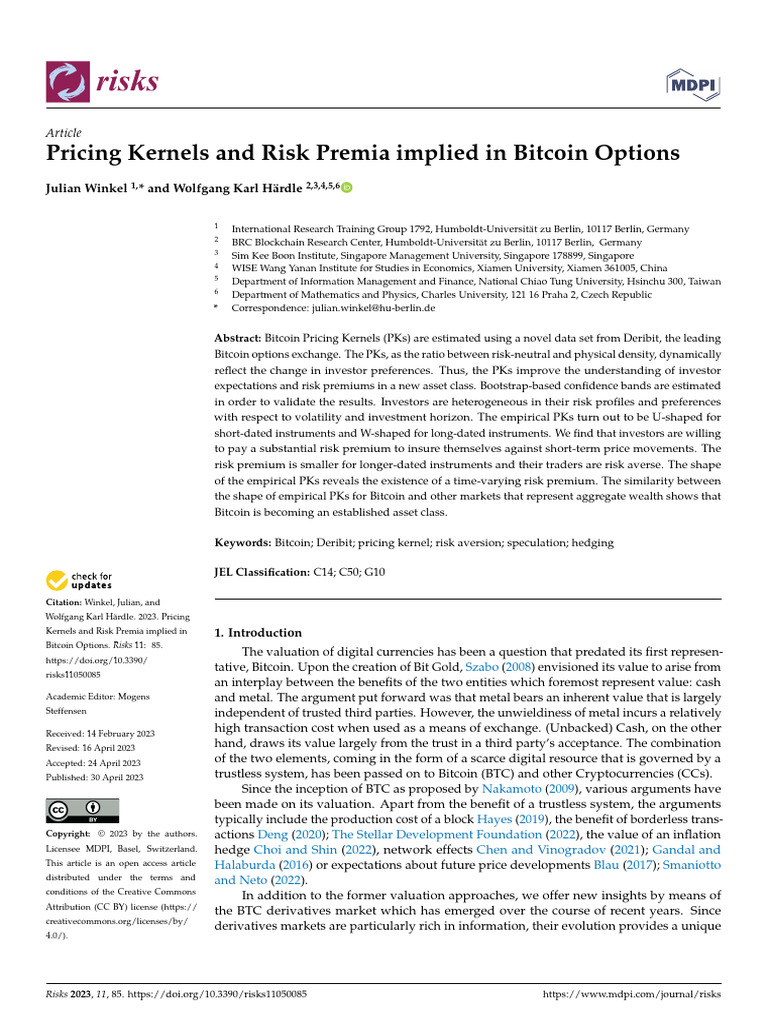

Bitcoin risk premia has become a focal point in recent discussions about the future of decentralized assets as the financial landscape faces increasing political scrutiny. The recent investigation into U.S. Fed Chair Jerome Powell highlights potential political pressure, which could impact Bitcoin investment sentiment significantly. Analysts suggest that such political events can exacerbate volatility in risk assets, including Bitcoin, as its appeal as a non-sovereign investment option grows. As interest rates fluctuate in response to governmental actions, Bitcoin price analysis shows the cryptocurrency maintains resilience amidst market turbulence. Consequently, understanding Bitcoin risk premia is essential for investors looking to navigate the complexities of today’s financial climate.
The concept of Bitcoin risk premia, often discussed in the context of alternative digital currencies, underscores the potential for enhanced returns amid uncertainty. With the ongoing scrutiny of central bank policies and interest rates, Bitcoin and other decentralized investments are becoming increasingly relevant for savvy investors. Political forces influencing monetary policy can significantly affect the perceived value of these digital assets, prompting a close examination of their price dynamics. Additionally, as traditional equities face systemic corrections, the narrative around decentralized assets like Bitcoin is likely to gain traction. By analyzing these intertwined elements, investors can better appreciate the risk-reward profile of engaging with this pioneering cryptocurrency.
The Introduction of Bitcoin Risk Premia
As the news of U.S. Fed Chair Jerome Powell’s impending legal troubles breaks, a significant topic of conversation within investment circles is the introduction of Bitcoin risk premia. This term refers to the additional return that investors may require when holding Bitcoin, perceived as a decentralized asset, amidst political turmoil. Analysts suggest that if trust in traditional banking structures, such as the Federal Reserve, wanes due to political influence, Bitcoin might gain traction as a safe haven for investors seeking stability and non-sovereign qualities.
This shift could mark an intriguing evolution in Bitcoin’s role within the financial landscape, transforming it from merely a speculative asset to a coveted safe haven. The potential for Bitcoin risk premia to be factored into investment strategies highlights the growing perception of cryptocurrencies as essential diversifiers. Such consideration might attract long-term investors looking for less correlation with traditional economic fluctuations and greater insulation against governmental meddling.
Political Pressure and Its Impact on Bitcoin Investment
The political pressure exerted on Federal Reserve officials, highlighted by President Trump’s vocal criticisms, poses a complex challenge for investors. As Powell’s credibility comes into question, the effects ripple through the financial markets, prompting questions about the resilience of decentralized assets like Bitcoin. Investors are increasingly recognizing that heightened political interference could amplify the appeal of Bitcoin, pushing it further into the limelight as an alternative investment vehicle.
With political uncertainties mounting, many investors may turn their attention toward Bitcoin investment as they seek to hedge against the volatility of U.S. equities. The connection between political environments and asset performance has never been clearer; Bitcoin’s performance often counteracts fiat stresses. Thus, the narrative surrounding its use as a non-sovereign asset gains traction, encouraging more investors to consider it as a legitimate component of their portfolios.
Interest Rates and Their Influence on Bitcoin Prices
Interest rates set by central banks have always had a profound impact on asset prices, and Bitcoin is no exception. As the Federal Reserve grapples with criticism and potential shifts in policy, analysts are observing how these interest rates affect Bitcoin’s price trajectory. With lower interest rates traditionally stimulating investment in riskier assets, any significant alteration in these rates could either propel or hinder Bitcoin’s market performance.
As Bitcoin’s price fluctuates in response to changing macroeconomic factors, investors must remain vigilant. The confluence of rising geopolitical tensions and the likelihood of fluctuating interest rates further complicates the landscape. Traders and investors are advised to analyze these factors comprehensively to understand how shifts in interest rates may trigger market responses in both Bitcoin and other decentralized assets.
Decentralized Assets in Times of Crisis
In times of economic uncertainty or political turmoil, decentralized assets like Bitcoin often come to the fore as attractive alternatives to traditional financial instruments. Investors are increasingly recognizing that Bitcoin’s non-sovereign design can afford them a degree of protection against the volatility seen in areas influenced by centralized policies. This recognition has begun to influence market sentiment, with many investors reassessing their portfolios to include more Bitcoin.
The resilience of decentralized assets during crises can serve as a litmus test for their longer-term viability as investment vehicles. As traditional markets react to political pressures, the stability offered by Bitcoin has been accentuated, leading many to consider it not just as part of a balanced investment portfolio, but as a crucial component in times of heightened risk.
The Role of Market Sentiment in Bitcoin Trading
Market sentiment plays a pivotal role in shaping Bitcoin prices, particularly during fluctuating economic conditions. Current data from crypto platforms indicate a shift in sentiment as investors begin to regain confidence amidst prevailing uncertainties. This newly optimistic outlook is reinforcing the notion that as political and economic factors sway traditional markets, Bitcoin may serve as a beacon of reliability.
Enhanced investor sentiment toward Bitcoin could catalyze renewed interest and drive demand in a market that has shown signs of stabilization. Coupled with analysts noting historical patterns linked to Bitcoin’s performance during similar sentiment shifts, traders may find strategic advantages in embracing the current climate. This overarching narrative underscores the need for investors to harness the psychological elements driving Bitcoin price movements in their trading strategies.
Analyzing Bitcoin Against Traditional Risk Assets
As interest in Bitcoin increases, a closer analysis of its performance relative to traditional risk assets becomes essential. Recent market events, including the scrutiny faced by Jerome Powell, illustrate how intertwined Bitcoin’s fortunes are with broader economic conditions. Observers note that as equity markets fluctuate prompted by potential political consequences, Bitcoin’s unique qualities as a non-sovereign asset may position it favorably against traditional stocks and securities.
Evaluating Bitcoin’s performance in the context of these traditional assets can provide insights for prospective investors. By identifying patterns where Bitcoin demonstrates strength amidst declining confidence in other markets, traders can better manage their expectations and strategies. This approach highlights Bitcoin’s potential as a hedge and diversifier, especially in turbulent times when traditional investment vehicles falter.
The Future of Bitcoin in a Changing Financial Landscape
With ongoing investigations and political scrutiny of federal institutions, the future of Bitcoin appears increasingly promising. Analysts posit that growing skepticism about traditional monetary policies could bolster Bitcoin’s attractiveness as a substitute for conventional financial assets. Strategic adoption by institutional investors and a shift in investor perceptions may prompt Bitcoin’s evolution from a speculative asset to a grounded investment opportunity.
The changing financial landscape poses both challenges and opportunities for Bitcoin; its foundational principles of decentralization might align perfectly with investor demands for autonomy and stability. As discussions surrounding its unique characteristics gain momentum, Bitcoin has the potential to become an integral part of contemporary investment portfolios. The future market narrative surrounding Bitcoin will likely be shaped by how effectively it can carve a niche amidst political and economic shifts.
Understanding Smart Money Reactions to Bitcoin Trends
The behavior of ‘smart money’—consisting of successful institutional investors—provides significant insights into market trends, particularly concerning Bitcoin. In recent observations, these traders positioned themselves net short on Bitcoin, indicating a cautious approach amidst roiling market conditions. This hesitance underscores the complexities inherent in Bitcoin trading and the predictive analytics employed by these savvy investors.
While smart money remains skeptical about Bitcoin’s short-term prospects, their continued focus on other assets like Ether and XRP hints at a broader narrative of discerning investment strategies. This divergence behavior showcases the necessity for all participants, from retail traders to institutional investors, to understand the diverse market dynamics at play. Monitoring smart money trends can offer critical foresight for those navigating the sometimes volatile waters of cryptocurrency investments.
The Resilience of Bitcoin in a Volatile Market
The recent fluctuations in traditional markets have unveiled Bitcoin’s resilience, reinforcing its narrative as a non-sovereign alternative asset. Amidst volatility, analysts have frequently emphasized Bitcoin’s enduring quality as an asset that often thrives in uncertain times. A closer examination reveals that its decentralized framework enables it to endure pressure from political and economic tensions that could destabilize traditional markets.
This resilience is pivotal for attracting a diverse set of investors eager for options beyond conventional assets. As external factors continue to challenge fiat currencies and risk assets, Bitcoin stands poised to fulfill a unique role within investment strategies focused on long-term sustainability and performance. Consequently, its appeal as a hedge against traditional financial systems is likely to grow, shaped by ongoing geopolitical and economic developments.
Frequently Asked Questions
What is Bitcoin risk premia and how does it relate to Bitcoin investment?
Bitcoin risk premia refers to the additional return investors expect from Bitcoin compared to traditional assets, due to its volatility and perceived risks. This concept becomes particularly relevant in instances of political pressure or economic uncertainty, as investors seek non-sovereign assets like Bitcoin to hedge risks and protect value.
How do interest rates impact Bitcoin risk premia?
Interest rates have a significant impact on Bitcoin risk premia. When central banks, such as the U.S. Federal Reserve, adjust interest rates, it can influence investor sentiment and the overall appeal of decentralized assets like Bitcoin. For instance, lower interest rates may lead to increased demand for Bitcoin as an alternative investment during times of inflation or economic instability.
What role does political pressure play in Bitcoin price analysis and risk premia?
Political pressure can directly affect Bitcoin price analysis by introducing uncertainty, which in turn can lead to a higher Bitcoin risk premia. As political factors challenge the credibility of traditional financial systems, investors may turn to Bitcoin due to its decentralized nature, seeking to diminish their exposure to sovereign risk.
Can Bitcoin’s decentralized assets status enhance its risk premia in uncertain markets?
Yes, Bitcoin’s status as a decentralized asset enhances its risk premia, especially in uncertain markets. As confidence in traditional financial systems falters due to political or economic pressures, investors may prefer Bitcoin for its non-sovereign characteristics, leading to an uptick in risk premia associated with Bitcoin investments.
Is there a correlation between Bitcoin risk premia and investor sentiment during market corrections?
There is often a correlation between Bitcoin risk premia and investor sentiment during market corrections. As traditional risk assets decline, investors might shift towards Bitcoin, viewing it as a safer, non-sovereign option. This shift can increase Bitcoin’s risk premia as demand rises amidst a backdrop of uncertainty.
How might future political events influence Bitcoin’s role in risk premia?
Future political events could significantly influence Bitcoin’s role in risk premia by creating environments of uncertainty. If political interference with monetary policy becomes a norm, Bitcoin may solidify its position as a non-sovereign risk asset, leading to higher expected returns linked to its perceived stability and independence from traditional financial systems.
What strategies can investors use to assess Bitcoin risk premia?
Investors can assess Bitcoin risk premia by analyzing market trends, geopolitical events, and shifts in sentiment among institutional and retail investors. Metrics such as volatility, trading volumes, and Bitcoin’s performance against traditional assets during market corrections can provide insights into its risk premia and investment potential.
| Key Point | Details |
|---|---|
| Investigation of Jerome Powell | Federal prosecutors have opened a criminal investigation into Powell’s testimony regarding Fed renovations. |
| Impact on Bitcoin | Political pressure and challenges to the Fed may renew demand for Bitcoin’s non-sovereign characteristics. |
| Political Environment | Trump has criticized Powell for not lowering interest rates, affecting risk assets including Bitcoin. |
| Market Reaction | Bitcoin prices rose 0.85% in 24 hours amidst increasing interest in decentralized assets. |
| Investor Sentiment | Data suggests a gradual improvement in crypto investor sentiment, potentially leading to market recovery. |
| Smart Money Position | Smart money traders are net short on Bitcoin but net long on Ether and XRP, indicating mixed expectations. |
Summary
Bitcoin risk premia are becoming increasingly significant as the political landscape continues to shift. Recent scrutiny of Federal Reserve Chair Jerome Powell highlights concerns over the independence of monetary policy, influencing investors’ perceptions of risk in various assets. As political pressures mount, Bitcoin’s appeal as a decentralized, non-sovereign asset may grow stronger, attracting those seeking refuge in volatility. The interplay between political challenges and market responses will be crucial in setting the future trajectory for Bitcoin.
Related: More from Bitcoin News | AI, BTC Miners Issue High | Bitcoin Above $69K? Glassnode Weighs In