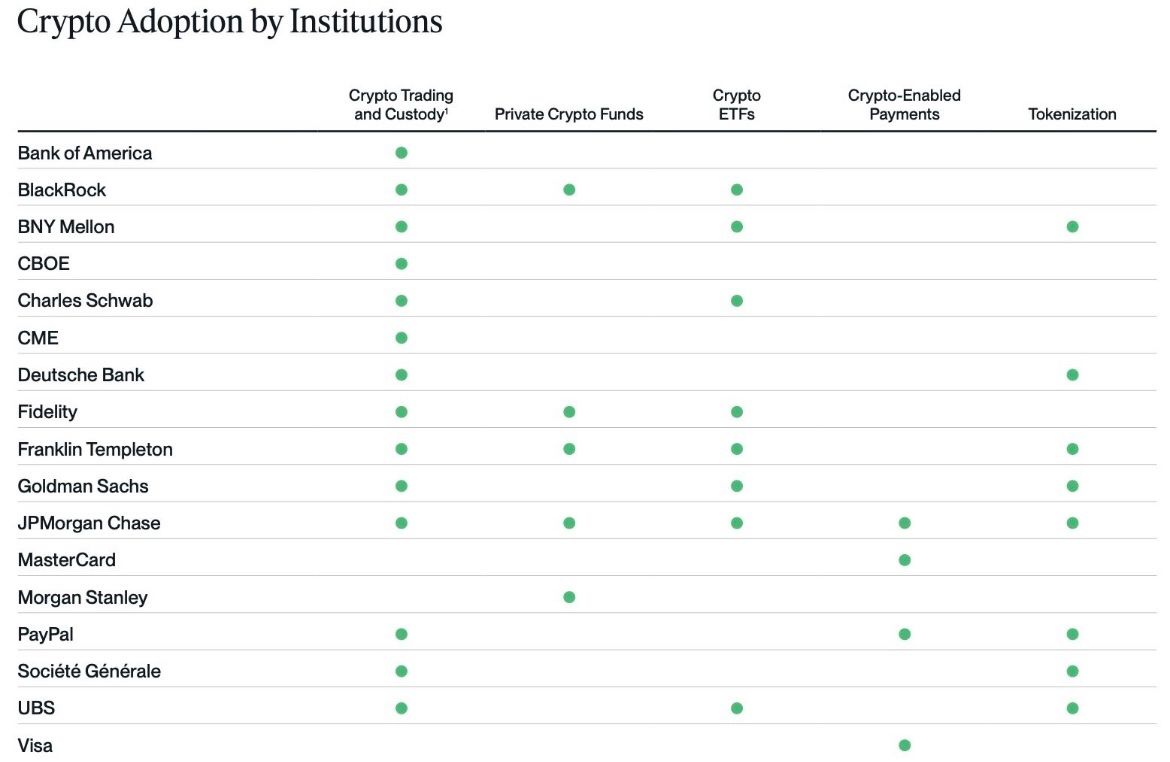

Crypto adoption by banks is no longer a matter of if, but rather when. Large financial institutions are actively integrating innovative blockchain technology in finance, recognizing the potential benefits of cryptocurrencies in their operations. With Wall Street increasingly leaning into the crypto space, major players such as JPMorgan and Morgan Stanley are making significant strides, from launching crypto ETFs to exploring tokenized cash solutions. This shift highlights a remarkable transformation in the banking and cryptocurrency landscape, where stablecoins and banks are beginning to intertwine. As these institutions embrace digital assets, the future of finance is poised for disruption, paving the way for a more interconnected financial ecosystem.
The integration of digital currencies into traditional banking continues to gain momentum, transitioning from skepticism to active participation. As financial institutions evolve their strategies, terms like “decentralized finance” and “digitized assets” are becoming commonplace in boardrooms. Leading banks are not just following trends but are instead taking the initiative to pioneer products that cater to a growing demand for blockchain-based investment solutions. From exchange-traded products to comprehensive infrastructures supporting stablecoins, the financial sector is adapting to the rapid advancements in the digital economy. This proactive approach signifies a broader acceptance of advanced technologies and cryptocurrencies as a staple in the modern financial landscape.
The Shift in Banking Attitudes Towards Cryptocurrency
Historically, major banks approached cryptocurrencies with skepticism, deeming them a threat to the traditional financial system. This mindset is gradually evolving as banks begin to recognize the potential benefits of integrating cryptocurrencies into their offerings. By looking beyond the initial risks and challenges, financial institutions are starting to embrace the innovative features of digital assets, especially with the rise of blockchain technology in finance. As this shift unfolds, the banking sector is realizing that cryptocurrencies are not just a passing trend but a significant development in the future of money.
This transformation is evident as numerous banks are now actively exploring various avenues to incorporate cryptocurrencies into their operations. From developing regulated investment products to implementing blockchain-based payment systems, these initiatives signify a newfound acceptance of cryptocurrencies within the banking ecosystem. Furthermore, advancements such as JPMorgan’s launch of the US dollar-denominated deposit token, JPM Coin, illustrate how financial institutions are not merely adopting cryptocurrencies but are committed to creating robust infrastructures to support them.
Crypto Adoption by Banks: A New Era of Financial Services
The recent wave of crypto adoption by banks marks a pivotal moment in financial services. Institutions like Morgan Stanley are venturing into the realm of cryptocurrency exchange-traded funds (ETFs), which allow broader access for both retail and institutional investors to digital assets like Bitcoin and Solana. By facilitating investment in crypto through familiar channels, banks can offer their clients a seamless transition into the world of digital currencies, thus bridging the gap between traditional finance and the burgeoning crypto market.
Moreover, with initiatives like Barclays’ investment in stablecoin infrastructure, banks are laying the groundwork for future applications of digital currency. Stablecoins, which maintain a stable value pegged to traditional fiat currencies, provide a secure point of entry into cryptocurrency for many investors. This integration of stablecoins into financial systems underscores a profound transformation where digital assets coexist alongside traditional monetary frameworks, paving the way for an innovative financial landscape that fully embraces both banking and cryptocurrency.
The Rise of Crypto ETFs in Traditional Banking
Exchange-traded funds (ETFs) have become a cornerstone of investment strategies for many clients, and the rise of crypto ETFs is creating significant opportunities within the banking sector. Morgan Stanley’s recent filings for Bitcoin and Solana ETFs exemplify how traditional banks are adapting to the growing demand for cryptocurrency exposure among investors. By offering such products, banks not only attract tech-savvy investors looking to diversify their portfolios but also reinforce their commitment to staying competitive in a rapidly evolving market.
The popularity of crypto ETFs has surged in recent years, as evidenced by the success of existing funds that have collectively attracted billions of dollars in investments. The accessibility and ease of trading ETFs make them appealing to both inexperienced and seasoned investors, allowing them to add digital assets to their portfolios without direct ownership. This trend highlights the acceptance of cryptocurrencies in traditional financial assets and signifies that banks are increasingly willing to support their clients in navigating this new investment landscape.
Blockchain Technology: Transforming Financial Transactions
Blockchain technology, the backbone of cryptocurrency systems, is fundamentally changing how financial transactions are conducted. Its decentralized nature ensures enhanced security, transparency, and efficiency, which appeals to banks looking to modernize their operations. Institutions like JPMorgan have recognized the potential of blockchain for streamlining payment processes and enhancing the security of transactions, allowing for quicker settlements and reduced costs.
As banks explore the use of blockchain technology, they are increasingly investing in solutions that facilitate interoperability with existing financial systems. This forward-thinking approach enables traditional banks to harness the benefits of blockchain, providing a competitive edge while also adhering to regulatory frameworks. Ultimately, this evolution sets the stage for a more seamless integration of cryptocurrencies within the banking sector, fostering a future where digital assets coexist with established financial practices.
Stablecoins: The Bridge Between Banks and Crypto
Stablecoins play a crucial role in bridging the gap between traditional banking and the cryptocurrency world. By maintaining a pegged value to fiat currencies, they offer a stable and reliable medium for transactions, which is vital for banks looking to integrate cryptocurrencies into their services. Banks like Barclays are already investing in stablecoin projects, recognizing their potential to enhance liquidity and scalability in digital finance.
The adoption of stablecoins can lead to increased efficiency within payment systems and aid in the proliferation of cryptocurrencies in retail markets. As regulated digital cash becomes more integrated into conventional banking infrastructures, consumers can expect smoother transaction processes, increased access to capital, and a wider range of financial products that incorporate both stablecoins and traditional currencies. This convergence is essential for fostering trust in the crypto ecosystem and promoting wider adoption by the general public.
Regulatory Challenges and Opportunities for Crypto in Banking
As banks delve deeper into the world of cryptocurrency, they face a myriad of regulatory challenges that could impact their operations. The intricate landscape of financial regulations often stifles innovation, as banks must navigate compliance with existing laws while adapting to a rapidly evolving digital environment. However, this challenge also presents an opportunity for banks to lead the dialogue on regulatory frameworks that support the safe and responsible adoption of cryptocurrencies.
By collaborating with regulatory bodies and industry leaders, banks can help shape a more accommodating regulatory environment that balances innovation with investor protection. This proactive approach not only positions banks as trustworthy custodians of digital assets but also fosters a spirit of collaboration within the financial ecosystem. Ultimately, addressing regulatory challenges head-on can pave the way for more extensive crypto adoption by banks, creating a robust framework for financial institutions to operate within the digital economy.
Consumer Demand for Cryptocurrency: Driving Banks’ Adoption
The growing consumer demand for cryptocurrency has catalyzed banks to adopt more forward-thinking approaches towards digital assets. As awareness and interest in cryptocurrencies rise among mainstream investors, banks are increasingly recognizing the necessity of incorporating these assets into their service offerings. This demand is prompting financial institutions to explore innovative solutions such as crypto trading platforms, arbiters of crypto funds, and direct customer education initiatives.
Surveys indicate that a significant portion of the younger generation is more inclined to invest in cryptocurrencies than traditional investment vehicles. Consequently, banks that adapt to these changing preferences are likely to secure a competitive advantage in attracting and retaining clients. By responding to consumer interests, banks can not only preserve their relevance in the financial landscape but also position themselves as leaders in the integration of crypto and traditional finance.
Future Perspectives: The Role of Banks in the Crypto Ecosystem
Looking ahead, the role of banks in the cryptocurrency ecosystem is poised to expand significantly as they continue to integrate digital assets into their business models. Traditional financial institutions are no longer factoring cryptocurrencies as niche investments but are instead viewing them as vital components of a comprehensive financial service offering. This paradigm shift could redefine the banking industry, ushering in an era where cryptocurrencies are widely accepted and utilized.
As banks embrace their role in the evolving crypto landscape, they must focus on building secure, efficient infrastructures that cater to the unique needs of cryptocurrency investors. This includes investing in advanced security measures, enhancing customer education, and forming strategic partnerships with technology providers. By prioritizing these areas, banks can create an environment where cryptocurrencies thrive, ultimately enriching the financial ecosystem and providing their clients with innovative investment opportunities.
Educational Initiatives: Equipping Banks for Crypto Integration
In light of the increasing adoption of cryptocurrencies by banks, there is a pressing need for educational initiatives that equip banking professionals with the necessary knowledge and tools to navigate this dynamic market. Training programs focused on blockchain technology, regulatory compliance, and crypto investment strategies will be essential in preparing bank employees to engage with digital assets confidently. As they become more informed about the nuances of cryptocurrencies, banking professionals can provide valuable advice and services to clients.
Moreover, educational initiatives also play a crucial role in promoting consumer confidence in the financial systems that incorporate cryptocurrencies. By enhancing community understanding of how cryptocurrencies work and their associated risks, banks can alleviate customer apprehensions and foster a more inclusive attitude toward digital investments. This ensures that as cryptocurrencies gain traction, consumers feel supported and informed, ultimately accelerating mainstream adoption within the overall banking framework.
Frequently Asked Questions
What does crypto adoption by banks mean for the future of banking and cryptocurrency?
Crypto adoption by banks signifies a transformative shift where traditional financial institutions embrace cryptocurrency and blockchain technology. This trend enables banks to offer digital cash services, such as JPMorgan’s JPM Coin, and facilitates the integration of crypto exchange-traded funds (ETFs) into their portfolios, thereby democratizing access to digital assets for their clients.
How are banks integrating blockchain technology in finance?
Banks are increasingly integrating blockchain technology in finance by developing platforms for secure digital transactions and tokenized cash. Initiatives like JPMorgan’s JPM Coin on the Canton Network exemplify how banks are building infrastructure for faster and more secure transfers of regulated digital currencies.
What impact do crypto ETFs have on traditional banking?
Crypto ETFs impact traditional banking by providing banks like Morgan Stanley the opportunity to offer exposure to cryptocurrencies such as Bitcoin and Solana. These products attract significant investment, allowing wealth management clients access to the growing crypto market, while helping banks diversify their financial offerings.
Are stablecoins becoming a standard in banking and cryptocurrency?
Yes, stablecoins are increasingly becoming a standard in banking and cryptocurrency. Banks, including Barclays, are investing in stablecoin infrastructure to facilitate smoother transactions and interoperability between regulated issuers and financial institutions, highlighting the evolving acceptance of digital currencies in mainstream finance.
How is Wall Street adopting crypto, and what does it mean for investors?
Wall Street’s adoption of crypto indicates a broader acceptance and integration of digital assets into the traditional finance landscape. For investors, this means more opportunities, such as the introduction of Bitcoin ETFs by banks, which provide easier access to cryptocurrency investments and the potential for portfolio diversification.
What role do banks play in the growth of cryptocurrencies?
Banks play a crucial role in the growth of cryptocurrencies by providing essential infrastructure, regulatory compliance, and investment products. Their increasing involvement in the crypto space, such as recommending Bitcoin ETFs to clients, demonstrates a commitment to integrating digital assets into mainstream financial services.
What are the risks associated with crypto adoption by banks?
The risks associated with crypto adoption by banks include regulatory uncertainty, market volatility, and cybersecurity threats. As banks navigate this evolving landscape, it is critical for them to mitigate these risks by adhering to compliance standards and implementing robust security measures.
How are banks positioning themselves in the evolving landscape of cryptocurrency and blockchain technology?
Banks are positioning themselves in the evolving landscape of cryptocurrency and blockchain technology by developing innovative products like digital cash, ETFs, and investing in stablecoin systems. This proactive approach indicates a significant shift from skepticism to strategic engagement with the digital asset ecosystem.
| Key Point | Details |
|---|---|
| Shift in Attitude | Banks have moved from viewing crypto as a risk to proactively integrating it into their systems. |
| JPMorgan’s JPM Coin | JPMorgan plans to issue JPM Coin on the Canton Network, enhancing the usability of regulated digital cash. |
| Morgan Stanley’s ETF Initiative | Morgan Stanley is set to launch Bitcoin and Solana ETFs, broadening access to more than 19 million clients. |
| Barclays’ Investment in Stablecoins | Barclays invests in Ubyx, signaling significant interest in stablecoin infrastructure. |
| Bank of America’s Support for Bitcoin ETFs | Bank of America permits wealth advisers to recommend Bitcoin ETFs, integrating crypto into traditional finance. |
Summary
Crypto adoption by banks is accelerating as major financial institutions recognize the potential benefits of integrating blockchain technology into their services. This transformation reflects a broader acceptance, moving from skepticism to strategic engagement with cryptocurrencies and digital assets. Initiatives by banks like JPMorgan, Morgan Stanley, Barclays, and Bank of America highlight a significant shift towards innovation, underscoring a new era where traditional finance and digital currencies coexist.
Related: More from DeFi & Stablecoins | Aixovia Burns 90,357,968 AIXDROP Tokens On-Chain Proof | Arthur Hayes Liquidates DeFi Tokens: A $3.48 Million Loss You Should See