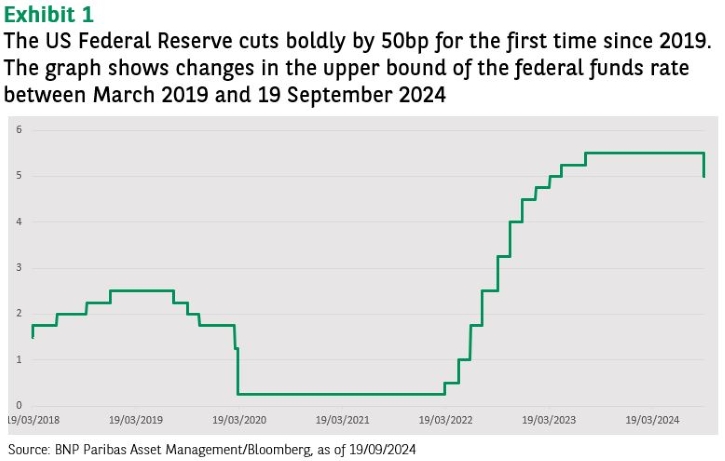

The Federal Reserve rate cuts are poised to reshape the financial landscape as we progress through 2026. Economists, including analysts from Goldman Sachs, are closely monitoring the U.S. labor market stability, which has shown signs of recovery and resilience. With January interest rates on hold, the anticipation of two rate cuts later in the year reflects a calculated approach to bolster economic growth amid evolving market conditions. This strategy also aligns with Goldman Sachs’ prediction that the labor market will continue to stabilize, potentially paving the way for favorable fixed income investment trends. Understanding the implications of these rate changes is crucial for investors and policymakers as we navigate the 2026 economic outlook.
In discussions surrounding monetary policy, the shifts in interest rates by the Federal Reserve can be viewed through various lenses, including their impact on overall economic stability and investment landscapes. Analysts predict that January will see the Fed maintain current rates while contemplating future reductions, which could play a pivotal role in supporting the U.S. economy. The strength of the job market, underlined by recent data exclusions, indicates that rather than systemic failure, fluctuations may have been influenced by temporary factors. Observations of fixed income investment dynamics suggest that investor confidence might increase with anticipated adjustments in the Fed’s monetary policy. As we approach the latter part of 2026, the economic horizon becomes increasingly complex, requiring careful evaluation of these evolving trends.
Federal Reserve Rate Cuts: What to Expect in 2026
As we look towards 2026, the consensus among economists, including those at Goldman Sachs, is that the Federal Reserve will likely adopt a cautious approach. January is projected to be a month of stability, where interest rates remain unchanged, reflecting ongoing evaluations of the U.S. labor market dynamics. The recent labor figures indicate a minor improvement, and while analysts agree that the Fed’s hold is justified, the anticipation of two rate cuts later in the year suggests an adaptive strategy to sustain economic growth. This approach accommodates expected shifts in inflation and employment rates, enhancing financial planning across sectors.
The Fed’s decision-making process will likely consider broader economic indicators beyond just the immediate labor statistics. Analysts at Goldman Sachs emphasize the importance of monitoring fixed income investment trends and macroeconomic factors that influence market behavior. As we approach the latter half of 2026, the relationship between interest rates and the market’s response to the Federal Reserve’s policies will come into sharper focus. Investors and stakeholders must remain agile, aligning their strategies with the projected rate cuts to optimize their positions in a fluctuating market.
Goldman Sachs Prediction: Insights on Labor Market Stability
The insights provided by Goldman Sachs regarding the U.S. labor market stability reveal a nuanced understanding of current economic conditions. Analysts highlight that the initial spikes in unemployment in November were more reflective of short-term adjustments and less about systemic issues within the workforce. With expectations of a more stable employment outlook, the Fed’s strategy in maintaining interest rates during January may be reinforced by reliable non-farm payroll data and a slow yet steady recovery in job creation.
Furthermore, as the labor market exhibits signs of recovery, the interplay between employment stability and interest rates will be crucial in shaping economic forecasts for 2026. Goldman Sachs anticipates that as the labor market continues to strengthen, the Fed could pivot towards a more accommodating monetary policy, making room for necessary rate adjustments in response to evolving economic realities. This scenario underscores the importance of being vigilant about labor market conditions as they play a pivotal role in the Fed’s rate-setting decisions.
Impact of Interest Rates on Fixed Income Investments
The relationship between interest rates and fixed income investments cannot be understated, especially in light of the anticipated Federal Reserve rate cuts in 2026. As Goldman Sachs observes, the dynamics of fixed income markets often react sensitively to shifts in policy rates. When the Fed cuts rates, it typically leads to lower yields on bonds, compelling investors to reconsider their allocations, especially towards corporate and treasury securities. Understanding these trends is essential for investors looking to preserve capital while seeking optimal returns.
Additionally, the reduced interest rates can stimulate borrowing and spending, further strengthening economic growth. However, fixed income investors need to navigate the potential risks associated with changing interest environments. As Goldman Sachs and other analysts delve into these trends, they emphasize the necessity for a robust investment strategy that accounts for fluctuating yields and the overall economic forecast. Success in this space hinges on an acute awareness of the Federal Reserve’s policy actions and their broader implications.
January Interest Rates: Stabilizing the Economy
January is poised to be a pivotal month for economic policymakers as the Federal Reserve contemplates maintaining the current interest rate regime. In an environment characterized by tentative labor market recovery, the Fed’s decision to hold rates steady could be instrumental in fostering an ongoing economic stabilizing effect. Goldman Sachs anticipates that this decision is underpinned by a careful assessment of employment data and inflationary pressures, ensuring that the economy transitions smoothly into the new year.
The stability that comes from maintaining interest rates allows businesses and consumers alike to plan their financial strategies with greater confidence. With improved job security and a positive economic outlook, January serves as a critical month for establishing momentum towards a balanced recovery. This proactive approach from the Federal Reserve is aimed at supporting growth while keeping inflation in check, which is essential for sustained economic health.
2026 Economic Outlook: Key Trends to Watch
Looking ahead to the 2026 economic landscape, several significant trends are expected to shape market dynamics. Insights from Goldman Sachs provide a roadmap for assessing potential variables such as interest rates, inflation, and labor market stability. One critical component of this outlook is the anticipated Federal Reserve rate cuts, which could fundamentally alter investment strategies across various asset classes, especially in fixed income markets.
As economic conditions evolve, staying informed about key indicators will be paramount for investors. The interplay between monetary policy and market sentiment will not only dictate the pace of recovery but will also determine how effectively businesses adapt to these changes. Analysts underline the importance of leveraging predictive models and economic forecasts to navigate the uncertainties ahead.
Understanding the U.S. Labor Market’s Resilience
The resilience of the U.S. labor market has emerged as a crucial focus for economists as they analyze how job stability impacts the broader economy. Goldman Sachs notes that while there were fluctuations in unemployment rates, these appear to be correctional rather than indicative of long-term decline. As organizations adapt to evolving operational needs, the labor market’s ability to recover presents a significant opportunity for economic stability moving forward.
Moreover, observing trends in labor participation and wage growth will provide deeper insights into the underlying health of the economy. The Federal Reserve’s decision-making will heavily rely on these metrics as it seeks to balance growth with the containment of inflation. Economic stakeholders must monitor developments closely to make informed decisions tailored to their investment approaches and business strategies.
Fixed Income Investment Trends Amid Rate Adjustments
As we witness the evolving economic conditions in 2026, the trends in fixed income investments will be profoundly affected by any Federal Reserve rate adjustments. Goldman Sachs has outlined that the market is likely to experience shifts in demand for bonds and other fixed income assets as prospects of rate cuts loom. Investors will need to analyze their portfolios carefully, balancing risk and return while remaining responsive to a dynamic interest rate environment.
Moreover, the demand for higher-yielding investments may surge as lower interest rates make traditional fixed income securities less attractive. This situation calls for strategic diversification, with fixed income investors moving towards sectors that may offer better returns amid a lower yield landscape. Being proactive in understanding these trends will be vital for successful investment outcomes in a rapidly changing economic environment.
Preparing for Economic Shifts: Investors’ Strategies
To navigate the anticipated economic shifts in 2026, investors must develop forward-thinking strategies focused on adaptability. As Goldman Sachs highlights, the combination of stable labor market conditions and potential Federal Reserve rate cuts creates a landscape ripe for strategic asset allocation. Investors should consider diversifying into sectors likely to benefit from lower interest rates, including equities and high-yield bonds, while remaining cautious of potential volatility.
Additionally, keeping an eye on macroeconomic indicators such as inflation rates and employment statistics will be essential for making timely investment decisions. Building a well-rounded portfolio that accommodates various economic scenarios will enable investors to position themselves advantageously in the evolving financial landscape. Preparedness to pivot in response to economic data will determine success as we move toward a more complex market environment in 2026.
Market Reactions to Federal Reserve Decisions
Understanding the market’s reaction to Federal Reserve decisions is pivotal for investors and analysts alike. Goldman Sachs notes that the implications of maintaining or cutting interest rates resonate across sectors, impacting everything from consumer confidence to corporate borrowing costs. In anticipation of the Fed’s moves, market participants often adjust their positions, creating a dynamic interplay of expectations and realities that can influence stock prices and bond yields significantly.
The reaction to rate changes further emphasizes the interconnectedness of the global economy, where shifts in U.S. monetary policy can have far-reaching consequences. Investors need to stay attuned to these developments, as they will influence capital flows and investment patterns across borders. Monitoring how markets respond to the Fed’s announcements and economic indicators will be essential for making informed financial decisions as the year progresses.
Frequently Asked Questions
What are the implications of Goldman Sachs predictions on Federal Reserve rate cuts for investors?
Goldman Sachs predicts that the Federal Reserve is likely to hold rates steady in January, but will implement two rate cuts later in 2026. This outlook implies that investors in the fixed income market should prepare for potentially lower interest rates, which can enhance bond prices and investment opportunities as the U.S. labor market stabilizes.
How could U.S. labor market stability impact future Federal Reserve rate cuts?
The stability in the U.S. labor market suggests that the Federal Reserve may not feel compelled to cut rates aggressively. However, if this stability continues and economic indicators support a rate reduction, Goldman Sachs anticipates two Federal Reserve rate cuts in 2026, aligning fixed income investment strategies with this outlook.
What does Goldman Sachs say about January interest rates and Federal Reserve rate cuts?
Goldman Sachs indicates that the Federal Reserve is likely to maintain its current interest rates in January. Nonetheless, the expectation of two Federal Reserve rate cuts later in 2026 suggests that changes in economic conditions may prompt a shift in monetary policy, directly affecting borrowers and investors.
How does the 2026 economic outlook influence Federal Reserve rate cuts?
According to Goldman Sachs, the 2026 economic outlook is pivotal for understanding possible Federal Reserve rate cuts. They suggest maintaining rates in January, but foresee two cuts as the economy evolves, influenced by labor market dynamics and inflation pressures.
What trends are emerging in fixed income investments related to Federal Reserve rate cuts?
With Goldman Sachs forecasting Federal Reserve rate cuts in 2026, fixed income investment trends are expected to shift as investors seek to capitalize on the anticipated lower rates. Such movements typically drive capital towards bonds, which could appreciate as rates decrease.
| Key Points | Details |
|---|---|
| Current Policy | The Federal Reserve is likely to hold steady in January. |
| Future Rate Cuts | Two rate cuts are anticipated during the remainder of 2026. |
| Labor Market Stability | Initial signs of labor market stability have been observed, with improvements in unemployment rates. |
| Causes of Recent Changes | The previous rise in unemployment was attributed to individual employees leaving early, rather than systemic problems. |
Summary
Federal Reserve rate cuts are a significant topic for economists and investors alike. According to Goldman Sachs, while the Federal Reserve is expected to hold its current policy steady in January due to initial signs of labor market stability, two rate cuts are projected for later in 2026. This outlook reflects the Fed’s strategic response to economic indicators and labor market dynamics.
Related: More from Market Analysis | Barclays Looks at Blockchain for Payments, Deposits | PayPal USD Powers New PYUSDx App