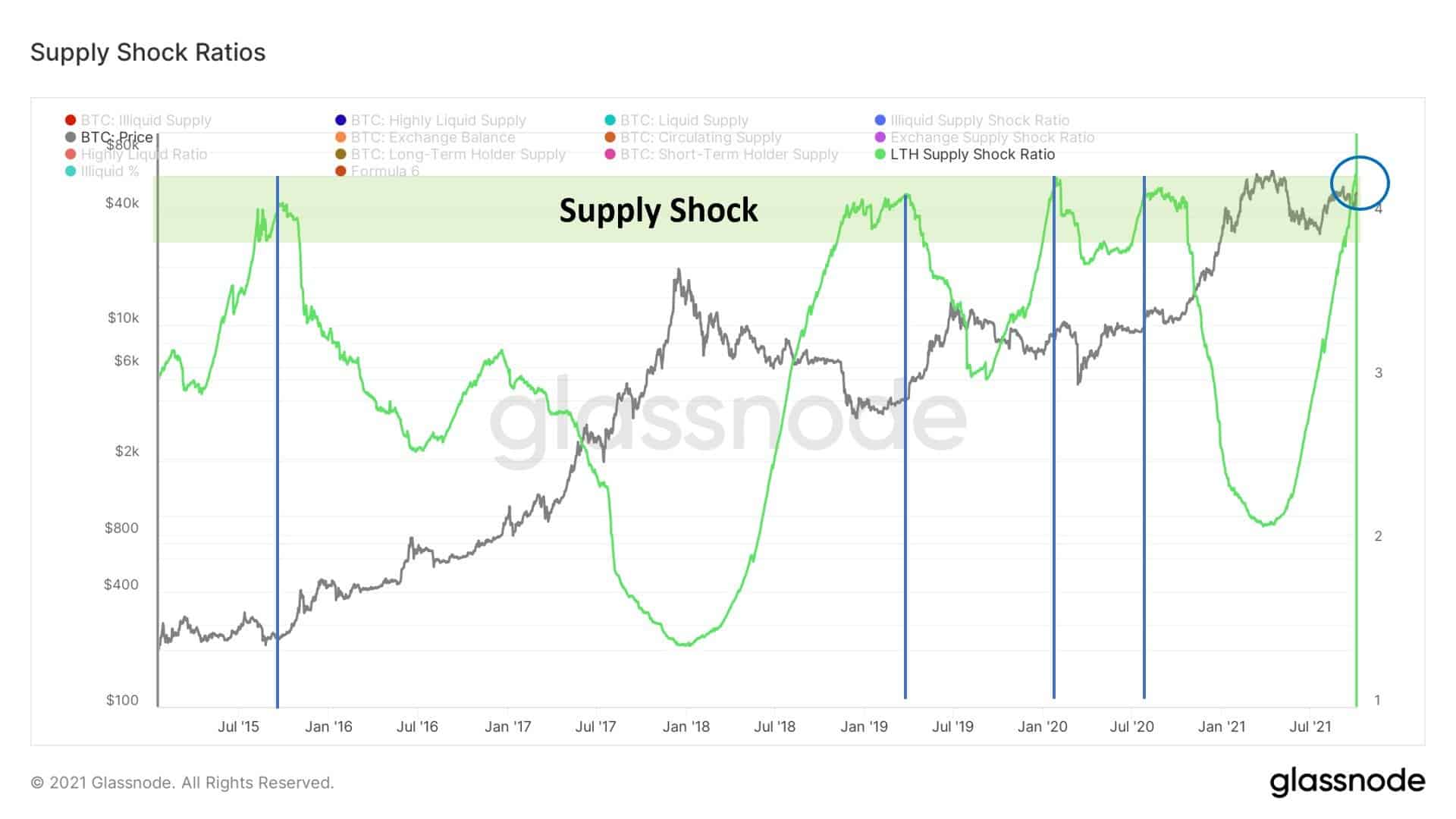

The concept of a Bitcoin supply shock is gaining traction in the cryptocurrency community as significant demand shifts unfold in 2026. Despite the current prices hovering around $90,000, market analysts are closely monitoring how institutional Bitcoin demand influences this dynamic. The ongoing inflows from Bitcoin ETFs reflect a growing appetite among institutional investors, which could drastically affect the Bitcoin price prediction landscape. As Bitcoin experiences scarcity due to capped supply and increased absorption by entities like corporate treasuries, the potential for a supply shock intensifies. Thus, understanding the interplay between demand, ETF inflows, and market analysis is crucial for anticipating future price developments in the Bitcoin ecosystem.
As we delve deeper into the intricacies of Bitcoin’s market dynamics, terms such as ‘Bitcoin scarcity’ and ‘institutional accumulation’ come to the forefront. The phenomenon of Bitcoin supply constraints, driven by factors like the diminishing issuance rates and significant investments by institutional players, sets the stage for possible market upheaval. Notably, rising net positive flows into Bitcoin ETFs highlight how regulatory acceptance and increased interest from traditional finance are reshaping the investment landscape. Furthermore, the unique characteristics of this digital asset, including its predetermined maximum supply, heighten the stakes in this evolving economic scenario. In this context, investors and analysts must navigate the complex interactions of supply, demand, and sentiment to understand the bullish potential of Bitcoin.
Understanding Bitcoin Supply Shock
A Bitcoin supply shock occurs when the availability of Bitcoin decreases dramatically in the market, often due to high demand from institutional investors and relatively low mining output. Currently, as institutional Bitcoin demand rises and more entities like corporate treasuries and ETFs absorb the available supply, the potential for such a shock becomes increasingly significant. With reports of institutional players absorbing more than 100% of newly mined Bitcoin in recent weeks, the underlying scarcity of Bitcoin is expected to drive prices upwards, creating a potential buying frenzy that could exacerbate the situation.
Moreover, as the crypto landscape evolves with products like spot Bitcoin ETFs gaining traction, market dynamics shift towards scarcity and demand. The sharp influx of capital into Bitcoin ETFs, even amidst a seemingly bearish overall market sentiment, reflects a growing acknowledgment of Bitcoin’s finite supply. In times when more assets are being sought than what is being produced, a supply shock not only becomes more predictable but could also push the Bitcoin price to new heights, as seen in previous market cycles where institutional interest sparked significant price rallies.
Institutional Bitcoin Demand and Price Predictions
Institutional Bitcoin demand has been a key theme in projecting future price movements. With giants of finance firmly planting their roots into the crypto world, average market expectations suggest a bullish scenario in the coming years. Major firms have set ambitious targets, with some predicting Bitcoin could reach $150,000 by 2026. These forecasts are grounded in the understanding that increasing institutional adoption, coupled with Bitcoin’s diminishing supply due to halving events, sets the stage for sustained price growth. The early 2026 inflows into Bitcoin ETFs highlight how institutional strategies are reinforcing demand amid volatility.
Additionally, as large entities accumulate Bitcoin as a long-term reserve asset, the holistic picture supports higher prices. Analysts estimate that if institutional acquisitions continue at the current pace—outstripping new BTC supply—it could create a compounding effect, leading to a sharp price increase. The mechanism is simple: as institutions fill their coffers, the available float diminishes, fostering an environment where even a modest uptick in demand could have outsized impacts on pricing. This institutional presence not only stabilizes the market but also positions Bitcoin as a serious contender against traditional assets.
The Role of Bitcoin ETFs in Market Dynamics
Bitcoin ETFs (Exchange-Traded Funds) have introduced an unprecedented level of institutional investment into the cryptocurrency space, allowing both retail and institutional investors to gain exposure without having to manage the complexities of digital asset custody. As observed with net positive flows into Bitcoin ETFs, this channel has been pivotal in absorbing significant amounts of Bitcoin from the market, indicative of strong, sustained institutional interest and reinforcing Bitcoin’s scarcity narrative. The continual influx of capital into these products signifies that despite bearish sentiments, optimism about Bitcoin’s value proposition remains intact.
Moreover, the functionalities of ETFs create a unique market mechanic: they funnel liquidity directly into Bitcoin while effectively pulling assets off the market. For instance, the recent observation of net inflows nearing 5,310 BTC provides valid evidence that, even in turbulent market conditions, institutional investors recognize the longer-term potential of Bitcoin. As ETF attractions grow amidst economic uncertainty, such inflows could set a precedent for future surges in both demand and price, consequently tightening the supply available for trading.
Bitcoin Scarcity: A Key Driver for Future Value
The fundamental principle of Bitcoin’s scarcity arises from its capped supply of 21 million coins, alongside predictable halving cycles that reduce the rate of new coins entering circulation. As the market evolves, this inherent scarcity begins to play a more crucial role in determining Bitcoin’s value as demand consistently outpaces supply. For investors, understanding Bitcoin’s scarcity not only influences strategies but also impacts long-term value assessments, particularly as institutional interest continues to grow.
In a market environment where demand exceeds supply dramatically, the implications could be profound. Historical analysis shows that during the last halving event, Bitcoin experienced substantial price appreciation, and current absorption data suggests we might be on the precipice of a similar cycle. The persistent narrative of scarcity builds a favorable outlook as more institutional players and retail investors begin to recognize Bitcoin as a viable hedge against inflation and currency devaluation. Combined with a strategic focus on long-term holdings, this understanding deepens the scarcity narrative, paving the way for potential price breakthroughs in the future.
Market Reactions to Absorption Dynamics
Market reactions to Bitcoin’s absorption dynamics are crucial in understanding upcoming price movements. As Bitcoin scarcity becomes a well-recognized narrative, the dynamics surrounding absorption begin to play a significant role in framing market sentiment. The recent absorption of Bitcoin by institutional players at rates exceeding new issuance levels signifies a tightening market—a situation where existing holders may become hesitant to sell unless incentivized by significantly higher prices. This can induce a bullish sentiment as supply dwindles, leading to a reactionary increase in Bitcoin prices.
Additionally, market actors are increasingly focusing on absorption metrics as indicators of potential price movements. When the absorption multiple—a ratio comparing net absorption to new issuance—remains elevated, the implication is that institutional demand is not just strong but may continue to encourage prolonged price increases. This creates a virtuous cycle where heightened demand leads to higher prices, which in turn deters selling from existing holders, thereby reinforcing the scarcity narrative further.
Future Projections in Bitcoin Price Movements
Looking ahead, projections that incorporate both current absorption rates and expected future inflows from institutional demand provide a range of potential Bitcoin price outcomes. With forecasts that extend into 2030 and beyond, analysts are keenly aware of the need for consistent institutional participation to maintain favorable supply-demand dynamics. As noted by several firms, estimates vary widely, reflecting the uncertainty intrinsic to cryptocurrency markets; however, they generally portray an optimistic long-term scenario propelled by increasing adoption and efforts to tighten supply further.
For example, some scenarios predict Bitcoin could soar to levels between $300,000 and $1.5 million by 2030. These bullish perspectives hinge on sustained absorption rates that outstrip issuance, essentially locking in a supply deficit that as history shows, tends to lead to significant price increments. By assessing multiple factors like ETF inflows, institutional demand, and overall market liquidity, future projections can remain dynamic, adapting to the real-time market shifts while offering a roadmap for investors looking to capitalize on Bitcoin’s long-term potential.
Analyzing Bitcoin Market Sentiment
Bitcoin market sentiment continues to be swayed by a mix of fear and optimism. The Fear & Greed index reading of 28 signals a strong sentiment of fear, however, this does not deter institutional interest, as evidenced by the robust inflows into Bitcoin funds. Investors are witnessing a transitional phase, where even though short-term price movements appear stagnant, the underlying absorption by stronger hands tells a different story. Market sentiment has been characterized by volatility, yet the increasing institutional buying power serves as a buffer, suggesting a shift towards bullishness despite current fears.
Moreover, as more entities recognize Bitcoin’s value proposition amidst macroeconomic uncertainty, the sentiment is poised for change. Institutional participants are likely to leverage market fears to acquire assets at lower prices, effectively creating strong buying pressure. In this context, retail investors and novices who are hesitant might miss out on lucrative opportunities as institutions continue to absorb excess supply, reinforcing a narrative that highlights not just the psychological elements of market sentiment but also their economic ramifications on price trajectories.
The Halving Impact on Bitcoin’s Economy
Bitcoin’s halving events play a pivotal role in influencing the cryptocurrency’s economy, primarily affecting supply side dynamics. These halving events occur approximately every four years and effectively reduce the reward for mining new Bitcoin by half. As we head toward the next halving in 2028, historical data indicate that such events have consistently preceded significant price increases. Considering the current absorption rates and the backdrop of institutional demand, the impending halving could further tighten supply, propelling Bitcoin prices to new all-time highs.
With reductions in the issuance rate, the relative scarcity of Bitcoin becomes more pronounced, enhancing its appeal as a store of value, especially in an environment of growing fiat currency inflation. Institutional recognition of Bitcoin as a long-term reserve asset underpins current price predictions, suggesting that, as the market approaches the next halving, investor interest will spike along with price appreciation. The interplay between halving cycles, market absorption, and institutional strategies will continue to shape the narrative surrounding Bitcoin’s economic landscape.
Bitcoin’s Long-term Value Proposition
The long-term value proposition of Bitcoin is increasingly defined by its supply dynamics and sustained institutional interest. Investors and analysts alike are beginning to appreciate Bitcoin not merely as a volatile asset but as a valuable economic resource, particularly as traditional assets face challenges related to inflation and currency devaluation. The fixed supply combined with increasing demand models suggests that Bitcoin’s scarcity could solidify its status as ‘digital gold,’ making it a crucial asset for a diversified portfolio.
Looking toward the future, ongoing institutional adoption could solidify Bitcoin’s place in the financial ecosystem. As corporate treasuries continue to integrate Bitcoin within their asset management strategies, the narrative surrounding Bitcoin as a secure, long-term investment strengthens. Predicted price targets reflect a growing consensus regarding Bitcoin’s potential, reinforced by its finite supply and the increasing number of market participants vying for limited assets. If the current trends of absorption persist and institutional involvement remains robust, Bitcoin is well-positioned to evolve into a foundational pillar of the digital economy.
Frequently Asked Questions
What is a Bitcoin supply shock and how does it affect Bitcoin price prediction?
A Bitcoin supply shock occurs when demand for Bitcoin significantly exceeds the current supply available, often due to institutional Bitcoin demand or regulatory changes like Bitcoin ETFs. This imbalance can lead to a sharp increase in prices, as seen in prior market cycles when institutional absorption rates surpass new issuance.
How does institutional Bitcoin demand contribute to a potential Bitcoin supply shock?
Institutional Bitcoin demand plays a critical role in creating a supply shock by absorbing more Bitcoin than is being mined or released into the market. As large players accumulate Bitcoin, they reduce the circulating supply, increasing scarcity and potentially driving prices higher.
What impact do Bitcoin ETF inflows have on the market and potential supply shocks?
Bitcoin ETF inflows can intensify a supply shock by channeling large sums of money into Bitcoin purchasing. When ETFs buy Bitcoin to back their shares, it pulls coins from the market, contributing to a tightening supply and supporting higher prices as institutional investors absorb more than what is newly mined.
Why is Bitcoin scarcity important in the context of a supply shock?
Bitcoin scarcity, defined by its capped supply of 21 million coins, is a fundamental factor in supply shocks. As demand increases, especially from institutional investors, the limited availability of Bitcoin can lead to significant price increases, often referred to as a ‘scarcity bid’ in the market.
How can Bitcoin market analysis help in predicting supply shocks?
Bitcoin market analysis provides insights into supply dynamics by assessing factors such as trading volumes, ETF inflows, and institutional accumulation rates. By understanding these metrics, analysts can better predict potential supply shocks and their impact on price movements.
What scenarios could lead to a Bitcoin supply shock in the near future?
Possible scenarios for a Bitcoin supply shock include sustained institutional demand absorbing new Bitcoin issuance at high levels, increased regulatory clarity leading to more ETFs, and macroeconomic conditions favoring digital assets. Each of these factors could tighten supply and drive prices upward.
Can long-term holder behavior impact the likelihood of a Bitcoin supply shock?
Yes, long-term holder behavior significantly affects the likelihood of a Bitcoin supply shock. When long-term holders resist selling, especially amidst rising prices, it constrains supply further. This behavior reinforces scarcity, making a supply shock more probable as demand continues to grow.
What is the relationship between Bitcoin supply shocks and historical price movements?
Historically, Bitcoin supply shocks have often preceded major price surges. As institutional and retail demand outstrips available supply, prices tend to spike, aligning with periods of heightened absorption by investors, driven by a belief in Bitcoin’s value and scarcity.
How do we measure the absorption rate of Bitcoin to understand potential supply shocks?
The absorption rate of Bitcoin is measured by comparing the amount of Bitcoin accumulated by institutions and ETFs against the new supply entering the market. A ratio exceeding 1 indicates that institutions are absorbing more than is being mined, a key signal of a potential supply shock.
| Key Concept | Description |
|---|---|
| Bitcoin Price Movements | Bitcoin’s price is experiencing volatility, hovering near $95,000 but testing the $90,000 mark. |
| Fear & Greed Index | The index currently indicates a sentiment of ‘Fear’ at 28. |
| Institutional Demand | Institutional players absorbed more than 105% of new Bitcoin supply in the first week of January. |
| ETFs and Corporate Accumulation | US spot Bitcoin ETFs recorded significant net inflows, further tightening available supply. |
| Supply Shock Potential | A structural supply shock could emerge if institutional demand consistently exceeds new Bitcoin issuance. |
| Future Projections | Various firms project Bitcoin prices could peak between $150,000 and $2.9 million by 2050 based on absorption dynamics. |
Summary
The current landscape surrounding Bitcoin supply shock suggests that significant price movement is on the horizon. As institutional demand continues to absorb new supply at a remarkable pace, this creates a potential scenario where a scarcity-driven price surge becomes inevitable. The data indicates that Bitcoin is not merely experiencing transient volatility; rather, it is undergoing fundamental shifts that may lead to record-breaking levels in the coming years. Monitoring these trends is crucial for investors and stakeholders as they navigate this evolving market.
Related: More from Bitcoin News | Stablecoin Strength Pressures Bitcoin Treasury | Analysts: No Evidence of Jane Street Bitcoin Manipulation, ETF Demand Soars