
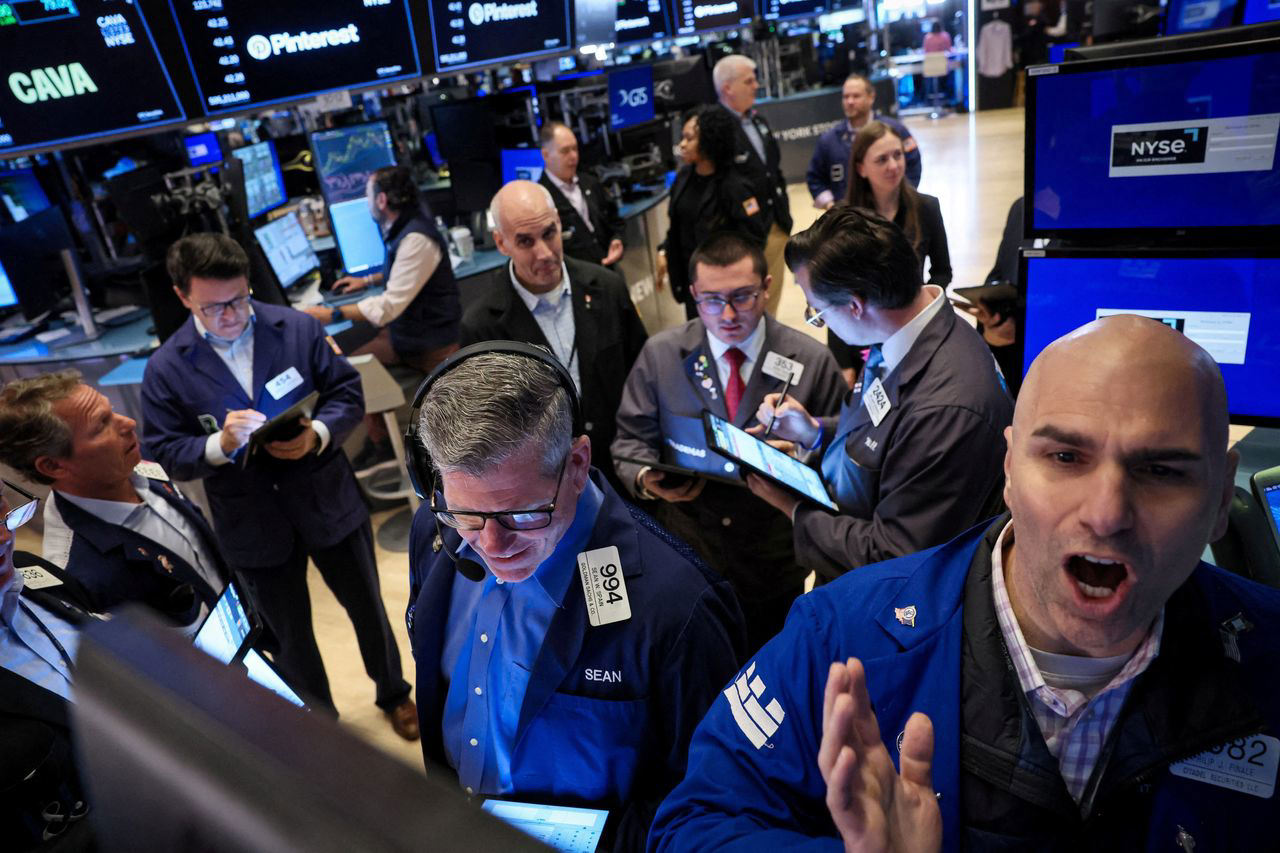

U.S. stocks rally has captured the attention of investors as Wall Street continues to navigate the complexities of the economic landscape. This surge has been led by the S&P 500’s recent achievement of a record closing high, indicating strong market optimism. Meanwhile, the tech-driven Nasdaq 100 experienced a slight dip of 0.2%, while the Dow Jones Industrial Average rose by 0.3%, highlighting a diverse performance across sectors. As traders brace for impactful economic data, including anticipated figures on non-farm payrolls, the market’s direction remains uncertain. Experts like Sameer Samana emphasize the need for clearer guidance from the Federal Reserve to sustain this momentum and break past previous resistance levels.
The recent upswing in the U.S. equity markets has ignited discussions among analysts and investors alike about the future trajectory of major indices like the S&P 500 and Dow Jones. With the Nasdaq 100 facing a small setback, the landscape of American stock exchanges reveals a fascinating interplay between economic indicators and investor sentiment. Observations of employment trends and forthcoming economic reports are crucial as they shape expectations and strategies on Wall Street. As the market approaches a critical juncture, the focus shifts toward the Federal Reserve’s forthcoming decisions and their potential impact on the financial landscape. Investors remain vigilant, seeking to decode the signals that could guide their actions in this dynamic environment.
U.S. Stocks Rally: The Current Market Landscape
U.S. stocks experienced a remarkable rally that captured the attention of investors across the globe. On Wednesday, however, that momentum appeared to halt as Wall Street braced itself for critical economic data releases. The S&P 500, a key benchmark for U.S. equities, remained largely static following its record-setting close the previous day. This stall hints at investor uncertainty as they await signals that could influence future trading decisions, highlighting the delicate balance between market optimism and cautious speculation.
As the market transitions into December, the outlook remains mixed. The Dow Jones Industrial Average exhibited some strength, climbing modestly by 0.3%, while the tech-heavy Nasdaq 100 faced slight declines, revealing a potential shift in investor preferences. Analysts suggest that the recent performance reflects a cautious approach among investors, particularly in light of the recent rise of interest rates and concerns regarding economic growth. With key economic indicators on the horizon, market participants are poised for significant developments that will shape trading activities in the coming weeks.
Frequently Asked Questions
What is driving the recent U.S. stocks rally on Wall Street?
The recent U.S. stocks rally on Wall Street is driven by optimistic investor sentiment, fueled by strong corporate earnings and favorable economic indicators. As the S&P 500 achieved record closing highs, tech stocks within the Nasdaq 100 have also significantly contributed to this upswing, despite some investors pulling back from major tech stocks recently.
How did the S&P 500 perform during the U.S. stocks rally?
During the U.S. stocks rally, the S&P 500 index reached record closing highs, remaining virtually unchanged recently as investors await critical economic data. This performance highlights the index’s resilience and investor confidence in the market’s upward trajectory.
What impact did economic data have on the U.S. stocks rally?
Economic data plays a crucial role in influencing the U.S. stocks rally. Market participants closely monitor releases, such as ADP employment data and non-farm payroll figures, to assess economic health and labor market strength, which in turn affects investment decisions and market movements on Wall Street.
Why is Wall Street cautious despite the U.S. stocks rally?
Wall Street is exercising caution despite the U.S. stocks rally because investors are seeking clearer guidance from the Federal Reserve regarding interest rates and economic policy. With the S&P 500 and Nasdaq 100 hovering around recent highs, uncertainty regarding future economic data could lead to market volatility.
What are analysts predicting for the future of the U.S. stocks rally?
Analysts are cautiously optimistic about the future of the U.S. stocks rally. They suggest that a continuation of strong economic data and clearer communications from the Federal Reserve could enable the markets, including the Dow Jones and S&P 500, to break through previous resistance levels and sustain the upward momentum.
How does the performance of the Dow Jones compare to the Nasdaq 100 during the U.S. stocks rally?
During the U.S. stocks rally, the Dow Jones has shown more stability with modest gains of 0.3%, whereas the Nasdaq 100 experienced a slight decrease of 0.2%. This indicates that while blue-chip stocks in the Dow are performing well, tech stocks that have largely driven the rally could be facing some headwinds.
What should investors watch for following the U.S. stocks rally?
Investors should watch for upcoming economic data releases, particularly the non-farm payroll report, as these figures can provide insights into labor market conditions and overall economic health. This data is crucial for gauging the resilience of the U.S. economy and could influence the direction of the ongoing stocks rally on Wall Street.
| Market Index | Change | Commentary |
|---|---|---|
| S&P 500 | 0% | Virtually unchanged after a record closing high. |
| Nasdaq 100 | -0.2% | Fell slightly as investors pull back from major tech stocks. |
| Dow Jones Industrial Average | +0.3% | Continued gains amid investor caution on technology shares. |
| Hiring Activity | +41,000 jobs | Moderate growth, below economists’ expectations. Awaiting non-farm payroll data. |
Summary
U.S. stocks rally has recently been marked by a record rise, yet experienced a pause as investors anticipate crucial economic data. After a notable peak in the S&P 500, major indices showed mixed performances, reflecting both resilience and caution among investors, particularly in the tech sector. Moving ahead, clarity from the Federal Reserve and upcoming labor market data will be important indicators for the market’s next direction.
Related: More from Market Analysis | Figure Shares Drop After Mixed Q4 Results as Crypto Loan Volume Grows | Barclays Looks at Blockchain for Payments, Deposits