
Central Bank Gold Reserves have reached a historic milestone as they surpass U.S. debt for the first time. Recent data from the World Gold Council reveals that these gold holdings total over 900 million troy ounces, reflecting a staggering valuation of $3.82 trillion based on current gold prices. This figure starkly contrasts with the total U.S. government debt of approximately $3.88 trillion as of October. As the valuation of central bank gold holdings continues to rise, experts predict that this trend may solidify, pushing the estimated gold reserves toward $3.93 trillion by 2025. This development not only highlights the significance of gold reserves valuation but also indicates a pivotal change in the global financial landscape, where gold now plays an integral role against traditional debt instruments like U.S. bonds.
The significant accumulation of gold held by central banks is transforming the economic landscape, with these institutions now prioritizing their gold stockpiles over U.S. debt instruments. As central bank gold holdings grow, they showcase a strategic shift towards optimizing assets and decreasing reliance on government securities. The latest statistics demonstrate how countries are increasingly valuing these metal reserves, leading to heightened demand and adjustments in gold price valuation. Such movements underscore the importance of gold in the financial ecosystem, as seen in trends derived from World Gold Council data and international financial assessments. This shift not only enhances the status of gold as a secure asset but also marks a new era in monetary policy and investment strategies.
Understanding Central Bank Gold Reserves Valuation
The valuation of central bank gold reserves has become a critical topic, especially following recent data published by the World Gold Council. As of the end of November, U.S. overseas gold holdings have reached over 900 million troy ounces, indicative of a significant asset sitting at an estimated value of $3.82 trillion. This transformation underscores the importance of gold in anchoring the economic stability of countries, as well as enhancing their financial resilience against fluctuating fiat currencies and economic uncertainties.
With historical fluctuations in gold prices, the valuation of these reserves illustrates a growing trend among central banks to accumulate gold. This trend is further accentuated by the sobering comparison to U.S. debt levels, where the amount of gold held by non-U.S. central banks is projected to rise to around $3.93 trillion by the end of 2025. This growth provides a powerful narrative for the solidifying perception that gold acts as a safe haven asset, counterbalancing the risks associated with government debt.
Impact of Gold Reserves on Global Financial Stability
The increasing gold reserves held by central banks are becoming an essential pillar for global financial stability. As nations navigate economic challenges, the stability offered by gold becomes especially crucial. Central bank gold holdings not only help to back national currency but also bolster investor confidence, ultimately paving the way for a more stable financial environment. When countries possess significant gold reserves, they can better mitigate the impacts of debt vulnerabilities, as evidenced by the recent valuation surpassing U.S. debt figures.
Furthermore, world gold council data suggests that central banks are enhancing their bullion reserves not just for strategic stability, but as an act of diversification of reserves. An investment in gold can act as a hedge against inflation, currency depreciation, and overall market volatility. As global economic conditions evolve, the interplay between gold valuation and central bank policies will shape investment strategies and fiscal maneuvers on an international scale.
U.S. Debt Comparison: Gold Reserves Take the Lead
The shift in comparison between gold reserves and U.S. debt has triggered significant discussions among economists and financial analysts alike. The data clearly indicates that the comprehensive value of gold reserves held by non-U.S. central banks is nearing and, as projected, will surpass U.S. debt figures. This noteworthy shift raises questions about the reliability of U.S. government bonds as a go-to asset and highlights the emerging inclination towards tangible assets such as gold that provide intrinsic value.
Moreover, as central bank gold holdings continue to expand, market sentiments regarding U.S. debt dynamics may shift, prompting investors to weigh their options more carefully. The contrasting trajectories of gold prices and U.S. debt levels will be of great interest to market participants who seek to optimize their portfolios and limit exposure to volatile debt instruments. In this context, gold presents itself not merely as a traditional safe haven asset but as a strategic investment in securing future financial stability.
Future Projections for Central Bank Gold Holdings
Looking ahead, future projections for central bank gold holdings indicate a rising trend, as financial experts predict that as we approach the end of 2025, the valuation of gold held by non-U.S. central banks could reach approximately $3.93 trillion. This expected surge will not only reinforce gold’s status as a dominant asset but also reflects central banks’ strategic shifts in reserve composition. Countries are increasingly prioritizing tangible gold assets due to their significant role as a hedge against economic volatility and currency fluctuations.
Additionally, these projections reinforce the narrative that central banks will continue to rely heavily on gold reserves to enhance their balance sheets and maintain economic integrity. As gold price valuation stabilizes and potentially increases due to global demand, the significance of gold reserves will likely escalate further. This continued investment in gold signifies a strategic pivot away from traditional currency dependencies in favor of a more asset-backed approach during uncertain economic times.
The Role of World Gold Council Data in Monitoring Trends
World Gold Council data serves as a fundamental resource for monitoring trends in gold reserves and informing officials and investors alike about the state of global gold holdings. Their reports provide critical insights into how various countries manage their gold assets, compare their positions relative to U.S. debt, and adjust their monetary policies accordingly. Understanding how countries utilize gold resources is vital, as trends within this sector are indicative of larger economic patterns and perceptions of currency trustworthiness.
Further analysis of the reports reveals the strategic importance placed on gold as many countries bolster their reserves to combat systemic risks. Such data underlines a growing consensus among nations that having substantial gold reserves can be a crucial buffer against economic upheavals. Consequently, the influence of the World Gold Council’s findings will continue to shape the strategies of central banks and impact the global economic landscape.
Gold Price Valuation: A Crucial Measure for Investors
Understanding gold price valuation is essential for investors aiming to harness the opportunities provided by central bank gold reserves. With recent valuations highlighting the importance of gold, investors are increasingly looking at these assets as more than just a hedge against inflation – they are evolving into a core component of asset diversification strategies. The dynamics of supply and demand in the gold market directly influence pricing, making it critical for investors to stay informed about these trends and their implications.
Additionally, fluctuations in gold prices affect the reported valuations of central bank gold reserves and influence investor sentiments. When gold prices rise, the total value of reserves grows, prompting central banks to reassess their financial strategies. For investors, this relationship creates a need to analyze market conditions, geopolitical influences, and economic indicators closely to make informed decisions regarding gold investments.
Economic Implications of Surpassing U.S. Debt with Gold Reserves
Surpassing U.S. debt with central bank gold reserves carries significant economic implications, particularly for those holding U.S. Treasury securities. The crossroad at which gold valuations surpass government debt signals a potential shift in global financial dynamics. Investors may start re-evaluating their risk exposure to U.S. government bonds and considering a shift towards gold-centric investments that assure more stability during times of economic strain.
The economic landscape could witness changes in currency valuation, as nations with substantial gold reserves may experience stronger bargaining positions in international trade. Furthermore, the perception of gold as a viable alternative to government debt could inspire other nations to increase their gold purchases to enhance economic sovereignty. This shift towards valuing gold as a primary asset may ultimately reshape global financial arrangements and investment preferences.
Diversification Strategies Utilizing Gold Assets
Diversifying portfolios with gold assets has become a prominent strategy among investors and central banks alike. With the valuation of gold reserves rising sharply, authorities are examining the benefits of integrating more gold into their reserve compositions as a safeguard against the volatility of fiat currencies. Such diversification strategies aim to mitigate risks and protect financial assets, allowing stakeholders to capitalize on the stable underpinning of gold as a tangible asset.
Moreover, as the gold market continues to evolve and exhibit resilience against economic downturns, further investments in gold serve to blanket portfolios against potential losses from market fluctuations. This approach is indicative of a broader understanding of the importance of asset diversification and an acknowledgment of gold’s vital role in maintaining financial security for investors and governments alike.
Central Banks: Shifting Perspectives on Asset Valuation
As central banks adjust their perspectives on asset valuation, the significance of gold is receiving renewed focus. Traditionally viewed as a safe haven asset, recent valuations highlighting gold reserves exceeding U.S. debt prompt a reevaluation of the role gold plays in the monetary system. Central banks are now prioritizing gold accumulation as a prudent measure for securing financial stability and enhancing monetary policy effectiveness in uncertain economic climates.
The shift in perception can also be attributed to a growing recognition of the limitations of currency-based assets in a world prone to financial fluctuations. With global economic uncertainty weighing heavily, central banks are looking to gold not only as a reserve asset but as a critical component that can bolster national security. This new alignment signifies a deeper appreciation for gold and its enduring value as a keystone of economic resilience.
Frequently Asked Questions
What is the current status of Central Bank Gold Reserves compared to U.S. debt?
As of November 2023, Central Bank Gold Reserves, valued at approximately $3.82 trillion based on the gold price, have reached a level that officially exceeds the U.S. government debt held by foreign countries, which was around $3.88 trillion.
How does the valuation of Central Bank Gold Holdings impact financial markets?
The valuation of Central Bank Gold Holdings plays a crucial role in financial markets as it reflects the strength of national reserves. With the current valuation exceeding U.S. debt, it creates potential implications for global economic stability and the confidence in fiat currencies.
What data sources provide insights into Central Bank Gold Reserves?
Insights into Central Bank Gold Reserves are primarily gathered from reports by the World Gold Council and the International Monetary Fund (IMF). These organizations track and publish data regarding global gold holdings and valuations.
How are gold reserves valued in comparison to U.S. debt?
Gold reserves are valued based on current market prices of gold. For example, as of November 30, 2023, the Central Bank Gold Reserves were valued at $3.82 trillion, which is almost on par with the $3.88 trillion U.S. debt held by foreign governments.
What is the future forecast for Central Bank Gold Reserves and U.S. debt comparison?
If current trends continue and non-U.S. central banks maintain their gold holdings, by the end of 2025, the valuation of Central Bank Gold Reserves is estimated to reach approximately $3.93 trillion, indicating a growing divergence from U.S. debt valuations.
Why is the valuation of gold reserves important?
The valuation of gold reserves is important as it serves as a critical indicator of a country’s financial health and stability. High valuations can enhance the stability of a country’s currency and serve as a hedge against inflation and economic downturns.
How does the World Gold Council influence Central Bank Gold Reserves?
The World Gold Council provides essential data and analysis regarding gold investments, impacting decisions regarding Central Bank Gold Reserves by highlighting trends and helping to shape global gold demand and policy.
How has the trend of Central Bank gold holdings changed recently?
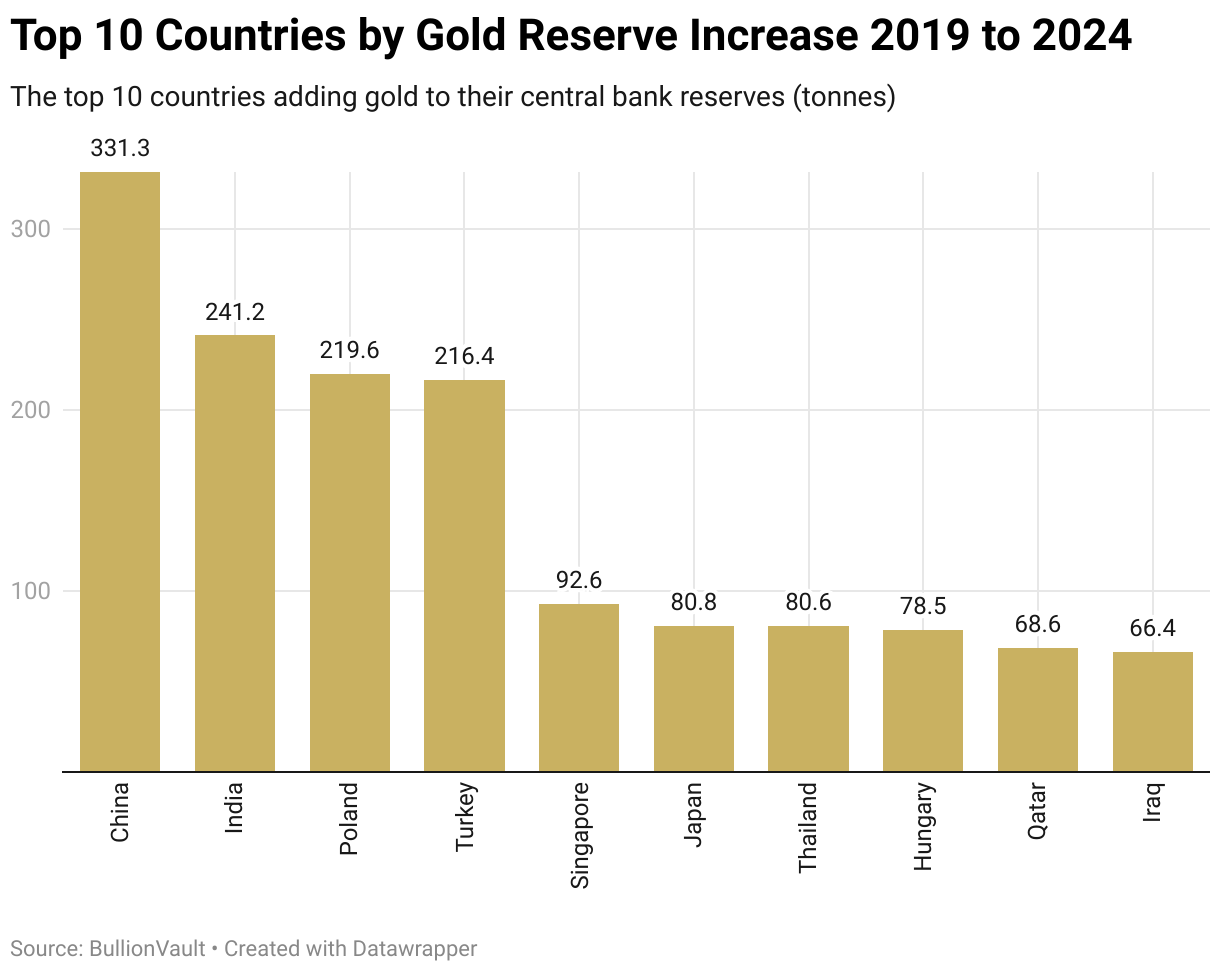
There has been a notable increase in Central Bank gold holdings, with recent reports showing that many countries have significantly raised their gold reserves, reflecting a strategic move towards gold as a secure asset in times of economic uncertainty.
| Key Points |
|---|
| The official U.S. overseas gold holdings total over 900 million troy ounces. |
| These gold reserves are valued at $3.82 trillion as of November 30 based on current gold prices. |
| U.S. government debt held by foreign countries is approximately $3.88 trillion as of October. |
| By the end of 2025, gold reserves held by non-U.S. central banks are projected to reach $3.93 trillion. |
| The valuation of gold reserves has now officially surpassed U.S. debt held by foreign entities. |
Summary
Central Bank Gold Reserves have reached a historic moment by surpassing the total value of U.S. debt held overseas. The latest data from the World Gold Council reveals that U.S. gold reserves stand at an impressive $3.82 trillion, while foreign-held U.S. debt is evaluated at $3.88 trillion. As projections suggest that gold reserves may rise to $3.93 trillion by 2025, it’s clear that central banks are increasingly favoring gold as a secure asset, marking a significant shift in the financial landscape.
Related: More from Market Analysis | Figure Shares Drop After Mixed Q4 Results as Crypto Loan Volume Grows | Barclays Looks at Blockchain for Payments, Deposits