
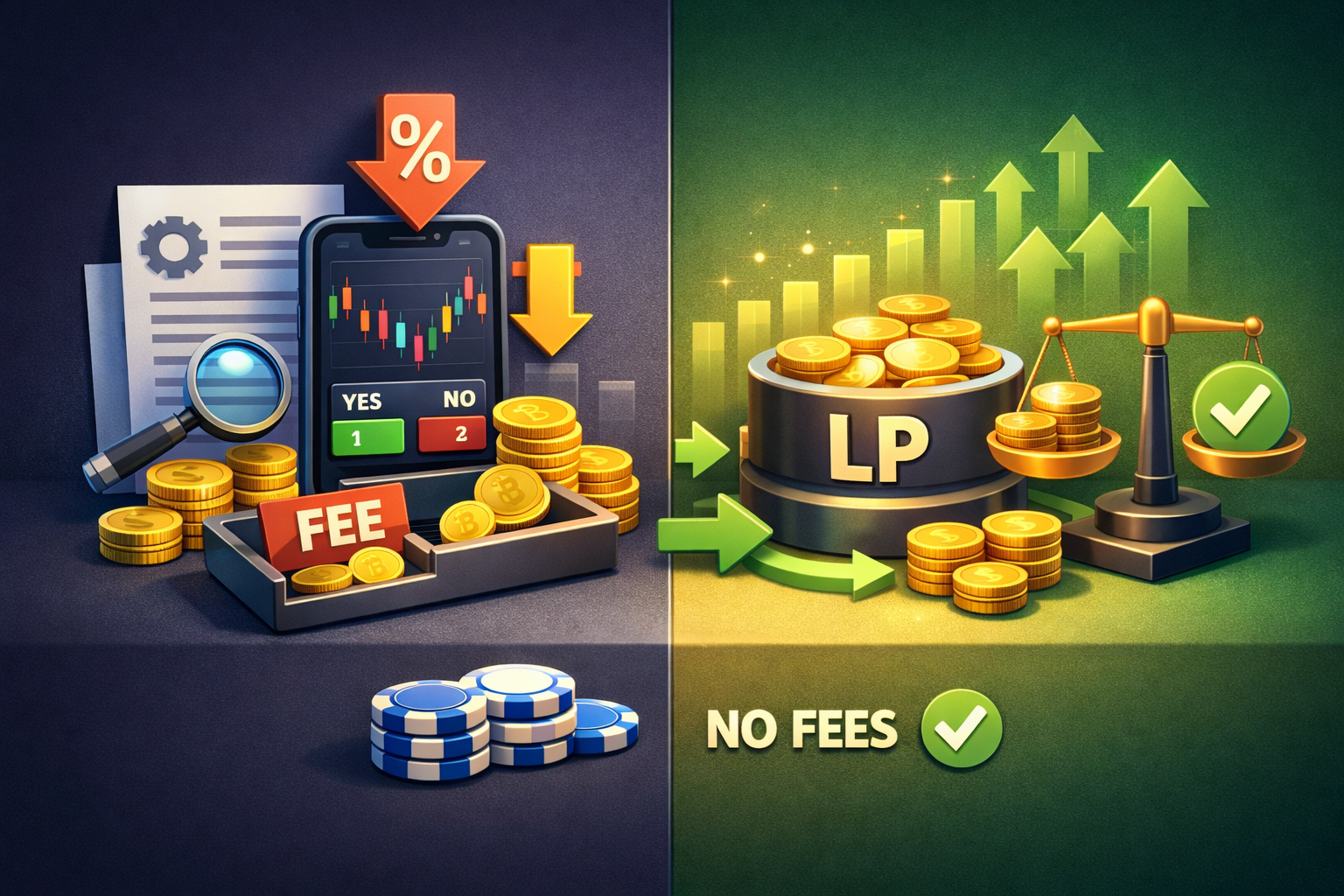

The Polymarket fee model recently underwent a quiet transformation, impacting how fees are structured in short-term crypto markets. This updated model introduces taker fees, specifically for 15-minute crypto trades, marking a significant shift from the traditionally fee-free environment that Polymarket has offered. These fees are now redistributed daily to liquidity providers in USDC, enhancing the incentive for traders to participate in these fast-paced markets. The fee structure taps into variable rates, with the highest charges occurring when odds hover around 50%, reflecting heightened trading activity. By fine-tuning this mechanic, Polymarket is looking to stabilize liquidity while maintaining a competitive edge in the rapidly evolving landscape of crypto market fees.
Recently, Polymarket has refined its trading fee regulations, particularly for short-duration crypto contracts. This innovative approach entails implementing transaction fees for fast-moving 15-minute markets, a notable change from the platform’s previously zero-fee structure. By channeling these fees to liquidity providers, Polymarket aims to bolster market maker engagement, ensuring a more vibrant trading ecosystem. This model has sparked discussions surrounding its purpose — not merely a revenue source but rather a strategic mechanism to enhance market efficiency and protect against occurrences like wash trading. As a result, the platform creates a balanced environment for traders and liquidity providers alike, catering specifically to the dynamics of short-term cryptocurrency trading.
Overview of Polymarket’s New Fee Structure
Polymarket has recently restructured its fee model specifically for its 15-minute crypto markets. This change, although subtle, marks a significant adjustment in how users engage with short-term trading on the platform. Previously known for its zero-fee trading approach, Polymarket has decided to implement taker fees that vary according to market odds. The aim of this new model is to encourage liquidity providers by redistributing fees collected from takers on a daily basis in USDC. With this strategic shift, the platform seeks to enhance trading dynamics and ensure a more robust trading environment for users.
The introduction of a fee structure tailored to market odds signifies a focused effort to balance the platform’s economic mechanics with user experience. When market odds are approximated to 50%, indicating heightened uncertainty, the highest taker fees are levied. Conversely, once the odds veer towards the extremes of 0% or 100%, the fees lessen significantly. Such a tiered fee system is designed to incentivize proper liquidity provision while refining the trading experience for participants engaging in fast-paced crypto activities.
Impact on Liquidity Providers and Market Dynamics
The revised fee model predominantly benefits liquidity providers within Polymarket’s ecosystem. By capturing a portion of taker fees from 15-minute crypto markets, these funds are redirected to support liquidity services, enhancing their capacity to provide consistent market stability. This innovative approach not only fosters a healthier trading environment but ensures that market makers are adequately compensated for their role in managing rapid price fluctuations. Consequently, this could lead to more competitive spreads and better trading outcomes for users involved in short-term contracts.
Furthermore, the strategic adjustment seeks to minimize the risk of wash trading and the prevalence of high-frequency trading bots that thrive in fee-free environments. By introducing these fees, Polymarket is seemingly creating a barrier for such practices, thereby promoting more genuine trading interactions. Traders have reacted positively on social media, recognizing the long-term benefits this adjustment could yield for liquidity and pricing consistency, essential components for thriving crypto markets.
User Reactions and Perceived Intentions Behind the Changes
The quiet introduction of taker fees for 15-minute crypto markets has not gone unnoticed by the trading community. Users on social media platforms have been actively discussing the implications of this change and the underlying intentions driving it. Many have perceived this as a market structure enhancement rather than a typical fee increase. Platform users such as 0x_opus have noted that this adjustment aims at bolstering market integrity by allocating fees directly back to liquidity providers, thereby improving user dynamics.
Additionally, community feedback emphasizes the importance of looking beyond the headline impact of the charges. Some traders argue that while the introduction of fees may seem counterintuitive, the actual functionality it provides is a proactive measure against mischief within the trading ecosystem. For instance, trader kiruwaaaaaa’s observations suggest that these measures are tailored to fight high-frequency trading discrepancies that might undermine liquidity. Ultimately, the discourse highlights a crucial understanding of the platform’s strategic objectives towards enhancing overall market efficiency.
Short-Term vs. Long-Term Crypto Market Fee Implications
In the narrative of Polymarket’s fee adjustments, it’s important to distinguish between the short-term crypto markets affected by these new fees and the long-term markets that remain unaffected. The introduction of taker fees for 15-minute contracts signals a targeted approach rather than a sweeping policy change across the entire platform. Users actively participating in longer-term predictions, political, or non-crypto markets continue to enjoy a fee-free experience, making these markets accessible to a broader audience.
This differentiation suggests that Polymarket is not just seeking to impose fees arbitrarily, but is consciously aiming to incentivize liquidity in high-intensity trading environments. As short-term markets are inherently more volatile and competitive, this new fee structure is effectively a fluid response to maintain the equilibrium necessary for successful trading outcomes. For traders who prefer the stability of low-cost transactions, longer-term markets cater to this need and maintain a clear path without the complexities introduced by the new structure.
Advantages of the New Fee Model on Trading Experience
The newly implemented fee model by Polymarket, particularly within the realm of 15-minute crypto trading markets, poses several advantages for users. One of the clear benefits includes the potential for improved liquidity, as taker fees are redirected to liquidity providers. This mechanism can lead to more efficient price formation and tighter spreads, ultimately enhancing the overall trading experience for participants. The transparency of fees being disbursed to support liquidity is a critical metric for traders seeking reliability in their transactions.
Moreover, by implementing fees that are contingent upon market odds, traders become more strategic in their approaches. With fees being highest at 50% odds, participants may engage in more thoughtful decision-making while placing trades. Instead of random trades, this model encourages deeper analysis of market conditions, thus promoting a more educated trading atmosphere. Overall, Polymarket’s initiative to introduce this structured fee model is intended to refine and optimize the trading interaction and appeal to users at all levels.
The Role of Taker Fees in Enhancing Market Integrity
In the wider context of prediction markets, the role of taker fees, such as those implemented by Polymarket, enhances market integrity significantly. By redistributing fees to liquidity providers, these fees perform a dual function; they serve as a funding mechanism for market makers while simultaneously curbing practices like wash trading that might compromise market integrity. This reflects a conscious effort from Polymarket to uphold trust in their trading environment, which is essential for long-term sustainability.
With the introduction of these fees, participants can expect to operate within a market structure designed for fairness and competitiveness. In essence, the new model fosters engagement from liquidity providers, ensuring there are adequate resources to support rapid trades, thereby stabilizing the market. As users become aware of the deeper implications, they may appreciate the initiative as one aimed at preserving the ethical framework of trading on the platform.
Future Implications for Users of Polymarket’s 15-Minute Markets
The future implications of Polymarket’s fee changes for its 15-minute crypto markets suggest a nuanced evolution in user behavior and market engagement. As traders adapt to the operational framework where fees are instrumented based on odds, anticipatory strategies will likely emerge. The incentive structure not only aims at supporting liquidity provision but also fosters an environment where traders must consider probabilistic outcomes and market sentiment.
Moreover, with ongoing adjustments and potential future iterations of the fee model, users can expect that the platform will continue to prioritize innovative mechanisms that drive stability and competitiveness. Amidst the dynamic landscape of crypto markets, these developments could position Polymarket as a key player in setting standards for integrative trading practices. Drawing from community feedback and market performance metrics, the platform may further refine its offerings, ensuring that users remain engaged and informed.
Understanding Fees in the Context of Crypto Market Economics
Understanding the implications of fees within the context of crypto market economics is essential for traders engaged in platforms like Polymarket. The introduction of taker fees, particularly tailored to short-duration markets, illustrates a critical aspect of market economics—liquidity provision. Fees act as incentives for liquidity providers who contribute essential capital to ensure that these fast-trading environments operate smoothly and with sufficient depth.
Furthermore, in the broader scope of crypto market fees, this new structure underlines the significance of comprehensive economic models that sustain market functionality. As users, having awareness of fee structures contributes to smarter trading decisions, particularly within volatile and competitive spheres such as 15-minute operations. Overall, awareness and understanding of fees create an informed trader base capable of navigating complex market conditions requiring agility and strategic foresight.
Concluding Insights on Polymarket’s Fee Model Evolution
In conclusion, Polymarket’s evolution of its fee model signals a thoughtful progression towards enhancing the user experience while ensuring market integrity within its 15-minute crypto markets. By implementing a tiered fee structure that aligns closely with market odds, the platform addresses critical concerns relating to liquidity, fairness, and user engagement. The evolution showcases the platform’s responsiveness to market dynamics and trader expectations.
As traders begin to navigate this newly structured environment, the implications of fees will continue to unfold, offering both challenges and opportunities. The greater understanding of how fees function and their direct correlation with market dynamics is likely to cultivate a more informed trading community. Thus, Polymarket’s strategic moves may set a precedent in the crypto space, enhancing liquidity provision and reinforcing trust in market mechanisms across the board.
Frequently Asked Questions
What changes were made to the Polymarket fee model for short-term crypto markets?
Polymarket has introduced taker fees for its 15-minute crypto markets, which were previously fee-free. The fees collected from takers are now redistributed to liquidity providers in USDC, designed to enhance liquidity and trading incentives.
How do the new crypto market fees vary based on market odds?
The Polymarket fee model applies variable fees that are highest when market odds are around 50%, reflecting peak uncertainty and trading activity. As the odds trend towards 0% or 100%, fees sharply decrease, thus incentivizing targeted trading in more competitive ranges.
Are all Polymarket markets subject to these new crypto market fees?
No, only the 15-minute crypto markets are affected by the new taker fees. Other markets, including longer-term crypto predictions and political or non-crypto events, remain fee-free, indicating a specific adjustment rather than a broad fee increase across the platform.
What is the purpose of the taker fees in Polymarket’s updated model for liquidity providers?
The taker fees implemented in Polymarket’s model are redistributed to liquidity providers, functioning as a funding mechanism to improve market liquidity instead of generating revenue for Polymarket itself.
How did the market respond to the changes in the Polymarket fee model for crypto markets?
The rollout of the new fee model spurred discussions on social media, with many users perceiving it as a structural adjustment that could help protect against wash trading while fostering better liquidity without imposing traditional fees on users.
Will users notice a significant difference in their trading experience due to the new crypto market fees?
For most users, the impact of the new fees is limited, as only the 15-minute crypto markets incur fees while the rest of Polymarket remains fee-free. Within the affected markets, the fee structure is designed to minimize costs for directional trades, maintaining a favorable trading environment.
What is Polymarket’s strategy behind charging fees only for the 15-minute crypto markets?
Polymarket’s strategy is to fine-tune its fee model to enhance liquidity and trading dynamics specifically in the most competitive and fast-paced 15-minute crypto markets, while preserving a fee-free environment in other markets to attract a broader user base.
| Key Point | Details |
|---|---|
| Fee Model Change | Polymarket has implemented taker fees for short-term 15-minute crypto markets, marking a departure from their traditionally zero-fee model. |
| Fee Redistribution | Fees collected from takers will be redistributed daily to liquidity providers in USDC, not retained by the platform. |
| Market Odds Impact | The fees are highest when market odds are near 50%, indicating high trading activity and uncertainty. Fees decrease as odds approach 0% or 100%. |
| Limited Impact | The fee changes apply only to 15-minute crypto markets; most other markets on Polymarket remain fee-free. |
| Market Structure Discussion | Reactions on social media suggest that users view this as a market structure adjustment rather than a conventional fee increase. Users acknowledge benefits like enhanced protection against wash trading. |
Summary
The Polymarket fee model has recently undergone a significant change, introducing taker fees specifically for short-term crypto markets. This adjustment aims to foster liquidity by redistributing fees to market makers rather than representing revenue for Polymarket. Only the 15-minute crypto markets are affected, allowing the platform to maintain a fee-free experience across its other offerings. The shift has generally been regarded by users as a positive structural amendment to improve market conditions, particularly for high-frequency trading scenarios. As such, the updated Polymarket fee model appears to be strategically designed to enhance trading experiences while supporting the platform’s liquidity providers.
Related: More from Market Analysis | Figure Shares Drop After Mixed Q4 Results as Crypto Loan Volume Grows | Barclays Looks at Blockchain for Payments, Deposits