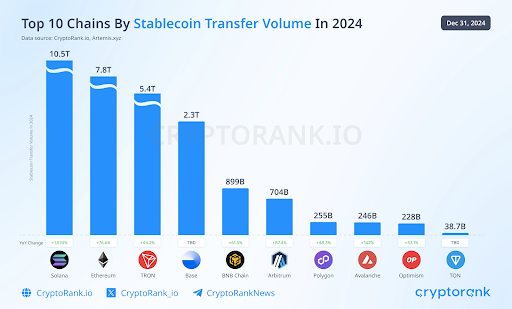

Ethereum stablecoin transfers have taken the financial landscape by storm, processing an astonishing $8 trillion in transactions during the fourth quarter of 2025. This phenomenal figure nearly doubles the volume of $4 trillion recorded in the previous quarter, highlighting a massive surge in blockchain payments and user adoption. As active Ethereum addresses reached an all-time high of 10.4 million, it’s clear that the network is becoming the go-to platform for stablecoin transactions. The uptick in stablecoin issuance, which rose by around 43% from $127 billion to $181 billion, underscores the growing reliance on these digital currencies in global financial systems. With Ethereum maintaining over 57% of the total stablecoin market share, it positions itself as a leader in facilitating secure and efficient Ethereum transactions.
The remarkable rise of stablecoin transfers on the Ethereum blockchain illustrates a significant shift in the way digital assets are managed and exchanged. With increasing transaction volumes, this decentralized platform has emerged as a critical backbone for secure digital payments and real-world asset tokenization. As Ethereum leads the charge, the ecosystem’s capability for accommodating a growing number of active addresses and daily transactions highlights its robustness. Additionally, the heightened interest in crypto assets points to a broader acceptance of blockchain technology within mainstream finance. As institutions and individuals alike turn to Ethereum for their digital asset needs, the future of cryptocurrency payments looks promising.
Record Ethereum Stablecoin Transfers: An Overview
In the fourth quarter of 2025, Ethereum processed an astonishing $8 trillion in stablecoin transfers, nearly doubling the transfer volume recorded in the second quarter of the year. This surge highlights not only the robust growth of the Ethereum network but also its unmatched role as a settlement layer for digital payments. The increase in stablecoin issuance, which rose from $127 billion to $181 billion over the same time frame, underscores the growing reliance on Ethereum for blockchain payments.
The dramatic rise in stablecoin transfer volume also reflects a broader trend in the cryptocurrency market, where institutional and retail investors are increasingly turning to stablecoins for their transactions. As Ethereum maintains its dominance with a market share of 57% of all stablecoins issued, the network’s efficiency and scalability continue to attract new users. This trend points to a new era in digital finance, with Ethereum serving as a foundational component in the emerging landscape of blockchain payments.
The Surge in Ethereum Transactions and Active Addresses
Recent statistics indicate that Ethereum achieved an all-time high in daily transactions, peaking at 2.23 million in December. This remarkable increase of 48% year-over-year illustrates the growing engagement with the Ethereum network. Active Ethereum addresses also reached historic levels, exceeding 10.4 million monthly active addresses during the same period. Such developments indicate a vibrant ecosystem where both new and existing users are increasingly utilizing Ethereum for various transactions.
The rise in active addresses correlates with the increasing popularity of stablecoins on the platform, as participants seek efficient means to transfer value within the blockchain. This is also evident in the daily number of unique addresses that were actively sending or receiving funds, topping a million in late December. This dynamic growth signals a promising future for Ethereum as it sustains user interest and transaction growth.
Real-World Asset Tokenization and Its Impact on Ethereum
Ethereum’s dominance in the realm of real-world asset (RWA) tokenization is noteworthy, capturing approximately 65% of the on-chain value associated with such assets, translating to roughly $19 billion. This strong market position is bolstered by the ongoing development of SWIFT-style integrations that seek to facilitate smoother blockchain payments. As Ethereum evolves to support more institutional participants, its role in the tokenization of physical assets is expected to expand, driving further adoption.
The significance of RWA tokenization cannot be understated, as it opens up new avenues for investments and payment options on the Ethereum blockchain. With over 70% market share when accounting for layer-2 solutions and EVM-compatible networks, Ethereum remains the leading choice for developers and companies exploring the potential of blockchain technology for real-world applications. The increased adoption of these tokenized assets is likely to enhance Ethereum’s standing as a key player in the financial ecosystem.
Stablecoin Market Dynamics and Ethereum’s Position
As of 2025, Ethereum holds a substantial 57% market share of all stablecoins issued, with Tether (USDT) remaining the clear leader at $187 billion in issuance. This dominant position illustrates Ethereum’s integral role in the stablecoin ecosystem, allowing users to access the benefits of cryptocurrency while maintaining stability against fiat currencies. Such confidence in Ethereum’s infrastructure contributes to the growing volume of stablecoin transfers that the network processes daily.
The competitive landscape, with Tron occupying the second position at 27%, highlights the ongoing battle among blockchain networks to capture stablecoin issuance. Ethereum’s established reputation for security and efficiency makes it the preferred choice for issuers and users alike. As the global demand for stablecoins continues to increase, Ethereum’s robust network is well-positioned to adapt and expand, reinforcing its status at the forefront of blockchain payments.
The Future of Stablecoin Transfers on Ethereum
Looking forward, the potential for stablecoin transfers on Ethereum seems boundless, particularly with advancements in the blockchain ecosystem. Innovations in RWA tokenization and increased institutional participation will likely lead to an uptick in stablecoin adoption. As more regulatory clarity emerges around cryptocurrencies and blockchain payments, we can expect to see exponential growth in stablecoin transfer volumes on Ethereum.
Furthermore, with the advent of new technologies and scaling solutions, Ethereum is poised to handle even higher transaction volumes and more complex operations. The continual expansion of the Ethereum ecosystem, alongside the implementation of improved transaction processes, will only enhance the experience for users of stablecoins. As users increasingly recognize the benefits of Ethereum for secure and efficient stablecoin transfers, we can anticipate a deeper integration of stablecoins into everyday financial transactions.
Ethereum’s Competitive Advantage in Blockchain Payments
Ethereum’s unique position in the blockchain payments landscape offers a significant competitive advantage over other networks. With its massive user base and a flourishing ecosystem of developers and projects, Ethereum has cultivated a rich environment for innovation and collaboration. The network’s versatility enables it to adapt to the evolving needs of users, setting it apart as a leader in enabling seamless blockchain payments.
Moreover, Ethereum’s ongoing developments, including improvements in transaction speed and cost-efficiency, further solidify its role as a preferred platform for stablecoin transactions. As more businesses look to leverage digital currencies for their operations, Ethereum’s established infrastructure will likely continue to draw attention and investment, reinforcing its market dominance in the ever-growing landscape of blockchain payments.
The Role of Active Ethereum Addresses in Market Growth
Active Ethereum addresses play a crucial role in the network’s growth, highlighting user engagement and the widespread adoption of decentralized technologies. As reported, the number of unique addresses soared to over a million daily in late December, a clear indicator of increased interaction with the Ethereum blockchain. This uptick in active users contributes to the network’s stability and liquidity, which are vital for conducting high-volume stablecoin transfers.
In addition, the growing number of active addresses signals a thriving community ready to embrace new financial solutions. The more active addresses there are, the more vibrant the Ethereum ecosystem becomes. This level of engagement not only attracts new users but also inspires ongoing projects and innovations aimed at improving the user experience and enhancing transaction efficiency on the blockchain.
Institutional Adoption of Ethereum and Stablecoins
Institutional adoption of Ethereum is on the rise, driven by the growing recognition of the platform’s capabilities for stablecoin transfers and RWA tokenization. As more financial institutions look to integrate digital assets into their operations, Ethereum’s established reputation and proven track record provide a reliable foundation for these endeavors. The anticipated SWIFT-style integrations will further catalyze institutional interest, making it easier for traditional players to enter the blockchain payments space.
Furthermore, with an increasing number of institutions recognizing the benefits of stablecoins, we can expect a marked impact on transaction volumes and network activity. As these entities leverage Ethereum for secure transfers and innovative financial products, the platform will likely see sustained growth and increased usage. The engagement of institutional players in the Ethereum ecosystem reinforces the potential for mainstream adoption of blockchain technology.
Blockchain Innovation: The Future of Payments on Ethereum
Blockchain innovation is set to revolutionize the payments landscape, with Ethereum at the forefront of this transformation. The network’s capacity for integrating new technologies facilitates greater efficiencies in transaction processing, paving the way for an increasingly interoperable financial system. As blockchain payments become more commonplace, Ethereum’s commitment to innovation will likely keep it ahead of competitors.
The anticipated developments in Ethereum’s infrastructure, paired with its existing functionality, position it as a central player in the global move toward decentralized finance. As Ethereum continues to evolve, the opportunities for collaboration and advancement in the stablecoin market will multiply, ultimately benefiting users and the broader financial ecosystem. The future of payments on Ethereum is marked by promise, ready to meet the demands of a rapidly changing digital economy.
Frequently Asked Questions
What are Ethereum stablecoin transfers and their significance in blockchain payments?
Ethereum stablecoin transfers refer to transactions involving stablecoins that are issued on the Ethereum blockchain. These transfers have become increasingly significant, as Ethereum processed $8 trillion in stablecoin transfers during Q4 2025, making it the leading platform for blockchain payments. This showcases Ethereum’s vital role in facilitating high-volume, secure transactions globally.
How has the stablecoin volume on Ethereum changed in recent quarters?
The stablecoin volume on Ethereum has seen a remarkable increase, reaching $8 trillion in Q4 2025, nearly doubling from just over $4 trillion in Q2 2025. This surge highlights the growing adoption and utilization of Ethereum for secure and efficient stablecoin transfers via the blockchain.
What role do active Ethereum addresses play in stablecoin transfers?
Active Ethereum addresses are crucial for stablecoin transfers as they indicate the number of unique participants engaging in transactions. In December 2025, Ethereum reached an all-time high of 10.4 million active addresses, reflecting a vibrant ecosystem for stablecoin transfers and signaling healthy network growth.
Can you explain the relationship between Ethereum transactions and stablecoin issuance?
Ethereum transactions and stablecoin issuance are dynamically linked, as the growing volume of stablecoin transfers corresponds to increased issuance on the Ethereum network. In 2025, stablecoin issuance rose by 43%, from $127 billion to $181 billion, driven by heightened transaction activity and user engagement in stablecoin transfers.
What impact does real-world asset (RWA) tokenization have on Ethereum’s stablecoin transfers?
RWA tokenization enhances Ethereum’s stablecoin transfers by integrating real-world assets into the blockchain, expanding the use cases for stablecoins. With Ethereum holding around 65% of the total RWA on-chain value, this tokenization trend supports the growth of stablecoin transactions, promoting broader acceptance in global payments.
Why is Ethereum the leading platform for stablecoin transactions compared to other networks?
Ethereum is the leading platform for stablecoin transactions due to its robust infrastructure, with a 57% market share of all stablecoins issued. Its dominance, bolstered by an extensive network of active addresses and transactions, makes it the preferred choice for users seeking comprehensive blockchain payments solutions.
How does the volume of Ethereum stablecoin transfers affect market trends?
The volume of Ethereum stablecoin transfers significantly influences market trends by demonstrating the demand for digital assets and decentralized finance (DeFi). Surpassing $8 trillion in Q4 2025 is an indicator of increasing confidence in Ethereum as a settlement layer, driving further institutional adoption and innovation in blockchain payments.
What are the future prospects for Ethereum stablecoin transfers?
The future prospects for Ethereum stablecoin transfers look promising, driven by ongoing developments such as SWIFT-style integrations and full RWA tokenization. As adoption increases, Ethereum is expected to maintain its dominance, facilitating even higher volumes of blockchain payments and stablecoin transactions.
| Key Point | Details |
|---|---|
| Total Stablecoin Transfers | Ethereum processed $8 trillion in stablecoin transfers during Q4 2025. |
| Previous Quarter Transfer Volume | Nearly double the Q2 amount of $4 trillion. |
| Stablecoin Issuance Increase | Increased by approximately 43% from $127 billion to $181 billion in 2025. |
| Daily Transactions Record | Peaked at 2.23 million transactions in late December 2025. |
| Active Addresses | Reached an all-time high of 10.4 million monthly active addresses. |
| Market Share of RWA | Holds 65% market share of total real-world assets on-chain. |
| Stablecoin Market Dominance | Ethereum has a 57% market share of all stablecoins. |
Summary
Ethereum stablecoin transfers reached an astounding $8 trillion in the fourth quarter of 2025, showcasing the platform’s dominance in the digital payments landscape. This significant increase from previous quarters indicates rising confidence and usage of Ethereum in stablecoin transactions. The continued growth of stablecoin issuance and transaction volume underscores Ethereum’s role as the leading layer for stablecoins and real-world asset tokenization. As the ecosystem evolves, the robust infrastructure already in place will likely drive even higher adoption rates among users, making Ethereum a pivotal player in the global finance ecosystem.
Related: More from Ethereum News | World Liberty Financial Links Staking to Voting: USD1 Supply Exceeds $4.7B | Ethereum Transforms into High