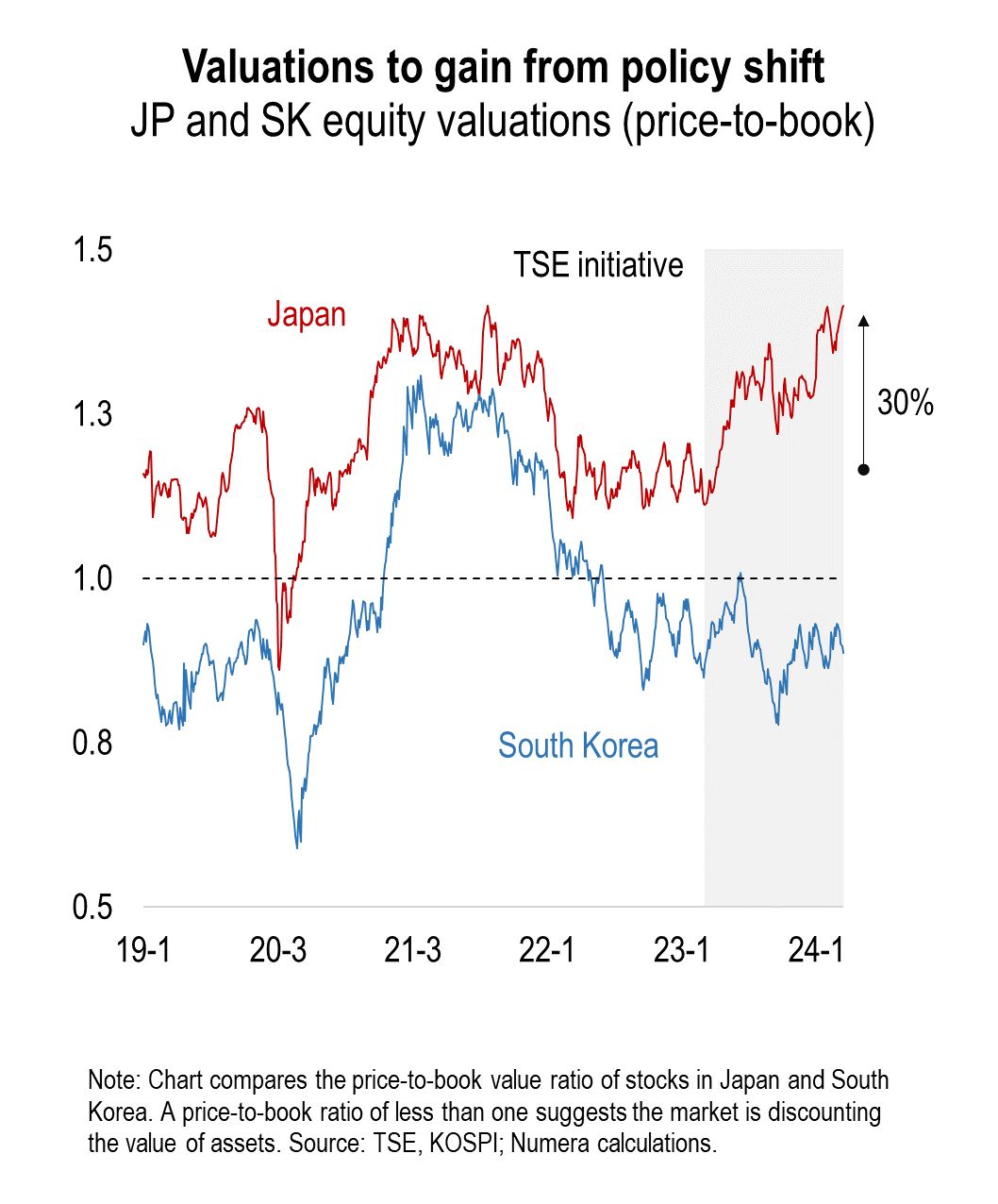

The Japan South Korea stock market experienced a remarkable surge on Monday, demonstrating the resilience and growth potential of Asian stock markets in the current economic climate. The Korean KOSPI index soared over 2%, achieving an unprecedented milestone, while Japan’s Nikkei 225 index impressively gained over 1,100 points during the morning trading session. Additionally, the Topix index reached a record high, indicating strong investor confidence across both markets. As investors keenly observe these developments, the momentum in Japan South Korea stock market highlights a broader trend of optimism in the region. This bullish sentiment could suggest favorable conditions for traders and stakeholders keen on capitalizing on the evolving dynamics of these Asian economies.
The financial landscapes of Japan and South Korea have shown significant vitality recently, with their respective equity markets reflecting this robust activity. The KOSPI index from Korea has catapulted to historical heights, while Japan’s benchmark indices, such as the Nikkei 225 and Topix indexes, have achieved impressive gains. Such bullish behavior in these markets paints a vivid picture of the resilience of the East Asian economies amidst global fluctuations. As the stock exchanges in both nations continue their upward trajectories, they offer a compelling avenue for investment and economic analysis. Investors and analysts alike are closely monitoring these trends as they seek to navigate the complexities of the Asian financial markets.
Record Highs in the Japan South Korea Stock Market
The recent surge in the Japan South Korea stock market has set the stage for unprecedented growth. On Monday, the Korean KOSPI index experienced a remarkable rise, boosting investor confidence as it surpassed the 2% mark to hit an all-time high. This rally in Korea reflects a broader positive sentiment in the Asian stock markets, where investors are optimistic about economic recovery and future growth prospects.
Meanwhile, Japan’s stock market was not far behind, as the Nikkei 225 index surged dramatically, climbing over 1,100 points during the morning session. Coupled with the Topix index reaching a record high, these developments indicate that the stock markets in Japan and South Korea are experiencing robust growth, driven by strong corporate earnings and positive economic indicators. Such performance is critical for attracting foreign investment and advancing regional economic stability.
Factors Driving the Stock Market Surge in Asia
The stock market surge in Asia can be attributed to several key factors influencing investor behavior. One of the primary drivers is the resurgence of consumer spending in both Japan and South Korea, fueled by easing pandemic restrictions and the return of normalcy in economic activities. This renewed consumer confidence has translated into increased demand for goods and services, thus benefiting major corporations listed in the KOSPI and Nikkei indices.
Additionally, supportive monetary policies from central banks in both countries have also played a vital role in this bullish trend. The Bank of Japan maintains its low-interest-rate environment, which encourages borrowing and investment, while South Korea’s central bank is also focused on fostering economic growth through stimulus measures. Together, these policies create a favorable climate for stock market gains, contributing to the remarkable performances of the KOSPI, Nikkei 225, and Topix indices.
The Impact of Economic Recovery on Stock Markets
As the global economy continues to recover from the effects of the pandemic, the stock markets in Japan and South Korea are witnessing substantial rebounds. This economic recovery has a direct correlation with the rise in stock prices, particularly seen in the impressive gains of the Korean KOSPI index and Japan’s Nikkei 225. Investors are cautiously optimistic, reflecting a willingness to engage in the stock market as uncertainties surrounding the pandemic begin to fade.
Economic indicators point towards a steady recovery, with improved trade figures and increased industrial output. This revitalization has created an environment conducive to investment, which is why the Asian stock markets are experiencing a widespread uplift. The robust performance of major indices like the Nikkei 225 and Topix underlines the strong market sentiment; as economies stabilize, stock markets are expected to continue their upward trajectory.
Comparative Analysis of Japan and South Korea’s Stock Indices
When analyzing the performance of Japan and South Korea’s stock indices, it is crucial to consider both short-term gains and long-term strategies. The Korean KOSPI index has recently outperformed its Japanese counterpart, reflecting a growing economy with a focus on technology and innovation. In contrast, while the Nikkei 225 has shown impressive gains, it is grappling with structural challenges such as an aging population and labor shortages, which could impact future growth.
Despite these challenges, both indices are responding positively to external economic conditions, including global demand for technology products. The enthusiasm in these markets, showcased by the recent stock market surge, highlights the potential future growth that could be realized through strategic investments in innovation and infrastructure. A comparative analysis reveals that while both markets possess unique strengths, the agility and adaptability of the South Korean market are currently propelling it to new heights.
Understanding the Global Trends Affecting Asian Markets
Global economic trends play a significant role in shaping the trajectories of stock markets in Asia, with particular reference to Japan and South Korea. Factors such as global supply chain disruptions, trade agreements, and changes in commodity prices impact these markets directly. As positive sentiment returns to international markets, it fosters confidence among investors in the region, contributing to the impressive gains observed in the KOSPI and Nikkei indices.
Furthermore, geopolitical influences cannot be overlooked. Relationships between major economic powers, and developments such as trade agreements or tensions, create ripples throughout the Asian stock markets. The stock market surge in Japan and South Korea signifies a responsive stance towards these global dynamics, which are increasingly interlinked. Particularly, as both countries engage in cooperative economic initiatives, they are well-positioned to capitalize on positive global trends.
Investment Strategies Amidst Stock Market Growth
As both Japan and South Korea experience significant stock market growth, investors are keen to formulate effective investment strategies. Diversification plays a critical role in navigating the fluctuating landscape of Asian markets. Investors are advised to consider a mix of blue-chip companies within the Korean KOSPI and Japan’s Nikkei 225, alongside emerging technology firms that promise substantial returns in the evolving economy.
Moreover, understanding sectoral strengths can enhance investment decisions. For instance, technology and manufacturing sectors in both Japan and South Korea are robust and poised for future growth. By identifying trends and aligning investment portfolios accordingly, investors can maximize returns during this stock market surge, positioning themselves advantageously for the long term.
Future Projections for Asian Stock Markets
Looking forward, projections for the Asian stock markets, particularly in Japan and South Korea, remain optimistic. Analysts suggest that sustained economic recovery, coupled with an increase in consumer spending and technological advancements, will continue to propel growth in indices like the KOSPI and Nikkei 225. As companies report strong earnings, the potential for further gains remains significant, drawing attention from both domestic and international investors.
However, vigilance is necessary, as market dynamics can shift rapidly based on geopolitical events or changes in global economic conditions. It is essential for investors to keep an eye on these indicators, as well as policy changes from key economic authorities. Amidst the current stock market surge, the potential for continued upward momentum exists, but investors must remain adaptable to the complex and ever-changing environment of the Asian markets.
Role of Technology in Shaping Stock Market Trends
Technology is revolutionizing the investment landscape in Japan and South Korea, significantly influencing stock market trends. The emergence of fintech and online trading platforms has democratized access to stock trading, making it easier for retail investors to partake in market activities. This increase in participation, particularly evident in the surge of the Korean KOSPI index, highlights the vital role technology plays in fostering investor engagement and market dynamics.
Moreover, advancements in sectors such as artificial intelligence and blockchain technology are reshaping how businesses operate, leading to enhanced efficiency and productivity. As these technologies proliferate, companies within the Nikkei 225 and Topix indices are likely to benefit, driving further growth and stock price appreciation. The integration of technology into trading and investment strategies will continue to redefine the landscape of the Japan South Korea stock market.
The Importance of Diversifying Investment Portfolios
Diversification remains a cornerstone of sound investment strategy, particularly in the context of the rapidly fluctuating Japan South Korea stock market. By spreading investments across different sectors such as technology, consumer goods, and manufacturing, investors can mitigate risks associated with market volatility. The recent surge in both the KOSPI and Nikkei indices underscores the importance of having a well-rounded portfolio that can absorb shocks from sector-specific downturns.
Additionally, diversifying investments internationally can further enhance portfolio resilience. By considering stocks from emerging markets while balancing investments in established markets like Japan and South Korea, investors can optimize their returns. This strategy not only stabilizes potential earnings but also allows investors to capitalize on the impressive growth exhibited in Asian stock markets, ultimately contributing to long-term financial stability.
Frequently Asked Questions
What factors contributed to the recent surge in the Japan South Korea stock market?
The recent stock market surge in both Japan and South Korea can be attributed to several factors including investor optimism, strong corporate earnings, and favorable economic data that bolstered confidence in the markets. Specifically, the Korean KOSPI index and Japan’s Nikkei 225 experienced significant gains, reflecting investor support and positive market sentiment.
How has the Korea KOSPI index performed compared to the Nikkei 225?
The Korea KOSPI index has shown remarkable performance recently, rising over 2% to hit an all-time high, while Japan’s Nikkei 225 index surged more than 1,100 points during the same period. This performance highlights the robust growth in the Asian stock markets, with both indices reaching new heights.
What does the record high of the Topix index mean for investors?
The record high of the Topix index signifies a bullish trend in the Japan stock market, indicating strong investor confidence and potential for sustained economic growth. For investors, this could mean opportunities for capital gains as the market remains favorable for growth.
How do changes in the Asia stock markets affect the Japan South Korea stock markets?
Changes in the Asian stock markets often have a ripple effect on the Japan South Korea stock markets. For example, a surge in one market can lead to increased investment flows and positive sentiment across other markets, influencing indices like the KOSPI and Nikkei 225, thereby creating a synchronizing effect among regional economies.
What strategies should investors consider during a stock market surge in Japan and South Korea?
During a stock market surge in Japan and South Korea, investors should consider strategies such as diversification to mitigate risks, focusing on sectors that show strong growth potential, and keeping an eye on economic indicators that may influence market conditions. Staying updated on trends affecting the KOSPI index and Nikkei 225 can also help in making informed investment decisions.
| Market Index | Change | Notes |
|---|---|---|
| Korean KOSPI | + 2% | Reached an all-time high |
| Nikkei 225 | + 1,100 points | Surged in the morning session |
| Topix | + Record high | Climbed significantly |
Summary
The Japan South Korea stock market saw remarkable gains this past Monday, with both nations’ indices achieving significant milestones. The KOSPI index in South Korea rose by more than 2%, marking an all-time high, while Japan’s Nikkei 225 surged over 1,100 points during the morning session, coinciding with the Topix index also hitting a record high. These increases reflect a positive market sentiment and indicate strong economic performance in both countries.
Related: More from Market Analysis | Kaspa KAS Price Forecast: Why $0.03 Crucial for Bulls | Barclays Looks at Blockchain for Payments, Deposits