
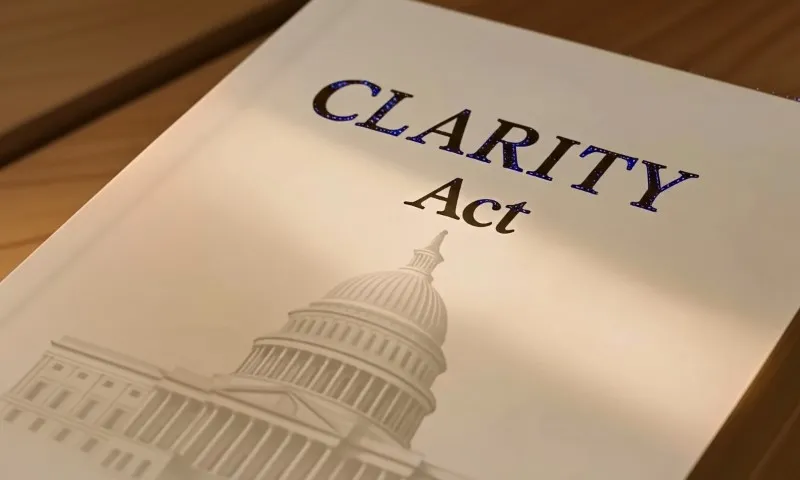

The CLARITY Act is set to reshape the landscape of digital assets regulation in the U.S. by establishing a clearer framework for how cryptocurrencies are treated under federal law. As the market for digital commodities continues to evolve, this pivotal legislation addresses the ongoing conflict between the SEC and CFTC regarding authority over crypto oversight. Aimed at streamlining DeFi compliance, the CLARITY Act intends to carve out specific guidelines that differentiate software infrastructure from traditional intermediaries. By simplifying the regulatory environment, the Act seeks to eliminate the confusion that has surrounded crypto trading and securities offerings, ensuring a more efficient marketplace. Ultimately, the successful passage of the CLARITY Act could provide the much-needed clarity that investors and developers alike have been waiting for in the fast-paced world of cryptocurrency.
The Digital Asset Market Clarity Act, commonly referred to as the CLARITY Act, represents a significant legislative effort to address the complexities surrounding the regulation of digital assets. This bill aims to clarify the roles and responsibilities of various regulatory bodies, such as the SEC and CFTC, in overseeing the burgeoning crypto market. It recognizes the unique characteristics of decentralized finance (DeFi) and seeks to create a more cohesive national framework that mitigates the risks of state-by-state compliance challenges. By treating digital commodities as covered securities, the CLARITY Act aspires to streamline the regulatory landscape, making it more predictable for businesses operating in the digital economy. This initiative not only promises to enhance investor protection but also seeks to foster innovation within the rapidly evolving space of cryptocurrency.
Understanding the CLARITY Act: A New Era for Crypto Regulation
The CLARITY Act, or the Digital Asset Market Clarity Act of 2025, is poised to redefine the landscape of cryptocurrency regulation in the United States. With the ever-growing complexity of digital assets, the Act seeks to clarify when a token is classified as a commodity or a security, thereby resolving long-standing conflicts between regulatory bodies such as the SEC and CFTC. By establishing a federal regulatory framework, the CLARITY Act aims to bring uniformity to the crypto market, which has been bogged down by inconsistent state laws and regulations that vary from one jurisdiction to another.
One of the most significant provisions of the CLARITY Act is its proposal to treat ‘digital commodities’ as ‘covered securities.’ This means that businesses dealing with cryptocurrencies will face fewer state-level compliance challenges, allowing them to operate more efficiently. However, this move has sparked concerns among consumer advocates who fear that limiting state oversight may dilute protections for retail investors. As the legislative process unfolds, the implications of these changes will be closely examined by both advocates and critics of the crypto sector.
The DeFi Carve-Out: What It Means for Decentralized Finance
The CLARITY Act includes a specific carve-out for decentralized finance (DeFi), which is a crucial aspect of its proposed regulatory framework. This carve-out clarifies that individuals and entities engaging in certain DeFi activities—such as operating nodes, relaying transactions, or providing liquidity—will not be considered intermediaries subject to traditional regulatory scrutiny. This distinction is vital for the growth and sustainability of the DeFi ecosystem, which has been hampered by the fear of regulatory overreach.
However, while the DeFi carve-out aims to foster innovation by exempting certain activities from intermediary regulation, it does not exempt these players from anti-fraud and anti-manipulation rules. This means that while software and protocol-level activities may not require compliance with traditional financial regulations, those involved in DeFi must still adhere to principles that prevent fraud. The balance struck by the CLARITY Act will significantly impact how the DeFi landscape evolves in the coming years.
Navigating the SEC vs. CFTC Conflict in Crypto Oversight
A central theme within the CLARITY Act is addressing the ongoing turf war between the SEC and the CFTC regarding jurisdiction over cryptocurrencies. The Act seeks to eliminate ambiguity about which agency has authority over various aspects of crypto regulation, specifically in differentiating between securities and commodities. By clearly delineating the boundaries of regulatory oversight, the CLARITY Act aims to streamline compliance for crypto firms and foster a more stable market environment.
The resolution of conflicts between regulatory agencies is crucial not only for the functioning of markets but also for investor protection. The CLARITY Act proposes a framework that recognizes the unique nature of digital assets, aiming to clarify roles while ensuring that protective measures remain in place against fraud and market manipulation. How this legislation ultimately resolves the SEC vs. CFTC conflict will likely shape the future of crypto regulation in the U.S.
Impact of State Preemption on Crypto Firms
The preemption clause embedded within the CLARITY Act holds significant implications for state-level regulation of cryptocurrencies. By classifying digital commodities as covered securities, the bill aims to prevent states from imposing their own separate requirements that could complicate the operational landscape for crypto businesses. This federal override is envisioned as a crucial step toward creating a unified market—one where firms can navigate a coherent set of rules without the burden of state-by-state compliance.
Nevertheless, this move has raised alarms among consumer protection advocates who believe that state-level regulators play an essential role in overseeing local markets and swiftly addressing scams or fraudulent practices. The trade-off between achieving regulatory clarity and maintaining robust protections for investors will be a focal point of discussion as lawmakers refine the bill. Ultimately, the preemption aspect of the CLARITY Act could reshape how crypto firms operate, potentially simplifying their compliance obligations but also limiting local regulatory oversight.
Anticipating Enforcement Challenges Under the CLARITY Act
Even if the CLARITY Act successfully passes into law, significant enforcement challenges are likely to arise. The Act proposes a regulatory framework that mandates the SEC and CFTC to establish rules within a stipulated timeframe. However, there remains an inherent risk during the transition period before these rules are finalized. Crypto firms might find themselves in a limbo state, where the existing compliance expectations are still in flux, posing a higher likelihood of regulatory scrutiny and enforcement actions during this uncertain period.
Regulators will also face challenges in interpreting and enforcing the new definitions and standards set forth in the CLARITY Act. For instance, determining the boundary between what constitutes a DeFi protocol and a fully-fledged trading operation will likely spark debates and disputes. As the industry continues to innovate rapidly, lawmakers and regulators must ensure that their interpretations keep pace with technological advancements to avoid stifling growth while adequately protecting investors.
Consumer Protections in the New Crypto Landscape
As the regulatory structure shifts with the implementation of the CLARITY Act, ensuring robust consumer protections will be paramount. While the bill aims to streamline regulations and eliminate ambiguities, it is imperative to address how market participants will be safeguarded against fraud and misconduct. Critics argue that removing state-level oversight diminishes the speed and effectiveness of consumer protection measures, particularly in a rapidly evolving market characterized by new risks and scams.
Thus, the CLARITY Act’s effectiveness will be judged not only by its ability to create a coherent regulatory framework but also by its impact on investor trust and safety. Maintaining a focus on consumer protections will require ongoing attention and adaptation from lawmakers, regulatory bodies, and industry stakeholders. Ensuring that consumers can navigate this new landscape safely will be a critical outcome as the legislative process unfolds.
The Role of Definitions in Regulating Digital Assets
One of the key aspects of the CLARITY Act is its focus on defining critical terms related to digital assets. By establishing clear definitions of terms like ‘digital commodities’ and ‘covered securities,’ the Act aims to create a more organized regulatory environment. However, these definitions must hold up under scrutiny, particularly as innovative cryptocurrency products emerge that may not fit neatly into existing categories. The precision of these definitions will directly influence how effectively the regulations can be enforced and maintained.
Moreover, as regulators define what constitutes a commodity versus a security, their ability to adapt to evolving technologies and market behaviors will be put to the test. If the definitions are too rigid or fail to capture the nuances of digital assets, the intended regulatory clarity may falter, leading to confusion and difficulties in enforcement. Thus, the ongoing discussions surrounding the drafting of these definitions will be fundamental to the success of the CLARITY Act.
Institutional Perspectives on the CLARITY Act
As the CLARITY Act progresses through Congress, various institutional stakeholders, including major financial firms, tech companies, and industry associations, are weighing in on its potential implications. Many institutions see the potential for the Act to provide the regulatory certainty necessary for more extensive investments into cryptocurrency markets. This clarity could pave the way for institutional adoption by delineating clear compliance pathways and fostering confidence among investors.
Yet, there are concerns that the changes proposed may not adequately protect against the risks inherent in a volatile market. Institutions that have navigated complex compliance landscapes in traditional finance may approach the streamlined framework with caution, particularly if consumer protections are perceived as weakened. The interplay between regulatory certainty and investor safeguards will be crucial as institutional participation in the crypto market evolves.
The Future of Crypto Regulation in America
The overarching goal of the CLARITY Act is to establish a forward-looking regulatory framework that can accommodate the dynamic nature of cryptocurrencies and blockchain technology. As the crypto space continues to grow and evolve, regulators will need to address the myriad of challenges presented by new business models, technologies, and market behaviors. The successful enactment of the CLARITY Act may serve as a template for other countries grappling with similar issues regarding digital assets.
Ultimately, the future of crypto regulation in America will depend not just on the passage of the CLARITY Act, but also on the political will to uphold its principles and adapt to future changes in the industry. As other nations move to establish their regulatory regimes, the United States may find a pivotal opportunity to lead by example, showcasing a balanced approach that nurtures innovation while safeguarding consumer interests in the increasingly connected global market.
Frequently Asked Questions
What is the CLARITY Act and its main objectives in crypto regulation?
The CLARITY Act, formally known as the Digital Asset Market Clarity Act of 2025, aims to provide clear definitions and frameworks for crypto regulation in the U.S. It seeks to resolve the ongoing conflict between the SEC and CFTC regarding oversight of digital commodities, ensuring a unified regulatory approach that eliminates the chaotic patchwork of state laws while promoting clarity in secondary trading and decentralized finance (DeFi) compliance.
How does the CLARITY Act address the conflict between SEC and CFTC in crypto oversight?
The CLARITY Act aims to end the turf war between the SEC and CFTC by establishing clear guidelines which define when a digital asset is considered a security or a commodity. This preemptive approach categorizes ‘digital commodities’ as ‘covered securities’ to halt inconsistent state-level regulations, fostering a more structured crypto oversight that guides market participants.
What provisions does the CLARITY Act have for decentralized finance (DeFi) compliance?
The CLARITY Act includes a specific carve-out for DeFi, stating that individuals operating necessary infrastructure like wallets, nodes, and liquidity pools are not regulated as intermediaries. This provision supports the development of DeFi by distinguishing between operational functions and regulated activities, aiming to encourage innovation while still maintaining oversight over fraudulent practices.
How does the CLARITY Act impact state regulatory authority over digital commodities?
The CLARITY Act’s preemption clause limits state regulatory authority by designating digital commodities as covered securities. This federal override is intended to prevent individual states from imposing their own burdensome registration and compliance requirements, aiming for a more coherent federal framework that facilitates a unified national market while preserving certain state powers under specified conditions.
What are the concerns surrounding investor protection in the CLARITY Act?
While the CLARITY Act seeks to streamline crypto regulation, critics argue that the removal of state oversight may weaken investor protections. There is concern that the bill’s DeFi carve-out allows for significant evasion of accountability measures that could safeguard retail investors from scams and abusive practices, emphasizing the need for a balanced approach to consumer safety in digital commodities.
What is the timeline for the implementation of the CLARITY Act after its passage?
Once passed, the CLARITY Act mandates that the SEC and CFTC must create necessary regulations within 360 days. However, specific provisions may have delays tied to rule-making schedules. Thus, even after enactment, the full implications of the CLARITY Act in the crypto space will evolve over time as regulations are developed and clarified.
How does the CLARITY Act seek to define decentralized finance (DeFi)?
The CLARITY Act attempts to clearly delineate decentralized finance by protecting core infrastructure from being considered as regulated intermediaries. It categorizes activities essential for the operation of DeFi, like compiling transactions and maintaining protocols, as non-regulated, yet it retains anti-fraud provisions to ensure that deceptive practices can be prosecuted.
What skeleton provisions are included to address potential loopholes in the CLARITY Act?
The CLARITY Act includes anti-fraud and manipulation authority explicitly retained for the SEC and CFTC, ensuring that even if an entity claims to operate ‘just software’ or ‘just a UI,’ it remains liable for fraudulent practices. This distinction aims to mitigate the risk of parties exploiting the DeFi carve-out to avoid compliance responsibilities.
Why is the markup process critical for the future of the CLARITY Act?
The January markup process is vital as it will determine refinements made to the bill, including definitions and boundaries that regulate crypto oversight effectively. It addresses unresolved issues such as the scope of DeFi, the balance of consumer protections, and the practicality of a unified regulatory framework among federal and state authorities.
What potential challenges could affect the passage of the CLARITY Act?
The passage of the CLARITY Act may face challenges related to political divisions over federal versus state authority in regulation, differing priorities for consumer protection versus innovation in DeFi, and the complexities of establishing consistent definitions and operational frameworks. Senators’ negotiations during markup will be crucial to address these concerns.
| Key Point | Description |
|---|---|
| The CLARITY Act Overview | The Digital Asset Market Clarity Act of 2025 aims to clarify the regulation of crypto assets, simplifying oversight between the SEC and CFTC. |
| DeFi Carve-Out | Specifies that activities related to decentralized finance do not make operators liable as intermediaries, focusing instead on software infrastructure, |
| Preemption Clause | Treats ‘digital commodities’ as ‘covered securities’, overriding state laws to maintain a unified federal framework. |
| Challenges Ahead | Ensures anti-fraud is maintained but raises questions about how to enforce regulations, who will be held accountable, and what definitions will prevail. |
| Bipartisan Support | The bill received a solid vote in the House, but achieving bipartisan agreement in the Senate remains a challenge due to differing priorities on consumer protection and innovation. |
Summary
The CLARITY Act is poised to redefine regulatory landscapes for cryptocurrency by providing clear guidelines on oversight, effectively addressing long-standing ambiguities. It aims to streamline how decentralized finance (DeFi) operators are treated in comparison to traditional financial institutions while simultaneously implementing a federal framework that minimizes state-level interference. As Senators prepare for markup sessions, the success of the CLARITY Act hinges on their ability to balance innovation with investor protection, ensuring that the final regulation is both comprehensive and enforceable.
Related: More from Regulation & Policy | Blocks Retreat Signals Broader Payments Shifts | Cardone Announces Real Estate Portfolio Tokenization


