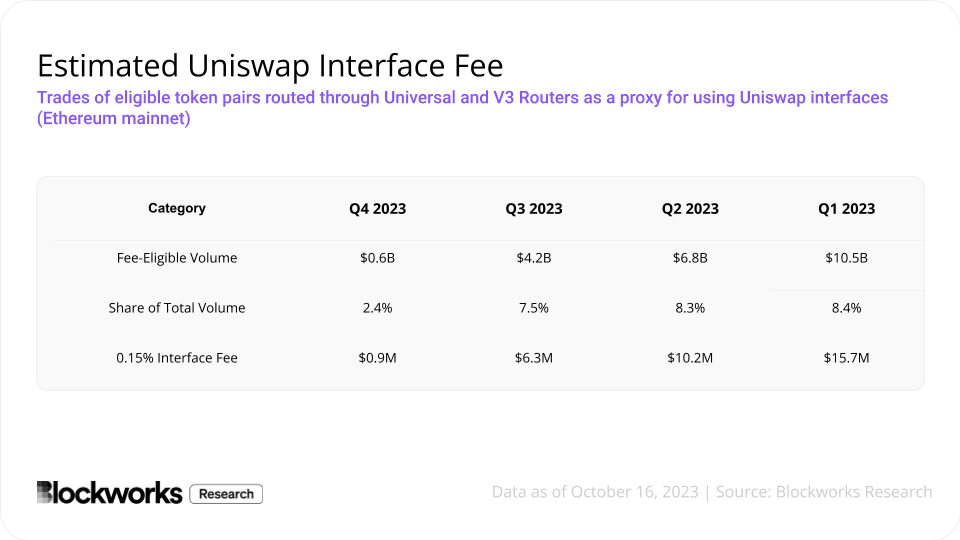

Uniswap interface fees have recently undergone a significant change, as the platform proudly announced a reduction to zero for both its application and API. This decision comes on the heels of a successful governance vote that approved a new fee switch proposal for Uniswap. This strategic move not only enhances user experience but also sets the stage for important developments in liquidity and trading dynamics on Uniswap v2 and v3. Additionally, activating the fee switch will trigger the UNI token burn mechanism, potentially influencing token scarcity and demand. This exciting update marks a new era for users seeking more cost-effective trading options in decentralized finance.
In the realm of decentralized exchanges, Uniswap has taken decisive action to eliminate interface fees associated with its services, fostering an inviting environment for traders and liquidity providers alike. The recent approval of the fee switch during a governance vote indicates a shift in strategy focused on enhancing user engagement and platform efficiency. With both Uniswap v2 and v3 set to benefit from this transition, users can anticipate improved trading experiences without the burden of extra costs. Furthermore, this initiative ties into broader discussions about token economics, especially with the forthcoming UNI token burn mechanism aimed at optimizing token supply. As this change unfolds, the landscape of decentralized trading is poised for exciting developments in user incentives and governance.
Uniswap Interface Fees: A Game-Changer for Users
The recent announcement from Uniswap heralds a significant shift in the trading landscape, as it has effectively eliminated all interface fees associated with its platform and API. This move is designed to enhance user experience and attract a broader audience to decentralized finance (DeFi). By offering zero interface fees, Uniswap aims to eliminate barriers to entry for new users, offering them a seamless and cost-efficient way to engage in cryptocurrency trading.
This fee reduction is not just a temporary promotional strategy; it reflects Uniswap’s commitment to creating an equitable trading environment. Users can now swap tokens on both Uniswap v2 and v3 without worrying about additional costs cutting into their investments. As the DeFi space becomes increasingly competitive, such initiatives are vital for retaining user loyalty and driving platform growth.
Understanding the Uniswap Fee Switch Proposal
The Uniswap governance vote recently passed a pivotal fee switch proposal, which serves as a foundational change in how the platform operates. This proposal does not just eliminate fees; it also introduces a mechanism for potential revenue generation through the UNI token burn. This healthy balance between incentivizing users with zero fees and ensuring the sustainability of the platform through governance decisions marks a strategic advancement for Uniswap.
The implementation of the fee switch mechanism enables the platform to adapt to economic factors while still prioritizing user benefits. By utilizing community feedback through governance votes, Uniswap fosters a collaborative environment where users can influence the platform’s future. This governance model is essential for promoting investor confidence and ensuring that the interests of the community are represented.
The Impact of UNI Token Burn on the Ecosystem
The UNI token burn mechanism, activated in conjunction with the fee switch, is anticipated to have significant implications for the Uniswap ecosystem. By reducing the circulating supply of UNI tokens, the burn process fundamentally alters demand and scarcity dynamics, potentially leading to increased value for existing token holders. This intentional deflationary measure aligns well with the broader trends of decreasing supply in cryptocurrency markets.
Moreover, as token holders participate in governance votes influencing future changes, this integration of community power into the tokenomics of Uniswap fosters ownership and engagement. The reduction of UNI supply, paired with the zero fee structure, creates an appealing proposition for investors looking for long-term value retention and growth.
Navigating Between Uniswap v2 and v3
With the activation of zero interface fees across both Uniswap v2 and v3, traders now have the flexibility to navigate between these two versions of the platform. Uniswap v2, known for its simplicity and broader accessibility, is excellent for traders who require quick token swaps without the complexities of liquidity provision. In contrast, Uniswap v3 introduces more advanced features, including customizable liquidity ranges and concentrated liquidity, appealing to experienced traders seeking higher yields.
The option to choose between v2 and v3 while benefiting from zero interface fees allows users to select the platform that best fits their trading style and efficiency requirements. Such strategic choices empower users to maximize their trading outcomes without financial burdens, reinforcing Uniswap’s reputation as a leader in the decentralized finance revolution.
DeFi Revolution: Uniswap’s Pioneering Role
Uniswap’s commitment to zero interface fees and governance-driven fee switch proposals highlights its pioneering role in the DeFi sector. By continuously innovating and adjusting to user needs, Uniswap sets the standard for what decentralized exchanges should strive for. As the first platform to enable automated liquidity pools, its evolution over the years showcases how adaptability leads to sustained success.
The decentralization ethos embodied by Uniswap not only encourages broader participation but also empowers users to have a voice in the platform’s operations. This groundbreaking approach, paired with zero fees, is expected to inspire other projects within the DeFi space to rethink their fee structures and governance models.
Maximizing Trading Efficiency on Uniswap
Traders looking to maximize their efficiency on Uniswap can exploit the recent advancements in both v2 and v3. With no interface fees, users are encouraged to execute more trades without the overhead costs previously incurred. This environment supports higher trading volumes and increased liquidity, ultimately benefiting all participants in the ecosystem.
Additionally, understanding the nuances of Uniswap v3—such as range orders and concentrated liquidity—can further enhance trading strategies. Users who take the time to familiarize themselves with these features are likely to experience a greater competitive edge in the market.
The Future of Uniswap Governance
Future governance decisions will continue to determine the trajectory of Uniswap’s development and its community-based ethos. The successful execution of the recently approved fee switch reflects the community’s ability to influence change and adapt to market needs. These governance mechanisms will allow users to propose and vote on changes that could further enhance user satisfaction and platform performance.
As the crypto landscape evolves, the importance of responsive governance in DeFi projects cannot be overstated. Uniswap’s model of incorporating user feedback into its operational strategies could serve as a blueprint for other decentralized platforms seeking to cultivate a loyal user base while remaining agile in the face of market dynamics.
Exploring Uniswap’s Ecosystem of Products
Uniswap’s expansion beyond simple token swaps into a full ecosystem of products marks a significant evolution in its service offerings. Users can explore various DeFi solutions, including automated market-making and yield farming opportunities that allow them to earn passive income without incurring interface fees. This diversification not only bolsters the utility of the platform but also encourages users to engage more deeply with their digital assets.
Furthermore, as Uniswap continues to innovate, forming partnerships and integrating new protocols, the overall ecosystem expands, providing users with multiple avenues to optimize their investments. By facilitating connections between different financial products while maintaining zero fees, Uniswap is poised to solidify its position as a central hub in the DeFi landscape.
Adapting to Market Trends in DeFi
Adapting to emerging trends in the DeFi sector is crucial for platforms like Uniswap, which must remain in tune with user preferences and market demands. By eliminating interface fees, Uniswap positions itself favorably against competitors, especially as fee structures continue to be a primary concern for cryptocurrency traders. It represents a strategic move towards a more user-centric model within decentralized exchanges.
Moreover, the integration of community governance through proposals like the fee switch empowers users and enriches the platform’s adaptability. As market conditions fluctuate, maintaining flexibility will be essential for sustaining long-term growth and user engagement in a space characterized by rapid innovation.
The Role of Community in Uniswap’s Success
Community involvement has always been at the heart of Uniswap’s ethos, driving its success as one of the leading decentralized exchanges. As users actively participate in governance votes and contribute to discussions around proposals, they play an integral role in shaping the future of the platform. This sense of ownership fosters community loyalty and attracts new users excited about taking part in a decentralized financial ecosystem.
The recent fee switch approval reflects how user feedback directly influences operational changes. Each governance decision not only impacts tokenomics but also serves as a reminder of the collaborative spirit that propels Uniswap forward. As it continues to leverage community insights, Uniswap is likely to remain at the forefront of DeFi innovation.
Frequently Asked Questions
What are the Uniswap interface fees and have they changed recently?
Uniswap interface fees, which users previously incurred for interacting with the platform, have recently been reduced to zero. This change was announced alongside an approved proposal for a fee switch during a Uniswap governance vote.
How does the Uniswap fee switch affect users of v2 and v3?
The Uniswap fee switch, which is set to be activated on the Unichain mainnet after a two-day time lock, allows for the possibility of charging fees on trades executed through Uniswap v2 and v3. However, currently, all interface fees have been set to zero.
What is the significance of the UNI token burn related to Uniswap interface fees?
The UNI token burn mechanism will be triggered following the activation of the Uniswap fee switch. This process involves using part of the fees collected to permanently remove UNI tokens from circulation, potentially increasing the value of the remaining tokens.
What does a zero interface fee mean for Uniswap users?
With the implementation of zero interface fees on Uniswap’s application and API, users can interact with the platform without incurring transaction costs associated with the interface, making it more accessible than ever.
How will the Uniswap governance vote impact the fee structure?
The Uniswap governance vote has approved a fee switch, which will allow the community to manage fee structures in the future. While interface fees are currently zero, this governance flexibility may change the fee landscape in subsequent updates.
Are there any other fees to consider when trading on Uniswap v2 and v3?
While Uniswap interface fees have been reduced to zero, users should be aware of trading fees associated with liquidity pools on Uniswap v2 and v3. These fees are not related to the interface and are instead a cost of providing liquidity.
When will the fee switch be activated for Uniswap v2 and v3?
The fee switch for Uniswap v2 and v3 will be activated on the Unichain mainnet following a two-day time lock period, as per the latest governance vote, allowing for potential future fee implementations.
How will the changes to Uniswap’s interface fees benefit traders?
The reduction of interface fees to zero benefits traders by allowing them to perform transactions without added costs from the interface, thereby maximizing their trading efficiency and profitability on Uniswap.
What changes might users expect with the new fee switch mechanism on Uniswap?
With the new fee switch mechanism, users may see the introduction of fees in the future, which could lead to the subsequent burn of UNI tokens, impacting the overall supply and value of the UNI token.
Why is the governance vote important in deciding Uniswap interface fees?
The governance vote is crucial as it empowers the Uniswap community to make decisions regarding the implementation of fees, including the fee switch, ensuring that user interests are represented in the platform’s fee structure.
| Key Point | Details |
|---|---|
| Zero Interface Fees | Uniswap has announced a reduction of all application and API interface fees to zero. |
| Governance Vote | A fee switch proposal was approved in a recent governance vote. |
| Activation Timeline | The fee switch will be activated after a two-day time lock period. |
| Uniswap v2 and v3 | The fee switch applies to both Uniswap v2 and v3 versions. |
| Token Burn Mechanism | The activation will trigger the UNI token burn mechanism. |
Summary
Uniswap interface fees have been significantly reduced to zero, greatly benefiting users of the platform. This strategic move is expected to enhance trading activity and attract more liquidity to Uniswap’s decentralized exchange. Coupled with the approval of the fee switch in the governance vote, users can anticipate a more efficient trading environment. The timing of this change, along with the workings of the token burn mechanism, is poised to reinforce the overall growth and sustainability of the Uniswap ecosystem.
Related: More from DeFi & Stablecoins | Germany Launches Regulated Stablecoin Pegged to Swiss Franc | U.S. Regulator Challenges Crypto Stablecoins