
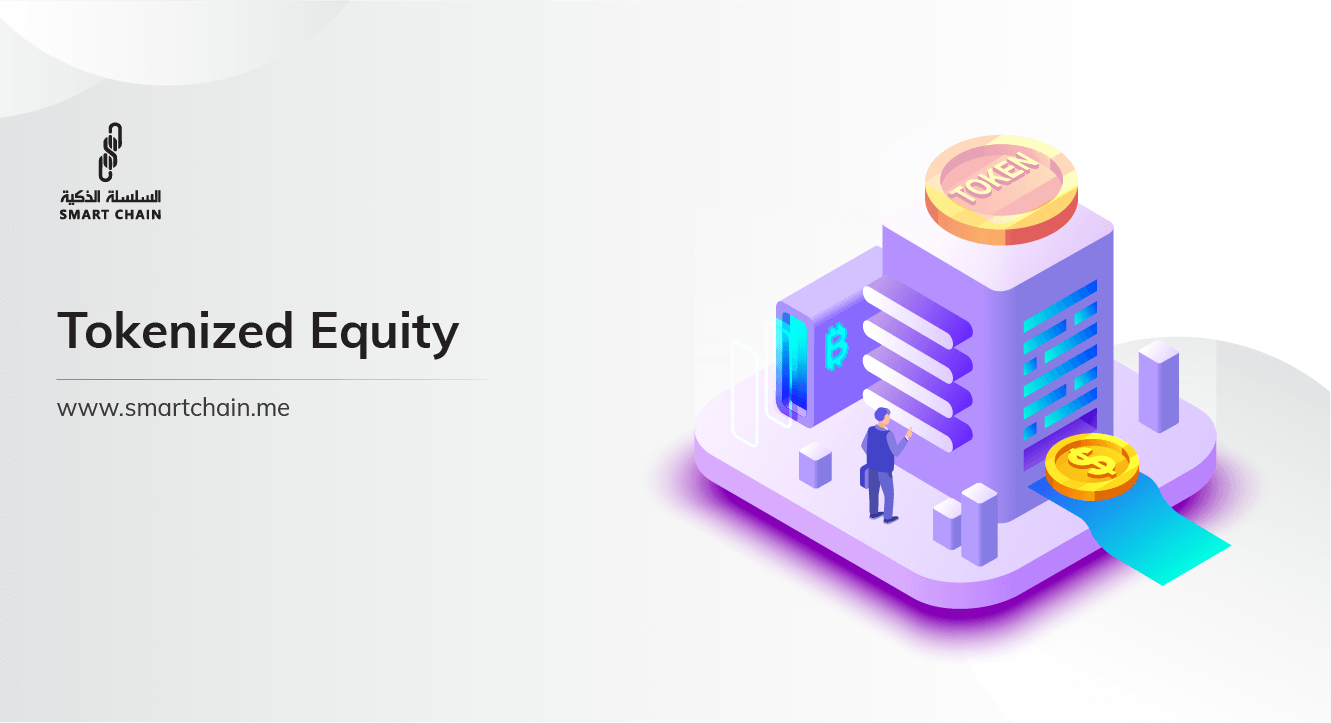

Tokenized equities are revolutionizing the landscape of traditional finance by allowing digital representations of shares to trade on blockchain platforms. Recent developments highlight the growing tension between traditional entities, like Citadel, and decentralized finance (DeFi) platforms, particularly in light of DeFi regulations and compliance standards. Citadel’s SEC filing argues that these tokenized assets should be classified similarly to traditional exchanges, emphasizing the need for regulatory frameworks to ensure investor protections and market integrity. As Uniswap and other decentralized equity trading platforms respond, the validity and future of tokenized equities are thrust into the regulatory spotlight. This ongoing debate will shape how stock trading interacts with decentralized finance, potentially influencing both mainstream and emerging markets.
The emergence of tokenized stock assets represents a groundbreaking shift in how we approach equity trading. These digital shares, often traded through decentralized protocols, blur the lines between traditional markets and innovative technological solutions. Amidst ongoing discussions, firms like Citadel are urging regulators to reconsider definitions that dictate how these digital equities should be managed within existing frameworks. This call to action places the vital issue of investor protection at the forefront, as different models of equity trading begin to take shape in a space historically dominated by centralized exchanges. As the landscape evolves, understanding tokenized equities and their implications on regulatory practices will be crucial for both market participants and decision-makers.
Understanding Tokenized Equities in DeFi
Tokenized equities represent a bridge between traditional finance and decentralized finance (DeFi). These digital assets allow stocks to be expressed on blockchain networks, enabling alternative trading mechanisms that operate outside traditional exchanges. As Citadel Securities argues, any platform facilitating tokenized US equity trading can effectively fulfill the roles of an exchange or broker-dealer. This framing has significant implications for regulatory oversight and the future of equity trading platforms. To thrive within this evolving landscape, stakeholders must grapple with compliance, technological advancements, and the essence of decentralized finance itself.
The implications of tokenizing equities extend beyond mere shifts in trading platforms; they challenge the foundational principles of securities regulation. Investors and developers must work collaboratively to foster an environment where tokenized equities can flourish while adhering to existing regulatory frameworks. The SEC’s involvement is crucial, as it will ultimately determine if these new financial instruments can coexist with established investor protections and market integrity standards. As this debate unfolds, the essence of decentralized finance — transparency and accessibility — must remain central to any developments.
The Regulatory Implications of Citadel’s Filing
Citadel’s recent 13-page letter to the SEC signals a pivotal moment in the regulatory landscape surrounding the tokenization of equities. The firm argues that decentralized finance platforms currently facilitating token trading must be classified as exchanges, requiring them to adhere to stringent regulations such as market surveillance and fair access requirements. This shift, if accepted by the SEC, could impose traditional financial regulations on innovative DeFi protocols, potentially stifling their growth by introducing layers of bureaucratic oversight that were not part of the decentralized ethos.
However, the response from DeFi advocates highlights a critical discourse on the role of open-source developers in the trading ecosystem. Citadel’s call to regulate these developers as brokers is seen by many, including prominent figures like Uniswap’s founder, as an unwarranted tightening of the regulatory noose around decentralization. This tension encapsulates the broader struggle within the crypto community: balancing the inevitable evolution of financial products with the core values of permissionless access and innovation.
Uniswap’s Response to Citadel’s Concerns
In response to Citadel’s formidable stance, Uniswap’s founder has taken to public platforms to assert the importance of protecting decentralized protocols from being classified similarly to traditional financial institutions. Adams argues that treating software developers as intermediaries undermines the very principles on which DeFi was built — openness, accessibility, and trustless transactions. By framing Citadel’s concerns as an attempt to impose antiquated regulatory frameworks on modern innovations, Adams champions the notion that DeFi should not be forced to comply with 20th-century standards.
Uniswap’s counter-argument raises essential questions about the future of decentralized finance. The belief that code should not be conflated with business operations underscores the importance of distinguishing between decentralized applications and broker-dealer functions. As discussions around fair access and market integrity continue to unfold, platforms like Uniswap must advocate for a regulatory environment that allows tokenized equities to thrive without compromising the decentralization that is fundamental to their operation.
The Role of SEC in Defining DeFi Regulations
As the regulatory watchdog over financial markets, the SEC’s role in delineating the boundary between decentralized finance and traditional securities regulation is crucial. The narrative surrounding tokenized equities presents a significant test of how well the SEC can adapt to the rapidly changing financial landscape. The SEC has consistently emphasized investor protection and market integrity. However, the challenge lies in implementing these principles without constraining innovation within the DeFi space.
The recent investor advisory committee meeting underscored the need for a nuanced approach to tokenized equities. Dialogue among major financial players indicated a willingness to explore new regulatory paradigms, but there remains apprehension regarding how these regulations will impact the fluidity of decentralized markets. The outcomes of future SEC rulings could either bolster the evolution of tokenized equities within DeFi or impose barriers that restrict their growth.
The Divergence in Theories of Control in Finance
At the heart of the current regulatory debate lies a fundamental divergence in theories of control in finance. Citadel’s perspective positions that securities remain securities, irrespective of their mode of transmission — whether digital or traditional. This viewpoint asserts that any platform aggregating buyers and sellers of tokenized assets is subject to the same regulatory obligations as conventional exchanges and broker-dealers.
Conversely, proponents of decentralized finance argue that protocols should not be encumbered by the same rules that govern traditional finance. They advocate for a distinct framework recognizing the unique properties of DeFi, which operate on smart contracts and decentralized ledgers. This ongoing discourse reflects the broader struggle to define how emerging financial technologies align or clash with existing regulatory frameworks.
Impact on Investor Protections in a DeFi Landscape
As discussions around tokenized equities intensify, a critical element to consider is the impact on investor protections in a decentralized finance ecosystem. Citadel’s concerns about fragmented liquidity and the potential sharing of investor protections echo the sentiments of many traditional market players. The fear is that without stringent regulations, retail investors could become increasingly vulnerable within a shadow marketplace operating outside the protective confines of the Securities Exchange Act.
However, DeFi advocates argue that one of the core tenets of decentralized finance is empowerment through transparency and code accessibility. They suggest that traditional notions of investor protection ought to evolve alongside technological progress. While investor safeguards are paramount, fostering an innovative environment for tokenized equities requires a balanced approach that redefines what protections look like in a decentralized world.
Potential Outcomes of The SEC’s Regulatory Decisions
The outcome of the SEC’s impending decisions regarding tokenized equities could have far-reaching implications for both decentralized finance and traditional markets. If the SEC endorses Citadel’s position, it may pave the way for a more regulated DeFi environment, where compliance burdens could reshape how protocols operate. This could either deter innovation or force many projects to consider relocating outside of regulated environments, diluting the principle of open access.
Conversely, if the SEC adopts a more tolerant stance toward DeFi protocols, this could encourage the growth of tokenized equities within established regulatory frameworks. Such a shift might create an opportunity for traditional finance and decentralized platforms to coexist, merging the best aspects of both worlds. However, this would hinge on the SEC’s ability to construct regulations that both protect investors and empower innovative financial solutions.
Examining the Future of Decentralized Finance and Equities
The future of decentralized finance, particularly in language around tokenized equities, remains uncertain yet compelling. The ongoing debates and developments point toward a potential convergence between traditional and decentralized finance, especially as adoption rates increase and the demand for innovative financial products grows. The landscape could see platforms facilitating tokenized trading of equities become commonplace, reshaping how stocks are viewed and traded.
However, navigating this new frontier will require careful regulatory balancing. The challenge lies in creating frameworks that foster innovation while ensuring investor protections remain intact. How regulators choose to address these rapidly evolving markets will shape not only the future of tokenized equities but also the broader trajectory of decentralized finance as it continues to challenge and redefine established norms.
Navigating the Tension between Innovation and Regulation
In the current climate of financial innovation, the tension between technological advancement and regulatory oversight is palpable. On one hand, entities like Citadel argue for stringent regulations on platforms handling tokenized equities to protect investors and maintain market integrity. On the other hand, advocates for decentralized finance assert that overregulation could stymie the very innovation that empowered these financial technologies to emerge.
Navigating this tension will be critical for the successful integration of tokenized equities into mainstream markets. Policymakers, stakeholders, and technology developers must collaborate to create an environment where DeFi can thrive while addressing the legitimate concerns raised by traditional financiers. As this ecosystem continues to evolve, it is imperative that all parties remain engaged in open dialogues to seek solutions that respect both innovation and regulatory integrity.
Frequently Asked Questions
What are tokenized equities and how do they differ from traditional equity trading?
Tokenized equities are digital representations of traditional stocks or equity assets on a blockchain, allowing them to be traded in a decentralized manner. Unlike traditional equity trading, which operates through centralized exchanges and broker-dealers, tokenized equities leverage decentralized finance (DeFi) protocols to facilitate trading directly between users without intermediaries, enhancing transparency and efficiency.
How do DeFi regulations impact the trading of tokenized equities?
DeFi regulations significantly influence the trading of tokenized equities by determining how these digital securities are categorized and governed. As highlighted in recent SEC discussions, if tokenized equities are classified as traditional securities, trading platforms facilitating such transactions may be required to register as exchanges or broker-dealers, impacting the decentralized nature and accessibility of DeFi.
What is Citadel’s stance on tokenized equities as expressed in their SEC filing?
In their recent SEC filing, Citadel argues that tokenized equities traded on DeFi platforms should comply with regulations similar to those governing traditional stock exchanges. They emphasize the need for investor protection measures and transparency, suggesting that without proper oversight, a fragmented and unregulated market could emerge, jeopardizing retail investors.
What was Uniswap’s response to Citadel’s position on DeFi regulation and tokenized equities?
Uniswap’s founder, Hayden Adams, countered Citadel’s position by arguing that treating decentralized protocols like centralized intermediaries undermines the principles of DeFi. He asserts that protocol developers should not be classified as brokers solely for creating software that enables tokenized equity trading, highlighting a fundamental disagreement about the role of code versus traditional financial regulations.
How do automated market makers (AMMs) fit into the regulatory discussion around tokenized equities?
Automated Market Makers (AMMs) play a crucial role in the trading of tokenized equities by providing a decentralized trading mechanism that matches buyers and sellers through smart contracts. However, regulatory discussions suggest that platforms utilizing AMMs may face scrutiny under existing securities laws, as they could be interpreted as operating similar to exchanges by facilitating trading activities without traditional oversight.
What challenges do tokenized equity trading platforms face regarding compliance with existing regulations?
Tokenized equity trading platforms face several challenges concerning compliance with existing regulations, such as meeting the requirements set by the SEC, ensuring fair access to all users, and navigating potential regulatory arbitrage. The evolving nature of DeFi creates uncertainty, as platforms must balance innovation with the need to protect investors and maintain market integrity.
Will tokenized equities be able to thrive in a permissionless DeFi environment under current regulations?
The future of tokenized equities in a permissionless DeFi environment hinges on regulatory developments. If the SEC adopts a framework that allows tokenized equities to operate without heavy burdens, it could encourage innovation and accessibility. However, stringent compliance demands could stifle growth and force trading activities to revert to more traditional, centralized systems.
What does the SEC’s interest in tokenized equities mean for the future of decentralized finance?
The SEC’s interest in tokenized equities signals a critical juncture for decentralized finance, as regulatory clarity could either validate the use of blockchain in traditional finance or impose restrictions that limit the potential of DeFi. The outcome of current regulatory discussions will significantly shape how tokenized assets can be integrated into the broader financial ecosystem.
| Key Point | Details |
|---|---|
| Citadel SEC Filing | Citadel urges the SEC to classify open-source developers as unregistered stockbrokers and argues for regulation of tokenized equity trading on DeFi. |
| Tokenization of Equities | Citadel supports tokenization but insists on compliance with existing market rules for fairness and efficiency. |
| Regulatory Debate | The SEC inquiry focuses on the regulatory framework needed for tokenized equities and the differences in perspectives between DeFi advocates and traditional finance. |
| Uniswap’s Response | Hayden Adams of Uniswap argues against Citadel’s approach, warning of treating decentralized protocol developers like centralized brokers. |
| Implications for DeFi | A ruling favoring Citadel could impose heavy compliance burdens on DeFi platforms, possibly pushing activity to less-regulated spaces. |
| Market Integrity Concerns | Concerns arise regarding investor protections and market integrity as the SEC considers how to treat tokenized stocks. |
Summary
Tokenized equities are at the forefront of a critical regulatory discussion that defines the future landscape of trading on decentralized finance (DeFi) platforms. With Citadel’s push to classify developers as unregistered stockbrokers, the balance between innovation and regulation faces scrutiny. As entities like Uniswap challenge these regulatory frameworks, it becomes clear that the resolution to this debate will shape whether tokenized equities can thrive within the existing legal structures or lead to a fragmented market deleterious to retail investors. Ultimately, the outcome will significantly influence the dynamic between traditional finance and decentralized markets.
Related: More from Regulation & Policy | UK Gambling Regulator Examines Cryptocurrencies for Licensed Bettors in Crypto Regulation | Blocks Retreat Signals Broader Payments Shifts