

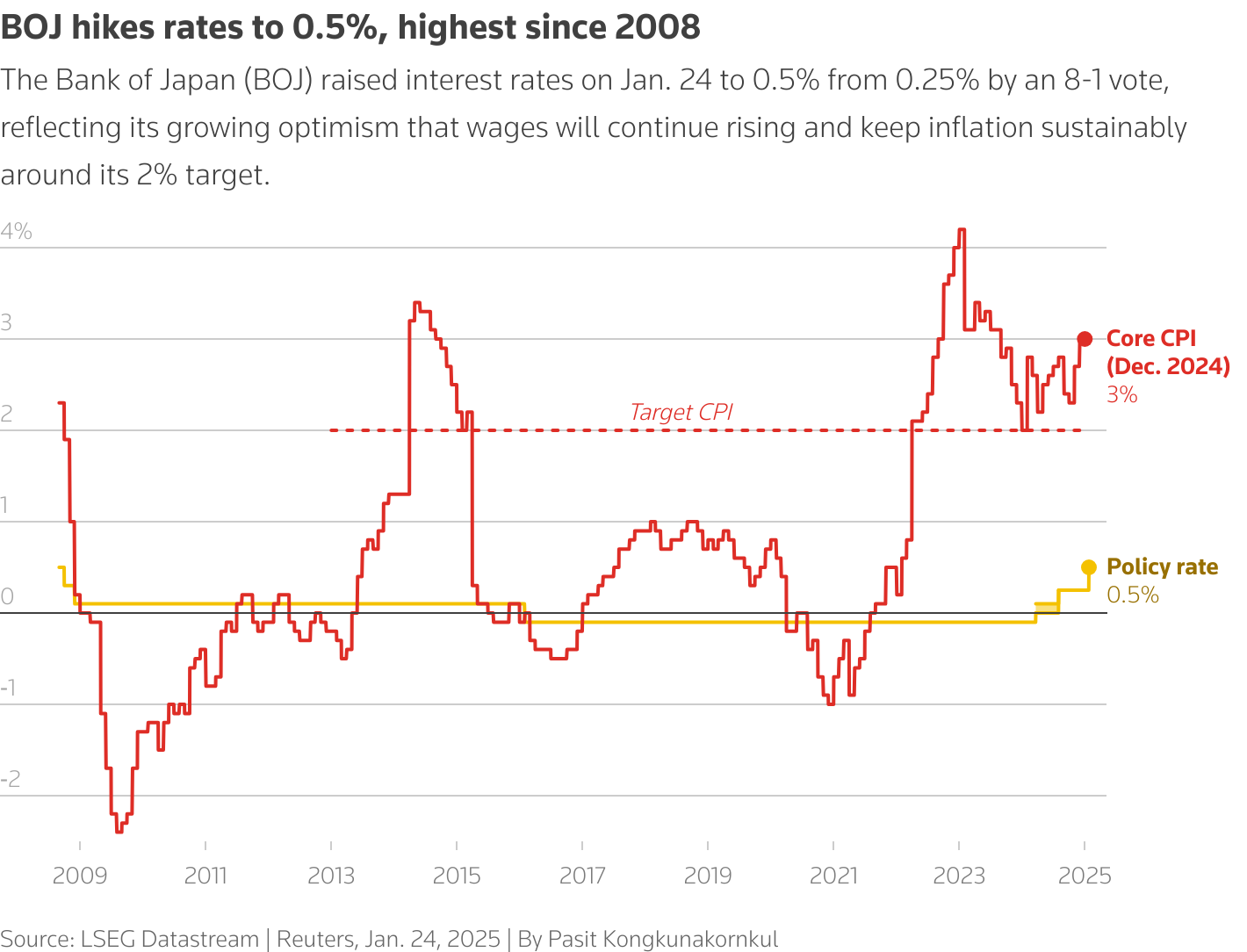

The Bank of Japan interest rates are set to take a significant turn with a potential hike of 25 basis points to 0.75% during the upcoming meeting on December 19. This adjustment would mark the highest interest rate level seen since 1995, sending ripples through the financial markets. Following the announcement, a remarkable strengthening of the yen was observed, fluctuating from around 155 to roughly 154.56. Typically, this surge in the yen may lead to macro portfolio deleveraging, which could impact various assets, including Bitcoin. As financing costs rise, the cryptocurrency market might experience a contraction, compelling leveraged funds to reassess their positions in high-volatility assets like Bitcoin, thereby altering their overall risk strategy.
In light of recent developments, the potential increase in Japan’s borrowing costs through interest rate adjustments could significantly reshape the financial landscape. A shift in the monetary policy by the central bank may not only bolster the yen but also trigger changes in investment strategies across various sectors. With a stronger currency often affecting international trade dynamics, investors are keenly watching for signs of portfolio readjustments and the subsequent effects on volatile assets. Furthermore, the rising interest rates could dampen borrowing activities in the cryptocurrency market, creating a ripple effect that could influence digital currencies and their investor appeal. As the market adjusts, the implications for Bitcoin and other cryptocurrencies could be profound, requiring market participants to navigate a shifting economic environment.
The Bank of Japan Interest Rates: A Potential Shift
The Bank of Japan’s decision to possibly raise interest rates by 25 basis points reflects a significant shift in monetary policy, as the new rate would reach 0.75%, a peak not seen since 1995. This proposed increase comes in response to changing economic conditions and aims to curb inflationary pressures in the economy. As the Bank of Japan adjusts its interest rate, it signals its intention to maintain control over short-term borrowing costs, indicating that further hikes could be on the horizon should economic indicators demand it.
A rise in interest rates can have immediate consequences for both domestic and international markets. As investors speculate on the Bank of Japan interest rates, the yen often experiences fluctuations against other currencies. This time, the yen saw a strengthening trend, as it moved from 155 to approximately 154.56 against the dollar. A significant appreciation of the yen can lead to tighter liquidity, making it essential for investors to reassess their portfolios and consider strategies for portfolio deleveraging.
Impact of Yen Strengthening on Financial Markets
The strengthening of the yen not only affects Japan’s economy but also reverberates throughout global financial markets. When the yen strengthens, it influences the profitability of Japanese exports, impacting multinational corporations and their stock prices. Investors may begin to adjust their positions, leading to a broader reassessment of market strategies, especially concerning high-volatility assets like cryptocurrencies. The interplay between the yen’s value and investment strategies in various asset classes can create waves of portfolio reallocation effort.
Moreover, as the yen gains strength, it becomes more expensive for leveraged funds to maintain their positions in the market. Continued strengthening may prompt significant portfolio deleveraging, leading funds to reduce their exposure to more volatile investments, such as Bitcoin. This cautious approach can trigger a ripple effect in the cryptocurrency market, particularly as investors weigh the impact of interest rate adjustments on their current holdings.
The Effects of Portfolio Deleveraging on Bitcoin
As funding costs increase alongside potential interest rate hikes, leveraged funds are often compelled to reassess their exposure to cryptocurrencies. When the Bank of Japan raises interest rates, it not only tightens liquidity for major currencies, including the yen, but can also lead to crucial decisions regarding asset management. For example, if leveraged investment strategies become more costly, funds might opt for reducing their Bitcoin exposure, which could lead to a decrease in demand and subsequent price volatility in the cryptocurrency market.
The concept of portfolio deleveraging becomes increasingly relevant in this context, as investors react to changes in financing conditions. Declines in Bitcoin’s price, triggered by offloading from leveraged funds, could further disrupt the stability of the cryptocurrency market. Therefore, observing how changes in interest rates influence investor sentiment towards Bitcoin is pivotal for gauging the future trajectory of this digital asset.
How Japan’s Interest Rate Decisions Affect Global Currency Trends
The movements of the Bank of Japan regarding interest rates can significantly influence global currency trends and market sentiment. When the central bank decides to increase rates, it tends to draw the attention of international investors, leading to capital inflows to the Japanese yen. The immediate effect is often a bolstered value of the yen against other currencies, as witnessed in its recent jump from 155 to around 154.56. This dynamic underscores the interconnectedness of global economic policies and their impact on currency valuations.
Furthermore, the ripple effects of Japan’s interest rate hikes reach beyond its borders. As global investors anticipate the upcoming rate changes, they might adjust their allocation strategies across various assets, including cryptocurrencies and commodities. The relationship between Japan’s monetary policy and other currencies illustrates how intertwined economic landscapes are, potentially leading to new trading opportunities as market participants adjust to these shifts in monetary policy.
The Ripple Effect of Japan’s Monetary Policy on Cryptocurrencies
Japan’s monetary policy decisions have far-reaching implications for the cryptocurrency market, particularly Bitcoin and its valuation. As the Bank of Japan considers an interest rate hike, the tightening of liquidity conditions may lead to an exodus of capital from the booming cryptocurrency sector. The increased cost of loans could force investors to re-evaluate the risk associated with holding high-volatility assets such as Bitcoin, especially when uncertainty clouds traditional market instruments.
This interconnectedness means that changes in Japan’s interest rates can initiate shifts in investor behavior towards cryptocurrencies. For instance, if Bitcoin were to experience a decline due to lower institutional demand amid rising financing costs, it could embolden skeptics and trigger a broader retreat from cryptocurrency investments. Understanding these dynamics requires constant monitoring of monetary policy shifts and their implications for all related markets.
The Role of Arbitrage in a Strengthening Yen
Arbitrage plays a crucial role in capitalizing on price discrepancies across different markets. When the yen strengthens, it can lead to the unwinding of arbitrage trades that are typically financed by the yen. This phenomenon jeopardizes the liquidity foundation that previously underpinned investment strategies, including those focused on Bitcoin. Investors must be wary of the potential impact as these trades could amplify market movements when unlocked positions apply upward pressure on traditional assets.
Moreover, as arbitrage opportunities dissipate with fluctuating currency values, it leads directly to implications for asset pricing across multiple markets. The withdrawal of liquidity from the yen for arbitrage purposes may tighten conditions, pressuring Bitcoin prices as speculative trading shifts rapidly in response. Investors who initially leveraged these arbitrage opportunities must now contend with a tighter market environment, reflected in both the yen’s price and cryptocurrency volatility.
Market Reactions to Potential Bank of Japan Rate Changes
Market reactions to anticipated interest rate changes from the Bank of Japan are often immediate and pronounced. Traders and investors closely monitor the central bank’s announcements, as they can lead to swift adjustments in currency pair valuations, equity markets, and even commodities. Therefore, as speculation surfaces regarding the bank’s potential 25 basis points hike, it becomes a focal point for both domestic and international investors, effectively reshaping trading landscapes.
The expected increase gives rise to debates around risk management strategies in various asset classes. Many investors are gearing up to assess the impacts of the Bank of Japan’s interest rate decision on their holdings, particularly in highly sensitive areas such as cryptocurrencies. Consequently, maintaining flexibility in trading strategies is paramount as fluctuations following the announcement can result in significant opportunities or threats depending on market positioning.
Strategizing in a Volatile Cryptocurrency Market
In light of Japan’s potential interest rate hike and its implications across financial landscapes, market participants need to develop robust strategies. This requires a balanced approach to risk management that encompasses traditional investments as well as emerging assets like Bitcoin. With the cryptocurrency market subject to its unique dynamics, knowledgeable investors should account for the idiosyncratic volatility and liquidity concerns exacerbated by the Bank of Japan’s decisions.
Being proactive in adjusting portfolios amidst these evolving conditions is crucial. Strategies focusing on diversification across assets could serve as a buffer against adverse market fluctuations fueled by monetary policy changes. Ultimately, an informed approach to navigating the volatility brought about by Japan’s interest rate decisions allows investors to capitalize on potential opportunities while managing inherent risks.
Frequently Asked Questions
How might a Japan interest rate hike impact the yen and its strength?
A Japan interest rate hike, such as the anticipated increase by the Bank of Japan to 0.75%, generally results in a stronger yen. This is because higher interest rates make Japanese assets more attractive to investors, encouraging them to buy yen, thus increasing its value.
What implications does the Bank of Japan’s interest rate decision have for the cryptocurrency market?
The Bank of Japan’s interest rate decision could significantly affect the cryptocurrency market. A stronger yen following an interest rate hike may lead to portfolio deleveraging as investors reduce exposure to high-volatility assets, which could include cryptocurrencies like Bitcoin.
How does a strengthened yen relate to Bitcoin and its market performance?
When the yen strengthens due to a Bank of Japan interest rate hike, it can lead to tighter liquidity in the market. This scenario could negatively impact Bitcoin’s rebound, as investors might be forced to sell off positions in cryptocurrencies to meet liquidity needs resulting from higher financing costs.
What is the effect of interest rates on portfolio deleveraging in Japan?
Increasing interest rates set by the Bank of Japan frequently lead to portfolio deleveraging, where investors sell off higher-risk assets to reduce debt levels. This may include assets in the cryptocurrency market, affecting overall market stability.
Could a rise in Japan’s interest rates influence Bitcoin’s price trends?
Yes, a rise in Japan’s interest rates may influence Bitcoin’s price trends. Higher rates generally lead to a stronger yen, tightening liquidity in the market, potentially resulting in reduced demand for Bitcoin and other cryptocurrencies as investors look to offload riskier assets.
| Key Points | |
|---|---|
| Potential Interest Rate Increase | The Bank of Japan is considering raising interest rates by 25 basis points to 0.75% on December 19. |
| Historical Context | This would mark the highest interest rate level since 1995. |
| Impact on the Yen | The yen strengthened from around 155 to approximately 154.56 following the announcement. |
| Market Reactions | A stronger yen may lead to macro portfolio deleveraging and unwinding of arbitrage trades. |
| Bitcoin Impact | Rising financing costs could lead leveraged funds to reduce exposure to high-volatility assets like Bitcoin. |
Summary
The Bank of Japan interest rates are poised for a significant update as a potential increase of 25 basis points to 0.75% is set for discussion on December 19. This anticipated change highlights a return to levels not seen since 1995 and is poised to impact not only the currency strength but also broader market dynamics. The strengthening of the yen in response to these developments signals important shifts in investor behavior, particularly within volatile markets such as cryptocurrency. If the rising interest rates materialize, we may see leveraged funds adjusting their risk exposure, particularly to assets like Bitcoin, which could further shape the financial landscape.
Related: More from Market Analysis | Crypto Worries Over Iranian Oil Supply: Is It Overhyped? in Crypto Market | Insider Traders Profit $1.2M Before US Iran Strike in Crypto Market