

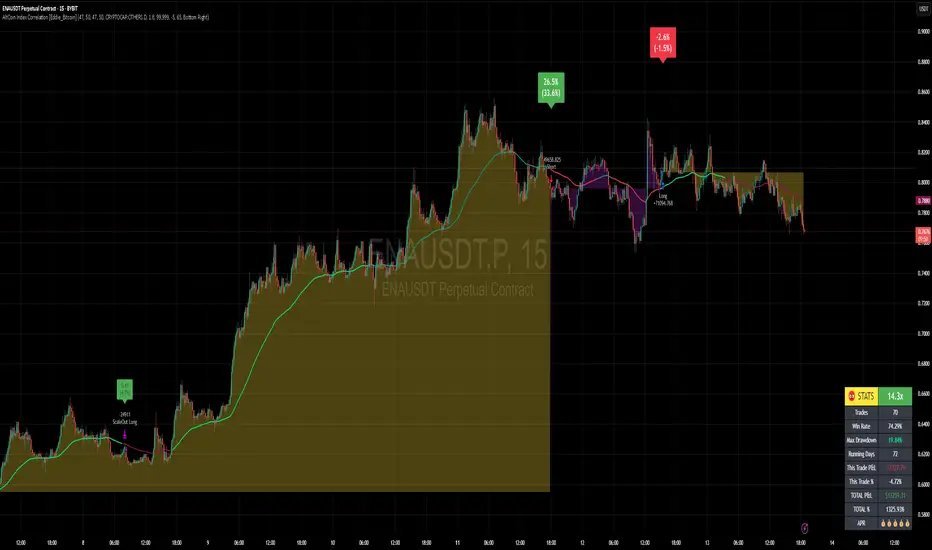

In the world of cryptocurrency, the topic of altcoin index correlation has gained significant attention, particularly in relation to the Total3 index and U.S. small-cap stocks. Recent analysis reveals that this correlation has hovered around 0.75 since early 2024, suggesting that market liquidity and investor risk appetite critically influence both asset classes. However, intriguing shifts are occurring, as short-term correlations—reflected in the 30-day and 90-day metrics—have dipped to historically low levels. This divergence usually prefaces a mean reversion, indicating potential for an altcoin rebound in the near future. Should the macroeconomic environment remain favorable and small-cap stocks continue their upward trajectory, altcoins are likely to follow suit, creating an exciting prospect for investors.
The relationship between cryptocurrency assets and traditional financial markets has always sparked interest, particularly when discussing the Total3 altcoin index and its performance in tandem with U.S. small-cap equities. This interconnectedness often reveals insights into broader market trends, especially concerning liquidity and risk sentiment among investors. Recently, notable fluctuations have emerged as short-term correlations appear to weaken, hinting at a temporary decoupling that could lead to a future correction or adjustment. Historical patterns suggest that such moments usually precede a resurgence in previously underperforming assets, creating potential opportunities for a rebound in altcoins. As the economic landscape evolves, the implications of these shifts can have profound effects on investment strategies in the cryptocurrency arena.
Understanding the Altcoin Index Correlation with U.S. Small-Cap Stocks
The altcoin index Total3 has shown a significant correlation with U.S. small-cap stocks, specifically the Russell 2000 index (RUT), hovering around 0.75 since early 2024. This strong correlation suggests that fluctuations in market liquidity and investor risk appetite impact both asset classes similarly. Investors observing trends within small-cap stocks may find invaluable insights reflected in altcoins, essentially linking their funds’ performance across these volatile landscapes. The interdependence highlights a broader trend where altcoins may follow the cues set by small-cap stocks, particularly during periods of increased liquidity.
However, it is crucial to note the divergence in short-term indicators. The 30-day and 90-day correlations between the altcoin index and small-cap stocks have recently declined, hitting historically low levels. This divergence might indicate a temporary decoupling, where altcoins are not as influenced by the movements of U.S. small-cap stocks in the immediate term. Such a short-term loosening could signal an opportunity for traders, as market behavior could revert to a mean trajectory, allowing for potential rebounds in altcoins while underperforming assets adjust and recover.
Navigating Market Liquidity and Its Impact on Altcoin Performance
Market liquidity plays a crucial role in determining the performance of various asset classes, including altcoins and U.S. small-cap stocks. As liquidity increases in the market, investors are more willing to take risks, which often translates into higher investments in altcoins. This relationship underscores how market sentiment can drive the altcoin rebound, especially when liquidity conditions are favorable. Investors should keep a keen eye on liquidity metrics to anticipate shifts in altcoin performance, particularly in tandem with small-cap stock trends.
Currently, with the macro environment showing signs of support, small-cap stocks have begun to break out. This improvement in liquidity and risk appetite sets an encouraging backdrop for altcoins, which may also experience a rebound. A favorable macroeconomic climate fosters a cycle where increased investments in small-cap stocks can lead to a re-evaluation of altcoins, enticing investors looking for higher returns. Therefore, maintaining an awareness of liquidity trends can be vital for investors aiming to capitalize on potential altcoin rebounds.
The Relevance of Mean Reversion in Altcoin Investments
Mean reversion is a fundamental concept in finance that suggests that asset prices and returns eventually revert to their historical averages. In the context of the altcoin market, historical patterns often reveal that periods of underperformance are frequently followed by rebounds. As current market indicators show that the correlation between Total3 and small-cap stocks has weakened, the potential for mean reversion becomes increasingly relevant for investors. By recognizing these historical trends, traders can position themselves wisely to take advantage of an impending rebound in altcoins.
When discussing mean reversion, it’s essential to consider the underlying factors influencing altcoins today. During times of liquidity tightening, certain altcoins may experience significant declines, offering unique investment opportunities. Should the macroeconomic factors align favorably, the rebound potential becomes stronger, and assets previously deemed undervalued may re-establish themselves. Investors can use this principle of mean reversion as a strategic lens when assessing altcoin investments with the goal of optimizing returns.
Analyzing Short-Term Indicators for Altcoin Trends
Short-term indicators are crucial for navigating the turbulent waters of the altcoin market, especially given their recent divergence from U.S. small-cap stocks. As the correlations have recently dropped, investors should pay close attention to short-term price movements and volume changes, which can offer insights into potential rebounds or continued underperformance. Understanding these indicators can provide a tactical advantage, where decisions can be made quickly to mitigate losses or capitalize on unexpected market shifts.
Moreover, monitoring these indicators can aid in forecasting broader market behavior and sentiment shifts. For instance, if altcoins begin to exhibit a strengthening correlation again with small-cap stocks, it might suggest a recovery phase driven by increased risk appetite and liquidity in the markets. Investors aiming to make informed decisions should utilize both fundamental and technical analyses of these short-term indicators to navigate investments wisely amidst a dynamic trading environment.
The Relationship Between Liquid Markets and Altcoin Volatility
Liquidity significantly influences asset volatility, especially in altcoin markets, where sudden shifts can lead to drastic price movements. With total liquidity being a driving force in both altcoin and U.S. small-cap stock markets, investors should realize that as liquidity tightens, altcoins often face more significant price fluctuations. In a liquid market environment, however, altcoins may thrive, benefiting from increased trading volumes that can stabilize prices and reduce volatility.
Conversely, in periods of low liquidity, altcoins can experience heightened volatility, making it a challenging landscape for investors. As traders seek opportunities in liquid markets, understanding how these conditions impact altcoin performance becomes vital. By analyzing liquidity trends and corresponding altcoin volatility, investors can better navigate the market, optimizing their investment strategies and timing for potential rebounds when market conditions become favorable.
Market Sentiment and Its Effect on Altcoin Investments
Market sentiment plays a pivotal role in determining the performance of altcoins. Investor feelings towards market conditions will influence decisions, often driving prices up during bullish phases or leading to sell-offs in bearish conditions. As liquidity improves alongside positive macroeconomic indicators, a shift in investor sentiment can provide the momentum needed for a significant altcoin rebound. A deeper understanding of market sentiment trends can offer valuable insights for investors aiming to capitalize on strategic entry and exit points.
Furthermore, assessing correlations with U.S. small-cap stocks provides additional context for market sentiment. When small-cap stocks perform well, it may bolster investor confidence across the market, increasing the likelihood of altcoins benefitting from renewed risk-taking. Understanding this sentiment dynamic enables investors to make calculated decisions and better position themselves to leverage favorable market phases, embracing opportunities that arise in tandem with improved market conditions.
Evaluating Historical Performance Patterns in Altcoins
Historical performance patterns hold immense value for investors assessing altcoins, especially when analyzing how past trends relate to current dynamics. The altcoin market has undergone cyclical behaviors that reflect responses to broader economic conditions and liquidity trends. By examining these cycles, investors can identify reoccurring patterns that may suggest forthcoming behavior, particularly when correlating with established indexes like the Total3 and U.S. small-cap stocks.
In light of recent indicators suggesting a divergence from historical correlations, investors might find value in reassessing their positions. If history is a guide, previous downturns in altcoin performance have often preceded rebounds amidst improving market conditions. As traders look towards the future, understanding these historical contexts can effectively inform investment strategies, allowing them to navigate the altcoin landscape with a clear understanding of its cyclical nature and indicative performance pathways.
Strategic Positioning During Altcoin Market Shifts
As the altcoin market evolves, strategic positioning becomes essential for maximizing investment potential. With the altcoin index showing a connection to U.S. small-cap stocks, knowing when to enter or exit positions can make a significant difference in overall returns. Investors should focus on the indicators suggesting shifts in market dynamics, particularly those that point to a potential altcoin rebound in response to structural changes in market liquidity and investor sentiment.
Additionally, aligning trading strategies with macroeconomic insights can provide investors with a clearer direction as they navigate the altcoin space. Recognizing the patterns of mean reversion during market turmoil can guide decisions, helping traders take advantage of discounts available on altcoins during low performance phases. By maintaining a proactive approach to market dynamics, investors can effectively position themselves to benefit from upcoming opportunities as the altcoin market adjusts to underlying economic factors.
Predictions for Future Trends in the Altcoin Market
Looking ahead, several factors will likely shape the trajectory of the altcoin market. With the established correlation to U.S. small-cap stocks and recent liquidity trends, expectations for an altcoin rebound should remain cautiously optimistic. Analysts predict that as macroeconomic conditions stabilize and risk appetite strengthens, altcoins may follow suit, reflecting broader market recovery patterns. Investors who stay abreast of these economic indicators may find themselves well positioned for future gains.
Moreover, understanding the interconnectedness between different asset classes will be vital for predicting price movements in altcoins. A focused surveillance of liquidity conditions and small-cap stock performance can offer key insights into potential altcoin dynamics. As historical trends of mean reversion reappear, traders should be ready to adapt, recognizing that shifts in investor sentiment and market liquidity will undoubtedly play a crucial role in determining the altcoin market’s future performance.
Frequently Asked Questions
What is the current altcoin index correlation with U.S. small-cap stocks?
As of 2024, the correlation between the altcoin index Total3 and U.S. small-cap stocks (RUT) is around 0.75, indicating a strong relationship influenced by market liquidity and risk appetite.
How does market liquidity affect the altcoin index correlation?
Market liquidity plays a crucial role in altcoin index correlation, as both the Total3 index and U.S. small-cap stocks react similarly to changes in liquidity, impacting their performance and correlation rate.
What does a low correlation in the 30-day and 90-day periods suggest for altcoins?
The recent drop in the 30-day and 90-day correlations to historically low levels suggests a temporary weakening of short-term linkages, potentially indicating a shift in market dynamics for altcoins.
Can we expect an altcoin rebound based on correlation indicators?
Yes, historically low correlation levels have often preceded a mean reversion, and with a favorable macro environment, there is potential for an altcoin rebound, especially if small-cap stocks continue to perform well.
What role does mean reversion play in altcoin index correlation?
Mean reversion suggests that following periods of divergence, such as low correlation levels, assets like altcoins often return to their average performance, which may lead to an anticipated rebound.
How does the performance of small-cap stocks influence altcoin index movements?
Small-cap stocks’ performance can significantly influence altcoin index movements; if small-cap stocks continue to break out, it is likely that altcoins will follow suit in a rebound.
What factors could affect the altcoin index correlation in future market conditions?
Future market conditions such as changes in liquidity, risk appetite, and overall macroeconomic factors can significantly influence the altcoin index correlation with U.S. small-cap stocks.
Why is the correlation between Total3 and altcoins important for investors?
Understanding the correlation between Total3 and altcoins helps investors gauge market sentiment and liquidity dynamics, providing insights into potential investment opportunities and risks.
What indicators should investors monitor to understand altcoin index correlation trends?
Investors should monitor altcoin index correlation with market liquidity metrics, small-cap stock performance, and short-term correlation indicators to better predict upcoming trends in the altcoin market.
How can historical correlation patterns inform altcoin trading strategies?
Analyzing historical correlation patterns between the altcoin index and U.S. small-cap stocks can help traders identify potential entry and exit points, particularly during predicted periods of mean reversion.
| Key Point | Details |
|---|---|
| Correlation Level | The correlation between the altcoin index Total3 and U.S. small-cap stocks (RUT) is around 0.75. |
| Market Drivers | Both are influenced by liquidity and risk appetite. |
| Short-term Indicators | Recent 30-day and 90-day correlations have dropped to historically low levels. |
| Market Behavior | Low correlations suggest a temporary loosening of short-term linkages. |
| Mean Reversion | Structures similar to this often indicate potential mean reversion. |
| Potential for Rebound | If conditions stay favorable, underperforming altcoins could see a rebound. |
Summary
Altcoin index correlation has been a topic of growing interest, especially considering the strong historical ties between the altcoin index Total3 and U.S. small-cap stocks. As highlighted, the current environment indicates mixed short-term signals, yet the potential for a rebound in altcoin prices remains, particularly if macroeconomic conditions continue to favor growth in small-cap stocks. It will be essential for investors to monitor these correlations closely to take advantage of potential market movements.
Related: More from Altcoin News | XRP Drops 10%, Ripple Tokens Future Uncertain in Altcoin | XRP News: AI Finds Critical Bug in Ripple Tokens in Altcoin