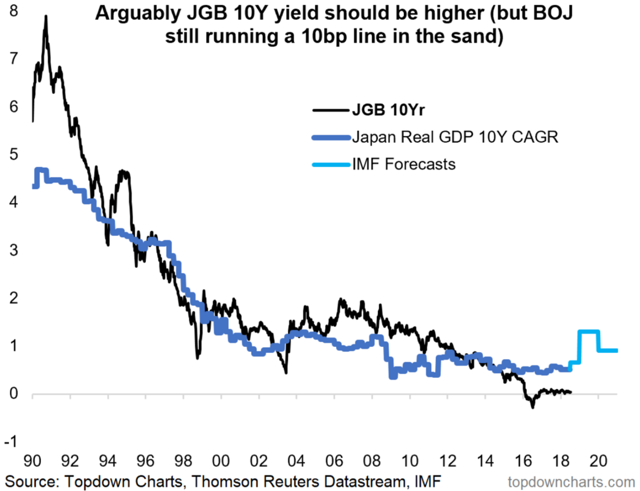

The Japan 10-year government bond yield has recently climbed to an impressive 1.94%, marking its highest point since July 2007. This notable increase in Japanese bond yields signals a pivotal change within the national economy, prompting a reaction from global investors who are keenly observing these developments. As interest rates fluctuate and the yield curve shifts, the implications of such changes become crucial for economic policy formulation in Japan. With these new dynamics at play, market analysts are keen to understand how this could affect investment strategies and financial forecasts. As such, the rise in the Japan 10-year government bond yield not only reflects local economic trends but also has ripple effects across the global financial landscape.
In recent developments, the yield on Japan’s decade-long government securities has surged, indicating a significant shift in fiscal conditions. This spike in long-term bond rates draws attention from international financiers and is particularly relevant in the context of current interest rate adjustments. The phenomenon of rising yields often leads to a reevaluation of the yield curve, providing insights that could reshape economic strategies. As policymakers navigate these waters, the implications of Japan’s government bond performance will be critical for those tracking investment opportunities and market stability. Overall, this scenario encapsulates the intricate interplay between domestic financial trends and the global investment climate.
Understanding the Rise of Japan’s 10-Year Government Bond Yield
The current yield on Japan’s 10-year government bonds has reached 1.94%, marking its highest point since July 2007. This surge in yield reflects a notable shift in the Japanese economic environment and investor sentiment. As global investors closely monitor these developments, it is essential to consider the broader implications of rising bond yields on interest rates and economic policy. Increased yields can indicate that investors expect stronger economic growth or inflation, which are crucial factors that influence monetary policy decisions.
The climb in Japan’s bond yields has caused a ripple effect across the global financial markets. Many analysts suggest that higher yields could attract more foreign capital, as investors seek better returns in Japan. This adjustment may lead to shifts in the yield curve and interest rates, altering the dynamics of credit borrowing across economies. In a world where low rates have dominated for an extended period, understanding these fluctuations is important for global investors looking to navigate changing market conditions.
Impacts on Global Investors from Japanese Bond Yield Changes
Global investors are now paying closer attention to the implications of rising Japanese bond yields. The 10-year government bond yield’s ascent to 1.94% signals potential changes in investor behavior and asset allocation strategies. As investors reassess the risk and potential returns, there could be a significant shift in capital flows, leading to alterations in other financial markets. Higher yields may entice risk-averse investors looking for stable returns, impacting global equities and commodity prices as capital gets reallocated.
Furthermore, the change in bond yields can significantly influence the currency markets. As Japanese bond yields rise, the yen may strengthen against other currencies, affecting exports and imports. For global investors, currency fluctuations can drastically impact investment outcomes, rendering foreign investments either less profitable or more challenging to assess. This evolving landscape urges investors to consider how shifts in Japan’s government bond yields will interact with their overall portfolio strategies, particularly in the context of interest rates and the broader yield curve.
Japan’s Economic Policy and Bond Yields
The recent increase in the yield on Japan’s 10-year government bonds brings to light the ongoing dialogue concerning Japan’s economic policy. Policymakers must navigate through these rising yields carefully, as they reflect shifting expectations regarding future growth and inflation. The Japanese government has been under pressure to tackle long-standing economic challenges, and bond yields may act as a barometer for the effectiveness of its policies aimed at stimulating growth. As yields rise, the conversation around fiscal and monetary policy adaptations becomes increasingly pertinent.
Additionally, expectations surrounding potential shifts in interest rates are closely tied to the movement of bond yields. If the Bank of Japan decides to adjust its monetary policy in response to rising yields, this could alter the landscape for loans and borrowing costs across the economy. Investors, both domestic and global, should be aware of these policy implications as they might reverberate far beyond Japan’s borders. Understanding how Japan’s government balances economic policy with the realities of rising bond yields is crucial for making informed investment decisions.
Analyzing the Yield Curve in Japan
The yield curve, which reflects the relationship between interest rates and bond maturities, is showing new dynamics as Japan’s 10-year government bond yields hit new highs. A steepening yield curve often suggests that investors expect robust economic growth and inflation, leading them to demand higher returns for longer-term investments. The behavior of Japanese bond yields is becoming a predictor of economic sentiment and future interest rate directions, making it critical for investors to analyze changes in the yield curve.
Moreover, a changed yield curve can influence various sectors across the economy, from real estate to manufacturing. Investors must heed those shifts as they can signal changing expectations among lenders and borrowers alike. As Japan navigates this landscape, the implications of an evolving yield curve on market sentiment and economic health will be a focal point for analysis, prompting investors to reconsider their strategies accordingly.
The Relationship Between Interest Rates and Japanese Bond Yields
Interest rates and bond yields have an interdependent relationship that significantly impacts economic decision-making. As Japan’s 10-year government bond yield rises to 1.94%, it prompts discussions surrounding adjustments in domestic interest rates. Higher bond yields typically indicate that investors are expecting an increase in interest rates, which can affect borrowing costs for consumers and businesses alike. This relationship plays a pivotal role in informing economic policies and lending practices.
Consequently, understanding how these interest rate expectations interact with bond yields helps investors to gauge the overall market environment. If the Bank of Japan reacts to rising yields with changes in interest rates, it can create a ripple effect within various segments of the economy. For instance, increased borrowing costs may dampen consumer spending, which directly affects corporate earnings and economic growth. Thus, keeping an eye on interest rate trends alongside bond yields is essential for global investors.
Market Response to Economic Policy in Japan
The market’s response to Japan’s economic policy is evident in the fluctuations of bond yields, especially as they relate to the yield on 10-year government bonds. Investors are continuously assessing how the government’s strategies to stimulate growth will impact their investments. The recent rise in bond yields suggests a growing confidence among market participants in the effectiveness of these policies, or alternatively a concern about rising inflation and its potential impact on future growth.
Moreover, effective communication from policymakers can shape market expectations and investor confidence. Government announcements regarding changes in fiscal measures, coupled with the trajectory of bond yields, can lead to significant volatility in the markets. Understanding how economic policy influences bond yields allows investors to make more informed decisions amid uncertain economic climates, particularly in Japan’s unique financial landscape.
Global Economic Implications of Japanese Bond Yield Fluctuations
The fluctuations in Japan’s 10-year government bond yields have far-reaching consequences for the global economy. As the yield rises to 1.94%, it signals to global investors that there may be a shift in risk sentiment and investment patterns. Such changes could mean less capital flowing into emerging markets, as investors may prefer the relatively safer assets of Japanese bonds when yields are appealing. This could lead to regional disparities in economic growth and investment flows.
In light of these fluctuations, various sectors worldwide need to reevaluate their investment strategies. For instance, central banks outside of Japan may be forced to adjust their policies in response to changing dynamics in bond yields, reflecting the interconnected nature of modern financial markets. The movement of Japanese bond yields—often considered a benchmark for other economies—underscores how economic policies can ripple across borders, creating a complex web of financial interdependencies that global investors must navigate.
Evaluating the Significance of Japanese Bond Yields on Global Markets
The significance of Japanese bond yields in the context of global markets cannot be understated. As they reach new highs, the implications for international investors and economic policy are vast. Rising yields often indicate shifting liquidity and risk preferences among investors, which can cause re-evaluations across equity markets worldwide. Thus, the current yield of 1.94% not only reflects Japan’s economic situation but also provides insights for investors looking for trends and opportunities within their portfolios.
Furthermore, as global bond markets have demonstrated increasing correlations, the implications of rising Japanese yields are expansive. Investors must take into account how changes within Japan’s bond market may influence rates in other nations, particularly within developed economies. This interconnectedness means that strategies must consider potential knock-on effects, creating a more complex landscape for investment decision-making.
Future Outlook for Japan’s Bond Market and Economic Policy
Looking ahead, the trajectory of Japan’s bond yields, particularly the 10-year government bond rate, will be crucial in shaping economic policy and investor strategies. As yields climb, they may signal a readiness by the Bank of Japan to modify its longstanding accommodative monetary stance. This potential move will be closely watched, as it could set the tone for interest rate decisions not only within Japan but throughout the global markets.
Analysts are keenly observing how the government balances the need for economic growth against inflationary pressures that rising bond yields can indicate. Should the bond yields continue on this upward path, various sectors—including technology, manufacturing, and real estate—may experience shifts in capital allocation. For investors, understanding these dynamics and preparing for adjustments in economic policy are critical for navigating the evolving landscape of Japan’s bond market.
Frequently Asked Questions
What is the current Japan 10-year government bond yield?
As of recent reports, the yield on Japan’s 10-year government bonds has risen to 1.94%, marking a peak not seen since July 2007. This significant increase reflects shifting dynamics in the Japanese economy.
How do changes in the Japan 10-year government bond yield affect global investors?
Fluctuations in the Japan 10-year government bond yield, especially reaching highs like 1.94%, can have substantial implications for global investors. Rising yields may prompt investors to adjust their portfolios in response to shifting interest rates and expectations regarding the yield curve.
What are the implications of the changes in the Japan 10-year government bond yield for economic policy?
The recent rise in the Japan 10-year government bond yield to 1.94% can influence economic policy decisions in Japan. Policymakers may need to consider this increase in yields when assessing strategies related to interest rates and national economic growth.
How does the Japan 10-year government bond yield relate to interest rates?
The yield on Japan’s 10-year government bonds, currently at 1.94%, is closely linked to overall interest rates in the economy. An increase in bond yields typically signals expectations of rising interest rates, which can affect borrowing and spending behaviors across the economy.
What factors are driving the rise in Japan’s 10-year government bond yield?
The rise to 1.94% in Japan’s 10-year government bond yield reflects several factors, including changes in domestic economic conditions, market responses to economic policy, and expectations surrounding future interest rates, which all contribute to a shifting yield curve.
What is the significance of the yield curve in relation to the Japan 10-year government bond yield?
The yield curve represents the relationship between interest rates and bond maturities. The recent increase in Japan’s 10-year government bond yield to 1.94% impacts the shape of the yield curve, indicating market expectations about economic growth and future interest rates.
Why is the Japan 10-year government bond yield important for investors?
The Japan 10-year government bond yield is crucial for investors as it serves as a benchmark for setting interest rates across various financial instruments. The current yield of 1.94% highlights potential changes in economic policy and market conditions that investors need to monitor.
| Key Point | Details |
|---|---|
| Current Yield | The yield on Japan’s 10-year government bonds rose to 1.94%. |
| Historical Context | This is the highest yield since July 2007. |
| Economic Implications | Reflects changes in the Japanese economy and market response. |
| Global Impact | This yield level could significantly affect global investors and economic policy. |
| Market Sensitivity | Market is currently sensitive to changes in interest rates and the yield curve. |
Summary
The Japan 10-year government bond yield has reached a notable 1.94%, marking a significant height not experienced since July 2007. This surge in yield signals important shifts in Japan’s economic landscape and demonstrates the market’s reaction to these changes. The implications of this increase are profound, particularly for investors globally and for shaping economic policy as the market navigates a climate sensitive to interest rate fluctuations.
Related: More from DeFi & Stablecoins | Stablecoin Payments Focus Shifts to User Networks | Germany Launches Regulated Stablecoin Pegged to Swiss Franc