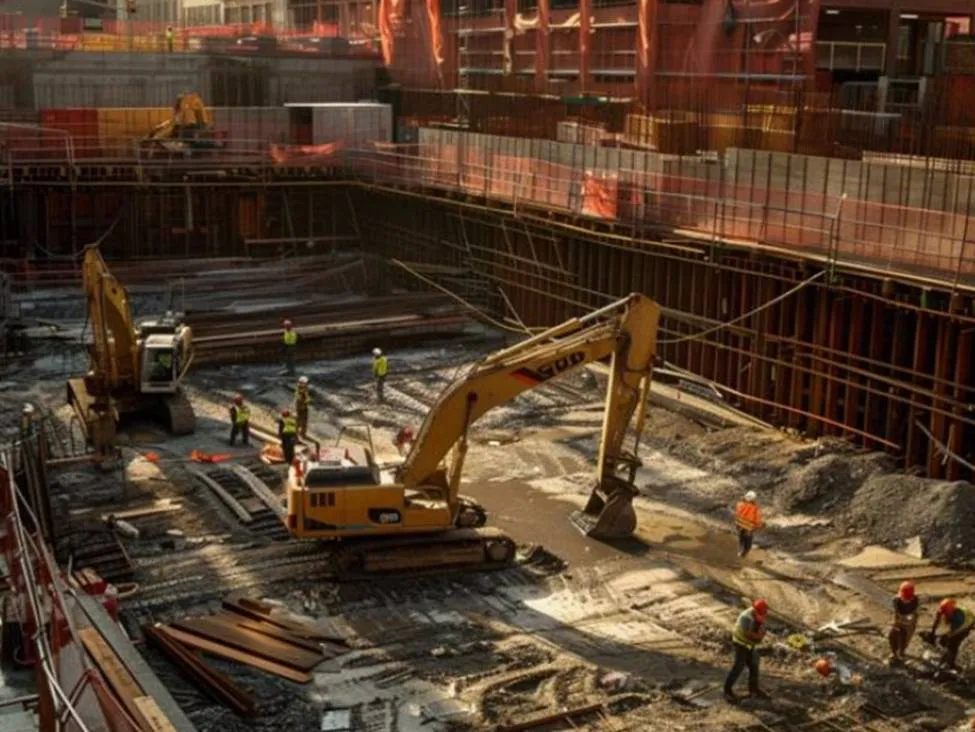

German construction slump eases as civil engineering returns to growth, but stagflation drags Germany’s construction downturn showed signs of stabilizing in November as civil engineering swung back to expansion and employment picked up for the first time in over three-and-a-half years. However, the sector overall remained in contraction, with residential and commercial building still under heavy pressure and costs continuing to rise.
Germany’s construction PMI improves, but stays below 50
The latest HCOB Germany Construction PMI rose from a prior 42.8, indicating an easing of the sector’s recession but remaining below the 50 threshold that separates growth from contraction. The bright spot was civil engineering, which turned positive again and has now improved in four of the past six months, supported by public infrastructure work such as rail upgrades. By contrast, housing remains the deepest weak spot and commercial building is still subdued. HCOB noted that order books continue to contract, and many firms remain cautious about activity levels in the year ahead despite a pickup in building permits that could provide some relief in 2025.
Costs climb as activity lags—classic stagflation pain
Input costs have risen steadily since spring, compounded by higher subcontractor charges. Combined with declining output, that leaves margins under pressure—an uncomfortable stagflation dynamic. Structural constraints are part of the story: Germany continues to face acute shortages of skilled workers, notably in civil engineering roles, while many building material prices have risen further from already elevated levels.
Market take: soft landing hopes vs. sticky cost pressures
For euro and rates markets, the print offers a nuanced signal. The improvement in civil engineering suggests public capex is cushioning the downturn and could help stabilize German growth at the margin. Yet persistent cost inflation and weak new orders keep the drag from construction in place, complicating the macro mix for the ECB. Traders will watch whether broader Eurozone PMIs confirm a gradual bottoming, and if fiscal-driven infrastructure outlays can offset housing weakness without rekindling price pressures.
Key Points
- Germany’s construction PMI improved from a prior 42.8 but remained below 50 (contraction territory).
- Civil engineering returned to expansion in November, improving for the fourth time in six months.
- Employment rose for the first time in over three-and-a-half years, hinting at stabilization.
- Residential and commercial construction remain deeply weak; order intakes are still falling.
- Cost pressures persist, with rising input and subcontractor costs and ongoing labor shortages.
- Building permits have increased, suggesting potential improvement next year if demand firms.
What it means for FX, equities, and commodities
– FX: The euro typically reacts more to broad Eurozone data and ECB guidance, but signs of stabilization in Germany’s capex-heavy segments can temper growth pessimism. The sticky cost picture, however, reinforces a cautious inflation backdrop. – Rates: Bund yields may be sensitive to how investors balance infrastructure-led resilience against weak private construction and falling orders. – Equities: Infrastructure suppliers and engineering firms could see relative support, while housing-exposed names remain vulnerable to weak demand and cost inflation. – Commodities: Steady public-works activity may underpin demand for construction materials and select metals, even as overall sector output remains subdued.
What to watch next
– New orders and backlogs: Signs that the order drought is easing would mark a genuine turning point. – Building permits vs. starts: A widening gap could flag financing or labor constraints. – Fiscal implementation: The pace at which planned public infrastructure projects break ground. – Price dynamics: Any moderation in materials and subcontractor costs would relieve margin pressure. – Labor availability: Easing skill shortages would help unlock capacity in civil engineering.
FAQ
What is the HCOB Germany Construction PMI?
It’s a monthly diffusion index based on surveys of construction companies in Germany. Readings above 50 indicate expansion; below 50 signal contraction.
Why does this data matter for EUR and Bunds?
Germany is the Eurozone’s largest economy. Construction swings can influence growth expectations, risk sentiment, and—indirectly—ECB policy views, affecting the euro and German government bond yields.
Which segment is driving the improvement?
Civil engineering, supported by public infrastructure projects, has returned to growth. Residential and commercial construction remain weak.
Is inflation still a problem in construction?
Yes. Input and subcontractor costs continue to rise while activity is subdued, a stagflation-like mix that squeezes margins.
Could housing turn around soon?
An increase in building permits hints at potential stabilization next year, but near-term order intake is still declining and financing remains tight.
What are traders watching from here?
Follow-through in Eurozone PMIs, shifts in order books, fiscal execution of infrastructure plans, and any easing in cost and labor constraints. These will shape the growth and policy narrative tracked by BPayNews readers.
Related: More from Market Analysis | Crypto Worries Over Iranian Oil Supply: Is It Overhyped? in Crypto Market | Insider Traders Profit $1.2M Before US Iran Strike in Crypto Market