


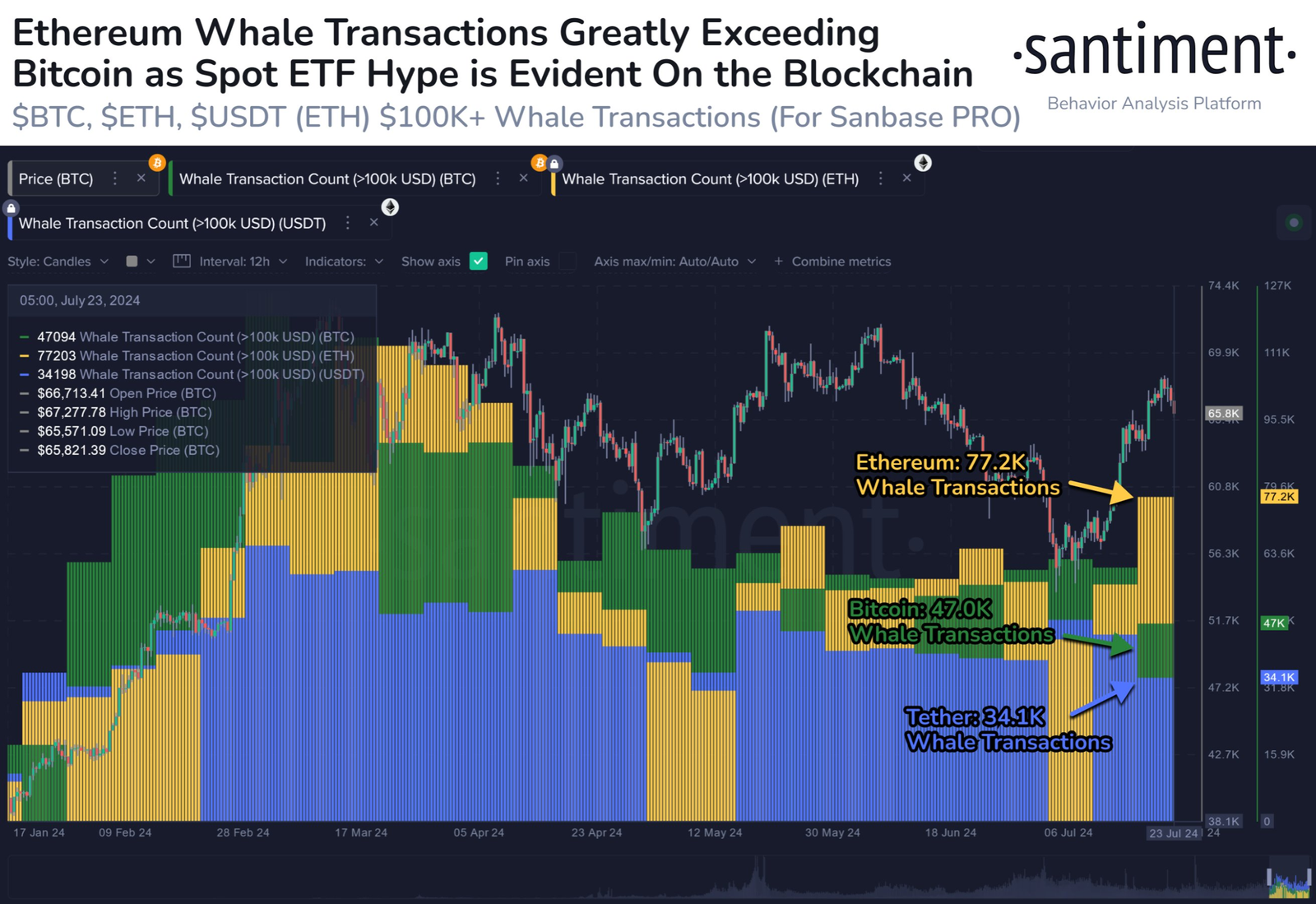

Ethereum Whale Transactions have captured the attention of the crypto community, especially given their significant impact on market dynamics. Recently, an address identified as ‘1011 Insider Whale’ made headlines by collateralizing 55,340 ETH, valued at approximately $157 million, to Aave just minutes before borrowing 50 million USDT. This transaction not only underscores the influence of major players in the blockchain ecosystem, but also highlights the rising trend of on-chain analysis for assessing crypto movement patterns. Following the loan, this enormous sum was swiftly deposited into Binance, further stirring crypto news discussions. As the intrigue surrounding ETH collateral deepens, investors are keen to decipher how such large movements will affect overall market sentiment and hold potential implications for lending protocols like Aave.
Large-Scale Ethereum Transfers, often referred to as whale transactions, play a crucial role in the cryptocurrency market landscape. These substantial movements of assets can have rippling effects across various platforms, such as Aave and Binance, and are typically highlighted through on-chain analysis. One recent transaction involved a prominent address that collateralized an impressive amount of ETH before securing a significant loan. Such activities not only showcase the financial clout of these entities but also raise questions about the future stability of digital currencies. Understanding these shifts is essential for anyone following the crypto space, especially regarding trends in deposits and borrowing.
Understanding Ethereum Whale Transactions
Ethereum whale transactions involve significant trades made by large holders of ETH, often resulting in substantial market movements. The ‘1011 Insider Whale’ case exemplifies this phenomenon, where the account collateralized over 55,340 ETH, valued at an impressive $157 million. Such actions can trigger a ripple effect in market dynamics, influencing both trading volumes and price volatility.
These transactions are closely monitored by on-chain analysts who utilize data insights to predict market trends. The recent transaction by the ‘1011 Insider Whale’ illustrates the strategic use of ETH collateral in Aave, a decentralized lending platform. By securing a massive loan of 50 million USDT, the whale not only demonstrates the power of liquid assets but also highlights the ongoing integration of decentralized finance (DeFi) into traditional trading frameworks, such as Binance.
The Impact of Aave Borrowing on the Ethereum Ecosystem
Aave has revolutionized the way users engage with their crypto assets by allowing them to borrow against their crypto holdings. The recent activity involving the ‘1011 Insider Whale’ showcases how large players are leveraging Aave’s protocol to maximize their capital efficiency. By collateralizing a significant amount of ETH, this address taps into the liquidity Aave offers while simultaneously opening new avenues for investment and trading on platforms like Binance.
Furthermore, Aave’s borrowing mechanism fosters an environment of trust and innovation within the Ethereum ecosystem. As more individuals engage with such platforms, the potential for growth is immense. Investors keenly watch these whale transactions, as they can reveal insights about future market conditions and the overall health of the DeFi space. The connection between Aave and Ethereum whale transactions can thus provide crucial data points for on-chain analysis and market predictions.
Insights from On-Chain Analysis of Ethereum Transactions
On-chain analysis serves as a vital tool for understanding the movements and behaviors of key players in the Ethereum market. By examining the records of transactions, analysts can track large transfers, such as those made by the ‘1011 Insider Whale’, and assess their implications for market liquidity and price stability. Understanding these patterns is crucial for both large investors and everyday traders looking to navigate the constantly evolving crypto landscape.
Moreover, on-chain data can unveil trends related to Aave borrowing and the utilization of collateral instruments like ETH. As seen in the example of the ‘1011 Insider Whale’, the ability to deposit ETH into a DeFi application like Aave signifies trust in both the underlying technology and the market. With tools for detailed analysis, traders can make informed decisions, capitalizing on these insights to enhance their portfolios and anticipate potential market shifts.
Navigating Binance Deposits: A Key to Crypto Success
Binance, one of the largest cryptocurrency exchanges, plays a pivotal role in the market by facilitating the trading of various assets. The decision of the ‘1011 Insider Whale’ to deposit borrowed USDT into Binance underscores the importance of leveraging exchanges to enhance market positions. Such strategic deposits are a clear indication of how whales maneuver within the crypto ecosystem, potentially signaling upcoming price movements to other market participants.
For everyday traders, understanding how to navigate Binance and similar platforms can create opportunities for profit. Keeping an eye on whale activities, like significant deposits or withdrawals, can provide valuable insights into market sentiment. By studying these movements alongside Aave borrowing strategies, traders can better position themselves in the rapidly changing world of cryptocurrency.
Exploring ETH Collateral and Its Role in DeFi Growth
ETH collateralization has emerged as a cornerstone of decentralized finance (DeFi), allowing users to unlock liquidity without selling their assets. The recent transaction by the ‘1011 Insider Whale’ involving 55,340 ETH collateralized on Aave highlights how whales maximize their asset utilization while still maintaining ownership. This practice not only safeguards the volatility of ETH but also empowers users to capitalize on market conditions.
The use of ETH as collateral in platforms like Aave opens up new financing avenues for users, enabling innovation and growth within the DeFi sector. By understanding the implications of these collateralized loans, investors can appreciate the broader trend of asset utilization in the crypto space. As more whales engage in such practices, the overall liquidity in the market could increase, enhancing the stability and attractiveness of DeFi projects.
Crypto News: Keeping an Eye on Major Movements
Staying updated with crypto news is essential for any trader or investor looking to navigate the complexities of the market. The recent report detailing the ‘1011 Insider Whale’ transaction reflects a critical moment in the Ethereum network’s current events, showcasing the ongoing dance between DeFi platforms and large asset holders. News like this can provide timely insights into market dynamics and help inform trading strategies.
Moreover, understanding the significance of whale activities is crucial for anticipating market changes. As crypto news continues to highlight major transactions and lending trends, investors can better align their portfolios with market sentiment. Platforms that cover these events, analyzing data related to Aave borrowing and ETH collateral, contribute to a more informed trading environment, essential for both established players and newcomers in the crypto arena.
Frequently Asked Questions
What are Ethereum Whale Transactions and why are they important?
Ethereum Whale Transactions refer to significant transactions made by large holders of Ethereum (ETH). These transactions can impact market prices and indicate trends in crypto trading. Monitoring whale activity is crucial for traders and investors looking to understand market movements.
How do Ethereum Whale Transactions relate to Aave borrowing?
Ethereum Whale Transactions often involve borrowing and lending activities, such as those on Aave. For instance, a whale can collateralize ETH to borrow USDT, which can influence liquidity and trading strategies within the ecosystem.
What does it mean when an Ethereum Whale collaterals ETH for a loan?
When an Ethereum Whale collateralizes ETH (like the recent transaction involving 55,340 ETH), it means they use their ETH holdings as security to obtain loans—such as borrowing 50 million USDT from Aave. This strategy can enhance their liquidity while maintaining exposure to ETH.
How do Binance deposits impact Ethereum Whale Transactions?
Binance deposits from Ethereum Whales can signify market confidence or strategic trading decisions. For example, if a whale deposits USDT into Binance after borrowing, it may indicate preparation for future trading opportunities or a move to capitalize on anticipated price shifts.
What role does on-chain analysis play in tracking Ethereum Whale Transactions?
On-chain analysis is crucial for tracking Ethereum Whale Transactions, as it allows analysts to monitor wallet activities, such as large transfers, borrowings, and deposits. Tools used for on-chain analysis help traders interpret market movements and the implications of whale behavior.
Can Ethereum Whale Transactions affect the price of ETH?
Yes, Ethereum Whale Transactions can significantly affect ETH prices. Large buy or sell orders from whales can create drastic price changes. Thus, understanding whale transactions is essential for anticipating market trends and potential price shifts.
Why are Ethereum Whales interested in borrowing against ETH as collateral?
Ethereum Whales often borrow against ETH collateral to access liquidity without selling their holdings, enabling them to take advantage of trading opportunities or diversify their investments while still maintaining their ETH exposure.
| Key Points | Details |
|---|---|
| Date and Time | December 1, 2025, at 09:07 |
| Source | Odaily Planet Daily |
| Transaction Monitor | On-chain analyst Ai Yi |
| Whale Address | ‘1011 Insider Whale’ (0x411…11cb) |
| Collateral | 55,340 ETH (worth $157 million) |
| Lending Platform | Aave |
| Borrowed Amount | 50 million USDT |
| Deposit Platform | Binance |
Summary
Ethereum Whale Transactions have taken a significant turn, as illustrated by a recent transaction where an address identified as ‘1011 Insider Whale’ has collateralized a staggering 55,340 ETH to Aave for a loan of 50 million USDT. This transaction exemplifies the active participation of large holders in the Ethereum ecosystem, showcasing the strategic maneuvers that influence market dynamics.
Related: More from Ethereum News | Vitalik Buterin Shares Vision for Ethereum Scaling Solution | Tether Freezes Over $4B Linked to Crime in Three Years in Ethereum