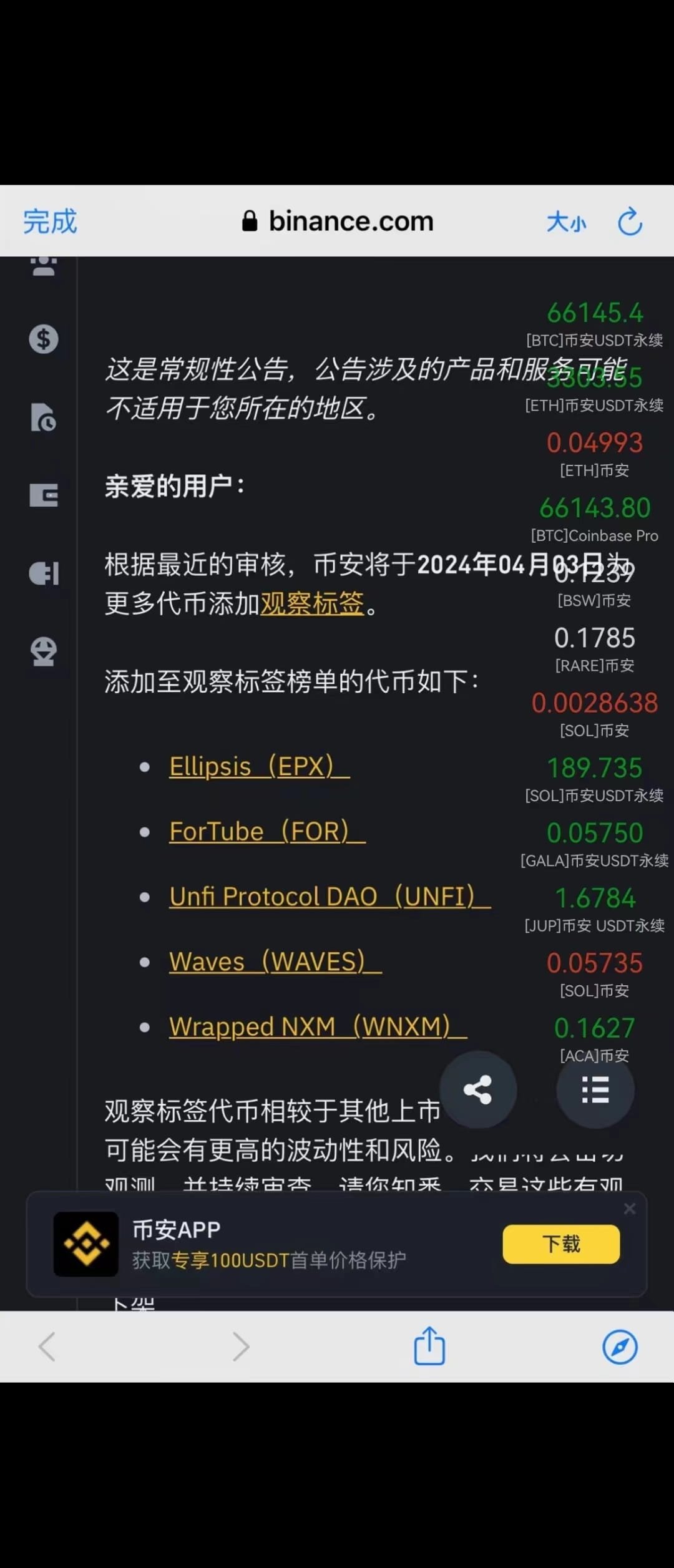

Binance observation labels are set to play a crucial role in how investors navigate the increasingly volatile crypto market. Beginning December 1, 2025, the renowned trading platform will implement observation labels for several tokens, including the likes of Tranchess (CHESS) and Dent (DENT). These labels serve as an important warning that certain assets, like Aavegotchi (GHST), may not fully uphold the stringent listing standards typically expected on the exchange. Given that high volatility tokens are often subjected to rapid price fluctuations, users need to proceed with caution when considering these assets. Consequently, Binance aims to keep users informed through regular reviews, ensuring that investors can make educated decisions amid the changing landscape of crypto investments.
In the ever-evolving realm of cryptocurrency, Binance has initiated a new system designed to enhance user awareness and decision-making. This innovative approach involves the introduction of observation tags for various crypto assets, including Tranchess (CHESS) and Dent (DENT), indicating their potential risk factors. These tokens often display unpredictable price behaviors, classified as high-risk investment options due to their departure from upholding the initial listing criteria. As the crypto marketplace continues to shift, these observation indicators will assist traders in maintaining a vigilant stance towards investments like Aavegotchi (GHST) and similar high volatility tokens. By continuously monitoring these assets, Binance reflects its commitment to transparency and user education within the digital asset sphere.
Understanding Binance Observation Labels
Binance has recently announced the introduction of observation labels for a variety of tokens on its platform starting December 1, 2025. This initiative is aimed at improving transparency and informing users about the potential risks associated with specific cryptocurrencies. Tokens like Tranchess (CHESS), Dent (DENT), and Aavegotchi (GHST) are among those subject to these observation labels, indicating they have not fully met Binance’s stringent listing requirements. The presence of an observation label alerts users to the likelihood of increased volatility and the inherent risks associated with investing in these assets.
By tagging these tokens with observation labels, Binance seeks to ensure that traders and investors are fully informed before engaging with these high volatility tokens. The observation labels serve as a warning sign, suggesting that the underlying projects may not be as stable as those without such tags. This proactive measure from Binance underscores the importance of conducting thorough research and exercise caution when considering investments in certain cryptocurrencies.
Key Tokens Receiving Observation Labels
Among the tokens added to the observation list are notable cryptocurrencies like Tranchess (CHESS) and Dent (DENT). Tranchess, designed to provide yield products and enhanced capital efficiency, has garnered attention due to its innovative approach in the DeFi space. However, the volatility associated with such projects means that investors should approach with caution. Dent, on the other hand, focuses on creating an open-source marketplace for mobile data, but its recent performance has not met Binance’s expectations, placing it on the observation list.
Additionally, Aavegotchi (GHST) combines NFTs with DeFi, targeting a unique niche in the cryptocurrency market. Nonetheless, it faces the same scrutiny, as its price fluctuations and market behavior can lead to significant risks for investors. Other tokens like dForce (DF) and Solar (SXP) also find themselves identified due to their inability to maintain the standards required by Binance. Tracking the performance of these tokens will be essential for traders looking to navigate the complexities of the cryptocurrency landscape.
Impact of High Volatility Tokens on Investors
Investing in high volatility tokens such as those receiving observation labels requires a strategic approach. These tokens are often subject to rapid price swings, which can both present unique opportunities and substantial risks. For investors, it is critical to have a robust risk management strategy in place to mitigate potential losses. Engaging with high volatility tokens necessitates continuous market analysis and a keen awareness of the underlying factors influencing price movements.
Moreover, the introduction of observation labels is a clear indicator that these tokens may face potential delisting in the future. The added uncertainty surrounding the sustainability of these projects amplifies the necessity for due diligence. Investors should not just rely on past performance but evaluate each token’s current operation, community support, and market sentiment. A cautious, well-informed approach will be key to navigating the stormy waters of high volatility tokens.
The Importance of Continuous Review by Binance
Binance’s commitment to continuously review the performance of listed tokens, especially those with observation labels, is a significant aspect of the platform’s operations. By regularly assessing these cryptocurrencies, Binance aims to protect its users from engaging with potentially risky projects that fail to meet standard performance metrics. This initiative not only enhances the trading environment but also fosters a more informed community of investors.
The review process can serve as an essential tool for investors to gauge the ongoing viability of their investments in tokens like Tranchess (CHESS) or Dent (DENT). If a token continuously underperforms, being listed as under review can prompt users to reconsider their strategies or exit their positions before substantial losses occur. Such diligence reflects Binance’s role in promoting responsible trading practices in an ever-evolving market.
Evaluating the Future of Cryptocurrency Markets
The evolving landscape of cryptocurrency is characterized by innovation and risk. The introduction of observation labels by Binance reflects a broader trend within the industry to enhance awareness among investors about potential volatility and risks. As more tokens become susceptible to increased scrutiny, the need for a comprehensive evaluation process will become even more critical for investors trying to navigate these turbulent waters.
As trading platforms standardize their approaches to include such precautions, it will inevitably shape market dynamics. Coins that might have previously experienced a surge in interest without thorough vetting will now face greater challenges. Investors must adapt their strategies accordingly, balancing their pursuit of high returns against the heightened risks of trading high volatility tokens.
Understanding the Risks of Investing in Dent (DENT)
Dent (DENT) is one of the tokens highlighted for concern, as it has recently gained an observation label due to performance issues. As an innovative cryptocurrency aimed at creating a decentralized marketplace for mobile data, many investors were initially drawn to its potential. However, the volatility that accompanies such ventures often leads to concerns about its long-term viability.
The challenges faced by Dent reflect broader issues within the cryptocurrency market, where regulatory scrutiny and project sustainability are increasingly in the spotlight. Investors looking at Dent should not only consider its market potential but also stay alert to the factors leading to its observation status. Proper due diligence and acceptance of potential losses are crucial when trading this high volatility token.
The Role of Aavegotchi (GHST) in the DeFi Ecosystem
Aavegotchi (GHST) functions at the intersection of gaming and finance, making it a unique entry within the DeFi landscape. Nevertheless, its recent classification as an observation label token speaks to the challenges it faces. While Aavegotchi merges non-fungible tokens (NFTs) with decentralized finance, the volatility inherent to such innovative models can pose significant risks to investors.
For those interested in investing in Aavegotchi, evaluating the underlying mechanics and market trends is essential. Understanding how Aavegotchi engages its community and maintains interest can provide insights into its future performance. Investors must weigh the excitement surrounding NFT integrations against the backdrop of sudden price changes often associated with high volatility tokens.
Navigating Tranchess (CHESS) and its Market Position
Tranchess (CHESS), designed as a token-driven yield optimization platform, has attracted interest for its novel features. However, its recent labeling as an observation token raises questions about its stability and future in the market. For investors, engaging with Tranchess requires vigilance, particularly as volatility can lead to swift alterations in token value.
While Tranchess aims to provide enhanced capital efficiency, the realities of fluctuating cryptocurrency markets means that investors should be prepared for potential downturns. Understanding the unique offerings of Tranchess in relation to other high volatility tokens is essential for making informed trading decisions. Investors should continuously track its performance metrics and market sentiment before committing significant capital.
The Future of dForce (DF) in Cryptocurrency Trading
dForce (DF) has garnered attention for its ambitions in the DeFi sector, but its recent status as a token with an observation label raises concerns for potential investors. The future of dForce largely depends on its ability to regain investor trust and stabilize its market presence. Similar to other protocols facing challenges, being under observation implies that dForce must navigate heightened scrutiny from the trading community.
For investors, understanding the operational changes dForce may undertake and monitoring its market interaction will be critical. As part of the broader landscape of high volatility tokens, dForce’s journey will serve as a barometer for similar projects that may find themselves in precarious positions. Keeping abreast of dForce’s developments is advisable for anyone considering investing in this increasingly challenging environment.
Frequently Asked Questions
What are Binance observation labels?
Binance observation labels are markers assigned to certain tokens like Tranchess (CHESS) and Dent (DENT) that indicate increased volatility and risk. These tokens may not fully meet Binance’s initial listing standards and could face potential delisting.
Why are some Binance tokens placed under observation?
Tokens such as Aavegotchi (GHST) are placed under observation due to their failure to consistently meet Binance’s listing criteria, which can signal higher volatility and greater investment risks.
How does Binance handle high volatility tokens?
Binance regularly reviews and tracks high volatility tokens, like dForce (DF) and Solar (SXP), that have observation labels, ensuring that traders are aware of the associated risks while making investment decisions.
What does it mean for a token like Tranchess (CHESS) to have an observation label?
When Tranchess (CHESS) has an observation label on Binance, it signifies that while it remains listed, it is under scrutiny due to heightened risk, which may involve potential future delisting.
Can observation labels be removed from Binance tokens?
Yes, observation labels on tokens like Dent (DENT) can be removed if their performance improves and they meet Binance’s listing standards. However, ongoing volatility may prolong their observation status.
What risks are associated with trading Binance tokens with observation labels?
Trading Binance tokens with observation labels such as Aavegotchi (GHST) involves risks such as higher volatility and the potential for delisting, which traders should consider before investing.
Will Binance continue to review tokens with observation labels?
Yes, Binance maintains a policy of regular review for tokens with observation labels, ensuring that traders are kept informed about any changes in volatility or listing status.
| Token | Observation Label Start Date | Implications | Performance Tracking |
|---|---|---|---|
| Tranchess (CHESS) | December 1, 2025 | Higher volatility and risk due to non-fulfillment of initial listing standards. | Tracked and regularly reviewed by Binance. |
| Dent (DENT) | December 1, 2025 | Higher volatility and risk due to non-fulfillment of initial listing standards. | Tracked and regularly reviewed by Binance. |
| dForce (DF) | December 1, 2025 | Higher volatility and risk due to non-fulfillment of initial listing standards. | Tracked and regularly reviewed by Binance. |
| Aavegotchi (GHST) | December 1, 2025 | Higher volatility and risk due to non-fulfillment of initial listing standards. | Tracked and regularly reviewed by Binance. |
| Solar (SXP) | December 1, 2025 | Higher volatility and risk due to non-fulfillment of initial listing standards. | Tracked and regularly reviewed by Binance. |
Summary
Binance observation labels will be introduced on December 1, 2025, for several tokens, including Tranchess (CHESS), Dent (DENT), dForce (DF), Aavegotchi (GHST), and Solar (SXP). These labels indicate that these tokens carry a higher level of risk and volatility, as the projects do not meet Binance’s initial listing standards. Continuous tracking and performance reviews will ensure that investors are kept informed about the status of these observations.
Related: More from Exchange News | Irans Crypto Shadow Economy Evades Sanctions in Crypto Exchange | BSP Proposes Stablecoin Yield Rules: Will It Impact Coinbase? in Crypto Exchange