


China’s Oil Demand Growth Set to Flatline by 2027, Making Storage the Swing Factor for Oil Prices Wood Mackenzie says China is nearing peak oil use, with growth slowing to near zero by 2027. For traders, China’s crude storage decisions now loom as a key driver of oil prices, time spreads and product flows in 2025–26.
Key Points
- Wood Mackenzie expects China’s oil demand growth to slow sharply, approaching zero by 2027 as the country nears peak consumption.
- Gasoline and diesel demand are already slipping; the marginal growth left is concentrated in aviation fuel and petrochemicals.
- Crude runs may tick higher in 2026 versus 2025, but weak underlying demand caps upside, with refined-product exports continuing to rise.
- After sizable builds earlier this year, China has drawn inventories as prices softened; the extent of any 2026 restock could swing global balances.
- Storage choices will influence Brent/WTI time spreads, refinery margins and commodity FX, particularly CAD, NOK and MXN.
China Nears Peak Oil Consumption
Wood Mackenzie’s senior analyst Alan Gelder said the demand engine that powered global crude for two decades is running out of road. Structural declines in gasoline and diesel reflect maturing vehicle ownership, efficiency gains and rapid electrification of transport, while only modest fuel growth remains in aviation and petrochemical feedstocks. That shift leaves China far less likely to absorb incremental barrels on the scale seen in the 2010s.
Refinery Runs, Products and Exports
China’s crude throughput is expected to edge higher in 2026 compared with 2025, but the consultancy sees a ceiling imposed by tepid domestic consumption. Rising exports of diesel, gasoline and jet fuel—subject to export quota policy—remain a release valve for refiners. That dynamic could pressure Asian refining margins if product barrels continue spilling into regional markets.
Inventories Move to Center Stage
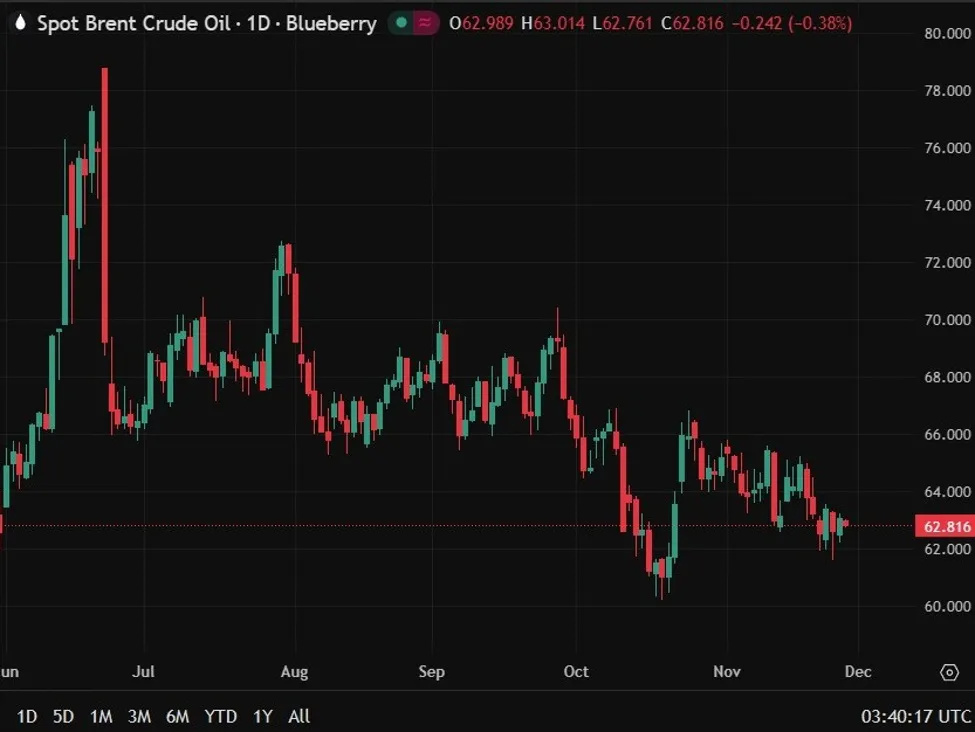
China accumulated large commercial inventories earlier this year and has recently drawn them amid softer prices. The pivotal question for 2026: does Beijing sanction a sizable restock, or do refiners lean on existing stocks while expanding product exports? – A rebuilding phase would tighten prompt crude balances, likely supporting Brent and Dubai benchmarks and deepening backwardation. – Minimal restocking would loosen balances, flattening time spreads and weighing on prompt prices. Either way, China’s storage policy will shape volatility across futures curves, crack spreads and shipping rates.
Market Implications for Oil, FX and Equities
– Crude benchmarks: Brent’s direction will be highly sensitive to Chinese import programs and any reopening of the import quota spigot. A sustained rebuild in China could pull the market higher even if global demand growth moderates elsewhere. – Time spreads: Watch ICE Brent M1–M6 and Dubai spreads. Inventories moving into tanks typically push curves into stronger backwardation; drawdowns risk flattening. – OPEC+: A softer China demand profile shifts the burden of market-balancing back to core producers; quota discipline becomes more consequential if Chinese restocking pauses. – Commodity FX: Higher oil supports CAD, NOK and MXN; softer crude favors importers such as JPY and INR. – Equities: Energy producers benefit from tighter balances; Asian refiners face margin risk if Chinese product exports climb; airlines gain from weaker jet cracks if Chinese demand underwhelms.
What Traders Should Watch
– Monthly crude import data, refining runs and product export quotas. – Satellite-tracked Chinese storage levels (commercial and strategic). – Refinery maintenance schedules and new petrochemical capacity ramp-ups. – Brent/Dubai spreads and VLCC freight rates from the Middle East to Asia. – Chinese macro signals—credit impulse, property activity and travel indicators—that correlate with fuels demand.
About Wood Mackenzie
Wood Mackenzie is a global energy and resources consultancy known for data-driven forecasts, asset valuations and strategic market analysis across oil, gas, power, and metals. The firm is widely regarded for long-term energy trend insights and commodity market fundamentals.
FAQ
What is Wood Mackenzie projecting for China’s oil demand?
China’s oil demand growth is expected to slow to near zero by 2027 as the country approaches peak consumption, with declines already evident in gasoline and diesel.
Where is any remaining growth coming from?
Incremental growth is mostly in aviation fuels and petrochemical-related feedstocks, rather than road fuels like gasoline and diesel.
Why do Chinese inventories matter so much for oil prices?
China’s decision to rebuild or draw down commercial stocks directly affects global crude balances. A restock phase increases buying and tightens the prompt market; minimal restocking can loosen balances and weigh on prices.
How could this affect Brent and time spreads?
Stronger Chinese buying typically supports Brent and deepens backwardation. Weak buying or net inventory draws tend to flatten spreads, signaling looser prompt supply.
What are the FX and equity market implications?
Higher oil from Chinese restocking supports commodity currencies like CAD and NOK and can lift energy equities. Weaker oil benefits importers’ currencies (e.g., JPY) and airlines due to cheaper jet fuel.
What indicators should traders track to gauge China’s impact?
Focus on Chinese crude import volumes, refinery runs, product export quotas, commercial storage levels, and Brent/Dubai spread behavior. These are timely proxies for China’s demand and inventory strategy. This article was prepared by BPayNews for informational purposes.
Related: More from Market Analysis | Polymarket: Traders Bet $500M on US in Crypto Market | Related Box Test