
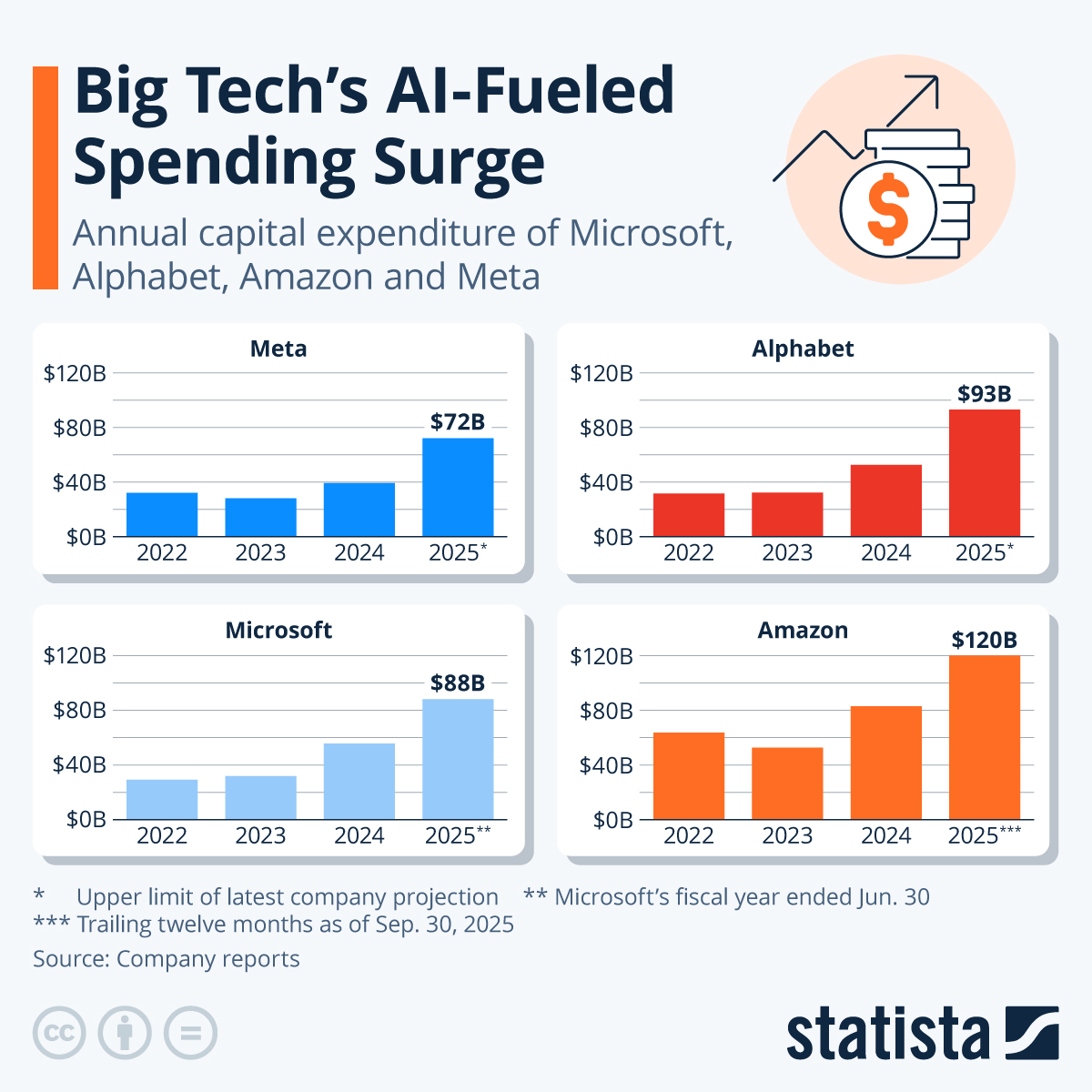

In recent discussions surrounding AI spending and Fed rate cuts, a compelling narrative has emerged that artificial intelligence may significantly influence U.S. economic dynamics. According to a McKinsey report, increased investment in AI is projected to invigorate economic growth, potentially limiting the Federal Reserve’s ability to implement aggressive interest rate cuts. As the central bank contemplates reductions in the Fed interest rate, the surge in AI-driven productivity could lead to higher U.S. Treasury yields, influencing monetary policy decisions moving forward. By 2026, expectations suggest that tighter monetary policies may become necessary, with projections estimating a rise in the yield of the 10-year U.S. Treasury bond. This interplay between technological advancement and fiscal strategy highlights the intricate relationship between innovation and economic stability.
Exploring the intersection of artificial intelligence investments and monetary policy reveals how these elements can shape future economic landscapes. As the Federal Reserve considers adjustments to interest rates, particularly in light of anticipated cuts, the role of AI in driving sustained economic momentum cannot be overlooked. The implications of growing treasury yields and a revised monetary approach, as outlined in recent fiscal analyses, underscore the complexity of AI’s contribution to financial markets. Specifically, projections for 2026 indicate that such advancements could necessitate a reevaluation of monetary strategies by policymakers. Thus, understanding AI’s potential to alter economic forecasts and Treasury performance opens a dialogue on the future of the U.S. economy.
The Impact of AI Spending on Economic Momentum
As businesses increasingly allocate resources toward artificial intelligence, the overall economic landscape is witnessing a significant transformation. AI spending is enhancing productivity and innovation across various sectors, driving economic growth at an unprecedented rate. Reports suggest that firms investing in AI technologies are reaping substantial benefits, leading to increased operational efficiencies and a stronger competitive edge in the market.
This trend is expected to fuel continuous economic expansion, which will likely influence the Federal Reserve’s monetary policy decisions. If AI-driven growth persists, the Fed may approach rate cuts with caution, as a robust economy could necessitate maintaining higher interest rates to prevent inflationary pressures from escalating. Thus, AI spending may play a pivotal role in shaping the U.S. economic trajectory well into the coming years.
Federal Reserve Rate Cuts: Projections and Challenges
Market expectations suggest that the Federal Reserve may implement up to three rate cuts in the next year to stimulate economic activity in response to potential slowdown concerns. However, experts are cautioning that sustained economic growth resulting from increased AI investments could complicate these plans. As highlighted in the McKinsey report, the interplay between AI advancement and monetary policy will be crucial in determining the timing and magnitude of any interest rate adjustments.
Dustin Reed from McKinsey emphasizes that if the economy continues to heat up due to AI contributions, the Fed could face pressure to take a more conservative stance on rate cuts. Maintaining higher rates would help manage inflation while reflecting a robust economic environment bolstered by advancements in technology. This scenario underscores the challenges the Fed may face as it navigates the complexities of a rapidly evolving fiscal landscape in 2026.
The Link Between AI Growth and U.S. Treasury Yields
The relationship between artificial intelligence investments and U.S. Treasury yields is becoming increasingly significant. Higher spending on AI correlates with improved economic performance, which entails a higher yield environment as investors adjust expectations for future growth and inflation. As businesses innovate and enhance productivity through AI, the demand for capital may rise, prompting a shift in treasury yield dynamics.
According to projections, the yield on the 10-year U.S. Treasury bond may reach approximately 4.4% by mid-2026, up from 4%. This anticipated increase aligns with the idea that a robust economy driven by AI may create upward pressure on interest rates. Investors will closely monitor these trends, recognizing that AI’s influence on economic growth is a pivotal factor steering the trajectory of U.S. Treasury yields.
McKinsey’s Insights on Monetary Policy and AI
The groundbreaking insights from McKinsey shed light on the intricate relationship between artificial intelligence and monetary policy. Their analysis reveals that the acceleration of AI technologies could create a more resilient economy, which, paradoxically, might limit the Fed’s willingness to cut rates substantially. The interplay between tightening labor markets and AI-driven efficiencies suggests that the latter could cushion economic fluctuations.
Understanding these dynamics is crucial as stakeholders across the economy prepare for shifts in fiscal policy. By anticipating how AI spending may influence the Fed’s strategy, businesses, investors, and policymakers can align their strategies with the unfolding economic narrative. This foresight will be particularly important as we approach the monetary policy discussions in 2026.
Forecasting AI’s Role in Future Economic Policies
Looking toward the future, the role of artificial intelligence in shaping economic policies cannot be overstated. As AI technologies become increasingly integrated into business operations and consumer behaviors, policy formulation will need to adapt to these changes. Economic forecasts suggest that a robust AI sector could lead to stronger demand and growth, prompting policymakers to reconsider existing frameworks for managing fiscal stability and inflation.
Therefore, discussions around the Fed’s rate cuts and broader economic policies will likely pivot on the developments within the AI domain. As we approach 2026, the intersection of AI spending and monetary policy will define the landscape for growth. Policymakers will need to prioritize agility in their responses to ensure that economic expansion remains sustainable while adequately addressing potential inflation risks.
Navigating Inflation with AI and Interest Rate Adjustments
Inflation management remains a top priority for the Federal Reserve, especially amidst the rapid advancements in AI. As economic growth flourishes due to AI spending, inflationary pressures may also rise, prompting the Fed to consider its interest rate strategy carefully. The challenge lies in balancing the need for growth with the imperative to keep inflation in check.
In an environment where AI enhances productivity, the rate of inflation may not rise as sharply as in previous cycles of economic growth. However, the Fed must remain vigilant, ready to adjust interest rates appropriately based on real-time data reflecting AI’s impact on the economy. As the Fed navigates potential rate cuts, it will have to weigh the likelihood of sustained inflation against the signals emitted by the growing AI industry.
The Role of AI in Economic Recovery Strategies
Following economic disruptions, the integration of artificial intelligence into recovery strategies could serve as a catalyst for sustainable growth. As businesses lurch toward digitalization and automation, AI plays a crucial role in not only enhancing productivity but also increasing resilience within various sectors. These technological adaptations position the economy for a stronger recovery trajectory.
Moreover, recognizing the potential of AI to drive economic resurgence may influence future policy initiatives by the Federal Reserve. By understanding how AI-driven growth can foster healthier markets and ultimately reduce dependencies on aggressive rate cuts, policymakers can formulate strategies that leverage technology as a cornerstone of recovery plans.
Long-term Implications of AI on Monetary Policy
The long-term implications of artificial intelligence on monetary policy are profound. As AI continues to redefine industries, the Federal Reserve may find itself facing new challenges in its inflation and growth projections. The interplay between enhanced productivity through AI and traditional monetary policy frameworks will require innovative thinking and responsive measures.
In the coming years, the Fed’s approach to interest rates may shift significantly in response to the evolving economic landscape influenced by AI. Policymakers will need to recognize the unique challenges posed by a technologically driven economy, adjusting their strategies to maintain fiscal stability while supporting sustained growth ushered in by AI advancements.
Evaluating Risks and Opportunities in AI-driven Growth
Evaluating the risks and opportunities associated with AI-driven growth is essential as we move forward. While the benefits of increased efficiency and productivity are clear, there are also inherent risks related to job displacement and economic inequality. As organizations invest in advanced technologies, the nature of work is changing, and businesses must be prepared to adapt to a transforming labor market.
In this context, the Federal Reserve must remain vigilant about these risks while considering the opportunities presented by AI advancements. The balance between fostering innovation and ensuring monetary stability may become a focal point for the Fed’s approaches in future rate adjustments, as AI will undoubtedly shape the economic landscape for years to come.
Frequently Asked Questions
How will AI spending affect Fed interest rate cuts in 2026?
AI spending is expected to drive significant economic growth, which may limit the Federal Reserve’s ability to implement interest rate cuts in 2026. According to the McKinsey report, greater productivity and momentum from AI could necessitate tighter monetary policy, potentially leading to fewer rate cuts than anticipated.
What does the McKinsey report say about AI economic growth and Fed rate cuts?
The McKinsey report suggests that AI economic growth could sustain the U.S. economy’s momentum, making the Fed’s planned rate cuts less aggressive. This higher growth forecast implies that the Fed may need to maintain higher interest rates to control inflation, affecting U.S. Treasury yields.
What are the projections for U.S. Treasury yields in relation to AI spending and Fed rate cuts?
As AI spending bolsters economic growth, McKinsey forecasts that U.S. Treasury yields will rise. By mid-2026, the yield on the 10-year U.S. Treasury bond may increase from 4% to 4.4%, influenced by the Fed’s potential hesitation to cut rates amidst strong economic performance driven by AI.
Why might the Fed cut rates three times despite AI economic growth?
Market expectations currently suggest that the Fed could cut rates three times due to anticipated economic conditions. However, continued strong growth driven by AI might lead the Fed to reconsider these cuts, keeping interest rates higher to manage inflation and support sustainable growth.
How can AI influence future monetary policy decisions by the Federal Reserve?
AI can significantly influence future Monetary Policy decisions by the Federal Reserve by enhancing productivity and economic growth. As AI technologies advance, the Fed may face pressures to adjust its rate-cut strategy to balance growth with inflation, as projected in the McKinsey report.
| Key Point | Details |
|---|---|
| AI Spending Impact | AI-driven growth could sustain momentum in the U.S. economy. |
| Federal Reserve’s Rate Cuts | Expected rate cuts may be limited due to strong economic growth influenced by AI. |
| Treasury Yields Prediction | 10-year U.S. Treasury yield is projected to rise from 4% to 4.4% by mid-2026. |
| Market Expectations | Market anticipates up to three rate cuts by the Fed next year. |
Summary
AI Spending and Fed Rate Cuts are intricately linked as the anticipated increase in AI investment could play a significant role in shaping U.S. economic policies. The strong growth potential stemming from AI technologies is believed to mitigate the need for aggressive interest rate reductions by the Federal Reserve. As the economy continues to thrive, this could lead to adjustments in Treasury yields and ultimately influence financial markets well into 2026.
Related: More from Regulation & Policy | Anthropic Founder Critiques Pentagons Choice as Unprecedented in Crypto Regulation | UK Gambling Regulator Examines Cryptocurrencies for Licensed Bettors in Crypto Regulation