


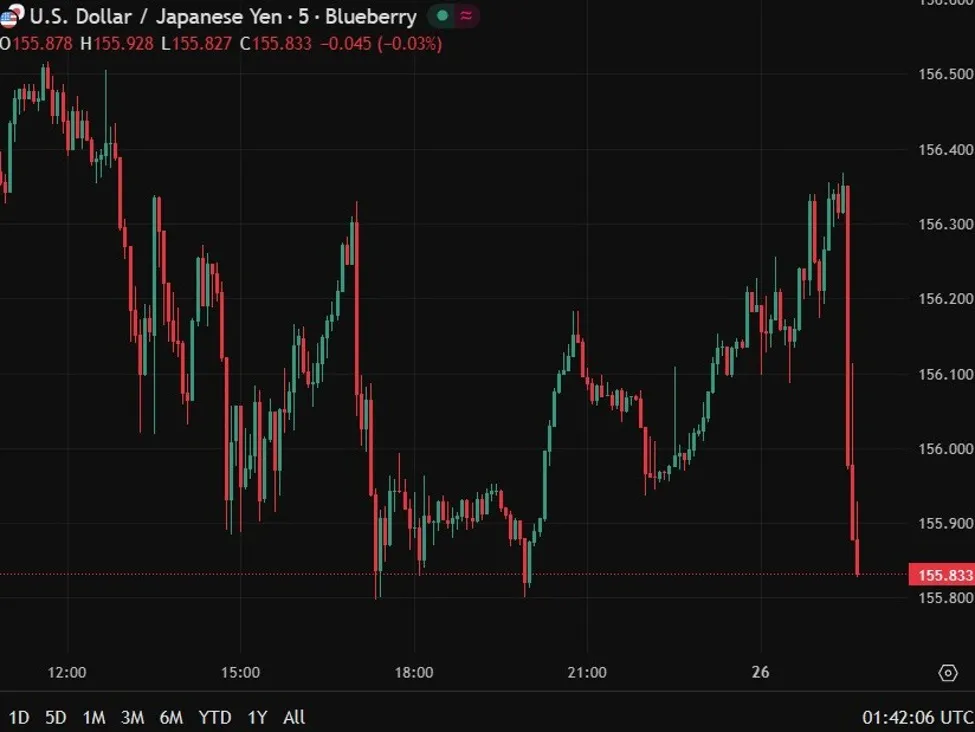

Stocks surge on Fed cut hopes as yen jumps on BOJ hawkish drumbeat; PCE inflation in focus Wall Street roared higher on renewed rate-cut bets while the yen strengthened on signals the Bank of Japan may hike sooner than expected. Traders now pivot to the Fed’s preferred inflation gauge, the PCE report, for confirmation that disinflation remains on track.
U.S. equities rally as megacaps hit records
The Dow Jones Industrial Average leapt roughly
650 points
as investors priced in earlier and potentially deeper Federal Reserve easing. Tech leadership was mixed:
Apple
and
Alphabet
notched fresh records, with Alphabet changing hands around
28x forward earnings
amid AI optimism, while
Nvidia
slipped as competition in AI semiconductors intensified. Risk appetite improved across cyclical sectors on expectations that the growth-softening trend and moderating inflation could give the Fed cover to pivot. Still, positioning remains sensitive ahead of the next inflation print.
Yen finds bids as BOJ steps up hawkish messaging
The
yen strengthened
after reports that the
Bank of Japan
is sharpening its guidance toward policy normalization, prompting a dip in
USD/JPY
and yen crosses. A firmer tone from policymakers—amid yen weakness, sticky inflation pressures and shifting domestic politics—has pushed near-term hike risk into view, including talk that the policy rate could reach
0.75% by March
. The prospect of earlier BOJ tightening narrows yield differentials at the margin and raises the risk of
carry trade
unwinds, especially in holiday-thinned liquidity. For FX, the balance between a softer U.S. dollar on Fed-cut bets and a stronger yen on BOJ normalization is a key near-term driver of volatility.
Macro watch: PCE, consumers, and travel signals
All eyes are on the upcoming
PCE price index
, the Fed’s preferred inflation gauge, for evidence that core inflation is cooling toward target. The print will help calibrate the pace and timing of any rate cuts and could set the tone for year-end risk appetite. On the consumer front,
Thanksgiving air travel volumes dipped about 5%
from last year even as airlines scheduled record flights, a sign travelers may be more cost-conscious as inflation concerns linger. Any softness in services demand would reinforce the narrative of disinflation without a hard landing—market-friendly, but contingent on resilient labor dynamics.
Key points
- Dow rallies ~650 points on growing Fed rate-cut expectations; tech leadership mixed.
- Apple and Alphabet set record highs; Alphabet trades near 28x forward earnings on AI momentum.
- Nvidia eases amid intensifying AI chip rivalry.
- Yen strengthens as BOJ ramps up rate-hike signaling; USD/JPY and yen crosses slip.
- Traders eye PCE inflation for confirmation of disinflation and the Fed’s pivot path.
- U.S. holiday travel shows a 5% dip despite record scheduled flights, hinting at consumer caution.
Market implications
FX
A firmer yen and a softer dollar create two-way risk in G10 FX. BOJ chatter raises volatility risks for yen crosses, particularly if policy guidance turns more explicit or if PCE surprises.
Equities
Rate-sensitive sectors and quality growth continue to benefit from lower-rate expectations. Divergence within AI-exposed megacaps underscores a maturing trade as investors differentiate on margins, competitive positioning, and capital intensity.
Rates
Treasury markets are primed to react to PCE. A softer inflation print would reinforce the current rally and deepen rate-cut pricing; a hot reading could reprice the path and pressure risk assets.
FAQ
Why did U.S. stocks surge today?
Equities jumped on mounting expectations the Federal Reserve could begin cutting rates sooner, boosting risk appetite and lifting megacaps to new highs.
What moved the Japanese yen?
Reports that the Bank of Japan is intensifying its rate-hike messaging pushed the yen higher, knocking USD/JPY and several yen crosses lower as traders priced in earlier normalization.
How could the BOJ’s stance affect global markets?
A shift to positive rates and tighter policy in Japan narrows yield differentials, raising the risk of carry trade unwinds and injecting volatility into global FX and rates markets.
Why is the PCE report so important?
The PCE price index is the Fed’s preferred inflation gauge. A cooler reading would support rate-cut bets and risk assets, while a hotter print could revive concerns about sticky inflation.
What does the AI stock divergence signal?
Record highs in Alphabet and weakness in Nvidia suggest investors are becoming more selective within AI, focusing on valuation support, competitive dynamics, and earnings durability.
What does the dip in Thanksgiving air travel indicate?
A roughly 5% decline in traveler volumes despite record scheduled flights hints at growing price sensitivity, aligning with broader signs of cautious consumer behavior amid inflation worries.
Reporting by BPayNews.
Related: More from Market Analysis | Polymarket: Traders Bet $500M on US in Crypto Market | Related Box Test