
Dogecoin Price Prediction for the End of 2025
As one of the most popular and beloved cryptocurrencies, Dogecoin (DOGE) continues to capture the attention of the crypto community and beyond. Initially created as a joke in 2013 by Billy Markus and Jackson Palmer, Dogecoin quickly developed a robust following and evolved into a significant crypto player, celebrated for its fun-loving community and charitable endeavors. With the impending conclusion of 2025 nearing, numerous investors and enthusiasts are eager to understand the potential future value of Dogecoin.
Factors Influencing Dogecoin's Price
To forecast where Dogecoin might be at the end of 2025, it’s important to consider various factors that could influence its price:
-
Market Sentiment and Adoption: Dogecoin often rides waves of increasing and decreasing popularity. Celebrity endorsements, particularly from figures like Elon Musk, significantly sway its price. A crucial factor will be how Dogecoin manages to maintain its relevance and adoption, especially in retail and online payments.
-
Crypto Market Trends: The overall health of the cryptocurrency market also plays a critical role. A bullish market in 2025 could see Dogecoin’s price surge, whereas a bear market could depress its value.
-
Technological Developments: Unlike many other cryptocurrencies, Dogecoin does not frequently introduce new technology or features. However, any updates or changes to improve its transaction efficiency, security, or scalability can positively impact its price.
-
Regulatory Environment: As with all cryptocurrencies, regulatory decisions can significantly affect Dogecoin. Positive regulations could boost investor confidence, while restrictive policies might limit its potential for growth.
- Economic Factors: General economic conditions, such as inflation rates, economic downturns, or booms, also influence investment in assets like Dogecoin.
Expert Predictions and Analysis
Market analysts and experts have varied opinions about Dogecoin’s future, given its volatile history. Some remain bullish, citing the cryptocurrency’s enduring popularity and strong community support. Others caution about its speculative nature and lack of a formal technological development plan compared to competitors like Bitcoin and Ethereum.
Quantitative Forecasting
Advanced models and analytical tools, such as machine learning predictions and expert algorithms, suggest different outcomes based on historical data and market cycles. Some project a modest increase, assuming the market conditions remain favorable and interest in cryptocurrencies continues to grow. Technical analysis, looking at chart patterns and trends, might provide short-term trading insights but remains less reliable for long-term predictions.
Market Sentiment and Possible Scenarios
The community’s sentiment towards Dogecoin could spawn various scenarios by the end of 2025:
-
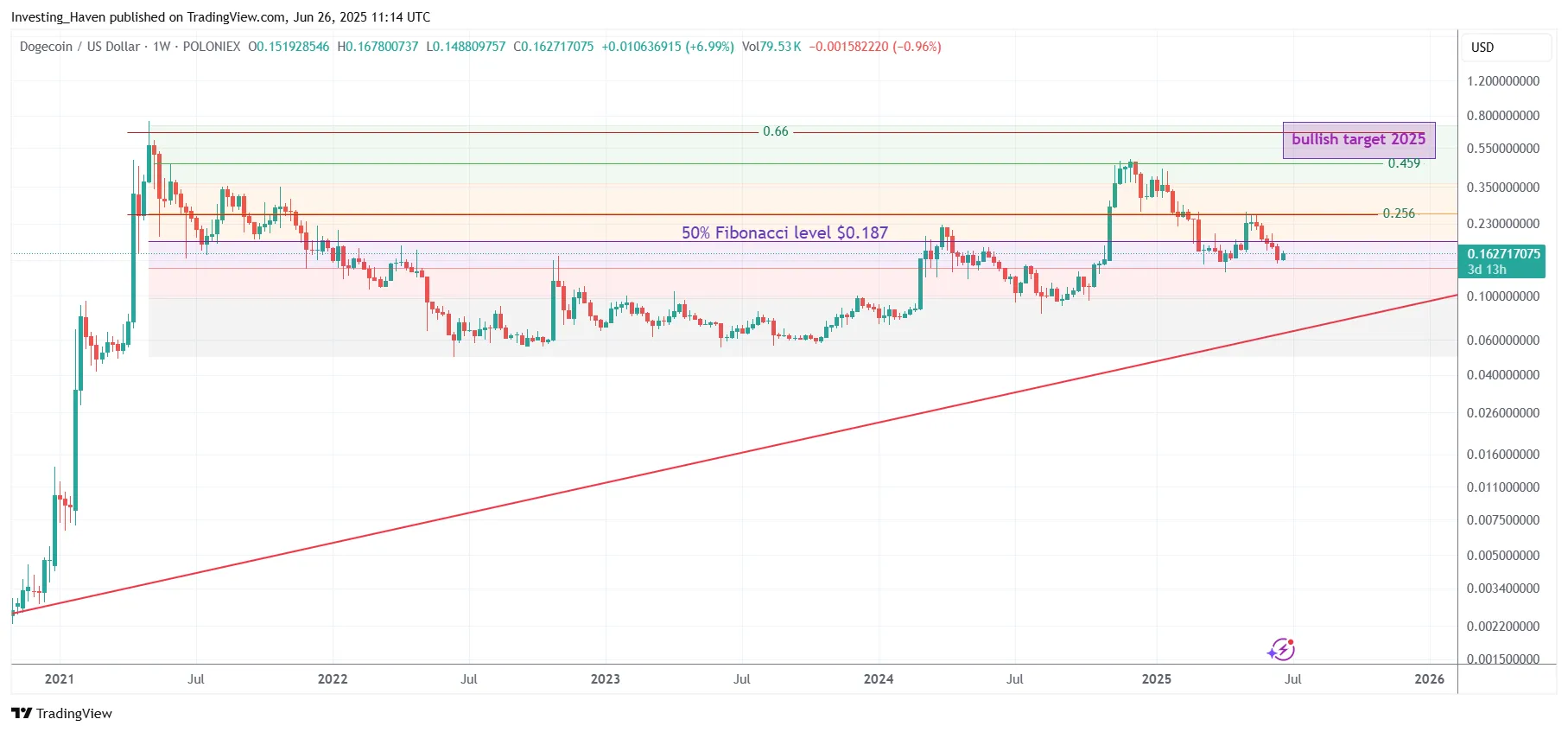
Optimistic Scenario: If the crypto market experiences a new wave of enthusiasm, possibly driven by technological innovations or positive regulatory frameworks, Dogecoin could potentially see its value increase significantly, even testing new highs.
-
Pessimistic Scenario: Conversely, harsh regulatory measures, a decline in public interest, or a significant market downturn could diminish Dogecoin’s price.
- Realistic Scenario: Considering the cyclical nature of cryptocurrencies and Dogecoin’s historical performance, a moderate growth that follows market trends could be the most likely outcome.
Conclusion
While the nature of cryptocurrency investments is inherently risky and speculative, Dogecoin holds a unique place in the crypto world with its vibrant community and cultural impact. Whether it can rise significantly by the end of 2025 will largely depend on factors both intrinsic and extrinsic to the crypto market. Investors should keep close tabs on global economic indicators, crypto market trends, and Dogecoin’s adoption and community initiatives. As always, potential investors in Dogecoin or any other cryptocurrency should approach with caution and consider diversifying their investment portfolios to mitigate risks.
Related: More from Altcoin News | XRP Drops Further: Exchanges See Increased Funding流入 in Altcoin | XRPs Value Falls Amidst XRPL Adoption Surge in Altcoin