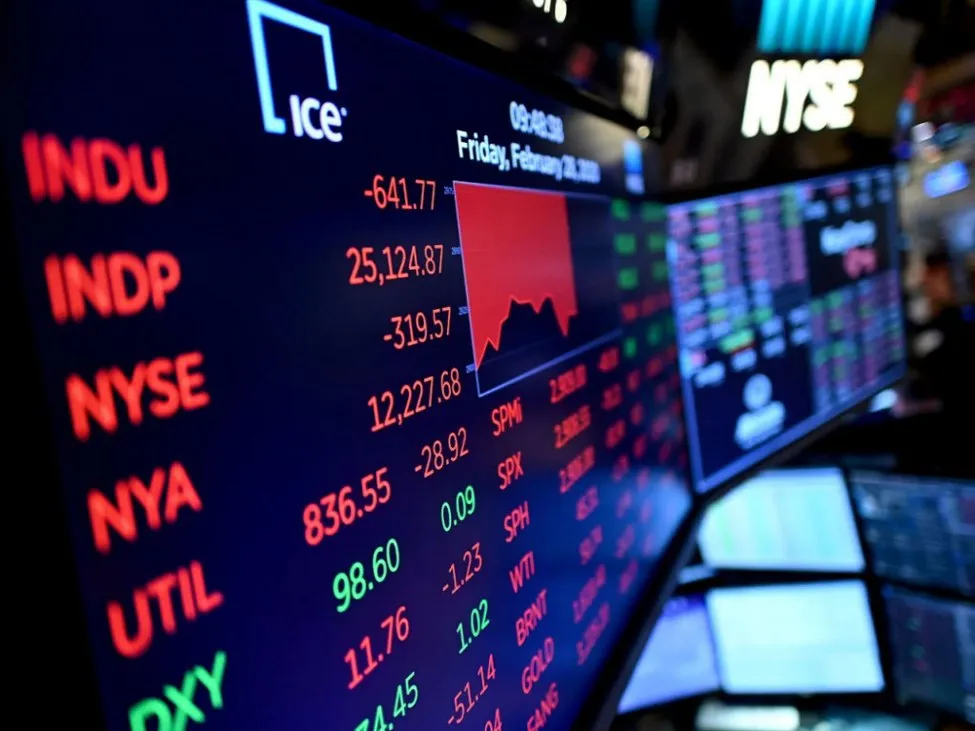

Stocks Turn Lower as Risk Appetite Begins to Look Weary
In recent trading sessions, stock markets have started to exhibit signs of fatigue, turning lower as investor enthusiasm wanes. This shift reflects growing concerns over a range of economic challenges and uncertainties that are leading many to reassess the sustainability of the prolonged bullish trends observed over the past months.
Key Takeaways
One of the principal drivers of this cautious sentiment has been the looming threat of inflation. Despite initial assurances that price rises would be transitory, persistent inflation has become a thorn in the side of economies worldwide. Increased cost pressures, driven by supply chain disruptions and recovering demand post-pandemic, have prompted central banks to consider tightening monetary policies sooner than anticipated. The Federal Reserve’s hints at possible interest rate hikes have particularly spooked markets, as investors dread the end of the era of cheap money which has buoyed stocks.
Furthermore, the global landscape is fraught with geopolitical tensions and uncertainties that complicate the economic outlook. From Europe’s energy crisis to China’s regulatory crackdown on technology and real estate sectors, these developments have instilled a sense of unpredictability that is typically anathema to stock markets. Additionally, the ongoing effects of the COVID-19 pandemic, including new variants and uneven vaccination rates, continue to pose significant risks to global economic recovery.
The tech-heavy Nasdaq Composite, which had been leading gains, is now seeing a pullback as technology stocks suffer from valuation concerns amidst the increasing yields. High-growth stocks, particularly sensitive to interest rate hikes, are experiencing some of the most significant declines. Meanwhile, traditional economically sensitive sectors like energy and financials are not immune to the downturn, reflecting broader market apprehensions.
Investors are also beginning to show a shift in their investment strategies, veering away from the high-flying growth stocks towards more stable, value-based stocks. This trend indicates a search for safer havens amid the uncertain macroeconomic climate. The rotation into value stocks underscores the anxiety about overextended asset valuations after a long bull run.
Market sentiment is thus being tugged by a complex interplay of fading risk appetite and a more discerning approach towards investments. Trading volumes have been muted, suggesting that many are adopting a ‘wait and see’ strategy, further contributing to market volatility.
In response, financial analysts are advising caution, recommending diversified portfolios, and a focus on long-term investment horizons to navigate through the potential market turbulence. Additionally, they suggest keeping an eye on upcoming economic data releases and central bank communications, which are likely to play significant roles in shaping market directions in the coming months.
In conclusion, as stocks turn lower amid a weary risk appetite, the marketplace becomes a reflection of the broader global uncertainties and the dilemma facing investors in a potentially shifting economic environment. Whether this is merely a temporary setback or a sign of more profound shifts remains to be seen, but clearly, caution is the watchword in today’s investment landscape.
Context
Current positioning around Market Analysis remains sensitive to primary-source updates, policy interpretation, and execution risk across major venues.
What To Watch
Key confirmation signals include sustained spot demand, funding stability, and whether price can hold reclaimed levels after headline-driven volatility.
If momentum weakens, traders will likely prioritize downside liquidity zones and risk-control positioning before adding new directional exposure.
Related: More from Market Analysis | Middle East Tensions Lift CRCL Shares Amid Rate in Crypto Market | Dollar Rise Weighs on Cryptos, Gold in Crypto Market