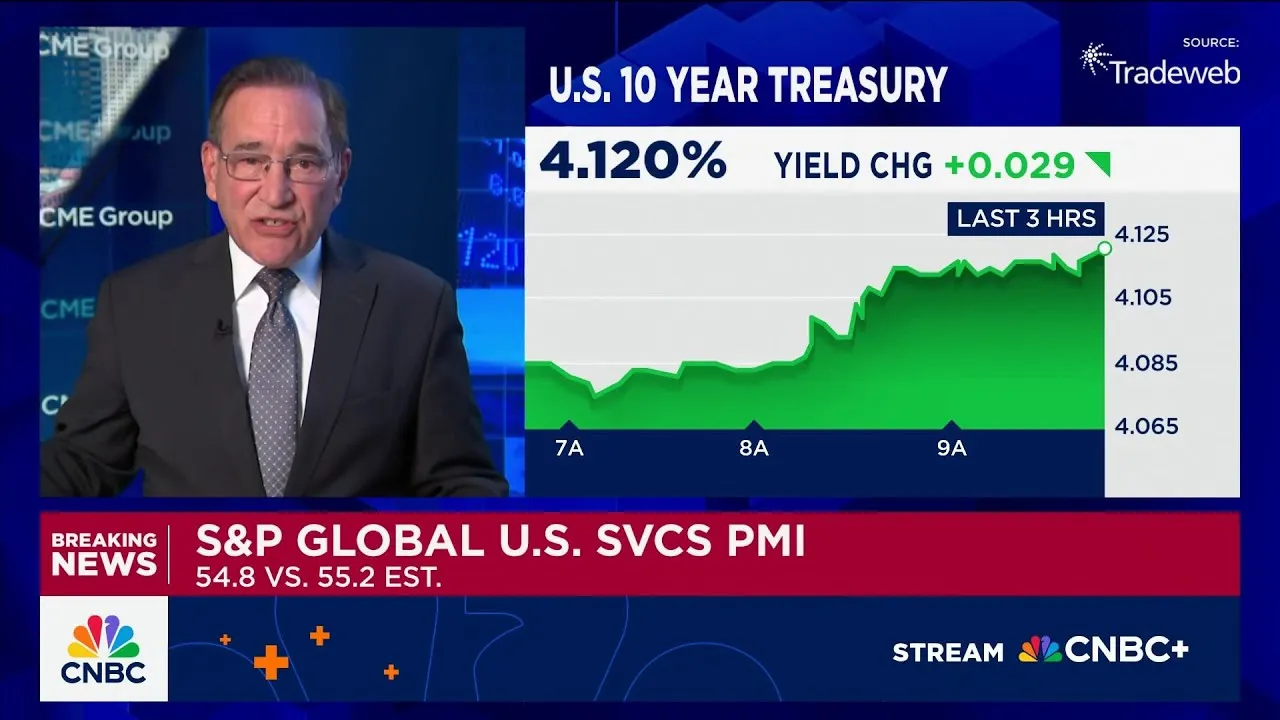

The final Service Purchasing Managers’ Index (PMI) for the United States, as reported by S&P Global for October, registered at 54.8. This figure is slightly lower than the preliminary estimate, which was reported earlier at 55.2. This data is critical as it provides insights into the economic activity within the services sector, representing a significant component of the overall US economy.
Key Takeaways
The PMI is an influential financial indicator derived from monthly surveys of private sector companies. A reading above 50 suggests that the services sector is generally expanding, while a reading below 50 indicates contraction. The October reading of 54.8, while lower than the preliminary estimate, still denotes growth in the sector, albeit at a slightly slower pace than initially anticipated.
Several factors might have contributed to this slight downturn from the preliminary data to the final report. Analysts suggest that economic uncertainties, fluctuations in consumer demand, and cost pressures could be influencing the services sector dynamics. Additionally, the reintroduction of some COVID-19 restrictions in certain regions and ongoing global economic stresses may also weigh on performance and sentiment.
Despite the dip against the preliminary figure, the PMI at 54.8 illustrates resilience in the services sector. Businesses continue to recover from the heights of the pandemic-induced downturns. Companies in the services industry, such as healthcare, financial services, and IT, are experiencing varying levels of demand, with some industries pushing through growth limitations more robustly than others.
On the employment front, the October services PMI report occasionally provides insights into job creation within the sector. An expanding services sector generally corresponds with increased employment opportunities, as businesses require more staff to meet demand. The specifics of job creation within this report could further elucidate the health of the labor market tied to service-oriented activities.
For investors, understanding the nuances of the PMI report is crucial. Although the final reading fell short of preliminary expectations, the fact that the index remains well above the growth threshold is a positive signal. It suggests continued economic expansion, though modulated by various challenges. Investors closely watch these indices to gauge market sentiment and economic trends to make informed decisions on asset allocations and to foresee potential shifts in monetary policy that could be prompted by changes in economic conditions.
As we look ahead, the services sector remains a vital component of the U.S. economy. Monitoring upcoming PMI reports will be essential for stakeholders to gauge if this slight deceleration is a temporary blip or the beginning of a more prolonged trend of subdued growth. Additionally, analyzing sector-specific performances within the broader services category will be imperative for pinpointing stronger investment opportunities or identifying possible risks.
In summary, while the October PMI of 54.8 shows a slight decrease from preliminary estimates, it still supports a narrative of ongoing expansion within the US services sector. How the sector navigates the myriad of existing economic pressures will be key to understanding future PMIs and the broader economic implications tied to this pivotal component of the economy.
Context
Current positioning around Market Analysis remains sensitive to primary-source updates, policy interpretation, and execution risk across major venues.
What To Watch
Key confirmation signals include sustained spot demand, funding stability, and whether price can hold reclaimed levels after headline-driven volatility.
If momentum weakens, traders will likely prioritize downside liquidity zones and risk-control positioning before adding new directional exposure.
Related: More from Market Analysis | Middle East Tensions Lift CRCL Shares Amid Rate in Crypto Market | Dollar Rise Weighs on Cryptos, Gold in Crypto Market